Modern Synthetics : What is Modern Synthetics
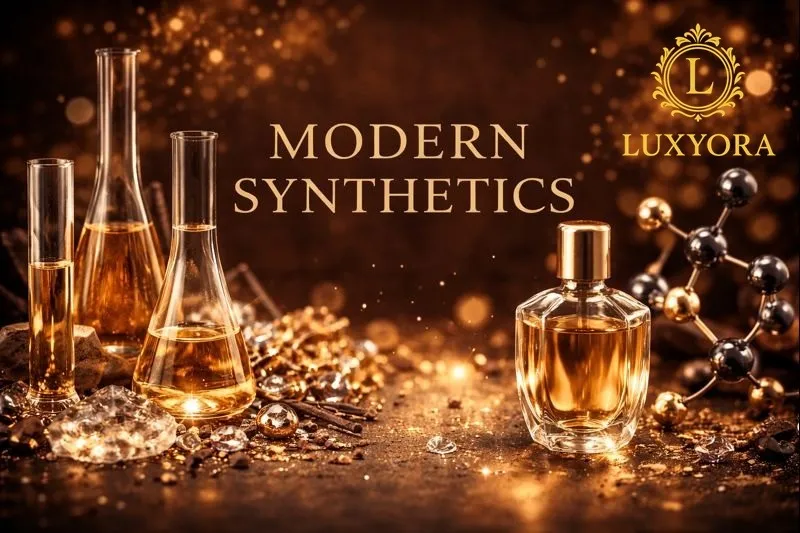
Modern synthetics are the lab-created aroma molecules that quietly power many of today’s most iconic fragrances. While natural ingredients such as rose, jasmine, and oud evoke romance and tradition, they can also be expensive, inconsistent, fragile, or environmentally limited. This is where synthetics step in, not as replacements, but as essential collaborators.
Created through chemical synthesis or bioengineering, modern synthetics allow perfumers to recreate scents found in nature, such as lily of the valley, a flower that produces no extractable oil, as well as to imagine entirely new aromas that don’t exist in the natural world.
Why Synthetics Matter
Modern synthetics solve some of perfumery’s biggest challenges. They offer:
- Consistency from batch to batch
- Stability across climates and skin types
- Ethical and sustainable alternatives to endangered or rare materials
- Affordability without sacrificing quality
Thanks to synthetics, perfumers can work freely without being limited by harvest cycles, climate shifts, or ecological concerns.
Not “Less Than” Naturals-Just Different
In the fragrance industry, synthetics are not considered inferior to natural materials. Instead, they are valued for precision, clarity, and control. Naturals can vary
dramatically depending on weather, soil, and harvest conditions. Synthetics behave predictably, allowing perfumers to design fragrances with exacting accuracy.
This reliability makes synthetics indispensable in modern perfumery- especially in fine fragrance, where balance and longevity are essential.
Iconic Molecules That Shaped Modern Scent
Some synthetic molecules have become legends in their own right:
- Iso E Super: Soft, woody, velvety, and skin-like
- Ambroxan: Warm, musky, amber-leaning with remarkable longevity
- Hedione: Airy, radiant, jasmine-like with luminous diffusion
These molecules don’t dominate a fragrance; they enhance and expand it, adding transparency, projection, and modern elegance. Many consumers associate these
effects with sophistication, minimalism, and contemporary luxury.
Expanding Creative Freedom
Synthetics dramatically expand the creative palette of perfumers. They make it possible to:
- Build scents that feel cleaner and more luminous
- Create abstract or conceptual fragrances
- Enhance diffusion without heaviness
- Balance natural materials without overpowering them
Rather than masking artistry, synthetics enable it, allowing perfumers to sculpt fragrances with architectural precision.
Sustainability and the Future of Fragrance
As sustainability becomes central to luxury, synthetics play a crucial role. Bio-engineered molecules reduce pressure on endangered species and fragile ecosystems
while maintaining olfactory beauty. This shift allows perfumery to evolve responsibly, honouring both craftsmanship and the planet.
Understanding Synthetics as Olfactory Art
Modern perfumery is no longer a debate between “natural” and “synthetic.” It’s a dialogue between chemistry and creativity. The most compelling fragrances often combine naturals for texture and emotion and synthetics for structure and radiance.
To understand modern synthetics is to understand how science has elevated perfumery into a true art form of the invisible.
The science behind modern synthetics is fascinating, yet choosing between natural and synthetic fragrances is an entirely different conversation. Explore Natural vs Synthetic Perfumes.
References
Turin, L., & Sanchez, T. (2018). Perfumes: The A–Z Guide (Revised ed.). Penguin Books.
Sell, C. S. (2019). The Chemistry of Fragrances: From Perfumer to Consumer (2nd ed.). Royal Society of Chemistry.
Baser, K. H. C., & Buchbauer, G. (2020). Handbook of Essential Oils: Science, Technology, and Applications (2nd ed.). CRC Press.
Ellena, J.-C. (2022). Perfume: The Alchemy of Scent. Arcade Publishing.
International Fragrance Association (IFRA). (2023). Synthetic ingredients and sustainability in perfumery. IFRA Publications.
Encyclopaedia Britannica. (2024). Synthetic fragrance.
Grand View Research. (2025). Synthetic aroma chemicals market analysis.
Aroma Chemicals Association. (2026). Modern fragrance molecules and
innovation. Industry White Paper.
Spence, C. (2021). The scent of attraction and the smell of success. Cognitive Research: Principles and Implications, 6(1), 46.