Foundation
Foundation is one of the most important products in the beauty industry. It serves as the base of a makeup look, helping to create an even skin tone, conceal imperfections, and provide a smooth canvas for other cosmetic products. Over the years, foundation has evolved significantly, offering a wide variety of formulas, finishes, shades, and skin-friendly ingredients to meet the needs of diverse consumers.
Today, foundation is much more than a cosmetic product. It combines skincare benefits, sun protection, hydration, anti-aging ingredients, and advanced pigment technology to deliver both beauty and skin-enhancing results. Whether someone prefers a natural, barely-there look or full-glam coverage, understanding foundation can help achieve better makeup results while maintaining healthy skin.
This comprehensive guide explores everything about foundation, including types, benefits, selection tips, application methods, common mistakes, and practical examples to help beauty enthusiasts make informed decisions.
What Is Foundation in the Beauty Industry?
Foundation is a complexion product designed to create a uniform skin appearance by evening out skin tone, minimizing discoloration, covering blemishes, and enhancing the overall texture of the skin.
The primary purpose of foundation is to:
- Even out skin tone
- Conceal redness and pigmentation
- Reduce the appearance of blemishes
- Create a smooth makeup base
- Improve makeup longevity
- Enhance natural beauty
Modern foundations are available in multiple textures and levels of coverage, making them suitable for virtually every skin type and concern.
The Evolution of Foundation Makeup
The concept of foundation dates back centuries, when people used powders and creams made from natural minerals and pigments. However, modern foundation gained popularity during the early twentieth century, especially in the film and theater industries, where performers needed flawless-looking skin under bright lights.
Today’s beauty industry has transformed foundation into a highly sophisticated product category. Advanced formulations now incorporate:
- Skin-nourishing ingredients
- SPF protection
- Anti-aging compounds
- Hydrating agents
- Oil-control technology
- Light-reflecting pigments
- Long-wear formulas
As consumers increasingly seek multifunctional beauty products, foundation continues to evolve to meet both cosmetic and skincare needs.
Different Types of Foundation
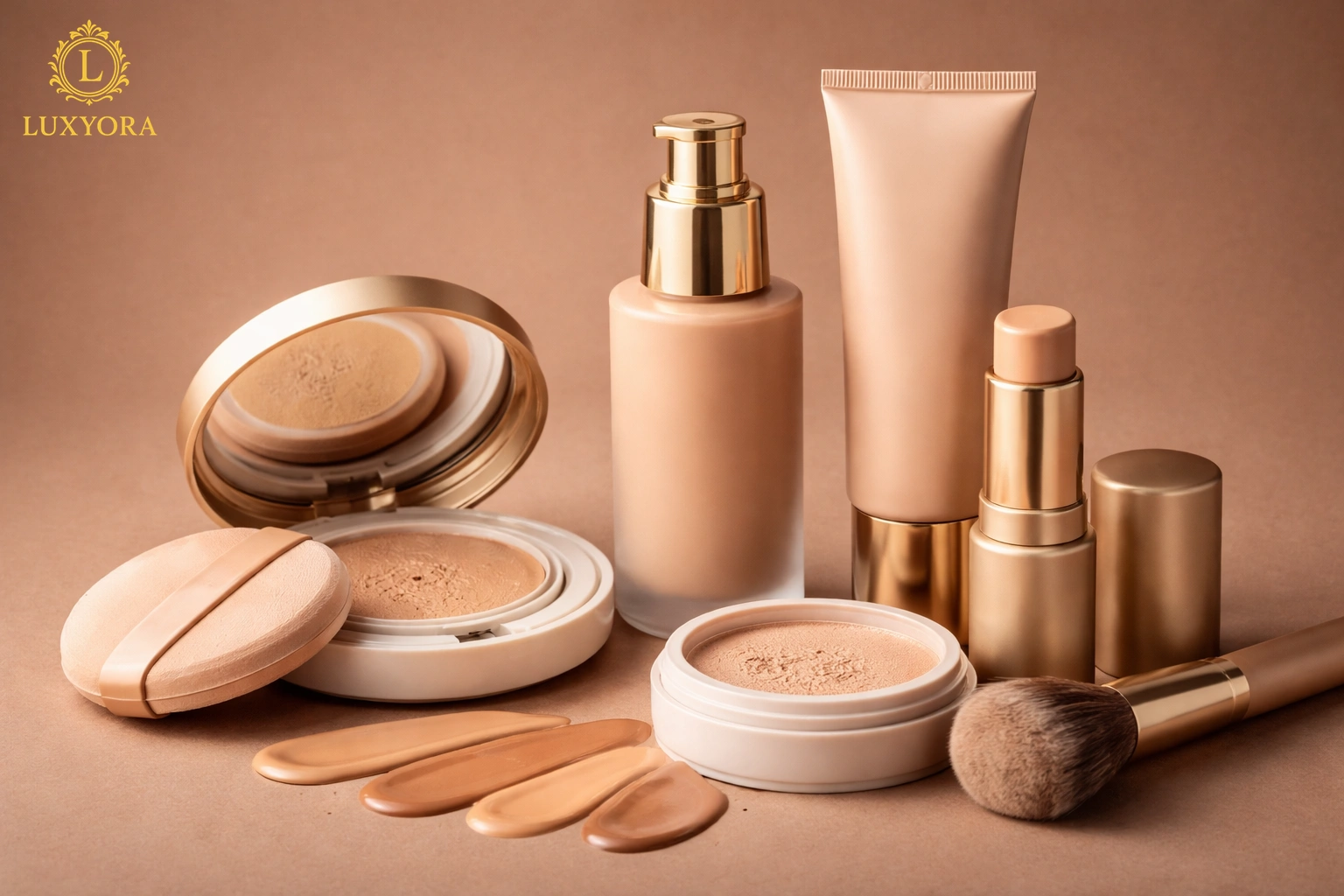
Liquid Foundation
Liquid foundation is the most popular and versatile type of foundation.
Benefits include:
- Easy application
- Wide shade selection
- Various coverage options
- Suitable for most skin types
Liquid foundations range from sheer to full coverage and are available in matte, natural, radiant, and dewy finishes.
Best for:
- Normal skin
- Combination skin
- Dry skin
- Mature skin
Powder Foundation
Powder foundation provides coverage while helping control excess oil.
Benefits include:
- Lightweight feel
- Quick application
- Shine control
- Portable convenience
Best for:
- Oily skin
- Combination skin
- Touch-ups throughout the day
Cream Foundation
Cream foundations offer richer texture and stronger coverage.
Benefits include:
- Excellent coverage
- Smooth finish
- Moisturizing properties
Best for:
- Dry skin
- Mature skin
- Special event makeup
Stick Foundation
Stick foundations combine portability and coverage.
Benefits include:
- Travel-friendly
- Easy blending
- Buildable coverage
Best for:
- Normal skin
- Combination skin
- On-the-go applications
Serum Foundation
Serum foundations blend skincare and makeup.
Benefits include:
- Lightweight feel
- Skin-enhancing ingredients
- Natural appearance
Best for:
- Minimal makeup users
- Mature skin
- Dry skin
Understanding Foundation Coverage Levels
Coverage determines how much of the skin’s natural appearance remains visible.
Sheer Coverage
Sheer foundations provide subtle enhancement while allowing natural skin to show through.
Ideal for:
- Everyday wear
- Minimal makeup looks
- Younger skin with fewer imperfections
Medium Coverage
Medium coverage offers a balanced approach between natural and polished appearance.
Ideal for:
- Professional settings
- Daily makeup routines
- Mild discoloration concerns
Full Coverage
Full coverage foundations conceal most imperfections and provide maximum uniformity.
Ideal for:
- Photography
- Events
- Hyperpigmentation
- Acne coverage
Choosing the Right Foundation for Your Skin Type
Selecting the correct foundation begins with understanding your skin type.
Foundation for Oily Skin
People with oily skin should look for:
- Matte finishes
- Oil-free formulas
- Long-wear technology
- Non-comedogenic ingredients
Example:
Someone working long shifts may benefit from a matte liquid foundation that resists shine throughout the day.
Foundation for Dry Skin
Dry skin requires:
- Hydrating ingredients
- Dewy finishes
- Cream-based formulas
- Moisturizing properties
Example:
A person experiencing seasonal dryness may choose a hydrating serum foundation that prevents flakiness.
Foundation for Combination Skin
Combination skin benefits from:
- Balanced formulas
- Natural finishes
- Buildable coverage
Example:
An individual with an oily T-zone and dry cheeks may prefer a satin-finish liquid foundation.
Foundation for Sensitive Skin
Sensitive skin should prioritize:
- Fragrance-free products
- Hypoallergenic formulas
- Dermatologist-tested options
Example:
A user prone to irritation may choose a mineral-based foundation with a minimal ingredient list.
How to Match Foundation Shade Correctly
One of the biggest challenges in makeup is finding the perfect foundation shade.
Determine Your Undertone
Skin undertones generally fall into three categories:
Warm Undertones
Characteristics:
- Golden appearance
- Yellow hues
- Green-looking veins
Cool Undertones
Characteristics:
- Pink appearance
- Red hues
- Blue-looking veins
Neutral Undertones
Characteristics:
- Balanced tones
- Mixture of warm and cool traits
Test in Natural Light
Always test foundation shades in natural daylight.
The jawline remains the best area for shade testing because it allows comparison between the face and the neck.
Consider Seasonal Changes
Skin tone often changes throughout the year due to sun exposure and environmental factors.
Many beauty professionals recommend owning two foundation shades and mixing them when necessary.
Foundation Finishes Explained
Matte Finish
Provides:
- Shine-free appearance
- Long wear
- Professional look
Best for:
Dewy Finish
Provides:
- Fresh appearance
- Healthy glow
- Youthful complexion
Best for:
Satin Finish
Provides:
- Balanced look
- Natural radiance
- Everyday versatility
Best for:
Natural Finish
Provides:
- Skin-like appearance
- Comfortable wear
- Minimal makeup effect
Best for:
- Daily use
- Professional environments
How to Apply Foundation Like a Professional
Step 1: Prepare the Skin
Preparation is essential.
Start with:
- Cleansing
- Moisturizing
- Sunscreen application
- Primer if desired
Proper preparation improves foundation performance and longevity.
Step 2: Choose the Right Tool
Application tools include:
Makeup Sponge
Creates:
- Natural finish
- Seamless blending
Foundation Brush
Creates:
- Higher coverage
- Precision application
Fingertips
Creates:
- Quick application
- Natural blending
Step 3: Apply Thin Layers
Building foundation gradually produces a more natural result than applying excessive product at once.
Step 4: Blend Thoroughly
Pay attention to:
- Jawline
- Hairline
- Neck area
- Around the nose
Proper blending prevents visible foundation lines.
Common Foundation Mistakes to Avoid
Using the Wrong Shade
An incorrect shade creates an unnatural appearance and can make makeup look obvious.
Applying Too Much Product
Excess foundation may:
- Settle into fine lines
- Look cakey
- Reduce comfort
Ignoring Skin Type
Using a matte foundation on extremely dry skin or a dewy foundation on very oily skin often leads to disappointing results.
Skipping Skin Preparation
Without proper skincare, foundation may cling to dry patches or separate throughout the day.
Foundation Trends in Modern Beauty
Recent beauty trends emphasize skin-like finishes and complexion-enhancing formulas.
Popular trends include:
- Skin-first beauty
- Lightweight coverage
- Hybrid skincare-makeup products
- Inclusive shade ranges
- Sustainable beauty formulations
- Clean beauty foundations
- SPF-infused foundations
Consumers increasingly seek products that improve skin health while delivering cosmetic benefits.
Practical Foundation Scenarios
Scenario 1 - Office Professional
A marketing executive requires a polished yet natural look.
Recommended choice:
- Medium coverage liquid foundation
- Satin finish
- Long-wear formula
Benefits:
- Professional appearance
- Comfortable all-day wear
Scenario 2 - Wedding Guest
A wedding guest needs makeup that photographs beautifully.
Recommended choice:
- Full coverage foundation
- Natural finish
- Transfer-resistant formula
Benefits:
- Long-lasting performance
- Camera-ready complexion
Scenario 3 - College Student
A student prefers minimal makeup for daily activities.
Recommended choice:
- Sheer coverage serum foundation
- Lightweight finish
Benefits:
- Quick application
- Natural appearance
Scenario 4 - Mature Skin User
A mature user wants a youthful glow without emphasizing texture.
Recommended choice:
- Hydrating foundation
- Dewy finish
- Medium coverage
Benefits:
- Smooth appearance
- Enhanced radiance
The Future of Foundation
Foundation products continue to evolve in response to technological innovation and consumer demand.
Future developments are expected to focus on:
- Personalized shade matching
- AI-powered beauty recommendations
- Enhanced skincare integration
- Sustainable packaging
- Eco-conscious formulations
- Adaptive pigment technology
As beauty brands continue investing in research and development, foundation will remain one of the most essential and innovative categories within the cosmetics industry.
Conclusion
Foundation remains the cornerstone of modern makeup, providing a versatile solution for creating an even, polished, and healthy-looking complexion. With numerous formulations, finishes, coverage levels, and skincare-enhancing ingredients available today, consumers have more choices than ever before.
Understanding skin type, undertones, coverage preferences, and application techniques allows individuals to select the most suitable foundation for their needs. Whether the goal is a natural everyday look or flawless event-ready makeup, the right foundation can significantly enhance both appearance and confidence.
By staying informed about foundation technology, ingredient innovations, and evolving beauty trends, consumers can make smarter purchasing decisions while achieving superior makeup results.
References
American Academy of Dermatology Association. (2023). Skin care basics and cosmetic products. American Academy of Dermatology.
Barel, A. O., Paye, M., & Maibach, H. I. (Eds.). (2023). Handbook of cosmetic science and technology (5th ed.). CRC Press.
Draelos, Z. D. (2021). Cosmetic dermatology: Products and procedures (3rd ed.). Wiley-Blackwell.
Elsner, P., & Maibach, H. I. (2020). Cosmetic science and technology: Theoretical principles and applications. Springer.
International Nomenclature of Cosmetic Ingredients. (2024). Cosmetic ingredient reference guide. Personal Care Products Council.
L’Oréal Research & Innovation. (2022). Advances in complexion products and shade technology. Cosmetic Science Publications.
Mintel Group Ltd. (2024). Global beauty and personal care trends report. Mintel.
Statista. (2024). Beauty and personal care market insights: Color cosmetics. Statista Research Department.
United States Food and Drug Administration. (2023). Cosmetics: Ingredients and safety considerations. U.S. Department of Health and Human Services.
Zion Market Research. (2023). Global foundation makeup market analysis and forecast. Zion Market Research.