Grommets : What are grommets?
Grommets have become one of the most recognizable hardware components in contemporary fashion. Once considered purely functional reinforcements for fabrics and textiles, grommets are now a defining design element across clothing, footwear, handbags, accessories, and luxury fashion collections. From edgy streetwear and punk-inspired garments to high-end couture and sustainable fashion innovations, grommets continue to influence modern apparel aesthetics and functionality.
In today’s fashion industry, understanding grommets is important for designers, manufacturers, fashion students, retailers, and consumers alike. This guide covers everything about fashion grommets, including their purpose, types, materials, applications, trends, manufacturing considerations, styling techniques, and practical use cases.
What Are Grommets in Fashion?
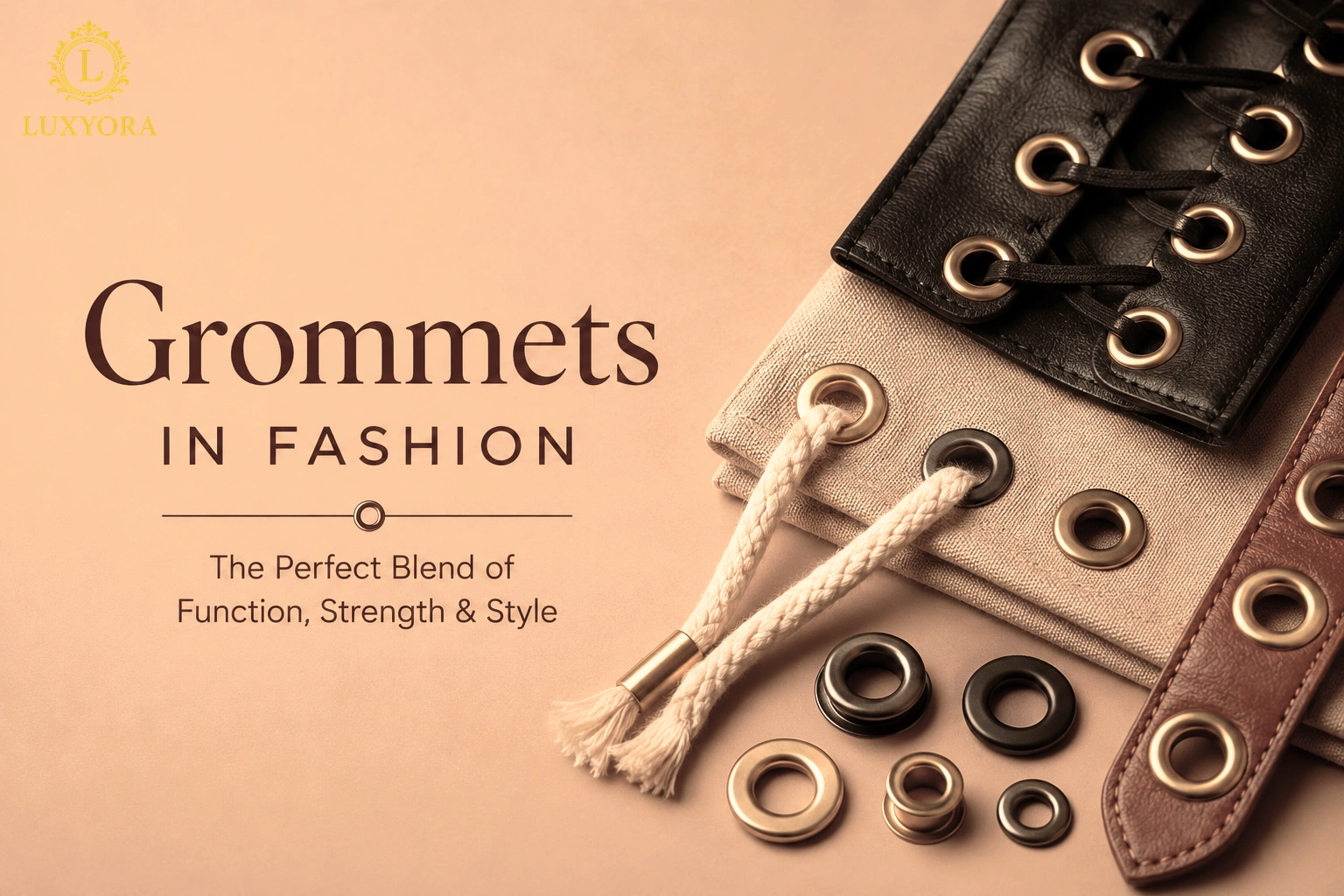
A grommet is a circular ring, usually made of metal, plastic, or rubber, that is inserted into a hole in fabric or other materials to reinforce the opening and prevent tearing. In fashion, grommets are commonly used to support laces, cords, drawstrings, straps, decorative accents, and adjustable closures.
While they originated as functional textile components, modern fashion designers often use grommets as visual design features that contribute to a garment’s overall aesthetic appeal.
Common fashion items featuring grommets include:
- Corsets
- Jackets
- Hoodies
- Dresses
- Belts
- Handbags
- Boots
- Sneakers
- Skirts
- Leather garments
- Swimwear
- Activewear
Today, grommets represent a blend of functionality and style, making them a staple in both fast fashion and luxury fashion markets.
The History of Grommets in Fashion
The use of reinforced holes dates back centuries. Historically, metal eyelets and primitive grommets were used in sailing equipment, military uniforms, and corsetry.
During the Victorian era, corsets heavily relied on metal grommets to withstand the tension created by lacing systems. As industrial manufacturing advanced, grommet production became more efficient, leading to wider adoption across apparel and accessory industries.
The punk fashion movement of the 1970s and 1980s significantly elevated grommets from functional hardware to statement design elements. Designers incorporated oversized metal eyelets into leather jackets, belts, and footwear to create rebellious and unconventional aesthetics.
Today, grommets appear across diverse fashion categories ranging from minimalist luxury collections to avant-garde runway designs.
Why Grommets Are Important in Fashion Design
Grommets serve multiple purposes that enhance both garment performance and visual appeal.
Structural Reinforcement
Fabric holes experience significant stress when cords, laces, or straps pass through them. Grommets strengthen these openings and prevent fabric damage.
Benefits include:
- Increased durability
- Reduced tearing
- Improved product lifespan
- Better performance under tension
Functional Adjustability
Many garments require adjustable features. Grommets allow:
- Waist adjustments
- Lace-up closures
- Drawstring systems
- Custom fit modifications
This functionality improves comfort and wearer satisfaction.
Decorative Appeal
Modern fashion often uses decorative grommets as visual accents.
Designers may employ:
- Oversized metal eyelets
- Colored grommets
- Patterned arrangements
- Mixed-material combinations
These elements add texture, dimension, and contemporary style.
Types of Grommets Used in Fashion
Different fashion applications require different types of grommets.
Metal Grommets
Metal grommets are the most common type in apparel manufacturing.
Materials include:
- Brass
- Stainless steel
- Aluminum
- Zinc alloy
- Nickel-plated steel
Advantages:
- High durability
- Premium appearance
- Corrosion resistance
- Strong reinforcement
Common uses:
- Corsets
- Leather jackets
- Footwear
- Handbags
Plastic Grommets
Plastic grommets offer lightweight alternatives.
Benefits include:
- Lower weight
- Lower production cost
- Variety of colors
- Corrosion resistance
Common applications:
- Activewear
- Children’s clothing
- Swimwear
- Sports apparel
Rubber Grommets
Rubber variants provide flexibility and protection.
Applications include:
- Technical garments
- Outdoor clothing
- Performance apparel
They help reduce friction and improve comfort.
Decorative Fashion Grommets
These are specifically designed for aesthetic purposes rather than structural reinforcement.
Features may include:
- Rhinestones
- Engraved finishes
- Matte coatings
- Gold plating
- Custom designer branding
Luxury fashion brands frequently use decorative grommets to enhance product value and brand identity.
Popular Fashion Products That Use Grommets
Corsets and Bustiers
Corsetry remains one of the largest users of fashion grommets.
Grommets provide:
- Strong lace support
- Shape retention
- Adjustable fitting systems
Without reinforced eyelets, corsets would quickly experience fabric failure.
Footwear
Shoes and boots rely heavily on grommets.
Examples include:
- Combat boots
- Hiking boots
- Sneakers
- Fashion boots
Grommets reduce lace friction while improving durability.
Handbags
Luxury and contemporary handbags frequently feature grommets.
Common uses:
- Strap attachment points
- Decorative embellishments
- Drawstring openings
These applications improve both functionality and aesthetics.
Streetwear Apparel
Streetwear brands often incorporate oversized grommets to create bold visual statements.
Examples include:
- Cargo pants
- Hoodies
- Utility jackets
- Oversized dresses
This trend continues to influence youth fashion globally.
Grommets and Fashion Trends
Fashion trends involving grommets evolve continuously.
Industrial Fashion
Industrial-inspired aesthetics use visible hardware components as key design features.
Characteristics include:
- Exposed metal hardware
- Utility-inspired construction
- Technical fabrics
- Functional detailing
Grommets fit naturally into this design language.
Punk and Alternative Fashion
Grommets remain iconic within punk fashion.
Typical examples include:
- Studded belts
- Leather jackets
- Fishnet garments
- Platform boots
Their metallic appearance contributes to rebellious visual identities.
Luxury Fashion Applications
Many luxury brands now reinterpret industrial hardware through premium materials and sophisticated craftsmanship.
High-end grommets may feature:
- Gold finishes
- Custom engravings
- Precious metal coatings
- Branded detailing
This approach transforms functional hardware into luxury design elements.
Sustainable Fashion and Grommets
Sustainability has become a major priority within the global fashion industry.
Manufacturers increasingly seek eco-friendly hardware solutions.
Recyclable Materials
Sustainable grommets may use:
- Recycled aluminum
- Recycled brass
- Recycled stainless steel
These materials support circular fashion initiatives.
Longer Product Lifespans
Grommets extend garment durability, reducing replacement frequency and textile waste.
A well-placed reinforced eyelet can significantly increase a product’s usable life.
Repair-Friendly Fashion
Many repair programs focus on replacing damaged hardware rather than discarding entire garments.
Grommets contribute to:
- Product repairability
- Circular economy practices
- Waste reduction
How Fashion Designers Select Grommets
Choosing the correct grommet requires careful evaluation.
Designers consider:
Fabric Type
Different fabrics require different reinforcement levels.
Examples:
- Denim requires stronger hardware.
- Silk requires gentler installation methods.
- Leather often uses heavy-duty metal grommets.
Intended Function
A decorative grommet may not withstand heavy tension.
Designers must evaluate:
- Load requirements
- User interaction
- Garment stress points
Aesthetic Goals
Hardware should align with brand identity.
Questions include:
- Should the grommet stand out?
- Should it blend into the garment?
- Should it communicate luxury, utility, or rebellion?
These decisions influence material and finish selection.
Practical Fashion Scenarios Involving Grommets
Scenario 1 - Designing a Streetwear Hoodie
A designer wants to create a premium oversized hoodie.
Grommet choices:
- Matte black metal eyelets
- Reinforced drawstring openings
- Industrial-inspired appearance
Result:
- Improved durability
- Enhanced streetwear aesthetic
- Premium customer perception
Scenario 2 - Manufacturing Luxury Handbags
A luxury handbag brand uses custom gold-plated grommets featuring engraved logos.
Benefits:
- Brand recognition
- Higher perceived value
- Unique product differentiation
Scenario 3 - Sustainable Apparel Collection
A sustainable fashion startup chooses recycled aluminum grommets.
Advantages:
- Reduced environmental impact
- Support for sustainability claims
- Improved consumer trust
Common Challenges with Fashion Grommets
Despite their advantages, grommets present several challenges.
Corrosion
Poor-quality metal hardware may rust over time.
Solution:
- Use stainless steel or treated metals.
- Conduct durability testing.
Fabric Damage
Improper installation can weaken fabrics.
Solution:
- Use appropriate reinforcement materials.
- Follow correct manufacturing procedures.
Increased Production Costs
Premium hardware can increase product expenses.
Solution:
- Balance quality and budget requirements.
- Source hardware strategically.
Best Practices for Fashion Brands
Fashion brands can maximize the benefits of grommets by following several best practices.
Prioritize Quality Hardware
High-quality grommets improve product longevity and customer satisfaction.
Test Durability
Conduct:
- Pull tests
- Wash tests
- Abrasion tests
These evaluations help ensure product performance.
Align Hardware with Brand Identity
Hardware should support the overall design story.
Examples:
- Minimalist brands may prefer concealed grommets.
- Streetwear brands may emphasize oversized metal hardware.
- Luxury brands may use custom finishes.
The Future of Grommets in Fashion
The future of fashion grommets looks promising as designers continue to blend functionality with creativity.
Emerging developments include:
- Lightweight sustainable metals
- Smart apparel integration
- Custom 3D-printed hardware
- Recycled material innovations
- Luxury personalization features
As fashion becomes increasingly focused on durability, sustainability, and multifunctional design, grommets will continue playing a vital role in garment engineering and aesthetic innovation.
Conclusion
Grommets are far more than simple hardware components. They represent a critical intersection of fashion design, garment engineering, durability, and aesthetics. From reinforcing corsets and footwear to creating bold streetwear statements and supporting sustainable fashion initiatives, grommets have evolved into an indispensable element of modern apparel manufacturing.
For designers, manufacturers, retailers, and fashion enthusiasts, understanding grommets provides valuable insight into how small details can dramatically influence product quality, functionality, and visual appeal. As fashion trends continue to evolve, grommets are likely to remain a powerful tool for innovation, customization, and creative expression across the global fashion industry.
While it is not a miracle cure or substitute for medical treatments, consistent and proper use of Gua Sha can contribute to a refreshed, sculpted, and radiant appearance. Whether incorporated into a daily skincare ritual or enjoyed as part of a professional facial treatment, Gua Sha represents a powerful blend of traditional wisdom and modern beauty innovation.
References
Black, S. (2020). The Sustainable Fashion Handbook (2nd ed.). Thames & Hudson.
Fletcher, K., & Grose, L. (2019). Fashion & Sustainability: Design for Change (2nd ed.). Laurence King Publishing.
Gwilt, A. (2020). A Practical Guide to Sustainable Fashion. Bloomsbury Visual Arts.
McKelvey, K., & Munslow, J. (2021). Fashion Design: Process, Innovation and Practice (4th ed.). Wiley.
Sorger, R., & Udale, J. (2021). The Fundamentals of Fashion Design (3rd ed.). Fairchild Books.
Steele, V. (2023). The Corset: A Cultural History (Updated Edition). Yale University Press.
Textile Exchange. (2024). Preferred Fiber and Materials Market Report. Textile Exchange.
The Business of Fashion. (2023). Fashion Technology and Hardware Trends Report. The Business of Fashion Publishing.
WGSN. (2024). Accessories and Hardware Design Forecast. Worth Global Style Network.
Yurchisin, J., & Johnson, K. P. (2019). Fashion and the Consumer. Fairchild Books.