No products in the cart.

Be the first to hear about new arrivals, exclusive offers and insider news.
Balenciaga is a Paris-based luxury fashion house of Spanish origin, founded by Cristóbal Balenciaga in San Sebastián in 1917 and established in Paris in 1937. Now part of Kering, the house works across haute couture, ready-to-wear, leather goods, footwear, accessories and fragrance. Its identity rests on an unusually consistent idea: fashion can be modern not merely because it looks new, but because it changes the relationship between fabric, form and the body.
Cristóbal Balenciaga Eizaguirre was born on 21 January 1895 in Getaria, a fishing town on Spain’s Basque coast. His father was a fisherman, while his mother was a seamstress who worked for the Casa-Torres family. That early proximity to dressmaking gave Balenciaga an intimate understanding of cloth and handwork. The Marchioness of Casa-Torres encouraged his talent and became one of his earliest clients. By 1907, he was in San Sebastián, learning tailoring at establishments associated with Parisian fashion.
At 22, Balenciaga opened his first registered business as a couturier in San Sebastián. The year was 1917, the date now recognised by both the house and the Cristóbal Balenciaga Museum as the beginning of the maison. His business grew rapidly. A later company, EISA Costura, expanded to Madrid in 1933 and Barcelona in 1935, allowing him to serve a sophisticated clientele that included prominent members of Spanish society.
Those formative Spanish years were essential. Balenciaga did not arrive in Paris as an untested talent; he came with two decades of professional experience, an established clientele and complete command of the dressmaker’s craft. His eye had also been shaped by Spain: by the gravity of court dress, the strength of regional clothing, the disciplined beauty of ceremonial garments and the visual drama of Spanish art.
Prompted by the Spanish Civil War, Balenciaga moved to Paris and opened his couture house at 10 Avenue George V in 1937. His first Paris collection was recognised for its technical assurance, clarity of line and distinctive sense of proportion. Paris gave him access to exceptional textile makers, specialist ateliers and an international clientele, but his creative language remained unmistakably his own.
Balenciaga’s authority stemmed from his understanding of a garment from the inside out. He could cut, drape, fit and construct his own toiles. This distinguished him even within haute couture, where creative direction and technical execution were often divided between different specialists. For Balenciaga, design was inseparable from making. A line on paper mattered only when it could be translated into cloth with balance, movement and precision.
His clothing was architectural, but never simply rigid. He used structure to create ease. Rather than forcing the body into a predetermined outline, he often allowed fabric to stand away from it, creating an expressive space between the wearer and the garment. This approach produced clothes that could look monumental while remaining poised and mobile.
During the 1940s, 1950s and 1960s, Balenciaga steadily altered the accepted shape of women’s fashion. His tonneau line, semi-fitted suits, balloon forms, tunics, sack dresses and baby-doll silhouettes shifted attention away from the tightly defined waist. The sack dress of 1957 and the chemise of 1958 were especially influential because they proposed a modern silhouette without a visibly marked waist.
The innovations were not isolated novelties. They formed a sustained study of volume. A sleeve could end at bracelet length to reveal jewellery and lighten the arm. A collar could rise away from the collarbone to lengthen the neck. A coat could curve around the figure like a cocoon. A dress could create presence through the fall and resistance of its fabric rather than through surface ornament alone.
Material development was central to this work. Balenciaga collaborated with the Swiss textile house Abraham on silk gazar, a crisp fabric capable of holding sculptural volume while retaining refinement. It became ideally suited to the designer’s evening dresses, suits and ceremonial shapes. His mastery lay not only in selecting beautiful materials, but in recognising what a textile could be persuaded to do.
Although Balenciaga became one of the defining couturiers of Paris, his Spanish heritage remained visible throughout his career. Black appeared with particular force in his work, sometimes austere, sometimes luminous through lace, embroidery or the play of light on silk. References to court dress, regional costume, the bolero and the ceremonial clothing found in Spanish portraiture were transformed rather than copied. His celebrated Infanta-inspired designs, for example, drew upon the portraits of the Spanish royal court painted by Diego Velázquez.
This gave his work emotional depth. The clothes could be restrained and dramatic at once. Their power often came from contrast: a severe line softened by movement, a dense black silhouette relieved by an exposed wrist, or a grand volume made unexpectedly light. That command of opposition helps explain why Balenciaga’s designs remain so compelling in museums and archives. They belong to their period, yet their logic still feels contemporary.
Cristóbal Balenciaga retired in 1968, and he died in Spain in 1972. His influence, however, had already travelled through fashion. André Courrèges and Emanuel Ungaro had worked in his atelier, while Hubert de Givenchy shared a particularly close creative affinity with him. More broadly, designers continued to study his pattern cutting, fabric manipulation and belief that silhouette could be reinvented through construction.
Balenciaga’s modern revival gained decisive momentum under Nicolas Ghesquière, who became creative director in 1997. Across 15 years, he drew from the archive without treating it as a fixed template. Historic shapes, innovative textiles and exacting construction were translated into a forward-looking wardrobe with distinctly contemporary energy. In 2001, Balenciaga joined the group now known as Kering, and the same year saw the introduction of Le City bag, which developed into one of the house’s best-known leather-goods signatures.
Alexander Wang was appointed creative director in December 2012, with responsibility for women’s and men’s ready-to-wear, accessories and the house image. He was followed in 2015 by Demna, whose decade at Balenciaga enlarged the vocabulary of the maison once again. Demna examined the contemporary wardrobe through proportion, trompe-l’œil, utilitarian garments, upcycling and the transformation of familiar objects and clothing types. His work brought Balenciaga into a particularly close conversation with global street culture, digital imagery and the everyday language of dress.
One of the most important achievements of this period was the return of Balenciaga Couture in 2021, 53 years after the founder’s final couture collection. The revival restored haute couture as a living part of the house rather than a purely archival memory. It also demonstrated the durability of Cristóbal Balenciaga’s central principles: precision, volume, invention and the belief that construction can carry an idea.
As of July 2026, Balenciaga is led by Chief Executive Officer Gianfranco Gianangeli, whose appointment became effective on 2 January 2025. Pierpaolo Piccioli became Creative Director on 10 July 2025, bringing extensive experience in haute couture and a recognised commitment to colour, proportion, craft and the emotional possibilities of clothing. His first collection for the house, Summer 2026, was unveiled in October 2025.
That debut approached Balenciaga not as a collection of motifs to be repeated, but as a method of design. It returned attention to the exchange between body, cloth and air—the space that allows a garment to move, hold volume and create an atmosphere around its wearer. In Piccioli’s work, historical reference becomes a tool for new construction rather than an exercise in nostalgia.
The direction became clearer in Spring 2027, titled Unsized – A Lightness of Being. The collection explored adjustable forms, featherweight techno taffeta and silhouettes shaped around freedom of movement. Balloon, draped and cocoon forms were reconsidered for a contemporary wardrobe, while softened versions of Le City and Rodeo extended the same interest in lightness to leather goods. The collection positioned couture knowledge not as something remote from daily life, but as a way of improving how everyday clothes feel, move and adapt.
Balenciaga’s influence is not confined to the runway. Leather goods have become an important expression of the house’s ability to create recognisable forms. Le City, introduced in 2001, is valued for its softened construction and relaxed character, while newer lines such as Rodeo continue the conversation between polish and ease. Footwear has likewise allowed Balenciaga to experiment with scale, engineering and the changing boundaries between performance, streetwear and luxury.
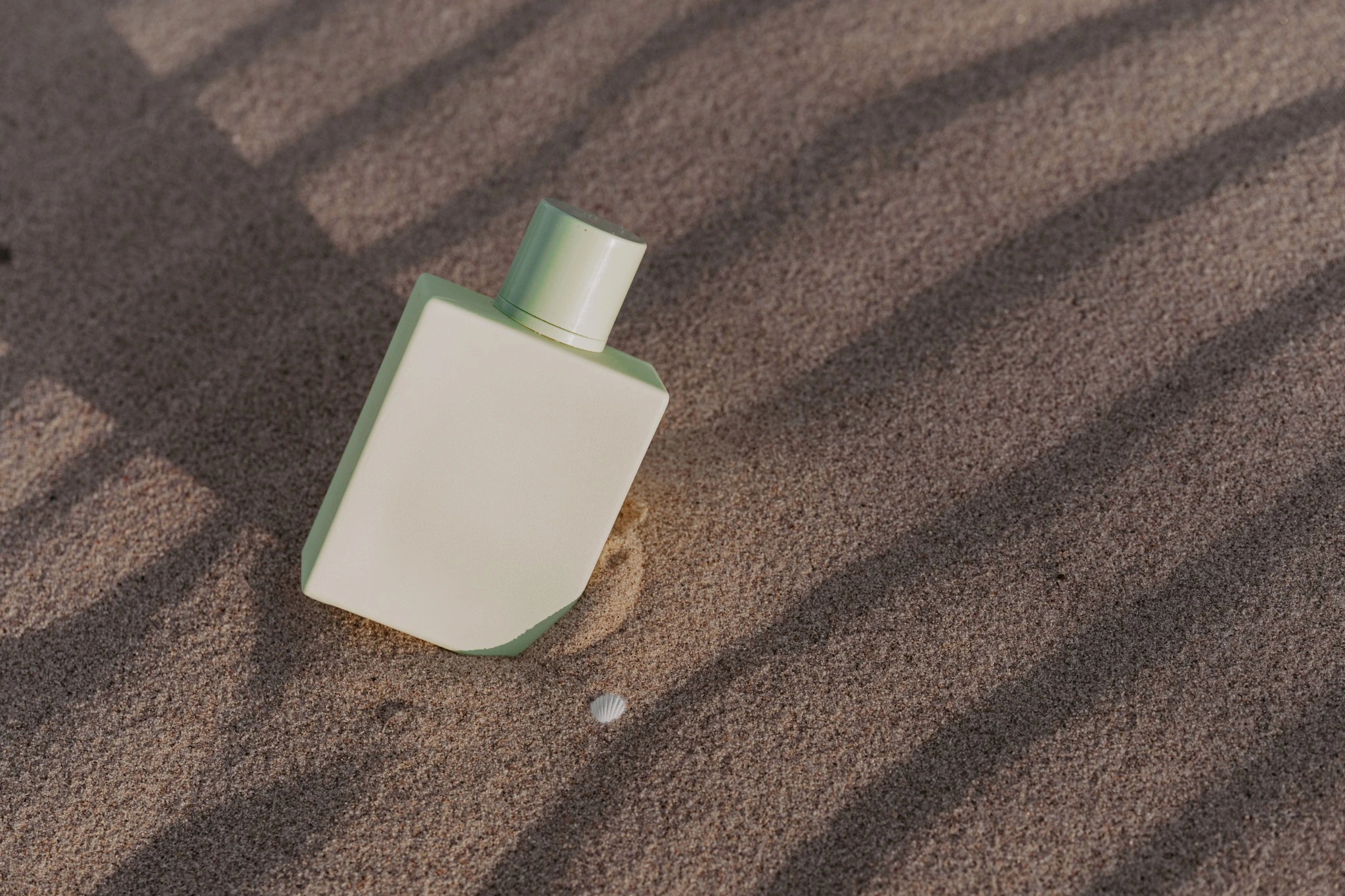
Fragrance also belongs to the house’s history. Balenciaga introduced Le Dix in 1947, naming it after the couture address at 10 Avenue George V. In September 2025, the maison unveiled a collection of ten fragrances following an extensive archival project that included the rediscovery and reconstruction of the original Le Dix bottle. The collection renewed an olfactory heritage that had begun under Cristóbal Balenciaga and reconnected fragrance with the house’s historic Paris home.
Luxury at Balenciaga is grounded in specialist knowledge. The Plant, the house’s leather-goods production facility in Cerreto Guidi, Tuscany, was created by renovating a former factory into an integrated manufacturing hub. Experienced specialists work alongside younger talent, and its apprenticeship programme includes a “Master Bag Maker” curriculum covering the complete production process of a luxury bag. The initiative treats craftsmanship as a living practice: one that must be taught, exercised and developed if it is to endure.
Alongside traditional savoir-faire, Balenciaga is exploring new material technologies through Kering’s innovation network. At ChangeNOW 2026, the house presented a Spring 2026 wrap dress made from AMSilk, a synthetic silk that Kering reports uses 97 per cent less water than conventional silk. A second look, developed with Weffan, used a three-dimensional weaving process intended to reduce fabric waste and production time. These projects reflect a particularly Balenciaga-like idea: material innovation is most meaningful when it expands creative possibility as well as improving the way a garment is produced.
Balenciaga has partnered with the United Nations World Food Programme since 2018, using co-branded products and communication to support food assistance and increase awareness of humanitarian needs. The partnership continued in May 2026 with a new series for which 20 per cent of proceeds were designated for WFP operations.
Such initiatives sit alongside the house’s investments in training, manufacturing and material research. Together, they illustrate how a major luxury house can extend its influence beyond image alone through the preservation of skills, support for humanitarian work and experimentation with more resource-conscious forms of production.
Balenciaga matters because its history is not simply a sequence of famous garments. It is a continuing argument about what clothing can do. Cristóbal Balenciaga proved that a silhouette could be radically modern while remaining elegant and wearable. Later creative directors demonstrated that the same house codes could be reinterpreted through futurism, youth culture, technology, everyday dress and couture.
Across these different eras, several principles have endured. Proportion is treated as a form of expression. Fabric is understood as an active material rather than a passive surface. Craft is the foundation of innovation, not its opposite. Most importantly, the body is not merely decorated; it is given space, movement and presence.
Under Gianfranco Gianangeli and Pierpaolo Piccioli, Balenciaga has entered a chapter that brings its couture foundations into close contact with contemporary life. The house’s future will continue to be shaped by the tension that has always made it distinctive: Spain and Paris, restraint and drama, heritage and experiment, the intimacy of handwork and the scale of global luxury.
Few fashion houses have influenced the physical shape of modern clothing so profoundly. Balenciaga’s lasting achievement is that it continues to make the silhouette feel like an open question.
Balenciaga. (n.d.). Maison.
Balenciaga. (2025). Balenciaga fragrance collection.
Balenciaga. (2025). Summer 26.
Balenciaga. (2026). Balenciaga | WFP 26 series.
Balenciaga. (2026). Spring 27: Unsized—A lightness of being.
Balenciaga. (2026). The Plant [LinkedIn post].
Cristóbal Balenciaga Museoa. (n.d.). Cristóbal Balenciaga.
Kering. (2012, December 3). Balenciaga appoints Alexander Wang creative director.
Kering. (2024, November 18). Kering appoints new CEOs at Saint Laurent and Balenciaga.
Kering. (2025, May 19). Pierpaolo Piccioli appointed creative director of Balenciaga.
Kering. (2026). Balenciaga: Couture and leather goods.
Kering. (2026). Kering highlights its commitment to sustainability at the ChangeNOW Summit 2026.
The Metropolitan Museum of Art. (2004, October 1). Cristóbal Balenciaga (1895–1972).
Victoria and Albert Museum. (n.d.). Cristóbal Balenciaga.
Vogue. (2012, November 6). Bidding Balenciaga farewell: Nicolas Ghesquière’s fifteen years at the house.



Stay inspired with exclusive brand features, luxury insights, and the latest in fine fashion and beauty — directly in your inbox.