Jasmine : What is Jasmine | Luxyora
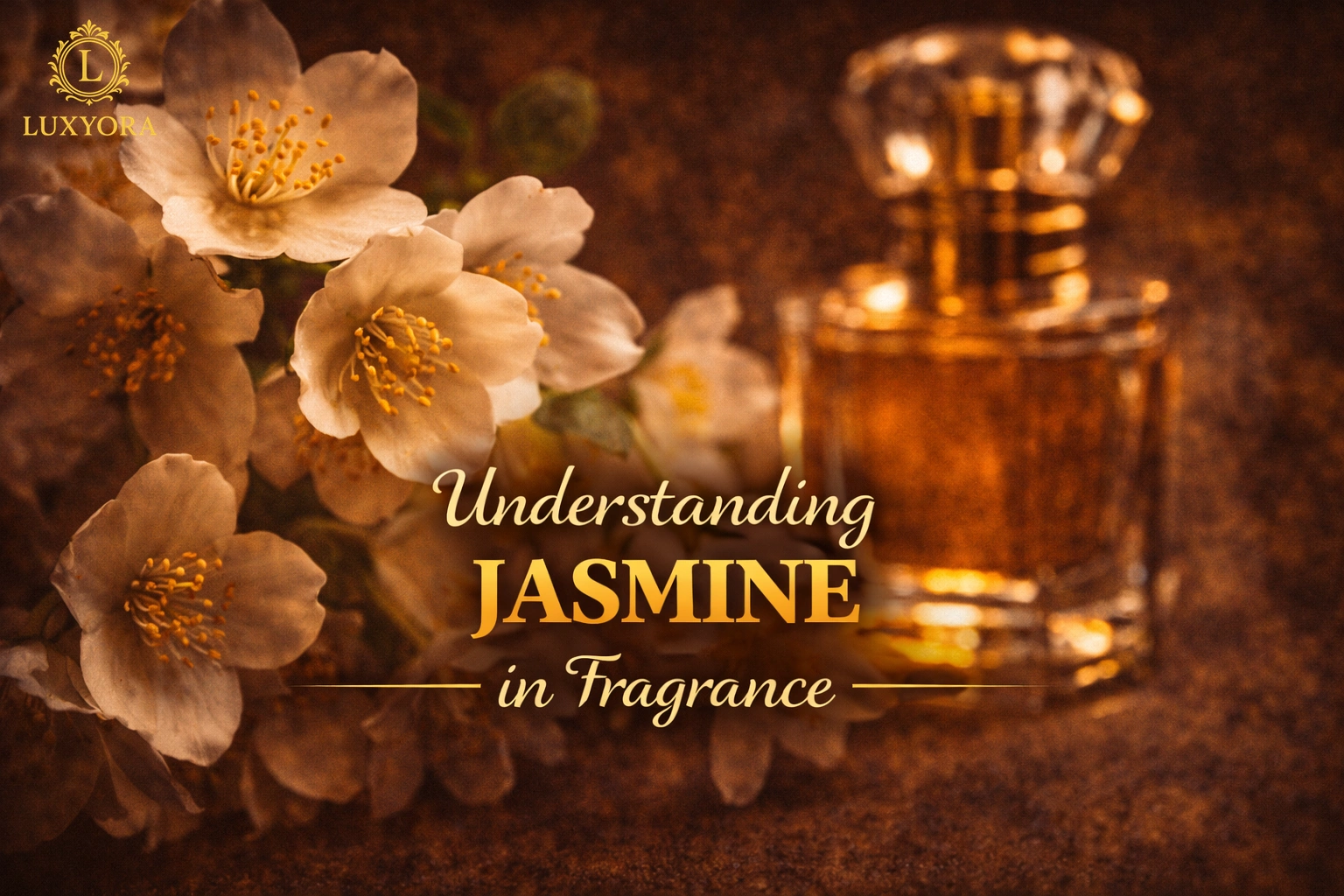
In perfumery, jasmine is one of the most important white-floral materials, prized for a scent profile that can feel creamy, honeyed, fruity, green, spicy, and subtly animalic all at once. When people say a perfume has a “jasmine heart,” they usually mean the fragrance contains either a natural jasmine extract (such as jasmine absolute) or a carefully built jasmine accord using aroma-chemicals that mimic jasmine’s key facets.
Jasmine is considered a cornerstone of fine fragrance composition because it delivers radiance, diffusion, and emotional richness qualities associated with both classic luxury perfumery and modern “clean floral” styles.
1) What “Jasmine” Means as a Fragrance Note
In industry language, “jasmine” can refer to:
- Natural extracts: most commonly, jasmine absolute (from jasmine concrete) is used in fine fragrance for depth and authenticity.
- A jasmine accord: a constructed blend that recreates jasmine’s impression using naturals and synthetics, often used because true jasmine extracts are expensive and vary by harvest.
- Jasmine-like molecules that bring a luminous floral aura (for example, “jasmine radiance” effects), sometimes without any natural jasmine material.
This is why two perfumes can both say “jasmine,” yet smell very different. One may emphasise the fresh petals, another the indolic sensuality, and another the airy radiance.
2) Botanical Sources: Grandiflorum vs Sambac
Two jasmine species dominate perfumery:
Jasminum grandiflorum (often “jasmine grandiflorum”)
Typically described as floral-fruity with classic jasmine richness and a characteristic indolic warmth (that natural “skin-like” sensuality).
Jasminum sambac
Often perceived as more exotic, sometimes greener, tea-like, or orange-blossom-adjacent, depending on the extraction and origin.
Origin matters: Jasmine’s aromatic profile can shift based on growing region, climate, and harvest/processing choices. Peer-reviewed work has examined how flower processing influences the composition of jasmine absolute and odour outcomes, which is one reason perfumers treat jasmine as a “living” material rather than a fixed ingredient.
3) How Jasmine Is Extracted for Perfumery
Because jasmine flowers are delicate and their scent can be damaged by harsh processing, high-end perfumery most often relies on solvent extraction rather than steam distillation for the signature “true jasmine” effect.
Concrete → Absolute (the classic pathway)
- Flowers are extracted with a solvent to make jasmine concrete (a waxy, aromatic mass).
- The concrete is then washed with alcohol and purified to produce jasmine absolute, a concentrated, intensely aromatic liquid.
- IFF’s LMR compendium describes jasmine absolute production as solvent extraction followed by purification with ethyl alcohol, and notes the immense botanical input required (a hallmark of why jasmine is costly).
- Why is jasmine expensive?
Jasmine is famously labour-intensive: blossoms are often picked at specific times to preserve aroma, and yields are low compared with many other botanicals. That combination of manual harvesting + low yield + high demand is why true jasmine is considered a premium natural.
4) The Smell Profile: Key Facets and Signature “Keywords”
Perfumers talk about jasmine using a consistent vocabulary:
- White floral/narcotic: plush petals, heady bloom
- Fruity-floral: soft peach/apricot nuance
- Honeyed/creamy: warm, nectar-like sweetness
- Green: leafy freshness, sometimes tea-like
- Indolic / animalic: sensual “skin” undertone (powerful, even in traces)
A practical way to understand jasmine’s complexity is to look at commonly cited components in jasmine absolute: IFF lists components such as linalool, benzyl acetate, indole, eugenol, cis-jasmone, and benzyl benzoate materials strongly associated with jasmine’s floral-fruity lift and its signature depth.
5) Jasmine’s Role in Perfume Structure: Heart Note, Diffusion, and “Glow”
Jasmine is most often placed in the heart (middle notes) of a fragrance, where it connects sparkling top notes to deeper bases (woods, musks, amber). Its special power is “lift” plus “body”; it can read as transparent or opulent, depending on how it’s dosed and paired.
Common pairing strategies include:
- Jasmine + citrus/neroli → bright, elegant florals
- Jasmine + rose → classic floral bouquet (often “white floral + rose” architecture)
- Jasmine + sandalwood/amber → creamy sensuality
- Jasmine + musks → clean radiance, laundry-fresh floral aura
- Jasmine + spices (clove-like facets) → warmer, vintage-leaning florals (eugenol-related nuances can support this).
In modern perfumery, jasmine is frequently used to create a diffusion effect, in which a perfume appears to “project” softly around the wearer rather than sitting flat on the skin.
6) Regulation and Safety: Allergens and Standards Context
In real-world formulations, perfumers must balance aesthetics with regulatory compliance. Jasmine materials can naturally contain constituents that appear on allergen declarations (depending on jurisdiction and finished formula thresholds). For example, IFRA conformity documentation for jasmine absolute commonly includes constituent lists and category-based usage guidance as part of responsible material handling.
Takeaway for readers: Jasmine in perfume is not “unsafe,” but it is a complex natural that must be used with appropriate standards, traceability, and dosage discipline, like many botanicals in modern perfumery.
7) Sustainability and Ethical Sourcing: Why “Jasmine” Is Also a Supply-Chain Story
Jasmine is not only an olfactory material, but it’s also an agricultural livelihood for communities in major producing regions. Leading fragrance houses have launched initiatives to improve environmental practices and social protections in jasmine supply chains.
- Givaudan reported a sustainable jasmine training programme in Egypt (initiated in 2019) that trained producers in safer, more sustainable agricultural techniques and reduced reliance on pesticide-heavy practices.
- Givaudan also discusses jasmine as a priority ingredient in responsible sourcing, including attention to human rights due diligence and the risk of child labour in agricultural supply chains.
For today’s fragrance consumer, this means that “jasmine” can also signal questions about traceability, farmer support, and ethical sourcing, especially for brands that disclose theirorigin and sourcing programs.
8) How to Smell Jasmine Like a Pro
If you want to train your nose, try this simple framework:
- First sniff (top impression): do you get bright petals, fruity lift, or green freshness?
- After 5–10 minutes: does an indolic warmth emerge (sensual, “alive,” slightly animalic)?
- Drydown: Does jasmine fade cleanly into musk/woods, or stay creamy and floral?
Also note: “jasmine” in a perfume may be more about the jasmine effect than the literal jasmine extract, especially in more affordable compositions.
Conclusion
Jasmine is one of perfumery’s most influential materials because it combines radiance, complexity, and sensual depth in a single floral theme. Whether used as a precious natural jasmine absolute or as a constructed jasmine accord, it remains a defining signature of floral perfumery. Understanding jasmine’s botanical origins, extraction, key facets, and sourcing realities provides readers with a robust, industry-relevant foundation for interpreting fragrance descriptions and making more informed scent choices.
References
Braun, N. A., et al. (2020). Jasminum grandiflorum: Influence of flower processing on jasmine absolute (Article). SAGE Journals. https://journals.sagepub.com/doi/10.1177/1934578X20960998
Givaudan. (2022, September 27). Givaudan and the Givaudan Foundation achieve sustainable jasmine training programme in Egypt. https://www.givaudan.com/media/trade-media/2022/sustainable-jasmin-training-programme-in-egypt (givaudan.com)
Givaudan. (2024). Bringing lasting change in the Egyptian jasmine supply chain. https://www.givaudan.com/sustainability/bridging-lasting-change-in-the-egyptian-jasmine-supply-chain (givaudan.com)
International Flavors & Fragrances. (n.d.). Jasmin absolute Egypt (LMR Naturals compendium). Retrieved February 6, 2026, from https://www.iff.com/scent/lmr-compendium/jasmin-absolute-egypt/ (IFF)
McCartney, S., & Scriven, S. (2021). The perfume companion: The definitive guide to choosing your next scent. Frances Lincoln/Quarto. (Google Books)
NHR Organic Oils. (2024, May 2). IFRA 51 conformity certificate: Jasmine absolute (Jasminum grandiflorum) [PDF]. https://www.nhrorganicoils.com/uploads/20250428100248e_Jasmine_Abs_IFRA51.pdf (nhrorganicoils.com)
Sell, C. (2019). Fundamentals of fragrance chemistry. Wiley-VCH. (dattanibookagency.com)
The Good Scents Company. (n.d.). Jasmin absolute sambac (data page). Retrieved February 6, 2026, from https://www.thegoodscentscompany.com/ (The Good Scents Company)
Ellena, J.-C. (2022). Atlas of perfumed botany. The MIT Press. (MIT Press)