Amber Accord : What Is Amber Accord?
Amber accord is one of the most recognizable and influential fragrance concepts in modern perfumery. Despite its widespread use across luxury perfumes, niche fragrances, home scents, and personal care products, many fragrance enthusiasts are surprised to learn that amber is not a single natural ingredient. Instead, it is a carefully crafted fragrance accord that creates a warm, sweet, resinous, and sensual scent profile.
In the fragrance industry, amber accord serves as a foundational building block that helps perfumers create depth, longevity, warmth, and sophistication. From oriental fragrances to modern gourmand compositions, amber accords have played a crucial role in shaping some of the world’s most beloved perfumes.
This comprehensive guide explores amber accord in detail, including its history, composition, applications, benefits, market relevance, and practical examples from the fragrance industry.
What Is an Amber Accord?
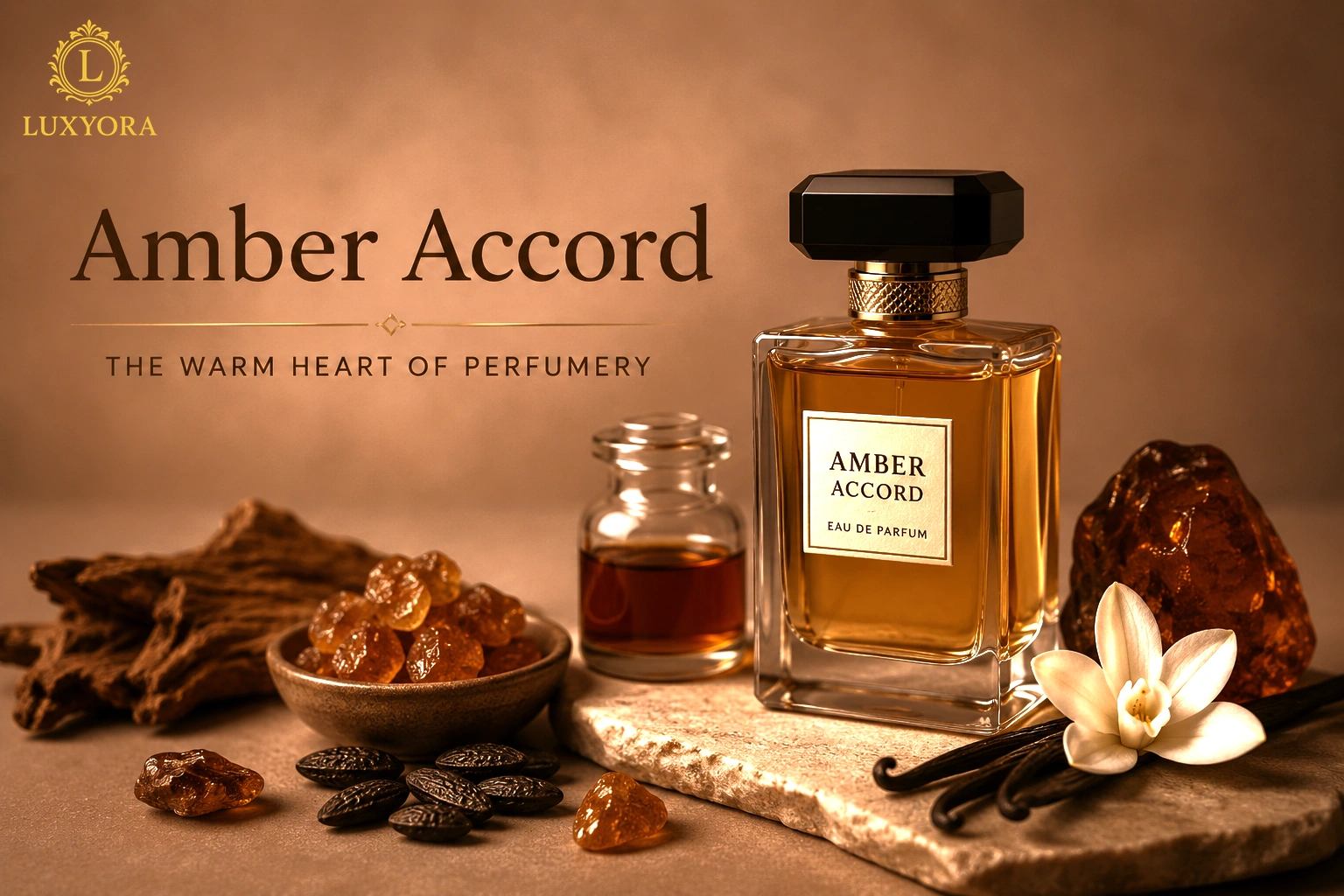
An amber accord is a fragrance accord created by blending multiple aromatic ingredients to produce a warm, rich, sweet, and resinous scent profile. Unlike essential oils such as lavender or rose, amber is not typically extracted directly from a plant source for use in modern perfumery.
Instead, perfumers create an amber accord by combining ingredients that collectively evoke warmth, sensuality, and richness.
Traditionally, an amber accord is built around three primary materials:
Vanilla
Vanilla contributes sweetness, creaminess, and comfort.
Labdanum
Labdanum provides a resinous, leathery, and slightly animalic character.
Benzoin
Benzoin adds balsamic sweetness and smooth depth.
Together, these ingredients create the classic amber accord that has become a cornerstone of fragrance formulation.
Understanding the Difference Between Amber and Ambergris
One common misconception within the fragrance market is confusing amber accord with ambergris.
Amber accord is a synthetic or blended fragrance structure created by perfumers.
Ambergris, on the other hand, is a rare substance historically produced in the digestive system of sperm whales. Modern fragrance formulations typically use synthetic ambergris alternatives due to ethical, environmental, and regulatory considerations.
While ambergris contributes a marine, musky, and diffusive quality, amber accord delivers warmth, sweetness, and resinous richness.
Understanding this distinction is essential for fragrance consumers and industry professionals alike.
The Historical Origins of Amber Accord
The roots of amber accord can be traced back centuries to Middle Eastern and European perfumery traditions.
Ancient civilizations highly valued aromatic resins such as:
- Frankincense
- Myrrh
- Labdanum
- Benzoin
- Styrax
These materials were used in religious ceremonies, medicinal preparations, and personal fragrances.
As perfumery evolved, fragrance creators discovered that combining resinous ingredients with sweet materials such as vanilla produced a luxurious scent profile that felt warm, mysterious, and long-lasting.
This fragrance style eventually became known as amber and later formed the foundation of what the industry historically called “Oriental” fragrances, a category increasingly referred to today as “Ambery” fragrances.
Key Characteristics of Amber Accord
Amber accord possesses several distinct olfactory characteristics that make it highly desirable in perfume formulation.
Warmth
Amber creates a comforting sensation often associated with cozy environments and cooler seasons.
Sweetness
Vanilla and benzoin provide a sweet and inviting character without becoming overwhelmingly sugary.
Resinous Depth
The presence of labdanum and other resins adds complexity and sophistication.
Longevity
Amber accords often improve fragrance performance and help scents last longer on the skin.
Sensuality
Many luxury brands use amber accords because they evoke intimacy, elegance, and refinement.
Common Ingredients Used in Amber Accord Creation
Modern perfumers have access to a vast palette of ingredients that can be used to create different interpretations of amber accord.
Natural Ingredients
- Labdanum
- Benzoin
- Vanilla Absolute
- Tonka Bean
- Frankincense
- Myrrh
- Peru Balsam
- Tolu Balsam
Aroma Chemicals
- Vanillin
- Ethyl Vanillin
- Ambroxan
- Cetalox
- Ambermax
- Norlimbanol
- Cashmeran
- Iso E Super
The use of aroma chemicals allows perfumers to enhance performance, consistency, sustainability, and creative flexibility.
Different Types of Amber Accords
Not all amber accords smell the same. Modern perfumery has developed multiple amber styles to suit different fragrance categories.
Sweet Amber Accord
Dominated by vanilla, tonka bean, and benzoin.
Typical impression:
Resinous Amber Accord
Focused on labdanum, frankincense, and balsamic materials.
Typical impression:
- Rich
- Incense-like
- Sophisticated
Woody Amber Accord
Combines amber materials with woods such as cedarwood, sandalwood, and synthetic woody molecules.
Typical impression:
- Elegant
- Modern
- Long-lasting
Spicy Amber Accord
Enhanced with spices such as:
- Cinnamon
- Cardamom
- Clove
- Nutmeg
Typical impression:
Luxurious
Why Amber Accord Is So Important in the Fragrance Industry
Amber accord remains one of the most valuable fragrance structures because it fulfills multiple technical and artistic functions.
Enhances Fragrance Longevity
Amber materials often possess excellent substantivity, helping fragrances remain detectable for extended periods.
Creates Emotional Appeal
Consumers frequently associate amber scents with comfort, luxury, and sensuality.
Improves Fragrance Complexity
Supports Brand Differentiation
Many niche fragrance houses create proprietary amber accords that become part of their signature identity.
Amber Accord Across Different Fragrance Categories
Amber accord appears across nearly every fragrance family.
Fine Fragrance
Luxury perfumes frequently rely on amber bases for depth and elegance.
Gourmand Fragrances
Amber complements edible notes such as:
- Caramel
- Chocolate
- Coffee
- Praline
Woody Fragrances
Amber softens dry woods and adds warmth.
Floral Fragrances
Amber enhances rose, jasmine, and orange blossom compositions.
Home Fragrance
Candles and diffusers commonly feature amber accords due to their comforting nature.
Practical Example: How Amber Accord Changes a Perfume
Imagine a simple floral fragrance composed primarily of rose and jasmine.
Without amber accord:
- Bright
- Fresh
- Airy
- Short-lived
With amber accord:
- Richer
- More luxurious
- Longer-lasting
- More sophisticated
This example demonstrates why perfumers often use amber as a foundational component rather than a standalone note.
Example Scenarios in Modern Perfumery
Scenario 1 - Luxury Evening Fragrance
A perfumer designing an evening scent may use:
- Labdanum
- Vanilla
- Benzoin
- Patchouli
The amber accord provides sensuality and lasting power suitable for formal occasions.
Scenario 2 - Niche Artisan Perfume
A niche brand may create a unique amber accord featuring:
- Frankincense
- Myrrh
- Ambroxan
- Tonka Bean
This creates a modern interpretation appealing to fragrance collectors.
Scenario 3 - Unisex Fragrance Launch
To attract both male and female consumers, a brand might blend:
The result is a balanced fragrance with broad market appeal.
Amber Accord and Current Fragrance Trends
Recent fragrance trends have further increased demand for amber-based compositions.
Growing Interest in Niche Perfumery
Consumers increasingly seek complex fragrances featuring sophisticated amber structures.
Popularity of Warm Fragrances
Many consumers are gravitating toward comforting scent profiles that create emotional connections.
Sustainable Formulation
Modern amber accords increasingly rely on sustainable aroma chemicals that reduce pressure on natural resources.
Gender-Neutral Fragrances
Amber works exceptionally well in unisex and gender-inclusive fragrance designs.
How Consumers Can Identify Amber Accord in Perfumes
When reading fragrance descriptions, consumers should look for terms such as:
- Amber
- Ambery
- Resinous
- Balsamic
- Warm vanilla
- Golden resin
- Sweet woods
- Oriental-inspired
- Rich base notes
These descriptors often indicate the presence of an amber accord.
Practical Tips for Buying Amber-Based Fragrances
Test on Skin
Amber develops differently depending on body chemistry.
Allow Time for Dry Down
Amber accords typically reveal their full character after 30–60 minutes.
Consider Seasonality
Amber fragrances often perform exceptionally well during autumn and winter.
Evaluate Longevity
Many amber-heavy perfumes offer stronger staying power than lighter fragrance styles.
Explore Niche Brands
Niche fragrance houses frequently create innovative amber interpretations unavailable in mainstream offerings.
The Future of Amber Accord in Perfumery
Amber accord continues to evolve alongside advances in fragrance science and consumer preferences. New sustainable ingredients, biotechnology-derived aroma molecules, and innovative formulation techniques are enabling perfumers to create increasingly sophisticated amber effects.
As demand grows for luxury, gender-neutral, and emotionally engaging fragrances, amber accord is expected to remain one of the industry’s most important olfactory building blocks.
Whether used in an opulent niche perfume, a mass-market fragrance, or a premium home scent, amber accord provides warmth, depth, elegance, and enduring appeal. Its versatility ensures that it will continue influencing fragrance creation for generations to come.
Conclusion
Amber accord is far more than a simple fragrance note. It is a carefully crafted olfactory structure that has shaped perfumery for centuries. Built primarily from ingredients such as vanilla, labdanum, and benzoin, amber accord delivers warmth, sweetness, longevity, and sophistication that few fragrance elements can match.
For fragrance professionals, enthusiasts, and consumers alike, understanding amber accord provides valuable insight into how modern perfumes are created and why certain scents feel so comforting, luxurious, and memorable. As the fragrance industry continues to innovate, amber accord remains one of the most influential and enduring foundations of contemporary perfumery.
References
Arctander, S. (2019). Perfume and flavor materials of natural origin (reprint ed.). Perfume & Flavor Materials Center.
Burr, C. (2018). The emperor of scent: A true story of perfume and obsession. Random House.
Calkin, R. R., & Jellinek, J. S. (2022). Perfumery: Practice and principles (updated ed.). Wiley.
Curtis, M., & Williams, D. G. (2020). Introduction to perfumery. Micelle Press.
Jellinek, J. S. (2021). The psychological basis of perfumery. Springer.
Sell, C. S. (2019). Chemistry of fragrances: From perfumer to consumer (3rd ed.). Royal Society of Chemistry.
The International Fragrance Association (IFRA). (2024). Guidance on fragrance ingredient safety and formulation practices. IFRA.
The Research Institute for Fragrance Materials (RIFM). (2023). Fragrance ingredient safety assessments and industry developments. RIFM.
Turin, L., & Sanchez, T. (2018). Perfumes: The guide. Profile Books.
Wells, R. (2023). Trends shaping the global fragrance market. Perfumer & Flavorist Journal, 48(7), 22–30.