How Perfume Is Made : Step-by-Step Fragrance Creation Process | Luxyora
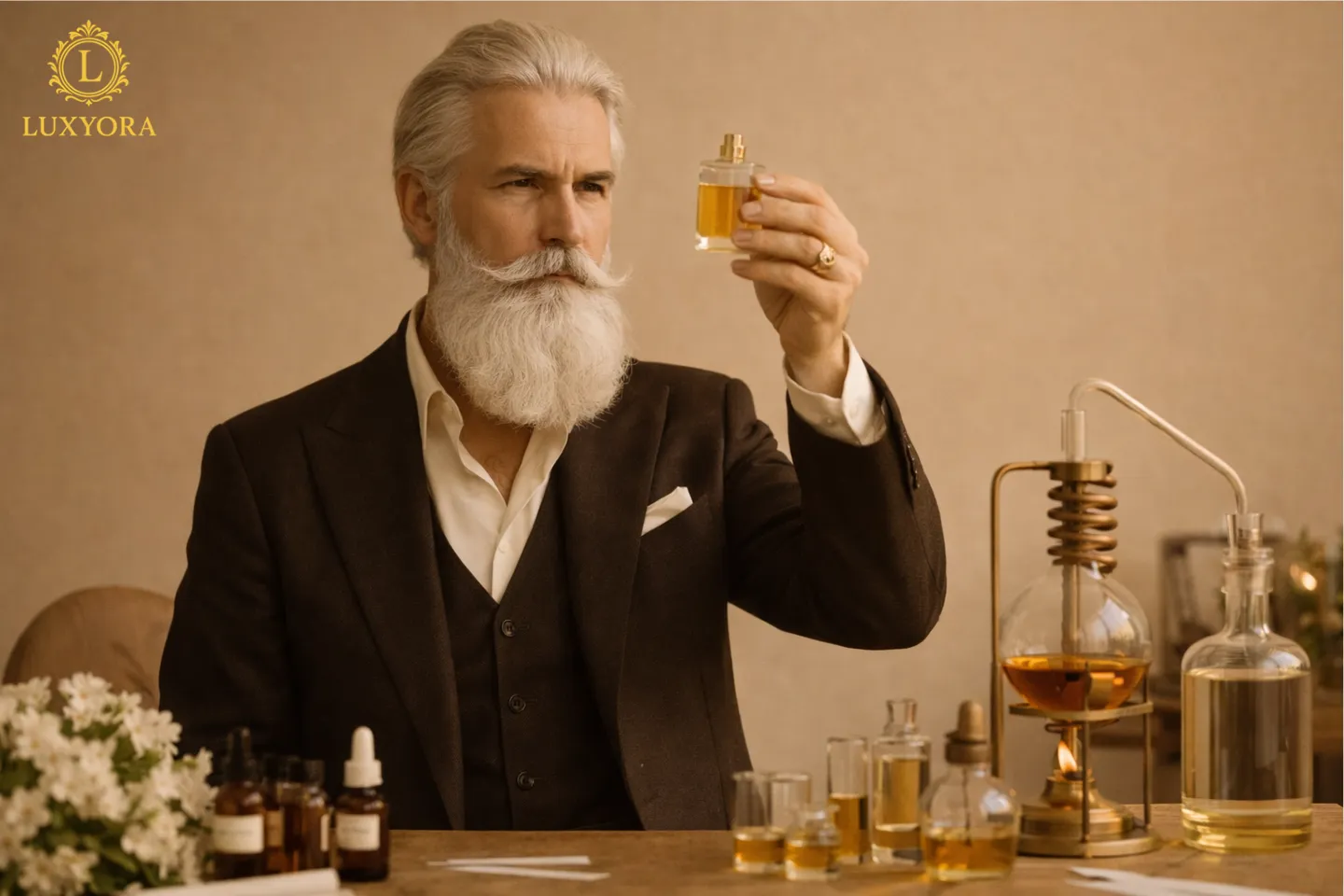
Perfume feels like glamour in liquid form, but behind every “one spritz, and you’re irresistible” moment is a surprisingly meticulous craft. Think of it as equal parts poetry and precision: a perfumer’s imagination, a chemist’s discipline, and a factory’s choreography, all bottled into something that sits neatly on your vanity and somehow still feels magical.
Here’s the step-by-step journey from raw materials to that final, obsessively sniffable mist.
Step 1: The brief (aka the fragrance’s “mood board”)
Most perfumes start with a creative brief: what should this scent say? Clean-girl linen? Velvet-date-night drama? Sun-warmed neroli on a Mediterranean balcony? The brief usually covers the emotion, the audience, performance goals (longevity, projection), and even practical constraints like price point and ingredient guidelines.
This is where perfumery becomes storytelling because the best fragrances aren’t just “floral” or “woody,” they’re a vibe you can wear.
Step 2: Sourcing ingredients (natural, synthetic, and everything in between)
Perfumers work with a palette that includes:
- Natural extracts (like essential oils, absolutes, resins)
- Nature-identical and synthetic aroma molecules (often used for stability, consistency, or notes that don’t exist in extractable form)
Modern perfumery relies on both, and not because anyone is trying to be sneaky, because some “natural” notes are impractical, unstable, or ethically problematic. At the same time, certain synthetics are cleaner, safer, and more consistent from batch to batch.
From rare natural materials to meticulously crafted synthetic accords, the ingredients behind modern perfumery exist on a fascinating spectrum. Learn why understanding this balance can transform the way you experience fragrance in Natural vs Synthetic Perfumes: Which Is Better for You?
Step 3: Extracting scent from nature
If a fragrance uses natural materials, those materials often need to be extracted first. The method depends on the plant and the type of aroma you’re chasing:
- Steam distillation: Classic for lavender, eucalyptus, and many herbs, steam helps release volatile aromatic compounds, which are then condensed and separated into oil and hydrosol.
- Solvent extraction: Used for delicate flowers (like jasmine) that don’t love heat. This can produce waxy “concretes” and then more refined “absolutes.”
- Supercritical CO₂ extraction: A more modern approach that can preserve delicate nuances and reduce thermal damage.
- “Green extraction” trends: The industry has pushed toward improved efficiency and sustainability using better solvents, energy reductions, and optimized processes.
And when a living flower is too fragile, too rare, or too sacred to harvest? That’s where technology gets chic.
Step 4: Capturing the uncapturable (headspace technology)
Some smells like a flower at midnight, wet stone after rain, or the airy scent of a garden don’t translate easily into traditional extraction. Enter headspace: a method that captures the aroma molecules in the air around an object, then analyzes them (often using GC/MS) so perfumers can recreate the scent impression in formula form.
In other words, perfume can literally be built from the air around a moment.
Step 5: Building the formula (notes, structure, and the “olympics of balancing”)
Now the perfumer composes a formula, sometimes with hundreds of materials arranged like a three-act play:
Perfumers test, tweak, and retest because changing a trace amount of one molecule can transform the entire mood.
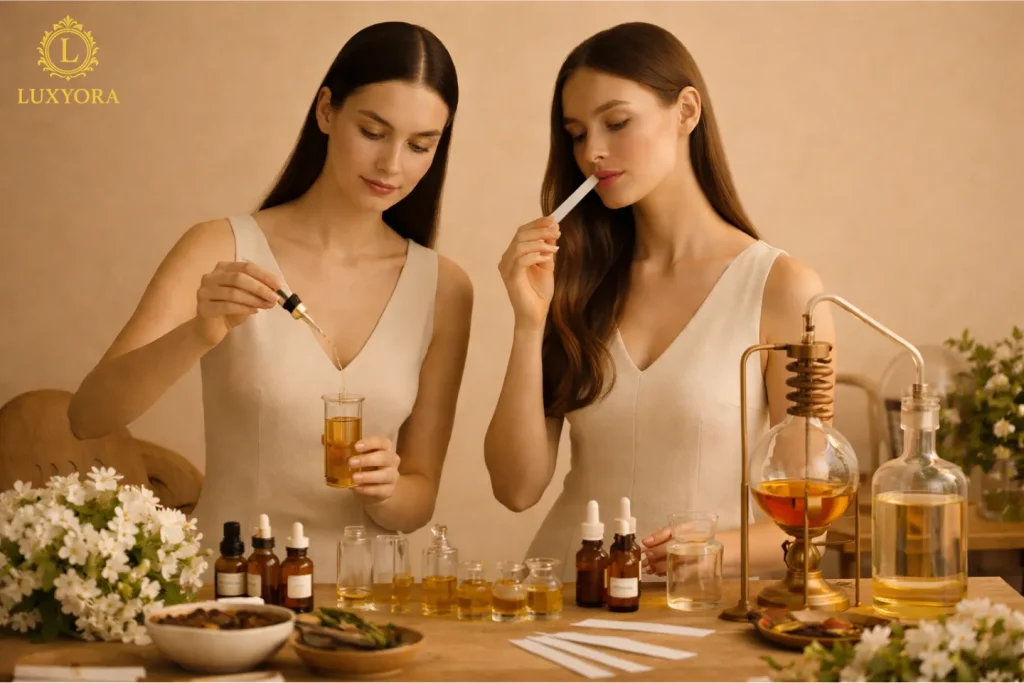
This stage often includes evaluation on paper strips (“blotters”) and on skin, because skin chemistry is the ultimate wildcard.
Step 6: Compounding and blending (where lab meets atelier)
Once the formula is finalized, it’s compounded, measured precisely, and blended into a concentrated fragrance oil (the “concentrate”). This is controlled work: weighing, mixing, documenting, and ensuring each batch matches the intended olfactive profile.
In large-scale settings, the concentrate is then prepared for dilution into alcohol (or another base), depending on the final product type.
Step 7: Maturation and maceration (the secret “resting beauty sleep”)
Freshly blended perfume can smell sharp or disjointed at first, like a playlist where every song is great, but the transitions are chaotic.
So the blend is often allowed to rest:
- Maturation: letting the concentrate harmonize
- Maceration: a resting period after dilution, helping the composition settle and integrate
Brands vary in timing (days to weeks, sometimes longer), but the goal is the same: a smoother, more cohesive scent experience, less “spiky,” more seamless.
Step 8: Chilling, filtration, and clarity checks
Perfume can contain trace amounts of waxes or insoluble particles from natural materials. Many manufacturers use cold stabilization (chilling) to encourage these to precipitate, followed by filtration to achieve that crystal-clear bottle glow.
It’s a very unglamorous step that produces a very glamorous result: no haze, no sediment, just polished perfection.
Step 9: Quality control and safety compliance (the quiet gatekeepers of “luxury”)
Before bottling, perfumes undergo quality checks, often including analytical methods such as gas chromatography mass spectrometry (GC-MS) to verify the presence and levels of specific fragrance substances
Safety and compliance also matter. Many fragrance houses formulate in accordance with IFRA Standards, which provide global guidance on safe use and ingredient restrictions and are updated through amendments.
Step 10: Filling, packaging, and that final “click” of the cap
Only after the juice passes its checks does it move to bottling, where it is filled, capped, labeled, boxed, and shipped. And yes, packaging can be part of the fragrance experience: the weight of the glass, the sound of the cap, the way it catches light on your dresser. Luxury lives in those details.
Luxyora Philosophy: Perfume is memory with a pulse, crafted molecule by molecule so that you can wear a feeling on your skin. Choose scents the way you choose a life: boldly, beautifully, and with intention.
References:
- Burger, P., Plainfosse, H., Brochet, X., Chemat, F., & Fernandez, X. (2019). Extraction of natural fragrance ingredients: History, overview and future trends. Chemistry & Biodiversity, 16, e1900424. Doing STS
- Fardin-Kia, A. R., & Zhou, W. (2020). Development and validation of a gas chromatography–mass spectrometry method for determination of fragrance substances in cosmetic products. Separation Science Plus. ResearchGate
- Fragrance Science. (2024, April 8). Head space “CaptureScent” technology. Fragrance Science
- International Fragrance Association. (2023–2024). IFRA Standards documentation (51st Amendment guidance and related materials). IFRA
- International Fragrance Association. (n.d.). Safe use and fragrance science: The IFRA Standards. IFRA
- Perfume Lounge. (2024). Innovative headspace technology gives new perfume inspiration. Perfume Lounge
- Sell, C. S. (2019). Fundamentals of fragrance chemistry. Wiley-VCH. AbeBooks