How to Wear Perfume in Cold Weather for Maximum Performance | Luxyora
Cold weather has a funny way of humbling your fragrance. The same scent that turns heads in summer can suddenly feel like it’s whispering into a cashmere scarf, polite, muted, almost shy. That’s not your imagination. In low temperatures, scent molecules generally evaporate more slowly and project less, which can make even a gorgeous eau de parfum seem quieter on the skin. The good news? Winter is actually a luxury playground for fragrance if you apply it with intention.
Think of cold-weather perfuming like styling a perfect winter outfit: you’re not piling on more, you’re choosing smarter layers, richer textures, and the right placement so everything works together.
1) Choose a fragrance that likes the cold
Warm air helps fragrance travel. Cold air makes it cling closer. So if you want “maximum performance,” winter is the season for perfumes with more depth, body, and staying power.
Look for notes that naturally feel cozy and tenacious:
- Amber, vanilla, tonka
- Resins and balsams (benzoin, labdanum)
- Woods (cedar, sandalwood)
- Spice (cardamom, clove, cinnamon done elegantly)
- Leather, smoke, incense (when you want drama)
This doesn’t mean you must abandon fresh scents. Just know that airy citrus and delicate watery florals may read softer outside, so they’ll shine best indoors, layered, or in higher concentration.
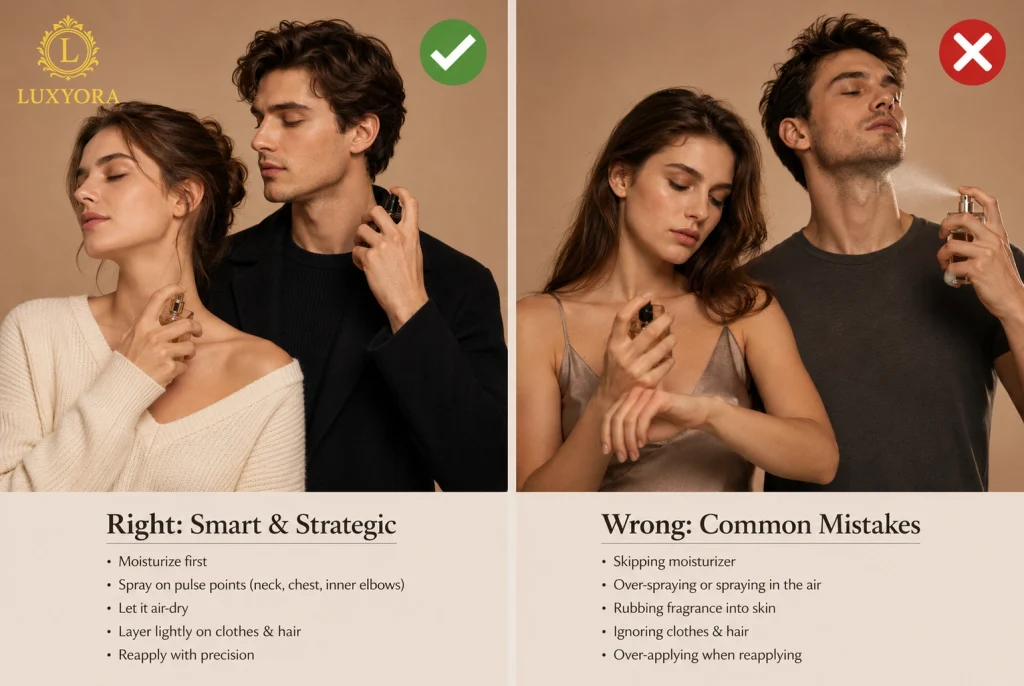
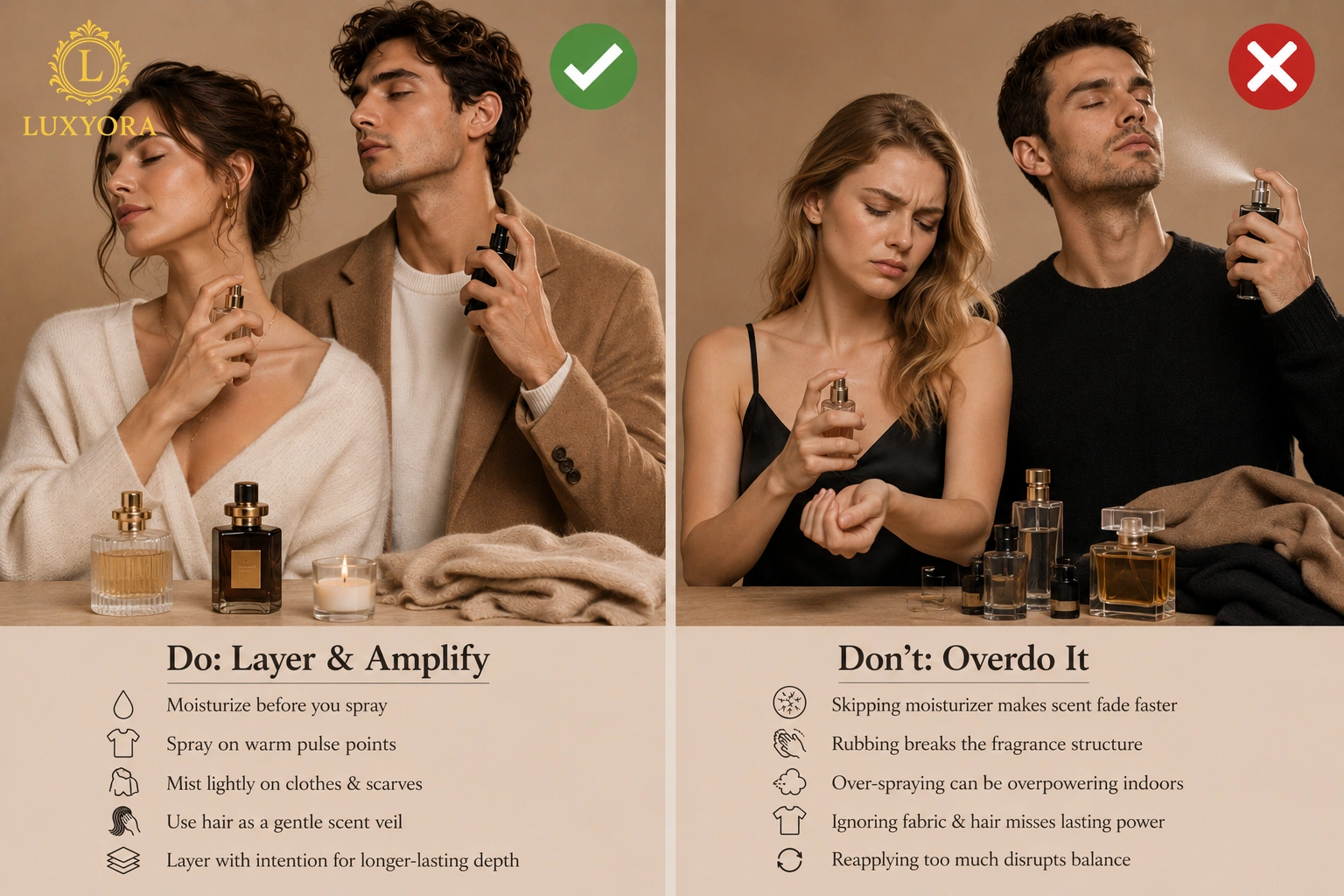
2) Moisturize first: winter skin drinks perfume
Cold weather and indoor heating are a double hit for dryness. And dry skin tends to let fragrance disappear faster because there’s less moisture and oil to “hold” the aromatic materials close to the surface.
Your simplest upgrade:
- Apply an unscented body lotion or body oil before spraying.
- If you want a high-impact trick, dab a tiny amount of an occlusive balm on select spots, then spray over it. It creates a smoother “grip” so the scent lasts longer.
Bonus: hydrated skin also helps your fragrance smell more rounded and expensive, less sharp, less fleeting.
3) Place it where warmth lives, but keep it elegant
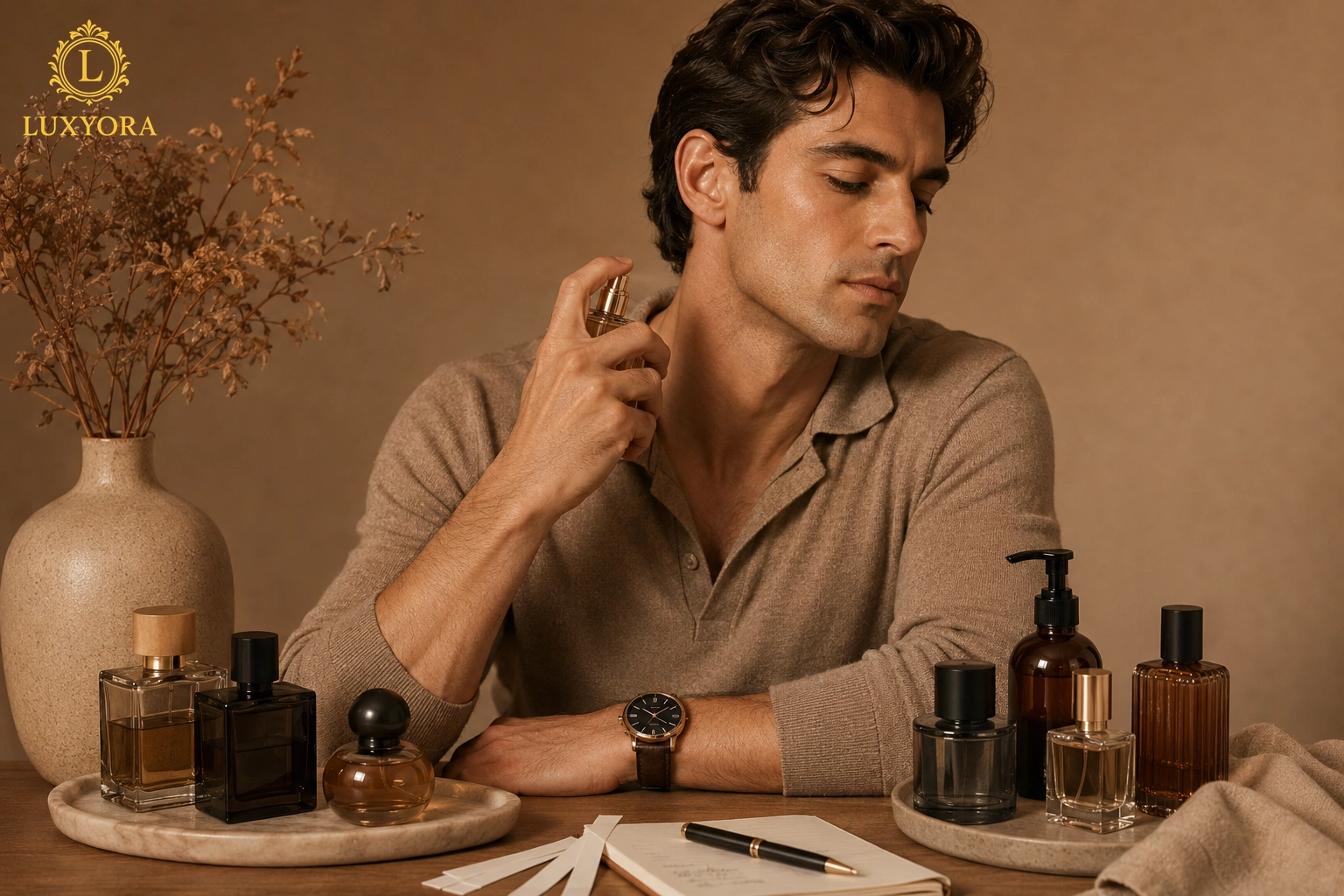
Pulse points are classic for a reason: warmth helps fragrance bloom. In winter, you want points that stay warm under clothing, so your scent diffuses slowly all day instead of evaporating into the cold and vanishing.
Try these cold-weather placements:
- Chest (under a knit or shirt): a soft, intimate aura
- Back of neck (under hair or collar): a subtle trail
- Inner elbows: warm, protected, and surprisingly effective
- Behind ears: beautiful for close encounters (go light)
- Between collarbones: refined projection without shouting
A winter-specific tip: skip over-spraying exposed wrists if you’re constantly washing hands, wearing gloves, or braving outdoor air. You’ll lose scent faster and end up reapplying more than necessary.
If you want your fragrance to project beautifully and last through cold days, there’s one overlooked detail you shouldn’t miss. Discover it in Where to Apply Perfume for Long-Lasting Scent (Pulse Points Guide).
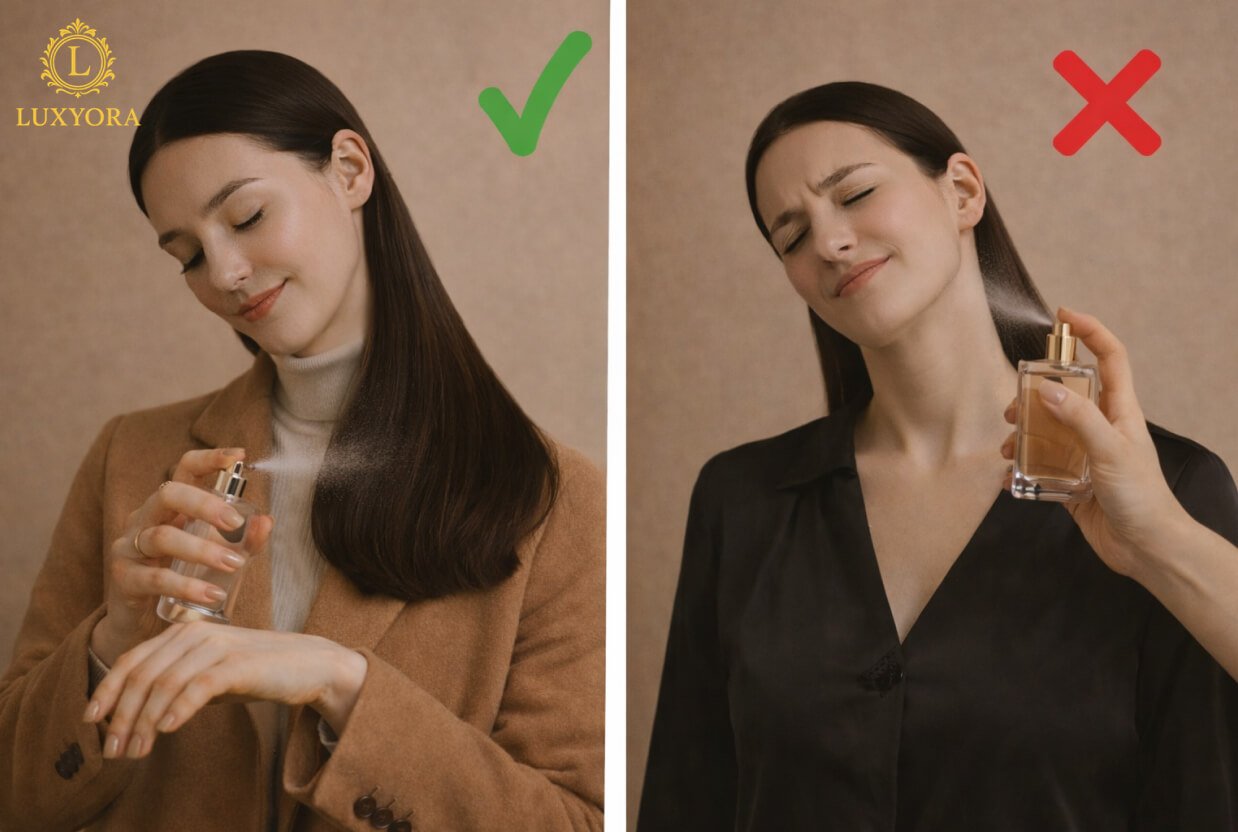
4) Spray, don’t rub, treat your top notes like silk
One of the quickest ways to flatten a perfume’s sparkle is rubbing it into the skin. The friction and extra heat can distort the way a fragrance opens and develops.
Instead:
- Spray from a comfortable distance (about a handspan away).
- Let it air-dry.
- Walk away like you meant it.
Before your fragrance has a chance to settle into your skin, a simple movement of your hands may be changing the experience more than you realize. Discover what really happens in Should You Rub Your Wrists After Applying Perfume.
5) Use your winter wardrobe as a fragrance amplifier
Winter gives you something summer rarely does: layers. And fabric can hold scent beautifully, sometimes longer than skin.
How to do it well:
- Mist lightly onto outer layers (coats, scarves) from a distance.
- Focus on areas that move: scarf ends, lapels, the inside of a coat.
- Avoid delicate fabrics and light silks that can stain.
The payoff is gorgeous: you get a refined scent cloud that lifts as you move, rather than a fragrance that sits stubbornly close to the skin.
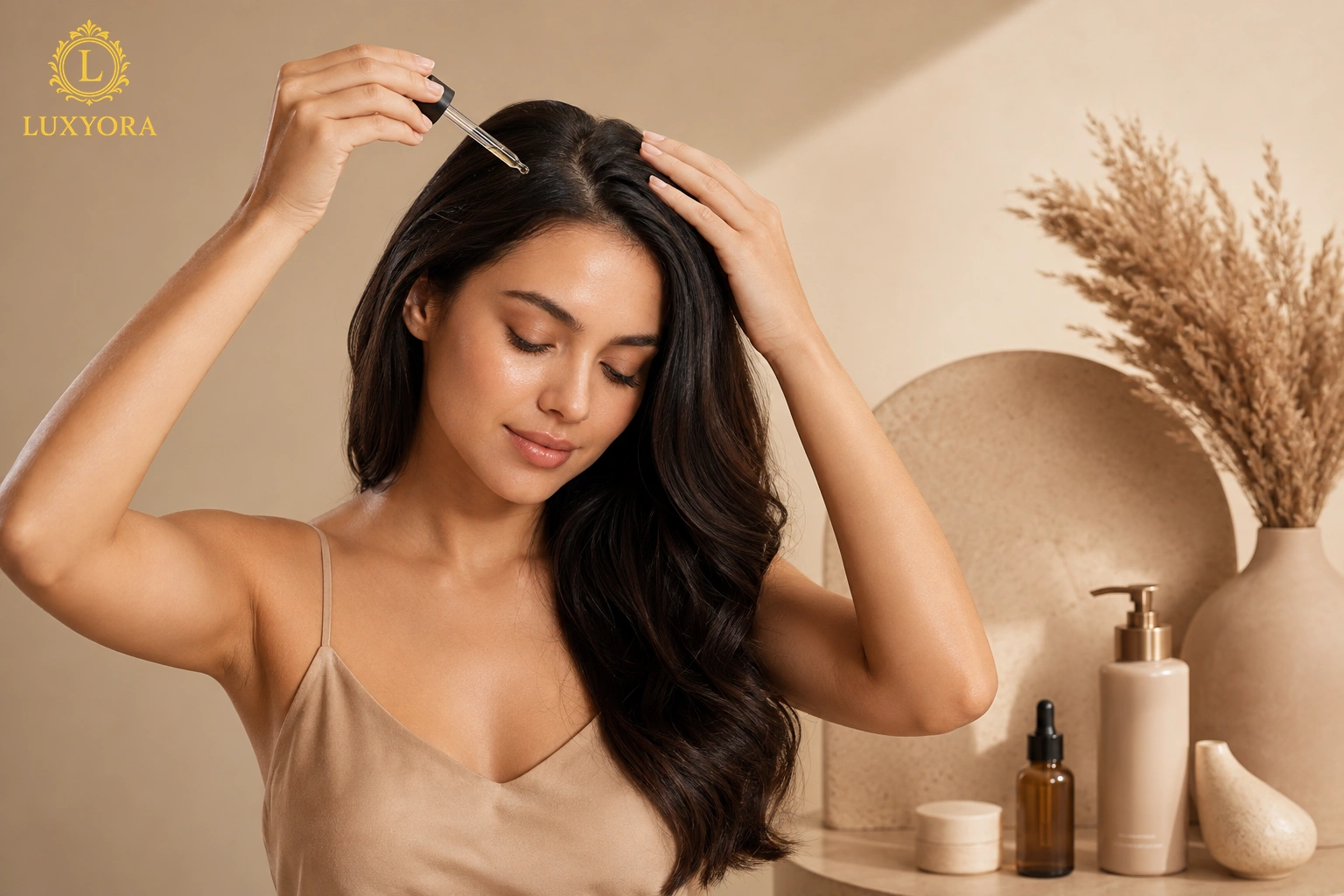
6) Hair can be a scent veil if you’re gentle
Hair holds fragrance, but alcohol-heavy sprays can be drying if you soak it.
The luxe way:
- Spritz a brush once, then comb through.
- Or use a dedicated hair mist if you have one.
This creates a soft “veil” effect, especially dreamy when you’re wearing coats, and your scent needs somewhere to live besides your skin.
7) Layer like a minimalist, not a mad scientist
Layering in cold weather is less about chaos and more about structure. You’re building a fragrance silhouette: base, shape, and a little sparkle.
A clean layering routine:
- Neutral body wash
- Unscented lotion/oil
- Your perfume
- Optional: a second, lighter scent as a “top coat” (like a bright citrus or airy floral) applied sparingly to the scarf or collar area
If you’re prone to headaches in winter (hello, heated indoor air), keep layering tight and intentional, with one main scent and one supporting touch at most.
Mastering perfume application in cold weather is only the beginning. The next step is discovering how different fragrances can work together to create something extraordinary in Layering Perfumes: The Secret to Creating Your Signature Scent
8) Reapply with precision (winter performance = controlled intensity)
Cold weather can make fragrance feel quieter outdoors, but indoors, it can suddenly feel much stronger, especially in warm, enclosed spaces.
So instead of a full respray, do a targeted refresh:
- One spray to the inner elbow or chest
- Or use a travel spray/solid perfume for a controlled touch-up
The goal is a smooth, continuous aura, not a fragrance jump-scare in the elevator.
9) Store your perfume like a treasure (because temperature swings matter)
Perfume is sensitive to heat and light, but winter adds another issue: repeated temperature changes (cold outdoors, warm indoors). Over time, that kind of fluctuation isn’t ideal for any delicate aromatic blend.
Keep bottles:
- In a cool, dark, stable place (drawer or closet beats bathroom shelf)
- Tightly capped
- Away from windows and radiators
Your fragrance should smell like the day you fell in love with it, not like a tired version of itself.
A fragrance designed to shine in winter deserves the right care all year round. Otherwise, its depth, balance, and longevity may never reach their full potential. Discover the essentials in A Complete Guide to Storing Perfume – the Right Way.
Luxyora Philosophy: Luxury fragrance isn’t about being noticed by everyone; it’s about being unforgettable to the right people. In winter, let your scent bloom slowly, like warmth under cashmere.
References:
- Benaim, C. (2018). Sillage in fine fragrance (World Perfumery Congress 2018 presentation). Perfumers Supply House.
- Glamour. (2025). Where to spray perfume for the most long-lasting scent. Glamour Magazine.
- Louw, S. (2021). Recent trends in the chromatographic analysis of volatile flavor and fragrance compounds: Annual review 2020. Wiley Analytical Science Advances.
- Perinelli, D. R., Cespi, M., Bonacucina, G., Palmieri, G. F., & Casettari, L. (2020). Encapsulation of flavours and fragrances into polymeric capsules and cyclodextrins: An overview. Molecules, 25(24), 5878.
- Rodrigues, A. E., Nogueira, I., & Faria, R. P. V. (2021). Perfume and flavor engineering: A chemical engineering perspective. Molecules, 26(11), 3095.
- Yeh, C. H., et al. (2024). Effects of storage time and temperature on the aroma and volatile compounds. Journal of Agriculture and Food Research.