Absolutes : What are Absolutes
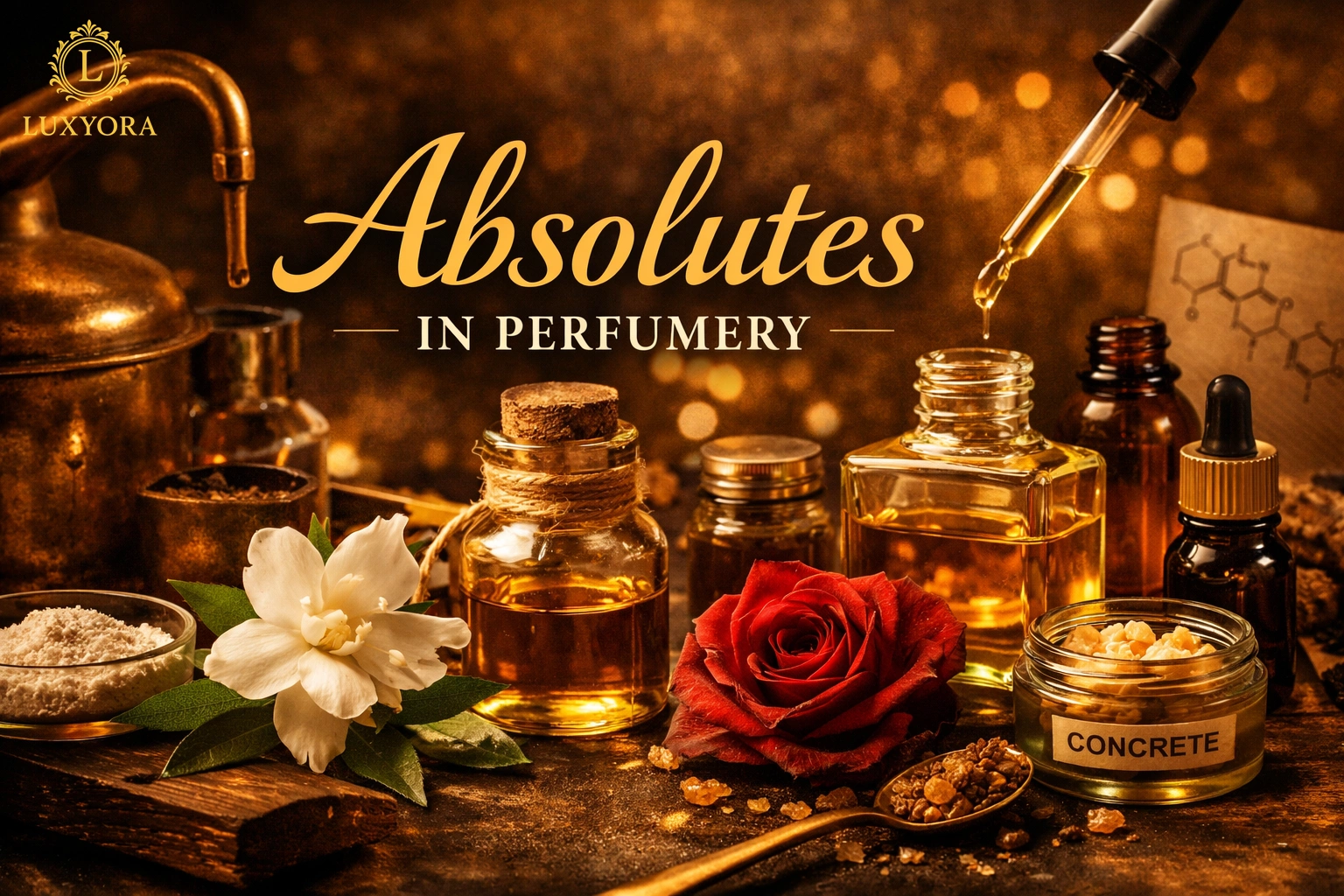
In the fragrance world, “absolutes” are prized because they capture a deep, true-to-nature aroma from delicate botanicals, often materials that don’t perform well under heat-based distillation. If you’ve ever noticed that a perfume’s jasmine feels almost alive (lush, narcotic, floral) or that rose smells more like fresh petals than “rosewater,” there’s a strong chance an absolute is part of the formula.
An absolute is best understood as a highly concentrated aromatic extract, typically produced by solvent extraction followed by alcohol processing to separate fragrance molecules from waxy plant matter.
Absolutes sit at the premium end of natural fragrance materials, used heavily in fine fragrance, luxury personal care, and niche artisanal perfumery.
What Exactly Is an “Absolute”?
An absolute is an aromatic natural raw material obtained through extraction processes that preserve fragile scent molecules (ISO, n.d.). In industry parlance, absolutes are often classified as Natural Complex Substances (NCSs) materials composed of multiple naturally occurring aromatic constituents rather than a single molecule.
Key characteristics of absolutes
- Extremely concentrated scent profile (often richer than essential oils)
- More “true-to-flower” for blossoms like jasmine, tuberose, and orange blossom
- Commonly fully soluble in alcohol, making them compatible with fine fragrance concentrates
- Often contain trace non-volatile components that add depth, warmth, and staying power
Absolutes vs. Essential Oils vs. Concretes
Understanding absolutes becomes easier when you compare them to nearby terms:
Essential oils
Essential oils are typically produced by steam/hydro distillation (or expression for citrus). Distillation can alter heat-sensitive molecules, sometimes changing the odor profile compared to the living flower.
Concrete
A concrete is the waxy intermediate created when plant material is extracted with a non-polar solvent. Concretes contain aromatic compounds plus waxes and pigments.
Absolute
An absolute is commonly obtained by washing the concrete with ethanol, chilling it, filtering out waxes, and then removing the ethanol, leaving a potent aromatic material.
How Absolutes Are Made (Industry Process, Step-by-Step)
While exact parameters vary by botanical and manufacturer, the classic process is widely described in technical literature:
- Botanical selection & harvesting
- Flowers are often harvested at specific times for optimal aroma yield.
- Solvent extraction → Concrete
- Plant matter is washed with a non-polar solvent to dissolve fragrant compounds, producing a concrete.
- Ethanol extraction → Absolute
- The concrete is dissolved in ethanol; waxes are precipitated out by chilling and filtration; ethanol is then removed to yield the absolute.
- Quality control
- Producers check aroma fidelity, chemical profile (GC-MS), and residual solvent limits.
Why this matters: solvent extraction can preserve fragile aromatics that are difficult to capture via distillation, making absolutes essential for many iconic floral notes.
Why Absolutes Matter in Perfume Formulation
Perfumers value absolutes because they deliver volume, realism, and nuance. A good jasmine absolute, for example, can give:
- bright floral top facets
- creamy, indolic depth
- tea-like, fruity undertones
Absolutes also help create signature “luxury cues” in fine fragrance complexity that’s hard to achieve with isolated aroma chemicals alone.
Common absolute families used in perfumery
- Floral: jasmine, rose, tuberose
- Mossy/woody: oakmoss-type materials (where permitted)
- Gourmand/balsamic: vanilla-type extracts, tonka-style materials
- Leafy/herbal: violet leaf-style materials, clary sage-type extracts
Quality, Safety, and Regulation: What Professionals Watch For
Residual solvents and compliance
Because many absolutes are made using solvents, residual solvent content and purity specifications matter. This is one reason reputable sourcing and testing are critical, especially for skin-contact products.
IFRA, transparency, and standardized naming
The fragrance industry uses structured nomenclature for natural complex substances (including extraction method identifiers such as “absolute”) to improve clarity in disclosure and safety assessment (IFRA, n.d.). IFRA also maintains the Transparency List, a public overview of ingredients used in fragrance formulation.
Allergens and sensitization potential
Many natural materials contain trace constituents that may trigger sensitivity in some individuals. Formulators evaluate these risks using the IFRA Standards and industry safety approaches.
Sustainability Trends Affecting Absolutes
Absolutes are powerful, but they can be resource-intensive. Key pressures shaping the category include:
- Biomass demand: producing small quantities may require large amounts of flowers.
- Solvent and energy footprint: extraction and solvent recovery add environmental load, pushing innovation toward greener processes.
- New “nature-faithful” alternatives: some suppliers are developing extraction approaches positioned as more responsible while maintaining a true-to-nature smell.
At the same time, consumer appetite for naturalness, craft, and traceable sourcing keeps absolutes highly relevant in premium fragrance narratives.
Market Context: Why the Term “Absolute” Shows Up More in Product Storytelling
Even when consumers don’t know the word “absolute,” brands use it to signal:
- premium ingredients
- botanical richness
- artisan extraction
- high-cost naturals
This aligns with continued growth in the broader perfume market in the mid-2020s, as reported by major market research publishers.
Practical Takeaways
If you work with fragrance materials, “absolute” should instantly signal:
- A solvent-extracted natural with high aromatic concentration
- Typically used in small doses for big impact
- Requires attention to specs, traceability, allergens, and safety constraints
- increasingly evaluated through a sustainability lens
Absolutes remain one of perfumery’s most valuable tools, bridging raw botanical beauty with the performance demands of modern consumer products.
References
Alves-Silva, J. M., Zuzarte, M., Gonçalves, M. J., Cavaleiro, C., & Salgueiro, L. (2021). The role of essential oils and their main compounds in the management of oral diseases. Molecules, 26(17). (PMC)
Aziz, Z. A. A., Ahmad, A., Setapar, S. H. M., Karakucuk, A., Azim, M. M., Lokhat, D., … & Ganash, M. (2018). Essential oils: Extraction techniques, pharmaceutical and therapeutic potential—A review. Current Drug Metabolism, 19(13). (PubMed)
Grand View Research. (n.d.). Perfume market size, share & trends analysis report. (Grand View Research)
IFRA. (n.d.). Nomenclature for natural complex substances on the IFRA Transparency List. (IFRA)
IFRA. (2025, July 10). IFRA launches updated Transparency List: A comprehensive overview of ingredients used in fragrance creation worldwide (Press release). (IFRA)
ISO. (n.d.). ISO 9235: Aromatic natural raw materials (terms and definitions). (ISO)
Martz, P., et al. (2023). Environmental profile of the production of fragrance ingredients used in cosmetic products: Comparative analysis of life cycle assessment and a green chemistry–based eco-design tool. Green Chemistry. (RSC Publishing)
Michailidou, F., et al. (2023). Scent and sustainability: Investigating consumer evaluations of sustainable fragrances. Food Quality and Preference. (ScienceDirect)
Premium Beauty News. (2024, February 19). Perfume ingredients: Towards more sustainable extraction processes. (Premium Beauty News)
Sadgrove, N. J. (2022). Fundamental chemistry of essential oils and volatile organic compounds, methods of analysis and authentication. Plants. (PMC)
Sell, C. S. (2019). Fundamentals of fragrance chemistry. Wiley-VCH. (Wiley)
The Business Research Company. (2026). Perfumes global market report (Market report page). (The Business Research Company)
Villa, C., et al. (2022). Microwave-assisted and conventional extractions of Rosa damascena: Comparison of rose concrete and absolute production and volatile profiles. Molecules, 27(12). (MDPI)
-