Cleaning Your Watch at Home: Do’s & Don’ts | Luxyora
Your watch lives on the most hands-on part of you, right where perfume mist lands, sunscreen migrates, coffee splashes, and “I’ll just wipe it later” becomes a lifestyle. Even the most immaculate luxury piece will quietly collect oils and dust, especially around the caseback, crown, and bracelet links. The good news: you can clean your watch at home safely. The better news: you can do it in a way that keeps it looking expensive (and keeps you away from the kind of cleaning mistakes that lead to service bills).
Consider this your chic, practical guide to what to do and what to absolutely not do when you’re freshening up your timepiece at home.
The first rule: know what you’re cleaning
Before you do anything beyond a gentle wipe, get clear on three things:
- Is it on a bracelet or leather strap? Leather and water are famously incompatible.
- Is it water-resistant and has it been tested recently? Water resistance is not a permanent promise; seals age.
- Is it vintage? Vintage pieces can have fragile seals and delicate finishes, even if they look sturdy.
If you’re unsure about any of the above, choose the “dry clean” route (microfiber only) and save the deeper clean for a professional.
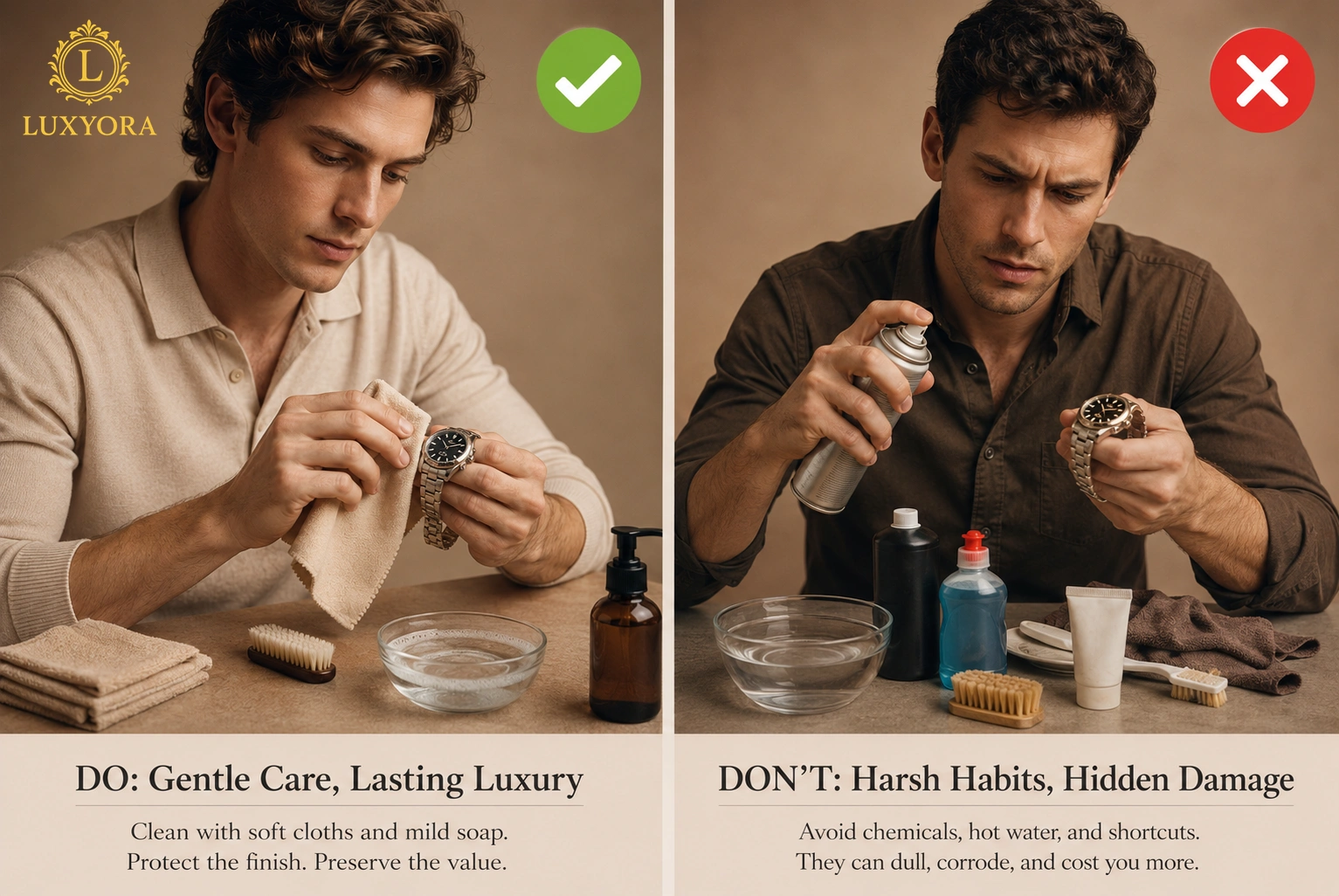
The Do’s: safe at-home cleaning that actually works
Do: make microfiber your default
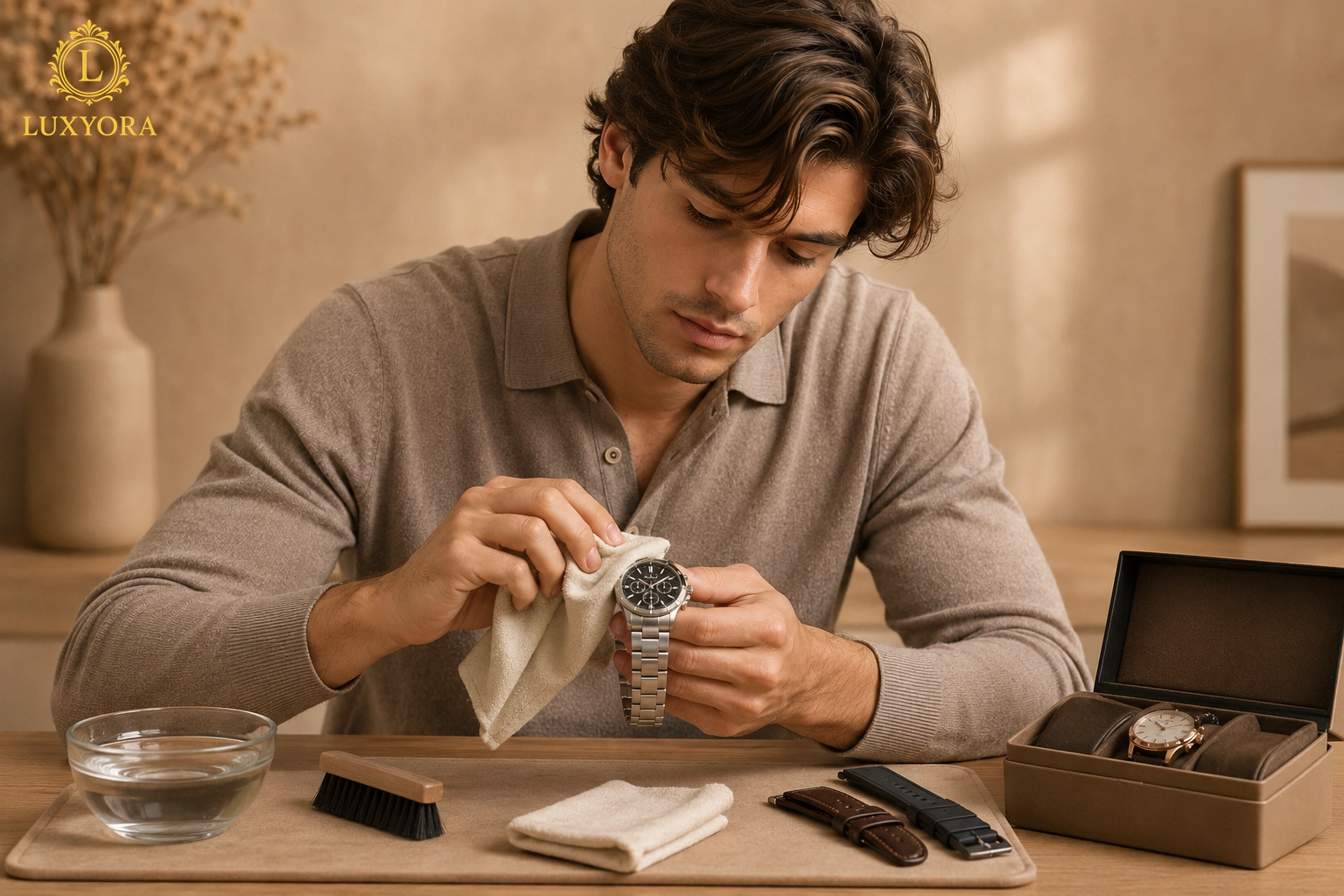
If you only adopt one habit, make it this: a quick wipe with a clean microfiber cloth after wearing. This lifts oils and fingerprints before they settle into a dull film. It’s the easiest way to keep your case, bracelet, and clasp looking crisp.
Do: use mild soap and a soft brush only when appropriate
If your watch is designed for water exposure and you’re confident the crown is fully secured, a gentle clean can be as simple as lukewarm water + mild soap + a very soft brush (think soft bristles that won’t scratch). This is especially helpful for metal bracelets, where buildup hides between links.
Keep it calm: you’re loosening grime, not scrubbing a frying pan.
Do: rinse after saltwater (and dry properly)
If you wear a water-ready watch in the sea, rinse it with fresh water afterward. Salt and sand are not “cute patina”; they’re abrasive and corrosive over time. Dry with a soft cloth and let any remaining moisture air-dry naturally.
Do: remove straps when you can
If you’re cleaning a strap (especially a fabric or rubber one), removing it from the watch head gives you better control and reduces risk. It also helps you avoid moisture getting trapped between the strap and case, an underrated source of odor and gunk buildup.
Do: clean straps based on what they’re made of
- Leather: keep it mostly dry. Wipe with a soft cloth; use leather-specific care sparingly. Let it air out between wears.
- Rubber: rinse with fresh water, mild soap if needed, then dry thoroughly.
- Fabric/NATO: mild soap + warm water works well; air-dry completely.
The Don’ts: the mistakes that quietly ruin watches
Don’t: assume “water-resistant” means “anything goes”
“Water-resistant” is not a blank check for showers, steam rooms, hot tubs, and constant immersion. Heat and sudden temperature shifts can stress seals and increase the risk of condensation. If your watch hasn’t been tested recently or is older, treat water exposure as a privilege, not a guarantee.
Don’t: clean with harsh chemicals
Avoid household cleaners, bleach, abrasive pastes, acetone-like solvents, and “miracle” sprays. These can damage finishes, degrade gaskets, discolor straps, and leave residues in crevices that are hard to remove.
Don’t: use ultrasonic cleaners at home
Ultrasonic machines can be great in professional hands, but they’re not a casual countertop toy for a fully assembled watch. They can shake loose debris into places it shouldn’t go and may stress seals and components. For bracelets alone? Sometimes. For the whole watch? Skip it.
Don’t: use hot water, hairdryers, or direct heat
Heat is not your friend. Hot water can be risky for seals. Hairdryers can push moisture deeper, warm adhesives, and stress materials. If your watch got wet, dry it gently with a cloth and allow it to air-dry.
Don’t: scrub a dusty watch with a dry cloth
This is how micro-scratches happen. If there’s visible grit, remove it gently first, either with a soft brush or a carefully controlled rinse (only if appropriate). Grinding dust into polished steel is the opposite of luxury.
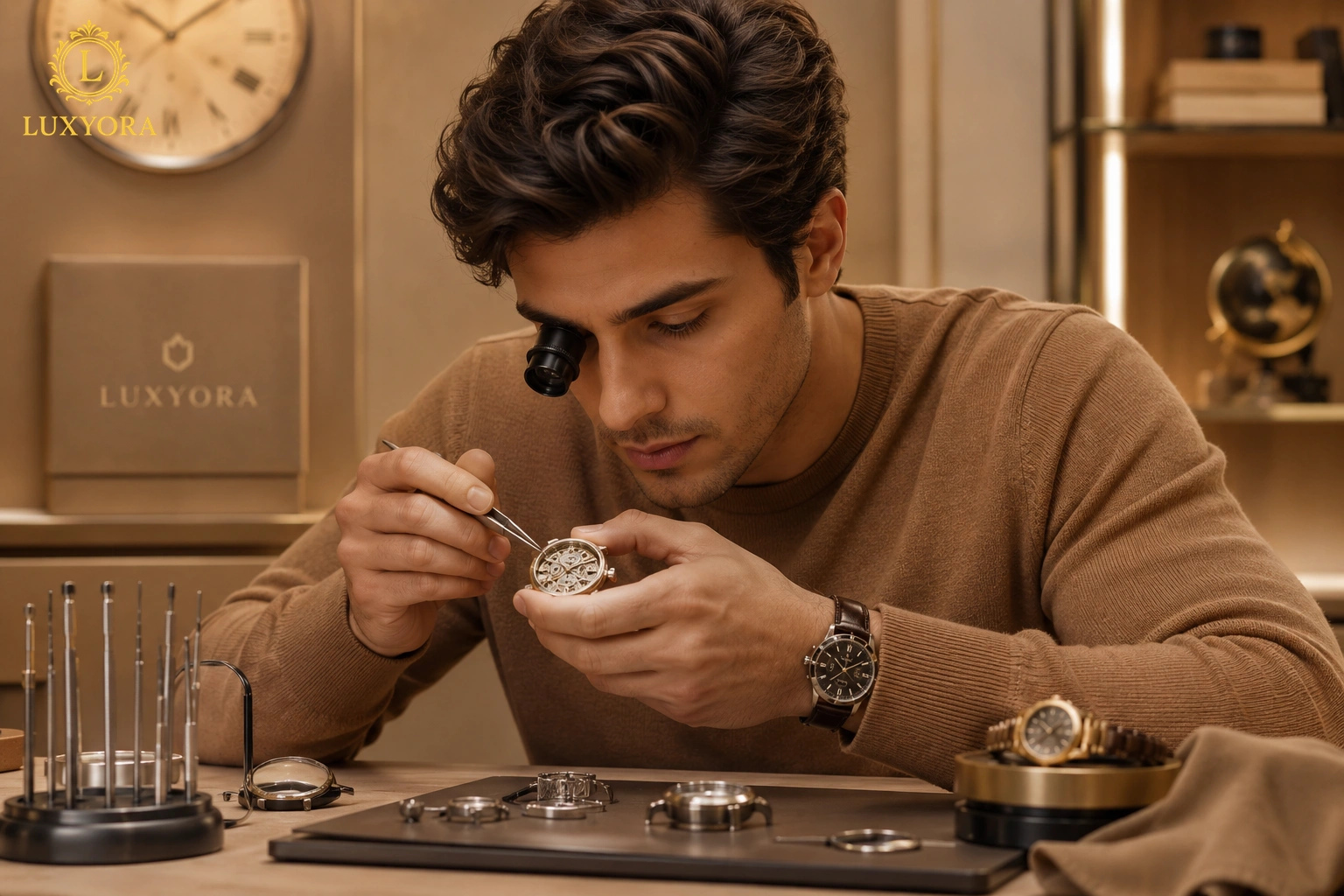
Don’t: “DIY service” your watch
Cleaning is external. Servicing is internal, and that requires the right tools, training, and a controlled environment. Opening a caseback at home introduces dust, risks seal damage, and can snowball into serious issues.
The safest at-home method (that feels luxe, not stressful)
Step 1: Set the scene
You want a clean countertop, good light, and a soft towel laid down as a “landing pad.” Remove rings if you tend to scratch metal with your hands.
Step 2: Do a dry wipe first
Use microfiber to remove oils and surface grime. For bracelets, gently work along the links.
Step 3: If water is appropriate, keep it gentle
If you’re confident in water readiness, use lukewarm water, mild soap, and a soft brush. Keep the crown secured. Avoid soaking leather straps.
Step 4: Rinse and dry thoughtfully
Rinse away soap residue, pat dry with microfiber, and let it air-dry fully before storing. Moisture trapped in bracelet links is a slow-burn problem.
Step 5: Final polish
A final microfiber wipe brings back that boutique glow, especially on polished surfaces.
When to stop and go professional
Some situations are not “home care” moments:
- Fogging/condensation under the crystal
- Crown feels loose, gritty, or difficult to operate
- You suspect water got inside
- Vintage pieces with unknown seal condition
- Deep grime buildup you can’t safely reach
Luxury is knowing when to hand it to an expert.
Luxyora Philosophy: The best watch care is the kind you do gently and consistently, with little rituals that protect beauty before anything breaks. Clean with intention, and your timepiece will keep its shine as confidently as it keeps its time.
References:
- Hodinkee. (2020, September 23). How to clean your watch. Hodinkee. (Hodinkee)
- Hodinkee. (2020, October 7). How to clean and care for your watch straps. Hodinkee. (Hodinkee)
- Rolex SA. (n.d.). Watch care and service: Caring for your Rolex. Rolex. Retrieved January 5, 2026. (Rolex)
- Rolex SA. (n.d.). Caring for your Rolex: Frequently asked questions. Rolex. Retrieved January 5, 2026. (Rolex)
- Stone, G., & Pulvirent, S. (2018). The watch, thoroughly revised: The art and craft of watchmaking. Abrams.
- Schmidt, R. (2019). The wristwatch handbook: A comprehensive guide to mechanical wristwatches. ACC Art Books.
- Casio Computer Co., Ltd. (n.d.). Water resistance: Technology. Casio. Retrieved January 5, 2026. (Casio)