The Best Shoes for High Arches | Luxyora
High arches have a certain ballerina-like elegance, an elevated curve that looks impossibly refined in a sandal selfie. But in real life? That lift can act like a stiletto built into your anatomy. With less of your foot making contact with the ground, high arches tend to absorb shock less efficiently and concentrate pressure at the heel and the ball of the foot. Translation: you can feel fabulous and still end the day feeling like your feet filed a complaint.
The good news is that the right shoes can make high arches feel less “high maintenance” and more “high comfort.” The key is choosing pairs that cushion impact, support your foot’s natural shape, and keep you stable without turning your look into a gym-class throwback.
First, a quick high-arch reality check
“High arches” can simply be your foot type, inherited like your dimples. But they can also be part of a condition called pes cavus, which can be associated with muscle imbalance and, in some cases, underlying neurologic issues. If you have frequent ankle sprains, persistent pain, numbness, or your arch seems to be getting higher over time, it’s worth getting assessed by a clinician. For everyday shopping, though, think of your arch like a diva: it needs the right entourage (shoe structure) to perform its best.
What high arches actually need from a shoe
Despite what the “more arch support is always better” myth suggests, high arches often do best with a balanced mix of cushioning, smart structure, and gentle guidance.
Here’s the checklist that matters:
1) Plush, responsive cushioning
High arches typically benefit from softer midsoles that help compensate for reduced shock absorption. Look for shoes marketed as cushioned, neutral, or comfort-focused, especially for walking and daily wear.
2) A stable heel counter
That’s the firm piece at the back of the shoe that cups your heel. It helps control wobble and can reduce that “rolling outward” feeling many high-arched walkers notice.
3) A roomy, non-pinching toe box
Pressure points are not a personality trait. High arches can come with clawing or toe tension for some people, so give your forefoot space to relax.
4) A supportive (not rigid) platform
A broad, stable base can help distribute load more evenly. You’re looking for “secure and grounded,” not “stiff as a board.”
5) Orthotic-friendly design
Even if you don’t wear custom inserts, choosing shoes with removable insoles gives you flexibility. Over-the-counter orthotics can help many people, and custom orthoses may be recommended for symptomatic pes cavus.
6) Flex in the right place
A shoe should bend at the forefoot (where your toes naturally push off), not fold in the middle like a paperback. That midfoot collapse can make high arches work harder.
The best shoe “types” for high arches (and how to shop them)
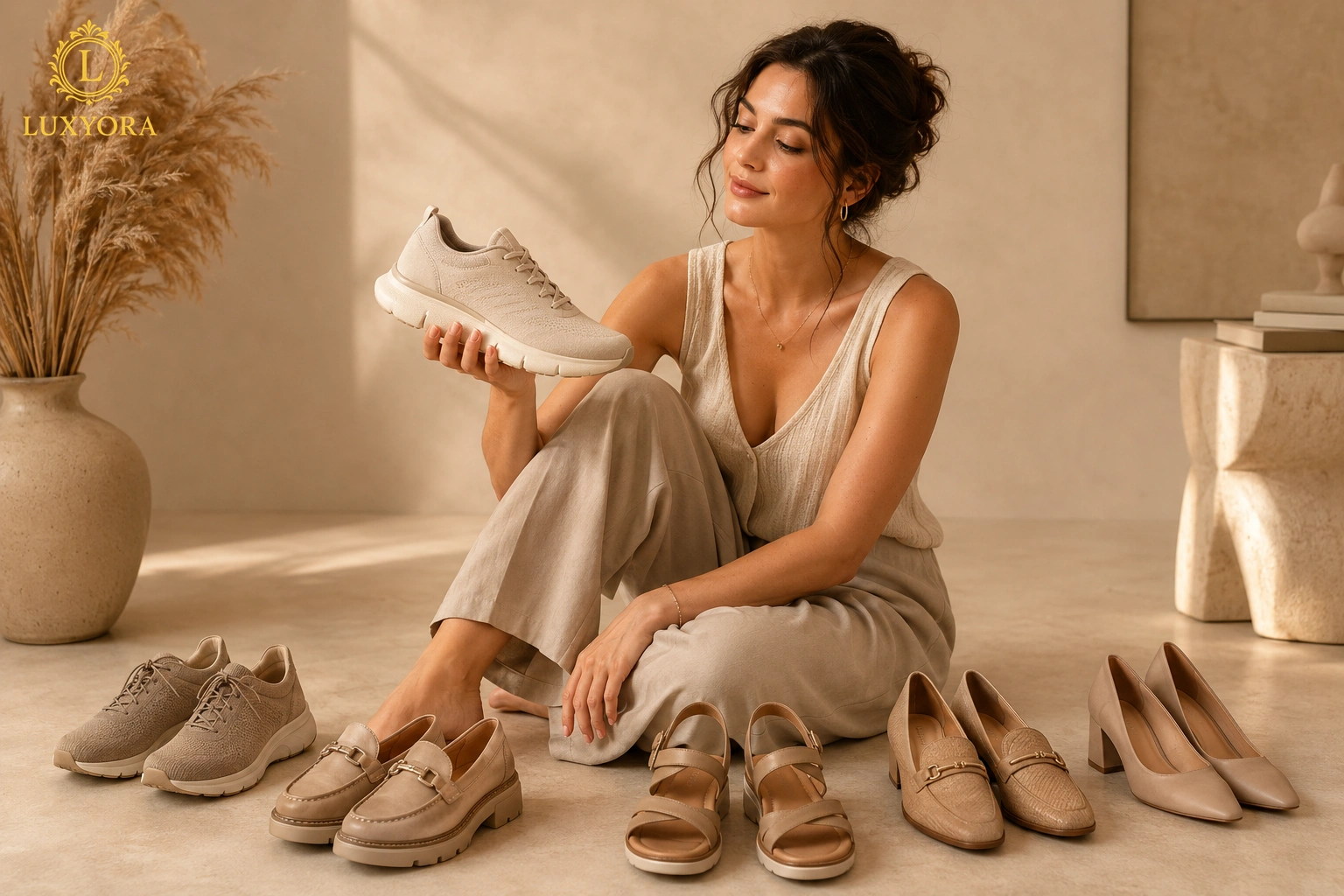
The Cloud-Cushioned Sneaker
If your ideal day involves errands, airport terminals, or walking meetings, a cushioned sneaker is your everyday hero. Look for:
- A soft midsole with visible cushioning
- A stable heel and a secure midfoot
- A neutral footbed that doesn’t aggressively “push” your arch
Style tip for a luxury-leaning wardrobe: pick sleek monochrome uppers, refined textures (leather, suede, knit with minimal branding), and sculptural soles that read modern—not marathon.
The Polished Walking Shoe That Doesn’t Look Like One
Yes, walking shoes can be chic. The trick is choosing pairs with hidden performance: supportive construction, cushioning, and a smooth silhouette. Prioritize:
- A straight, stable feel underfoot
- A confident heel cup
- A comfortable collar that doesn’t rub
These are the pairs you’ll wear with wide-leg trousers, a trench, and the kind of nonchalant ease that implies you hydrate and sleep eight hours (even if you don’t).
The Loafer With a Secret
Loafers are the ultimate “I’m put together” shoe until they’re hard as marble. For high arches, choose loafers with:
- Built-in cushioning or a removable insole
- A slightly thicker outsole (thin leather soles can feel unforgiving)
- Enough depth so your foot isn’t perched on top of the shoe
If a loafer feels stiff in the arch area but offers no cushioning, it may create pressure rather than relief. Your goal is elegance with a soft landing.
Sandals That Support Without Screaming “Orthopedic”
For warm-weather dressing, look for sandals with:
- Contoured footbeds that cradle rather than poke
- A supportive sole with some shock absorption
- Adjustable straps (a high arch can change how your foot sits in a sandal)
A supportive sandal should feel like it’s carrying you quietly through the day.
Heels: Yes, You Can, But Choose Wisely
High arches and heels can be a dramatic duo. If you wear heels, opt for:
- Lower heel heights or a platform that reduces the effective pitch
- Cushioning under the forefoot
- A stable heel shape (block > needle, especially for long wear)
- A secure fit at the heel and midfoot to reduce sliding
Think of it as architecture: stable base, balanced angles, luxe materials.
Fit tips that change everything
- Shop later in the day. Feet swell; you want your real-life size, not your morning fantasy.
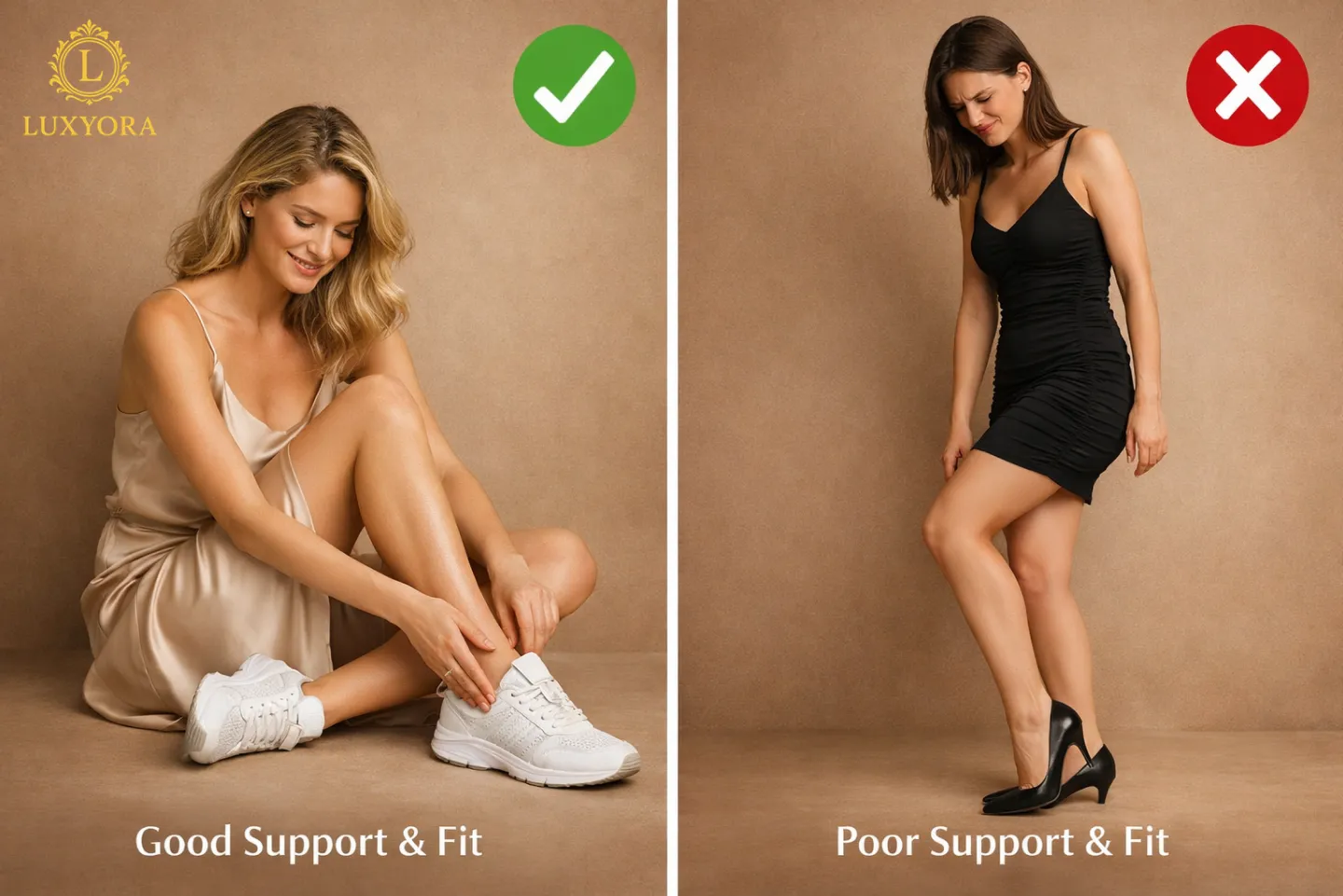
- Walk a full minute in-store. Your arch should feel supported and cushioned, not “pressed.”
- Test the heel. If your heel slips, your foot will tense up to compensate.
- Bring your inserts if you use them. A shoe can be perfect until your orthotic makes it too tight.
- Don’t ignore recurring ankle sprains. High arches can be associated with instability; stability features matter.
When to consider orthotics
If you have persistent pain at the heel or ball of the foot, repeated ankle issues, or you’re on your feet for work, inserts can help redistribute pressure and improve comfort. Many people do well with quality over-the-counter options, while others benefit from custom orthoses prescribed by a professional, especially when high arches are symptomatic.
Luxyora Philosophy: Luxury is never just how something looks; it’s how it supports your life. Choose shoes that let your high arches feel held, effortless, and quietly unstoppable.
References:
- American Podiatric Medical Association. (n.d.). Which running shoe is right for you? APMA (content accessed 2026).
- American Podiatric Medical Association. (2024). Choosing a running shoe [Fact sheet]. APMA.
- Cleveland Clinic. (2024, November 17). High arch feet (pes cavus): Causes, symptoms & treatment. Cleveland Clinic Health Library.
- Mayo Clinic Health System. (2022, March 23). How to determine your foot arch type. Mayo Clinic Health System.
- Qin, B., Wei, J., Zhang, Y., & colleagues. (2022). Evaluation and management of cavus foot in adults. Journal of Clinical Medicine, 11(13), 3679.
- Seaman, T. J., & colleagues. (2023). Pes cavus. In StatPearls. StatPearls Publishing.