Haircare Myths You Should Stop Believing | Luxyora
Hair advice travels faster than your dry shampoo can rescue a third-day blowout. One person swears by ice-cold rinses, another insists trims “make hair grow,” and someone on the internet is still doing 100 brush strokes like it’s a Victorian finishing school ritual. The problem isn’t that hair myths are dramatic (they are). It’s that they’re sticky: once a rule sounds intuitive, we repeat it forever, usually without checking whether it matches how hair and scalp biology actually work.
So let’s do the chic thing: retire the myths that sabotage your lengths, your scalp, and your sanity and replace them with what actually makes hair look expensive.
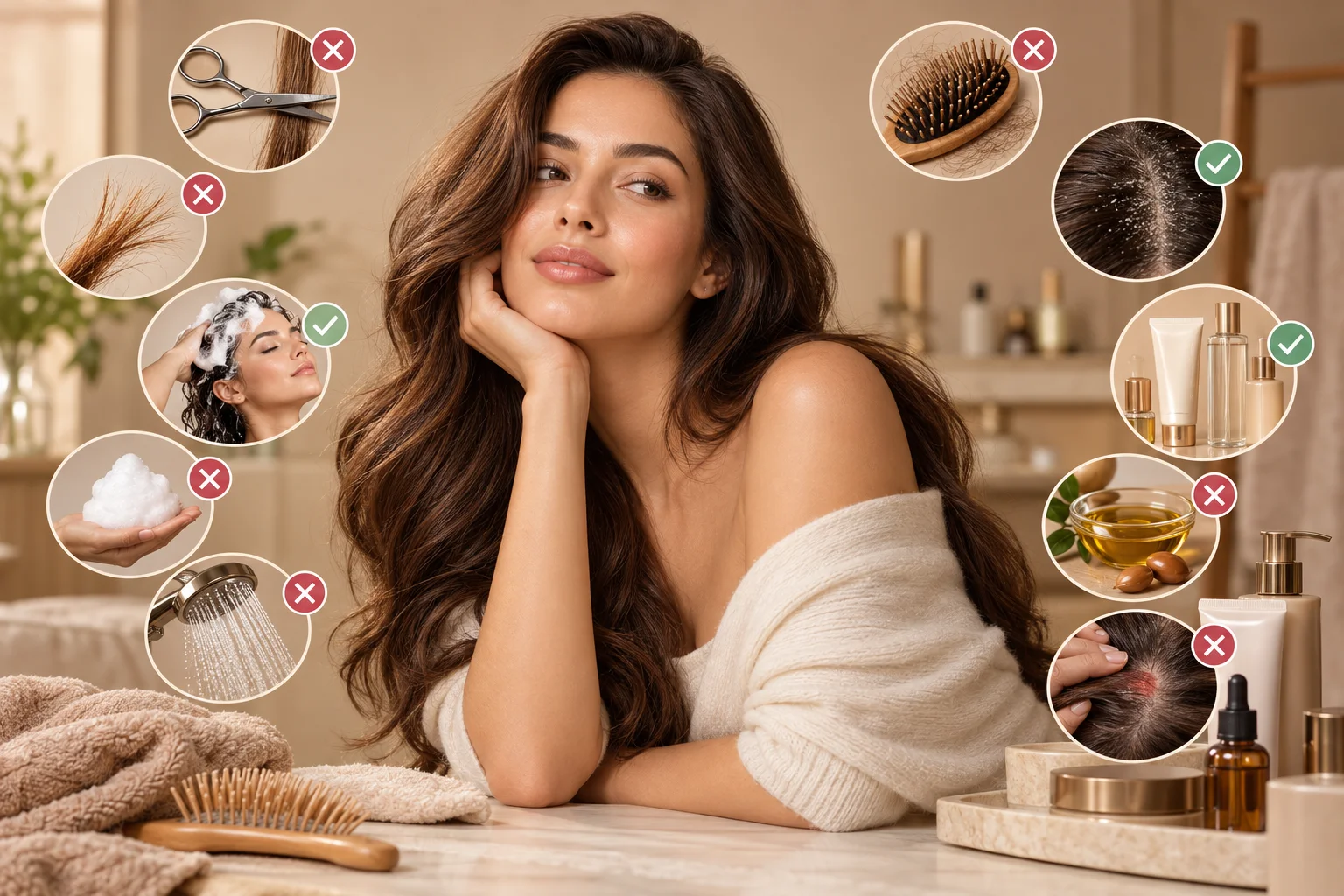
Myth 1: “Trimming makes your hair grow faster.”
Reality: Trimming doesn’t change what happens at the follicle. Genetics, hormones, health, and time drive hair growth. What trims do change is how long you can keep your length looking polished. Regular micro-trims remove split ends and prevent splits from travelling upward, thereby helping hair retain length and appear thicker at the ends.
Trims don’t speed up growth; they stop your ends from unravelling like a luxury knit.
Myth 2: “Split ends can be repaired.”
Reality: Once the fibre splits, it’s physically broken. Conditioners and serums can temporarily smooth and “seal” the appearance, but they don’t fuse the strands back together permanently. Cutting off the damaged portion is the only true reset.
What to do instead:
Use conditioning and gentle handling to prevent split ends in the first place, especially by minimising towel friction and rough detangling. The repair fantasy is cute; prevention is couture.
Myth 3: “Washing your hair too often causes hair loss.”
Reality: Washing doesn’t make follicles stop producing hair. People often notice that shedding hairs that were already in the shedding phase are finally released during washing. In fact, research and clinical discussions on hair-care “preconceived ideas” indicate that infrequent washing can lead to sebum buildup and irritation. In contrast, frequent washing with a mild shampoo can support scalp comfort and hair condition for many people.
And dermatologists don’t push a one-size schedule: wash based on oiliness, lifestyle, and hair type. Some scalps benefit from frequent cleansing, whereas drier textures may tolerate longer intervals between washes.
Your scalp is skin. Treat it like skin: cleanse when needed.
Myth 4: “The more foam, the cleaner your hair.”
Reality: Lather is not a cleanliness meter; it’s just how certain surfactants behave. A shampoo can be effective with modest foam, and a super-foamy shampoo can still be too harsh for your hair. Modern hair-care science reviews emphasize formulation choices (surfactants + conditioning agents + polymers) matter more than the bubble show.
What to do instead:
Choose shampoo by scalp needs (oil, flakes, sensitivity) and hair texture, not by whether it looks like a bubble bath.
Myth 5: “Cold water ‘closes’ your hair cuticle for shine.”
Reality: Hair isn’t a living pore you can open and close like a camera aperture. Water, hot or cold, interacts with the fibre, and shine is mostly about surface smoothness (conditioners, film-formers, reduced friction), not temperature theatrics. A widely cited beauty-science debunk notes that cold rinsing doesn’t reliably increase shine and can even leave more residue compared with warmer rinsing, depending on the formula.
Note: This is one of the few commonly referenced sources on the specific “cold rinse = shinier” claim; it’s slightly older than your preferred window, but it remains directly relevant to the myth.
If you want shine, focus on conditioning + gentle drying + finishing serum, not suffering through arctic showers.
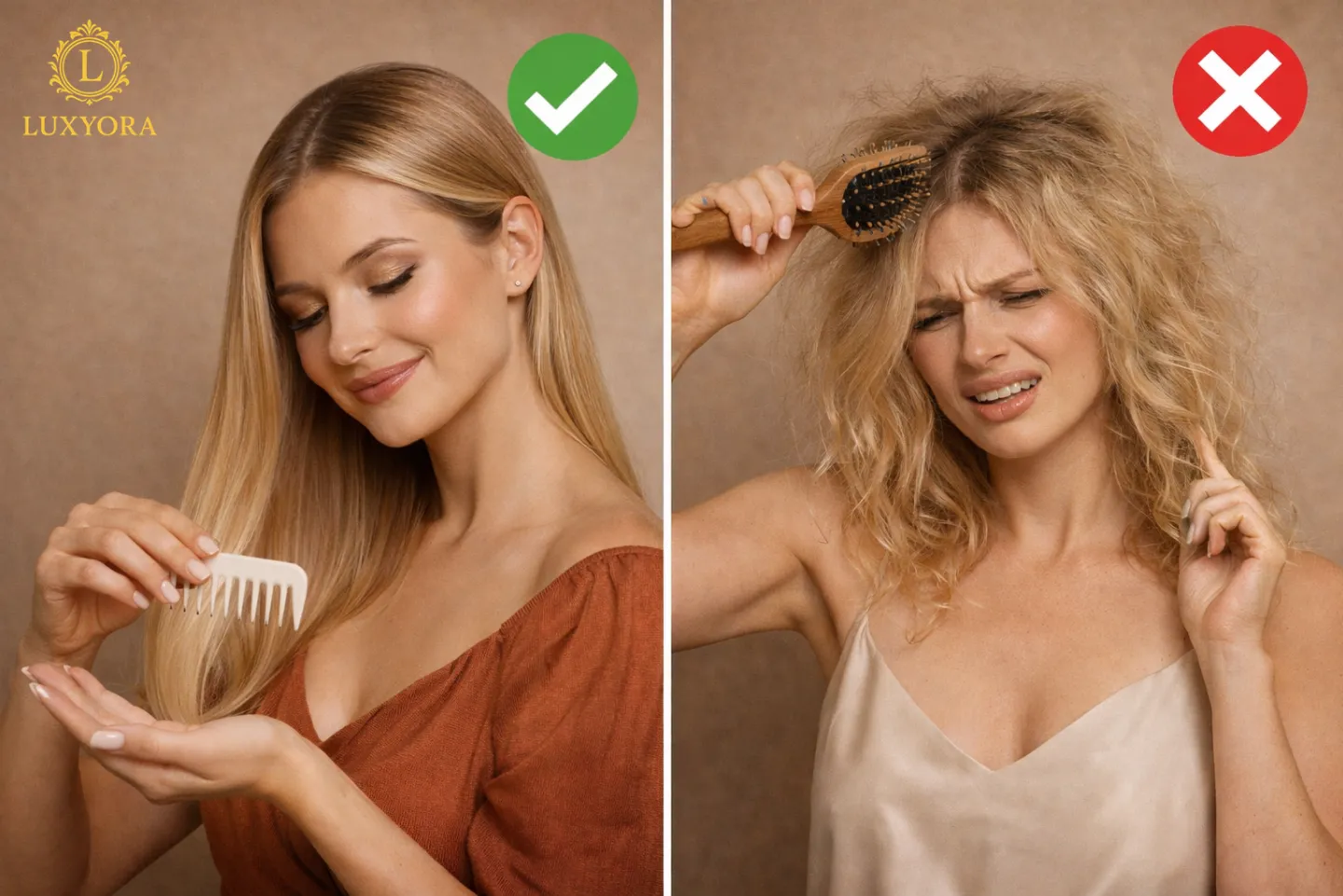
Myth 6: “Brushing 100 strokes a day makes hair healthier.”
Reality: Brushing can distribute oils along the strand and help with detangling, but aggressive or excessive brushing increases friction and breakage, especially on fragile, textured, or chemically treated hair. Hair-care myth research explicitly highlights the need for gentle, moderate brushing to avoid excessive loss and damage.
What to do instead: Detangle strategically:
- Use a wide-tooth comb on wet hair (especially with conditioner slip).
- Use a brush designed for detangling on damp-to-dry hair if your texture tolerates it.
- Start at the ends and work up.
Myth 7: “Dandruff is just a dry scalp.”
Reality: Dry scalp and dandruff can appear similar, but dandruff is commonly associated with inflammation and microbiome imbalance, often involving Malassezia yeast rather than simple dryness alone.
What to do instead: If flakes are greasy/yellowish or accompanied by itch and redness, consider an anti-dandruff shampoo active (like ketoconazole, selenium sulfide, zinc pyrithione) and consistent use. And if it’s persistent, a dermatologist can confirm whether it’s dandruff, seborrheic dermatitis, psoriasis, or something else.
Flakes aren’t a moral failing. They’re a scalp condition.
Myth 8: “Silicones are always bad for hair.”
Reality: Silicones are tools. They can improve slip, reduce friction, add shine, and protect against heat and humidity by forming a lightweight film, especially helpful for frizz control and damaged ends. The “always bad” narrative is oversimplified; the real story is product choice, hair type, buildup risk, and how you cleanse.
What to do instead: If silicones work for you, use them. If you notice heaviness, clarify occasionally and adjust how much you apply.
Myth 9: “Natural oils can ‘cure’ damage.”
Reality: Oils can reduce friction and help hair feel softer, and some oils can reduce protein loss under certain conditions, but oils don’t rebuild a severely damaged cuticle the way a time machine doesn’t un-text a bad ex. Hair surface science emphasises that the hair fibre’s condition is largely about the surface chemistry and how it’s treated (friction, heat, chemical processes), not a single miracle ingredient.
Oils are accessories. They’re not surgery.
Myth 10: “If a product burns or tingles, it means it’s working.”
Reality: On the scalp, burning often means irritation, especially with overuse of strong actives or fragrance-heavy formulas. Hair and scalp care should feel comfortable. When in doubt, gentler is smarter, and chronic irritation is a sign to scale back or get professional guidance.
Luxyora Philosophy: Your best hair isn’t built on rigid rules, it’s built on understanding. When you swap myths for science and treat hair like a luxury fabric, cleanse, condition, and protect, you get results that look effortless anywhere.
References:
- American Academy of Dermatology Association. (2024, August 12). Tips for healthy hair: Healthy hair care tips from dermatologists. (American Academy of Dermatology)
- Belcadi, J., et al. (2025). Preconceived ideas in hair care. International Journal of Women’s Dermatology (via PubMed Central). (PMC)
- Carvalho, R. M., et al. (2025). With or without silicones? A comprehensive review of silicones in hair care. Skin Appendage Disorders. (Karger Publishers)
- Galizia, G., et al. (2024). Seborrheic dermatitis: From microbiome and skin barrier to therapeutic challenges and opportunities. Cosmetics, 11(6), 208. (MDPI)
- Gubitosa, J., et al. (2019). Hair care cosmetics: From traditional shampoo to solid shampoo. Cosmetics, 6(1), 13. (MDPI)
- Luengo, G. S., et al. (2021). Surface science of cosmetic substrates, cleansing actives and formulations: A review. Colloids and Surfaces A: Physicochemical and Engineering Aspects. (ScienceDirect)
- Triviño, F. J. N., et al. (2025). Seborrheic dermatitis revisited: Pathophysiology, diagnosis, and management. (via PubMed Central). (PMC)
- Older but directly relevant to the cold-rinse myth:
Allure. (2016). Will a cold rinse make your hair shinier? (Allure)