Ambergris : What Is Ambergris?
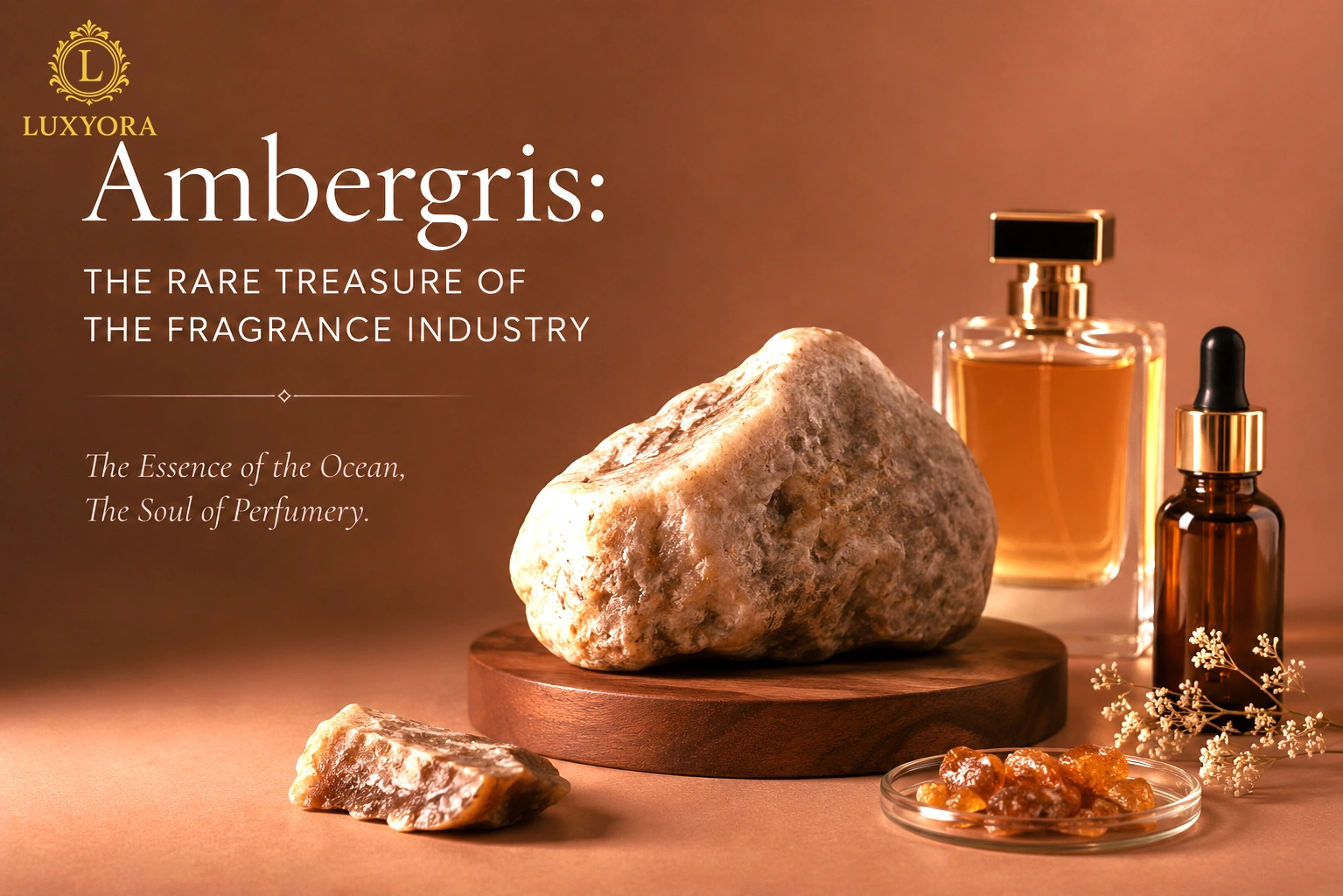
Ambergris is one of the most fascinating and mysterious ingredients ever associated with the fragrance industry. Often referred to as “floating gold” or the “treasure of the sea,” ambergris has captivated perfumers, collectors, traders, and fragrance enthusiasts for centuries. Despite its unusual origin, ambergris remains one of the most celebrated materials in luxury perfumery because of its remarkable scent profile and exceptional ability to enhance fragrance longevity.
In today’s fragrance market, natural ambergris is extremely rare, highly regulated, and often replaced by sophisticated synthetic alternatives. Yet its influence on modern perfumery remains undeniable. Understanding ambergris provides valuable insight into fragrance creation, luxury perfume craftsmanship, and the evolution of scent technology.
This article explores everything you need to know about ambergris, including its origins, fragrance characteristics, role in perfume making, legal considerations, industry applications, alternatives, and practical examples of how it impacts modern fragrance development.
What Is Ambergris?
Ambergris is a waxy, solid substance produced within the digestive system of the sperm whale. Scientists believe it forms as a protective mechanism when indigestible materials, such as squid beaks, irritate the whale’s intestines. Over time, this material is expelled into the ocean, where it undergoes a lengthy transformation process.
Freshly expelled ambergris has a strong and unpleasant odor. However, after floating in seawater for months or even years, exposure to sunlight, oxidation, saltwater, and environmental conditions gradually transforms it into a highly prized fragrant substance.
Mature ambergris develops a unique scent often described as:
- Sweet
- Warm
- Marine
- Earthy
- Musky
- Animalic
- Tobacco-like
- Slightly woody
Its complexity makes it nearly impossible to replicate perfectly, which is one reason it became legendary within perfumery.
The History of Ambergris in Perfumery
Ambergris has been used for hundreds of years across various cultures. Historical records indicate that it was valued in:
Ancient Arabia
Arab traders were among the earliest known collectors and users of ambergris. It was incorporated into perfumes, medicines, and ceremonial products.
Renaissance Europe
By the Renaissance period, ambergris became a luxury commodity among European royalty and aristocrats. It was frequently used in perfumes, scented gloves, and personal care products.
Traditional Medicine
Several historical medical systems considered ambergris beneficial for health and vitality. Although these medicinal claims lack modern scientific validation, they contributed significantly to ambergris’s popularity and value.
As perfume making evolved into a sophisticated art form, ambergris became one of the most coveted fragrance ingredients available.
Why Ambergris Is So Valuable
Ambergris is among the most expensive raw materials in the fragrance industry. Several factors contribute to its exceptional value.
Extreme Rarity
Only a small percentage of sperm whales produce ambergris. Furthermore, only a tiny fraction of expelled ambergris is ever discovered by humans.
Long Natural Aging Process
The transformation from fresh ambergris to perfumery-grade ambergris can take years. This lengthy maturation contributes significantly to its scarcity.
Unique Fragrance Properties
Ambergris possesses characteristics that perfumers struggle to duplicate entirely through synthetic chemistry.
Exceptional Fixative Ability
One of ambergris’s most important qualities is its ability to stabilize and extend the lifespan of fragrances. It helps perfume ingredients evaporate more slowly, resulting in improved longevity on the skin.
These factors have made high-quality ambergris worth thousands of dollars per kilogram in some markets.
How Ambergris Smells
Many people are surprised to learn that ambergris does not smell like a typical perfume ingredient.
Its aroma evolves depending on age, quality, and environmental exposure.
Common scent descriptions include:
- Salty ocean breeze
- Soft musk
- Warm skin scent
- Sweet tobacco
- Dry wood
- Earthy resin
- Marine freshness
- Subtle animalic notes
The scent is often described as smooth, sophisticated, and impossible to define with a single fragrance category.
Professional perfumers frequently value ambergris not only for its smell but also for the way it blends and harmonizes other ingredients.
Ambergris as a Fragrance Fixative
One of ambergris’s greatest contributions to perfumery is its role as a fixative.
A fixative slows the evaporation rate of volatile fragrance molecules. This allows perfumes to maintain their intended scent profile for longer periods.
Benefits of Ambergris as a Fixative
- Enhances fragrance longevity
- Creates smoother scent transitions
- Improves ingredient harmony
- Adds depth and complexity
- Supports long-lasting dry-down performance
Many luxury fragrance houses historically relied on ambergris to improve perfume quality and performance.
Ambergris in Modern Perfumery
Modern fragrance development has changed significantly over the last century.
Today, most perfumes no longer use natural ambergris because:
- Supplies are extremely limited
- Costs are exceptionally high
- Regulations vary by country
- Sustainability concerns influence ingredient sourcing
Instead, perfumers often use synthetic molecules inspired by ambergris.
Popular ambergris-inspired materials include:
Ambroxan
Ambroxan is perhaps the most famous ambergris substitute. It delivers a warm, woody, musky profile while providing excellent longevity.
Cetalox
Cetalox is widely used in modern niche and designer fragrances to recreate ambergris-like effects.
Ambermax
This modern aroma chemical offers powerful projection and long-lasting ambergris-inspired characteristics.
These ingredients enable fragrance companies to achieve similar performance without relying on scarce natural resources.
The Science Behind Ambergris Fragrance
The characteristic scent of ambergris originates primarily from a compound called ambrein.
Ambrein itself is relatively odorless. However, during oxidation and environmental aging, it breaks down into aromatic compounds that contribute to ambergris’s distinctive fragrance profile.
Researchers continue studying these compounds to better understand:
- Fragrance chemistry
- Olfactory perception
- Long-lasting scent mechanisms
- Synthetic fragrance development
This scientific knowledge has led to major advances in modern perfumery.
Legal Status of Ambergris Around the World
Ambergris occupies a unique position in international trade.
Countries Where Trade May Be Allowed
Some nations permit the possession and sale of naturally found ambergris because it is considered a waste product rather than a whale-derived body part.
Countries With Restrictions
Other jurisdictions prohibit the ambergris trade due to whale conservation laws and wildlife protection regulations.
For fragrance businesses, understanding local regulations is essential before sourcing or selling ambergris-containing products.
Industry Best Practice
Most modern fragrance companies avoid legal uncertainty by using synthetic ambergris alternatives that comply with international fragrance regulations.
Practical Example: Creating a Luxury Ambergris-Inspired Fragrance
Consider a niche perfume brand developing a premium marine fragrance.
Without ambergris, the composition may smell fresh initially but fade quickly.
By incorporating an ambergris-inspired accord, the perfumer can achieve:
- Greater depth
- Improved longevity
- Enhanced warmth
- Better blending between top, heart, and base notes
Example structure:
Top Notes
Heart Notes
Base Notes
The result is a sophisticated fragrance that retains the spirit of traditional ambergris while meeting modern industry standards.
Practical Tips for Fragrance Enthusiasts
If you are interested in perfumes featuring ambergris-inspired notes, consider the following tips.
Learn the Ingredient Names
Many modern fragrances use:
- Ambroxan
- Cetalox
- Amberwood molecules
- Synthetic amber accords
Understanding these ingredients can help identify ambergris-inspired fragrances.
Test on Skin
Ambergris-style materials often react differently on individual skin chemistry. Always test before purchasing.
Evaluate Dry-Down Performance
The magic of ambergris-like ingredients typically emerges during the dry-down phase several hours after application.
Explore Niche Fragrances
Many niche perfume houses emphasize ambergris-inspired compositions because of their complexity and sophistication.
Common Misconceptions About Ambergris
Several myths surround ambergris.
Myth 1: Ambergris Is Whale Vomit
This is one of the most widespread misconceptions. Scientific evidence suggests ambergris forms within the digestive system and is generally expelled through intestinal processes rather than vomiting.
Myth 2: All Luxury Perfumes Use Real Ambergris
Most modern perfumes use synthetic alternatives due to cost, availability, and regulatory considerations.
Myth 3: Ambergris Smells Bad
Fresh ambergris can smell unpleasant. Properly aged ambergris develops the complex aroma prized by perfumers.
Myth 4: Ambergris Is Easy to Find
Authentic ambergris is extremely rare, making genuine discoveries highly unusual.
Sustainability and the Future of Ambergris
The fragrance industry increasingly prioritizes sustainability, ethical sourcing, and environmental responsibility.
Modern fragrance innovation focuses on:
- Biotechnology
- Green chemistry
- Renewable aroma materials
- Sustainable fragrance production
As technology advances, perfumers continue developing sophisticated alternatives that capture the beauty of ambergris while minimizing ecological concerns.
These innovations allow fragrance brands to preserve the olfactory legacy of ambergris without relying on unpredictable natural supply chains.
The Future Role of Ambergris in Luxury Fragrance
Although natural ambergris remains one of perfumery’s most legendary materials, its future role will likely continue shifting toward inspiration rather than direct usage.
Synthetic ambergris accords now offer:
- Consistent quality
- Greater accessibility
- Regulatory compliance
- Sustainable sourcing
- Scalable production
However, the mystique of natural ambergris continues to influence luxury perfume storytelling, fragrance marketing, and niche perfumery culture.
Conclusion
Ambergris remains one of the most intriguing and influential substances in the fragrance industry. Its rare origin, remarkable scent evolution, and exceptional fixative properties have earned it a legendary reputation among perfumers and fragrance enthusiasts worldwide.
While natural ambergris is now rarely used due to scarcity, legal considerations, and sustainability concerns, its impact continues through innovative synthetic alternatives such as Ambroxan and Cetalox. These modern materials preserve the warm, marine, musky elegance associated with ambergris while supporting contemporary fragrance development.
For anyone seeking a deeper understanding of luxury perfumery, fragrance formulation, and scent longevity, ambergris represents an essential chapter in the story of perfume craftsmanship. Its legacy continues to shape the future of fragrance innovation, proving that even the rarest natural treasures can inspire generations of perfumers.
References
Burr, C. (2022). The Perfect Scent: A Year Inside the Perfume Industry in Paris and New York (Updated ed.). Picador.
Calkin, R. R., & Jellinek, J. S. (2021). Perfumery: Practice and Principles (2nd ed.). Wiley.
Corley, R. A., & Kasting, G. B. (2020). Advances in fragrance chemistry and ingredient performance. International Journal of Cosmetic Science, 42(5), 421–432.
Kraft, P., Bajgrowicz, J. A., Denis, C., & Fráter, G. (2019). Odds and trends: Recent developments in the chemistry of odorants. Angewandte Chemie International Edition, 58(2), 552–574.
Sell, C. S. (2019). The Chemistry of Fragrances: From Perfumer to Consumer (3rd ed.). Royal Society of Chemistry.
Steffen, A., & Hummel, T. (2021). Fragrance materials and olfactory perception in modern perfumery. Flavour and Fragrance Journal, 36(4), 381–394.
Swan, M. (2023). Ambergris in contemporary perfumery: History, chemistry, and sustainability challenges. Perfumer & Flavorist, 48(7), 24–31.
The International Fragrance Association (IFRA). (2024). Guidance on fragrance ingredient safety and sustainability. IFRA Standards Publication.
Vannuccini, S. (2018). The World of Perfume: From Ancient Traditions to Modern Innovations. Thames & Hudson.
Wright, S. (2022). Synthetic ambergris materials and their role in modern fine fragrance creation. Journal of Cosmetic Science, 73(6), 315–327.