Grained Leather : What is Grained Leather?
Grained leather is one of the most widely used and highly valued materials in the fashion industry. From luxury handbags and premium footwear to designer jackets and sophisticated accessories, grained leather has become a staple in modern fashion because of its distinctive texture, durability, and timeless appeal. Whether consumers are purchasing a luxury handbag or a pair of premium boots, understanding grained leather helps them make informed buying decisions and appreciate the craftsmanship behind quality leather products.
In today’s competitive fashion market, leather terminology can often be confusing. Terms such as full-grain leather, corrected grain leather, pebble grain leather, and embossed grain leather are frequently used by brands and retailers. However, not all consumers fully understand what these terms mean or how they affect product quality, appearance, and longevity.
This comprehensive guide explores everything about grained leather, including its manufacturing process, types, advantages, disadvantages, practical applications, and how it compares to other leather varieties commonly used in fashion.
What Is Grained Leather?
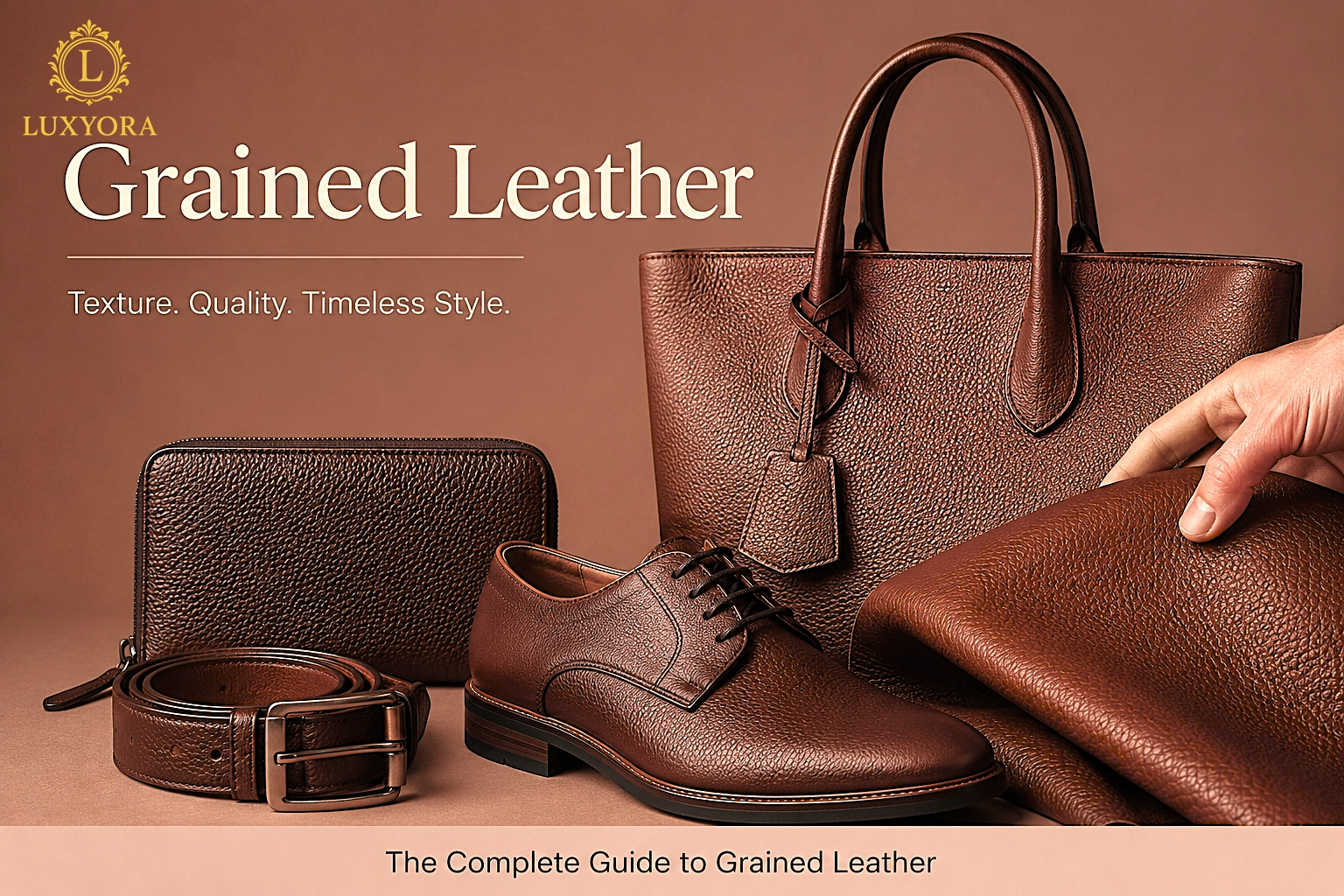
Grained leather refers to leather that displays a visible surface texture or pattern known as the “grain.” The grain is the outermost layer of the animal hide and contains natural markings, pores, and fibers that contribute to the leather’s appearance and strength.
Depending on how the leather is processed, the grain may be left natural, enhanced, corrected, or artificially embossed to create a specific texture. The resulting surface can range from subtle natural patterns to highly pronounced pebble-like textures.
In the fashion industry, grained leather is appreciated because it provides:
- Enhanced durability
- Better resistance to scratches
- A luxurious appearance
- Improved texture and tactile appeal
- Long-lasting performance
The term “grained leather” does not automatically indicate a specific quality level. Instead, it describes the textured surface of the leather.
Understanding the Grain Layer of Leather
To understand grained leather, it is important to understand the structure of animal hides.
The Main Layers of Leather
Leather is generally divided into several layers:
Grain Layer
The grain layer is the strongest and most durable part of the hide. It contains tightly packed fibers and natural markings.
Corium Layer
Located beneath the grain layer, this section contains looser fibers and contributes flexibility.
Flesh Layer
The innermost section of the hide, often removed during processing.
The grain layer plays a critical role in determining leather quality because it provides strength, durability, and unique natural characteristics.
Types of Grained Leather
Several types of grained leather are used throughout the fashion industry.
Full-Grain Leather
Full-grain leather is considered the highest quality leather available.
Characteristics include:
- Natural grain remains untouched
- Visible pores and imperfections
- Exceptional durability
- Develops a beautiful patina over time
Luxury brands often use full-grain leather in premium handbags, belts, wallets, and footwear.
Top-Grain Leather
Top-grain leather undergoes light sanding or buffing to remove imperfections.
Features include:
- Smoother appearance
- More uniform surface
- Softer feel
- Excellent durability
Many luxury fashion products utilize top-grain leather because it balances beauty and practicality.
Pebble Grain Leather
Pebble grain leather features a raised, textured surface resembling small pebbles.
Benefits include:
- Scratch resistance
- Modern aesthetic
- Easy maintenance
- Popular use in handbags and luggage
Many premium fashion houses use pebble grain leather for everyday luxury accessories.
Corrected Grain Leather
Corrected grain leather has undergone surface treatment to remove natural imperfections.
Characteristics:
- Uniform appearance
- Artificial grain patterns
- Lower cost than full-grain leather
- Consistent texture
This type is commonly found in mid-range fashion products.
Embossed Grain Leather
Embossed grain leather receives a grain pattern through heat and pressure.
Common patterns include:
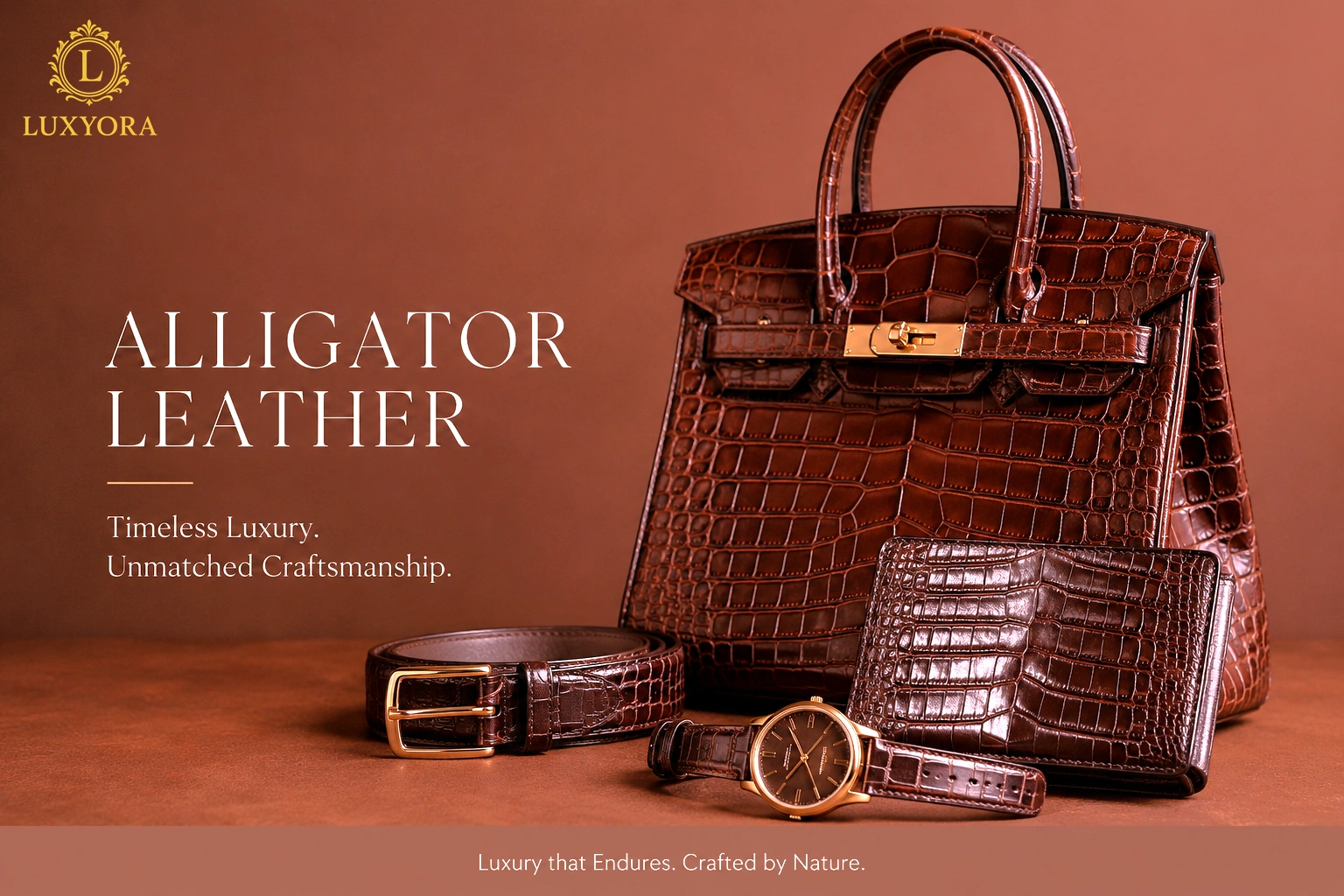
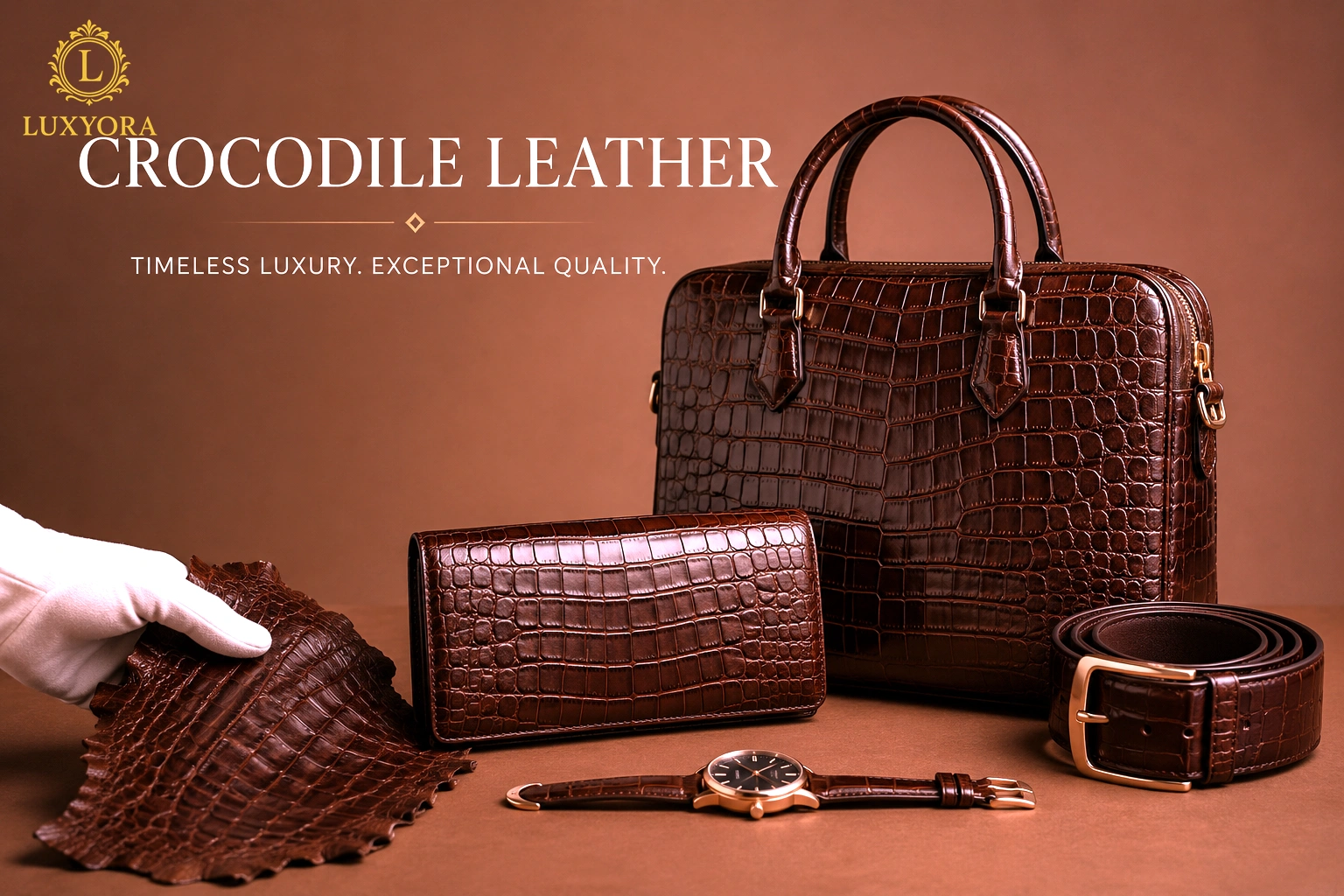
- Crocodile
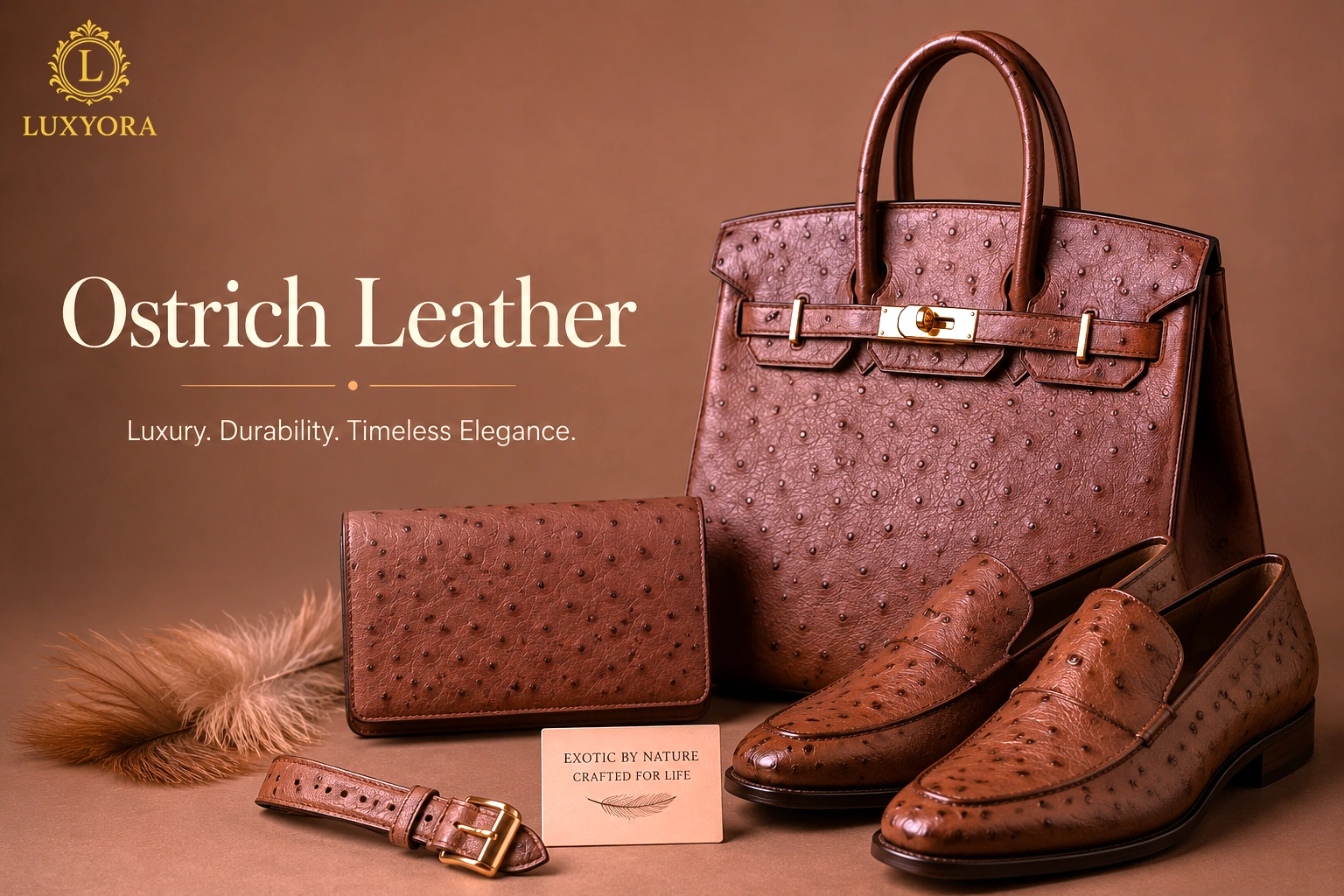
- Ostrich
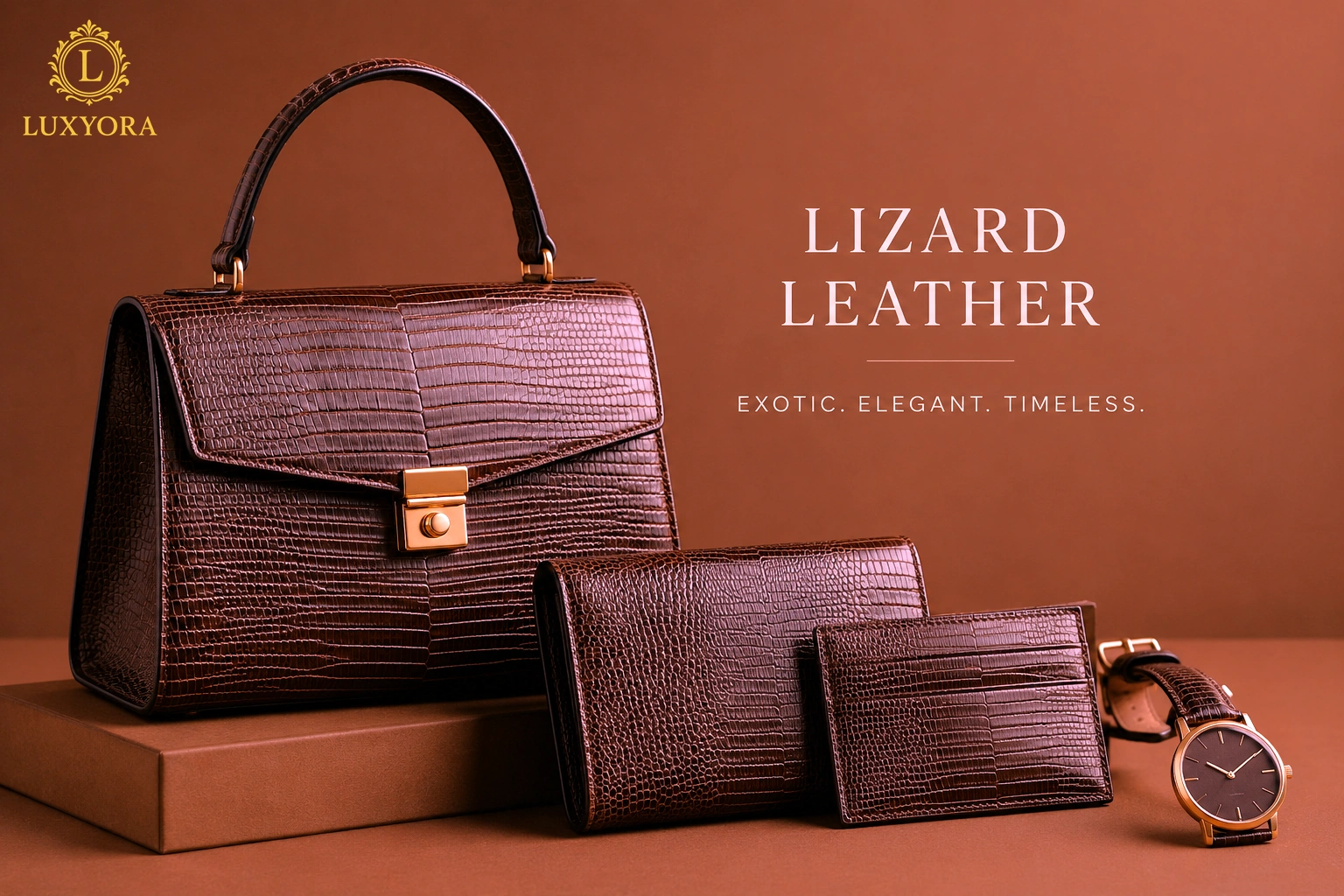
- Lizard
- Saffiano texture
- Pebble texture
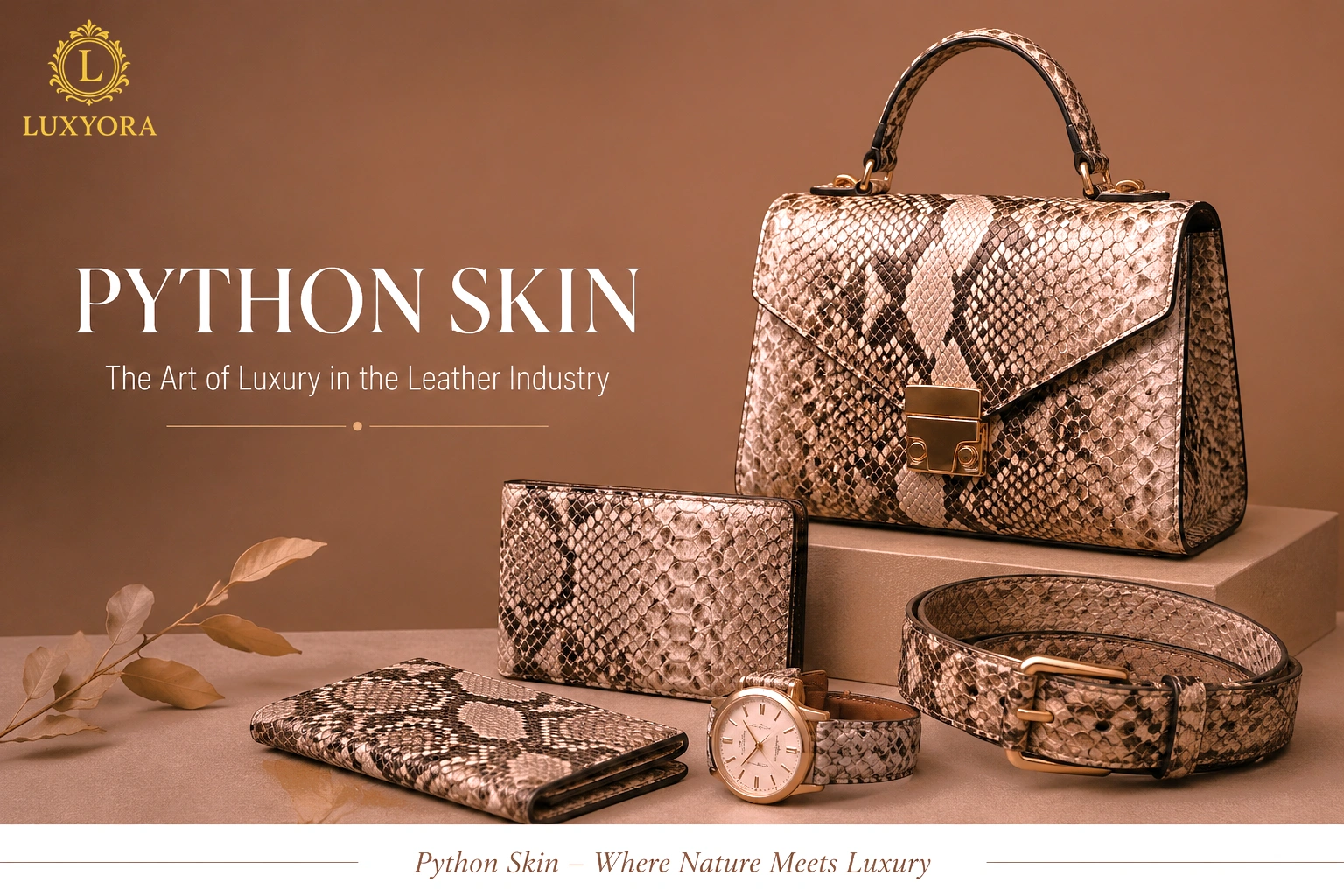
Fashion brands frequently use embossed leather to achieve luxury aesthetics without using exotic skins.
How Grained Leather Is Manufactured
The production of grained leather involves several specialized stages.
Step 1: Hide Selection
Manufacturers begin by selecting animal hides, typically from:
- Cattle
- Calves
- Buffalo
- Goats
- Sheep
Higher-quality hides generally result in better leather products.
Step 2: Tanning
Tanning stabilizes the hide and prevents decomposition.
Popular methods include:
Vegetable Tanning
Uses natural tannins derived from plants and tree bark.
Chrome Tanning
Uses chromium salts for faster production and softer leather.
Step 3: Surface Treatment
Depending on the desired finish, manufacturers may:
- Preserve the natural grain
- Buff imperfections
- Emboss decorative patterns
- Apply protective coatings
Step 4: Dyeing and Finishing
Leather receives color treatments and finishing processes that improve appearance and durability.
Why Grained Leather Is Popular in Fashion
The fashion industry consistently favors grained leather because it combines aesthetics and performance.
Luxurious Appearance
The textured surface creates visual depth and sophistication.
Unlike smooth leather, grained leather reflects light differently, creating a richer and more dynamic appearance.
Superior Scratch Resistance
One of the biggest advantages is its ability to hide minor scratches and wear.
This makes it ideal for:
- Handbags
- Briefcases
- Travel accessories
- Everyday footwear
Longevity
Quality grained leather products can last many years with proper care.
The textured surface often ages gracefully while maintaining structural integrity.
Versatility
Grained leather works across multiple fashion categories:
- Luxury handbags
- Leather jackets
- Sneakers
- Boots
- Wallets
- Belts
- Watch straps
Grained Leather vs Smooth Leather
Consumers frequently compare grained leather and smooth leather when purchasing fashion products.
Feature | Grained Leather | Smooth Leather |
Texture | Visible grain | Flat surface |
Scratch Resistance | Higher | Lower |
Maintenance | Easier | Requires more care |
Formal Appearance | Casual-luxury | Classic luxury |
Durability | Excellent | Excellent |
Everyday Use | Highly practical | More delicate |
Smooth leather often delivers a sleek and elegant appearance, while grained leather offers greater practicality and resilience.
Common Fashion Products Made from Grained Leather
Luxury Handbags
Many designer handbags use grained leather because it withstands daily wear.
Example Scenario:
A professional commuting daily may choose a pebble grain leather tote because it resists scratches from office desks, transportation, and regular handling.
Premium Footwear
Boots and dress shoes made from grained leather often maintain their appearance longer than smooth leather alternatives.
Example Scenario:
A traveler attending multiple business meetings benefits from grained leather shoes because minor scuffs are less noticeable.
Leather Jackets
Fashion brands frequently use grained leather for jackets due to its rugged yet luxurious appearance.
Wallets and Accessories
Small accessories benefit from the texture and durability of grained leather, especially items exposed to constant handling.
How to Identify Genuine Grained Leather
Consumers should know how to distinguish authentic grained leather from synthetic alternatives.
Examine the Texture
Real leather displays natural irregularities.
Perfectly uniform patterns may indicate synthetic materials or heavily corrected leather.
Feel the Surface
Authentic grained leather feels warm, supple, and flexible.
Synthetic materials often feel plastic-like.
Check the Edges
Genuine leather edges reveal fibrous structures.
Artificial materials usually have sealed plastic edges.
Observe the Smell
Real leather has a distinctive natural aroma that is difficult to replicate.
Caring for Grained Leather Products
Proper maintenance significantly extends the lifespan of leather goods.
Regular Cleaning
Use a soft cloth to remove dust and dirt.
Avoid harsh chemical cleaners.
Leather Conditioning
Apply a quality leather conditioner every few months.
Conditioning helps maintain flexibility and prevents drying.
Proper Storage
Store products:
- Away from direct sunlight
- In breathable dust bags
- In cool, dry environments
Water Protection
Although grained leather is relatively resistant to moisture, prolonged water exposure should be avoided.
Sustainability and Grained Leather
Sustainability has become increasingly important within the fashion industry.
Many manufacturers now focus on:
- Responsible sourcing
- Traceable supply chains
- Reduced chemical usage
- Environmentally conscious tanning methods
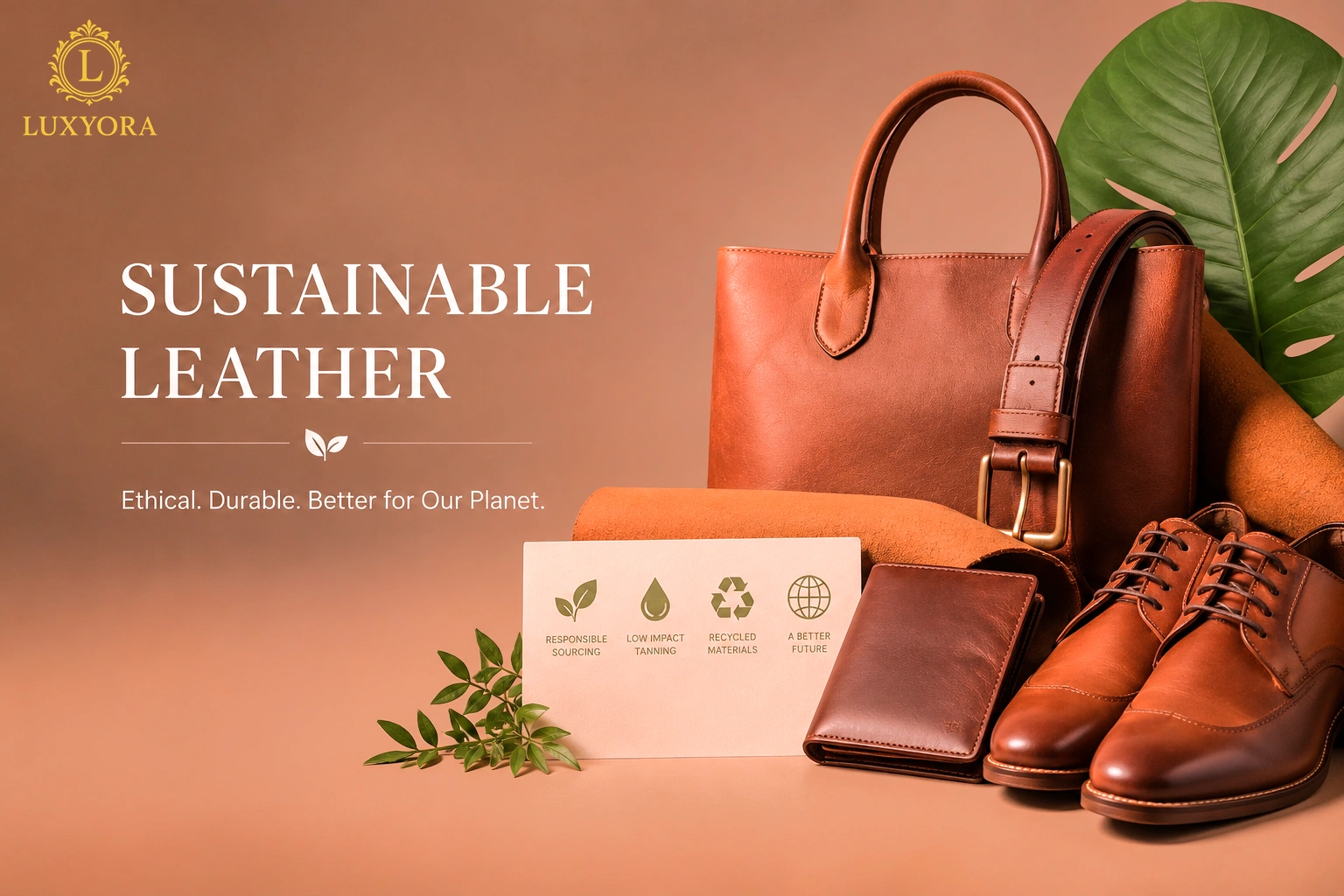
Vegetable-tanned grained leather is often promoted as a more environmentally friendly option because it utilizes natural tannins rather than certain synthetic chemicals.
Consumers increasingly seek transparency regarding leather sourcing and production methods when purchasing luxury fashion products.
Future Trends for Grained Leather in Fashion
The future of grained leather remains strong as fashion brands continue balancing luxury, durability, and sustainability.
Emerging trends include:
- Eco-friendly tanning technologies
- Digital traceability systems
- Bio-based finishing materials
- Increased demand for premium craftsmanship
- Growth of luxury resale markets
As consumers prioritize longevity over disposable fashion, high-quality grained leather products continue to gain relevance in both luxury and contemporary fashion segments.
Conclusion
Grained leather remains one of the most important materials in the global fashion industry. Its textured surface, durability, versatility, and premium appearance make it a preferred choice for luxury brands, manufacturers, and consumers alike. Whether found in designer handbags, sophisticated footwear, stylish jackets, or everyday accessories, grained leather delivers a balance of beauty and practicality that few materials can match.
Understanding the differences between full-grain, top-grain, pebble grain, corrected grain, and embossed leather allows consumers to make smarter purchasing decisions. With proper care and maintenance, quality grained leather products can provide years of performance while developing unique character over time. As sustainability and craftsmanship continue shaping fashion trends, grained leather is expected to remain a cornerstone of premium leather goods for many years to come.
References
Böhme, M. (2021). Leather technology: Handbook of leather manufacture. Deutscher Fachverlag.
Covington, A. D. (2020). Tanning chemistry: The science of leather (2nd ed.). Royal Society of Chemistry.
European Confederation of the Leather Industry. (2023). Leather and sustainability report. COTANCE.
Leather Working Group. (2024). Environmental stewardship and responsible leather manufacturing. Leather Working Group.
Nayak, R., & Padhye, R. (Eds.). (2019). Garment manufacturing technology. Woodhead Publishing.
United Nations Industrial Development Organization. (2022). Sustainable value chains in the leather industry. UNIDO.
Voice of the Leather Industry. (2023). Understanding leather grades and grain structures. Leather Naturally.
World Footwear. (2024). Global leather trends and premium materials in fashion manufacturing. World Footwear Yearbook.
Yang, Y., & Li, J. (2021). Advances in sustainable leather processing technologies. Journal of Cleaner Production, 310, 127512.
Zhang, X., Wang, S., & Chen, Y. (2020). Consumer perceptions of leather quality and luxury fashion products. Fashion and Textiles, 7(1), 1–18.