Citrus : What is Citrus in Perfumes
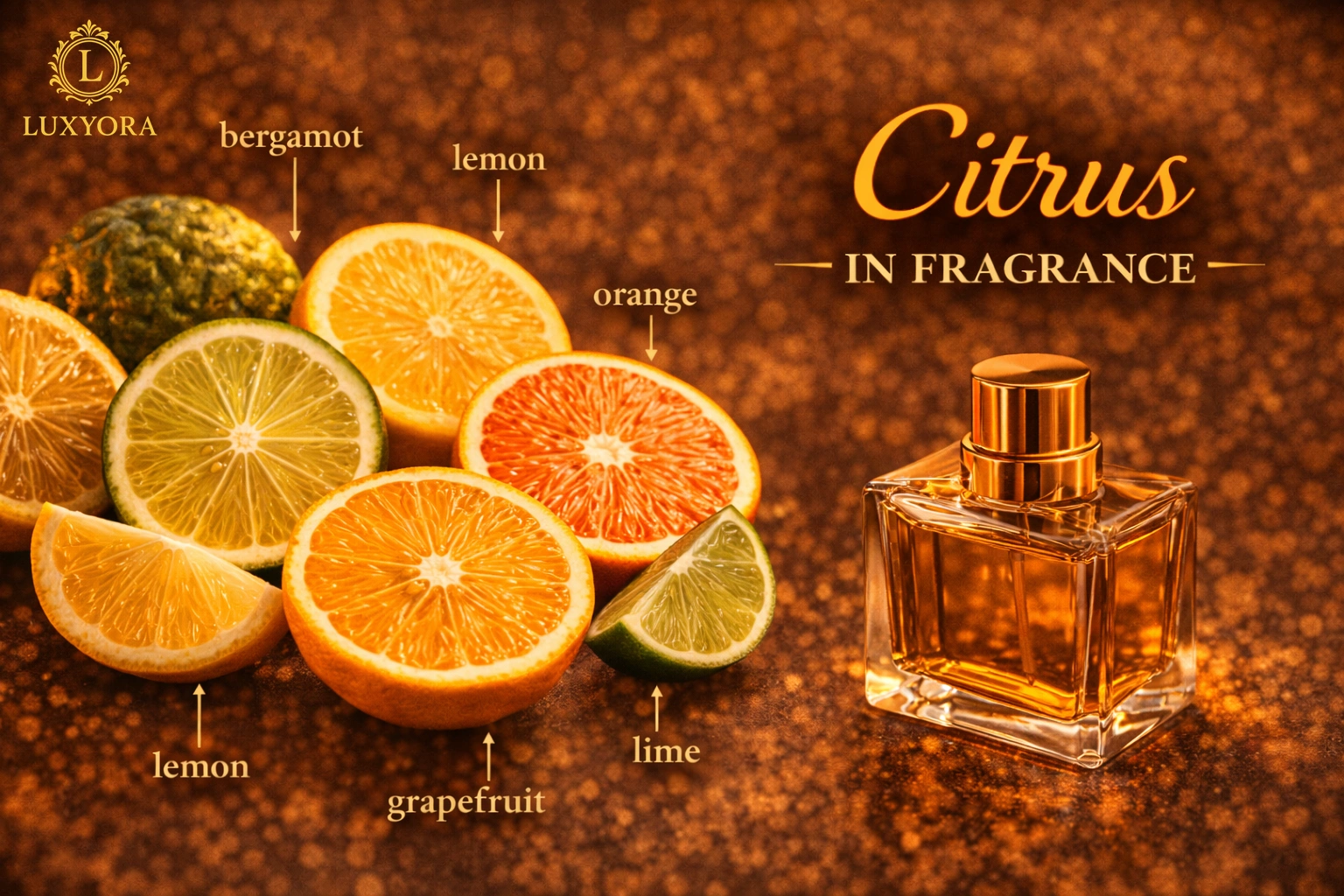
In perfumery, citrus is an industry term referring to a family of hesperidic (citrus-fruit) materials and effects, such as bergamot, lemon, sweet orange, grapefruit, mandarin, lime, yuzu, and bitter orange, used to create a sensation of brightness, cleanliness, sparkle, and instant freshness. Citrus notes are most often associated with the top notes of a fragrance because many citrus aroma molecules are highly volatile and evaporate quickly, giving the opening its “first impression” impact. In fragrance vocabulary standards for aromatic natural raw materials, ISO defines key terminology used across industries such as perfumery, thereby helping to ensure consistent material naming and definitions.
Citrus is not just “something that smells like fruit.” It is a technical building block: it enhances diffusion, lifts floral notes, cleanses heavy bases, and anchors classic styles such as Eau de Cologne, a format historically defined by a high proportion of citrus materials diluted in alcohol.
1. What “Citrus” Means in Perfumery
In industry usage, “citrus” can refer to:
- Natural citrus essential oils (often from peels): bergamot oil, lemon oil, sweet orange oil, grapefruit oil, etc.
- Citrus-derived isolates and fractions, such as d-limonene or refined/rectified fractions, are used to adjust stability and safety
- Citrus effects are created with aroma chemicals (e.g., aldehydes, citral, terpenes) that smell “citrus-like” even if not directly extracted from a citrus fruit
- Key keyword cluster (industry): hesperidic accord, citrus top notes, fresh opening, sparkling diffusion, cologne structure, citrus aromatic, citrus-woody, citrus-floral.
2. Why Citrus Is a “Top Note” Superstar
Citrus materials are popular because they are instantly readable to the consumer, fresh, uplifting, clean, and they perform important technical functions:
A. Immediate “lift” and brightness
Citrus notes add a high-impact opening that makes compositions feel more energetic and transparent. This is one reason citrus remains central to cologne-style perfumery.
B. Blending power
Citrus (especially bergamot) is often used as a “bridge” note that connects florals, aromatics, spices, and woods. Its nuanced profile arises from complex mixtures of compounds such as limonene, linalool, and linalyl acetate, which can impart citrus notes with fruity, floral, bitter, or tea-like facets.
C. Versatility across genders and categories
Citrus appears in fine fragrance, body mists, soaps, shampoos, deodorants, and home fragrance because its “clean” association works across usage occasions.
3. The Main Citrus Materials Perfumers Talk About
Bergamot (Citrus bergamia)
Often described as the “king” of citrus in perfumery, bergamot delivers a bright citrus opening with added aromatic/floral complexity. Research reviews report that bergamot oil commonly contains limonene, along with significant levels of linalyl acetate and linalool, which help explain its elegant, slightly floral character compared with simpler “orange-like” citrus oils.
Lemon and Lime
These contribute sharp, zesty “acid” freshness. However, they can also bring safety considerations because some citrus oils contain furocoumarins (discussed below).
Sweet Orange / Mandarin / Grapefruit
Often fruitier, softer, and juicier. Many citrus peel oils are dominated by d-limonene, a core citrus hydrocarbon associated with lemon/orange-type freshness.
Bitter Orange Family: Neroli & Petitgrain
Perfumery often treats these as “citrus relatives”:
Neroli: distilled from bitter orange blossoms (more floral)
Petitgrain: distilled from leaves/twigs (more green/aromatic)
These are frequently used to add sophistication to citrus-floral and citrus-aromatic structures.
4. How Citrus Ingredients Are Extracted (And Why It Changes the Smell)
Most peel citrus oils are produced by expression/cold pressing, a mechanical process that releases oil from the outer peel. Modern extraction research indicates that extraction methods can alter the volatile profile of peel oils, thereby influencing odor character and stability.
Why perfumers care:
- Cold-pressed citrus oils can smell more “fresh peel / juicy zest.”
- Distillation and other processing can shift or remove fragile molecules, which is sometimes useful for stability or for producing low-furocoumarin (safer) materials.
5. Citrus Chemistry: The Molecules Behind “Fresh.”
Citrus smell is built from a palette of volatile compounds. Major research reviews of Citrus volatiles emphasize that peel essential oil fractions are rich in terpene chemistry and include many compounds measuring “sparkle,” “green bite,” “peel zest,” and “sweet juice”.
Common citrus-related molecules include:
- d-Limonene (classic citrus hydrocarbon; often abundant)
- Citral (lemony aldehydic freshness; used widely in fragrance chemistry)
- Linalool / Linalyl acetate (bergamot/neroli-like floral citrus nuances)
Performance reality: Citrus materials are volatile, so perfumers often reinforce them with fixatives, musks, woods, or modern aroma chemicals to extend the “fresh” feeling beyond the first minutes.
6. Safety & Compliance: Phototoxicity and IFRA Restrictions
Some citrus essential oils are phototoxic, meaning they may cause skin reactions when applied and then exposed to sunlight/UV radiation. This is strongly associated with furocoumarins, including 5-methoxypsoralen (5-MOP / bergapten), which can occur in certain expressed citrus oils.
The fragrance industry manages this risk using IFRA standards and guidance. IFRA documentation explains how standards are used and applied across product categories. Specific IFRA standards reference phototoxicity concerns for furocoumarin-containing materials and set restrictions accordingly.
7. Sustainability Trend: Citrus Upcycling and Peel-Waste Valorization
A major modern direction is to source citrus aroma materials from juice-industry byproducts (peels are abundant). Recent studies have explored sustainable processes for extracting valuable citrus essential oils from peel waste, often highlighting high limonene content and commercial potential. This aligns with the broader industry movement toward circular raw material streams, using what would otherwise be waste as a fragrance resource.
Conclusion
In fragrance, citrus is both a sensory promise and a technical toolkit: it creates sparkling top notes, improves diffusion, supports classic cologne structures, and blends seamlessly into floral, aromatic, and woody compositions. At the same time, modern perfumery must balance citrus’s volatility with performance strategies and manage safety issues like furocoumarin-related phototoxicity through IFRA-aligned compliance. It remains essential not only for its smell but also for its role in sustainability innovation and precision formulation.
References
Agarwal, P., Kaur, N., & Gupta, R. (2022). Citrus essential oils in aromatherapy: Therapeutic effects and mechanisms. Frontiers in Pharmacology. (PMC)
Bonku, E. M., et al. (2026). Valorizing Citrus maxima peel waste into bioactive essential oil via sustainable steam distillation. Food Research International. (ScienceDirect)
Caputo, L., et al. (2020). Chemical composition and biological activities of Citrus bergamia essential oil. Molecules, 25(8), 1890. (MDPI)
Ellena, J.-C. (2018). Perfume: The Alchemy of Scent (Print ed.). Skyhorse Publishing. (books.google.com.jm)
González-Mas, M. C., Rambla, J. L., López-Gresa, M. P., Blázquez, M. A., & Granell, A. (2019). Volatile compounds in citrus essential oils: A review. Frontiers in Plant Science, 10, 12. (Frontiers)
Guzmán, E., et al. (2021). Essential oils and their individual components in cosmetic products. Cosmetics, 8(4), 114. (MDPI)
International Fragrance Association. (2021). IFRA Standard (phototoxicity/furocoumarin-related restrictions in relevant materials). (d3t14p1xronwr0.cloudfront.net)
International Fragrance Association. (2023). Guidance for the use of IFRA Standards (51st amendment). (d3t14p1xronwr0.cloudfront.net)
International Organization for Standardization. (2021). ISO 9235:2021 Aromatic natural raw materials — Vocabulary. ISO. (ITeh Standards)
Li, X., et al. (2026). Recent advances in the development of bergamot (Citrus bergamia) essential oil: From extraction and composition to applications. Industrial Crops and Products. (ScienceDirect)
Park, M. K., et al. (2023). The effects of different extraction methods on essential oils: Changes in orange and tangor peel volatiles. Scientific Reports. (PMC)
Sharmeen, J. B., et al. (2021). Essential oils as natural sources of fragrance compounds: Chemistry and applications. Molecules. (PMC)