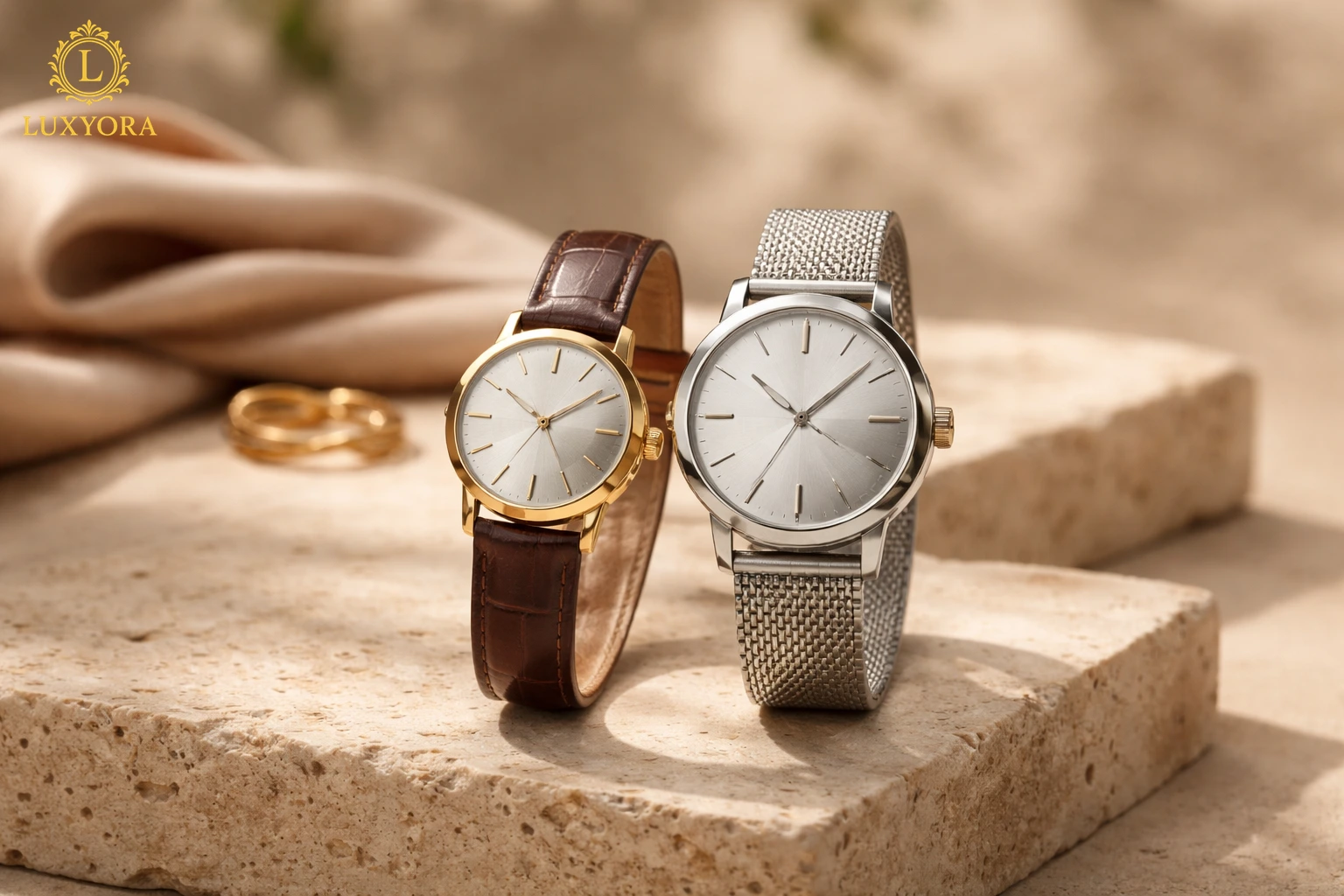
Small Case Size Watches: Compact Timepieces Trending Again | Luxyora
There’s a charming appeal to a watch that speaks softly. It gently slips under a cuff, stays close to the wrist, and lets elegant proportions do the talking. After a period where bold, oversized designs dominated, smaller watches are making a stylish comeback in today’s watch scene. What once seemed like a niche or vintage-style choice now feels fresh, smart, and truly luxurious.
This return isn’t just about nostalgia in shiny metal; it’s also a reflection of a broader shift in taste. People are increasingly favoring elegance over excess, comfort over boldness, and craftsmanship that truly rewards a closer look. In today’s watch discussions, smaller watches have been widely seen as part of an exciting change in collecting and design since 2023 and 2024. Editors and enthusiasts alike are celebrating the renewed charm of compact sizes, mini proportions, and more fluid, graceful styles.
Why Small Case Size Watches Are Trending Again
The rise of smaller watch cases feels almost inevitable when you look at how tastes in luxury evolve. Fashion, interiors, jewelry, and accessories all move in cycles, but the most interesting cycles never return in the same way. Today’s compact timepieces are not a rejection of modernity. They are a refinement of it.
For a long time, large watches symbolized confidence and visibility. They offered immediate impact, especially in an era shaped by sports-luxury aesthetics and bold wristwear. But style rarely stays maximal forever. Once larger cases became common, a new appetite emerged for restraint, nuance, and silhouette. Smaller watches answered that desire.
Editorial coverage over the past few years has pointed to a growing embrace of compact and mini watches across genders, with the conversation shifting away from rigid size rules and toward personal styling, wearability, and proportion. That matters because it signals a cultural change, not just a product cycle.
Small watches feel more intimate. They invite closeness. They reward the eye with detail rather than scale. In luxury, that is often where the real magic lives.
The New Luxury of Restraint
A compact watch carries a very specific kind of glamour. It does not announce itself from across the room. It reveals itself in motion: the tilt of the wrist at dinner, the glimmer beside a bracelet, the discreet confidence of something beautifully made but not over-explained.
This is exactly why smaller case sizes are resonating again. In an era when people are becoming more selective about what they wear and why, proportion has become part of the conversation. A watch no longer has to dominate the wrist to feel important. In fact, for many collectors and style-conscious buyers, the opposite is true.
A smaller watch can feel more expensive because it demands precision. The margins are tighter. Every design decision becomes more visible. The bezel cannot be clumsy. The dial cannot be lazy. The lugs cannot be resolved. On a compact timepiece, poor proportions are impossible to hide.
That is the secret allure: small-case-size watches make design discipline visible.
What Counts as a Small Watch Today?
In modern terms, a “small” watch usually falls somewhere between the mid-20s and the mid-30s in millimeters, though context changes everything. A slender rectangular watch wears differently from a round case, and a slim bezel can make a small diameter feel visually larger. Likewise, lug-to-lug distance, case thickness, crystal shape, and bracelet integration all affect wrist presence.
Common small watch categories
A practical way to think about compact sizing is this:
- Mini and jewelry-like sizes: often around 20 mm to 28 mm
- Classic compact sizes: often around 29 mm to 34 mm
- Vintage-balanced modern sizes: often around 34 mm to 36 mm
That last range is especially interesting because it often feels like the sweet spot between heritage proportion and contemporary usability. Many modern enthusiasts now see sub-40 mm watches as more wearable, more versatile, and often more sophisticated than the bulkier options that defined earlier decades. Recent commentary in watch media also points to growing enthusiasm for diminutive, ergonomically refined case designs.
The Role of Vintage Influence
No serious conversation about compact watches is complete without vintage influence. Many of the most admired wristwatches of the twentieth century were far smaller than what became common in the 2000s and 2010s. Their appeal was rooted in balance, not scale.
Vintage watches taught modern buyers something essential: elegance is architectural. A well-designed 32 mm or 34 mm watch can have more presence than a poorly proportioned 41 mm case. This rediscovery has changed collecting habits. Buyers who once pursued diameter alone have started paying closer attention to case profile, dial opening, and how a watch actually sits on the wrist.
The return of smaller sizes is also linked to historical literacy. As more consumers learn about classic watchmaking, they begin to appreciate the dimensions that once defined refined timekeeping. Smaller cases no longer read as old-fashioned. They read as informed.
The return of small case size watches feels less like a new trend and more like a rediscovery of timeless proportions. Their understated charm carries an unmistakably vintage spirit one that invites a closer look at how heritage timepieces are worn today. Discover Vintage watch styling tips and how to wear heritage timepieces.
Why Small Watches Feel Better on the Wrist
Trend is one thing. Comfort is another. And comfort may be the strongest argument of all.
A watch is one of the few luxury objects that must live in motion. It should move with the body, not against it. Large and heavy watches can create pressure points, instability, and awkward balance, especially when thickness and lug design are not well resolved. Watch commentary focused on comfort and ergonomics has repeatedly noted that weight, case architecture, and lug behavior are central to wearability, not just nominal diameter.
Small-case-size watches often win here because they are naturally better suited to daily wear. They tend to sit flatter, shift less, and slip more elegantly under sleeves. They can also feel more secure on smaller wrists and more intentional on larger wrists, especially when styled with confidence.
There is also a psychological comfort to compact watches. They feel edited. Lighter. More personal. They become part of the wearer rather than a performance for everyone else.
Material Knowledge: Why Compact Cases Demand More from Craftsmanship
This is where things get especially interesting for a luxury audience. Small watches are not simply scaled-down versions of larger ones. In many cases, compact construction is more demanding.
Case finishing becomes more exacting
On a smaller case, every polished bevel, brushed plane, edge transition, and lug angle is more visible in proportion to the whole object. There is less visual real estate to distract from imperfections. Finishing must be cleaner. Tolerances must feel sharper.
Dial design requires discipline
A compact dial cannot survive clutter. The typography has to breathe. The markers must be balanced. The hands need proper length and visual weight. If the minute track is too dense or the aperture placement is lazy, the entire composition feels cramped. Small dials reward clarity and punish indecision.
Decorative crafts become more intimate
Traditional métiers d’art such as guilloché, enameling, miniature painting, marquetry, and hand engraving are especially captivating in compact watches because the viewer must come closer to appreciate them. Coverage of artisanal dial decoration and independent watchmaking in recent years has highlighted how labor-intensive these crafts remain and how they transform a watch into an object of intimacy rather than spectacle.
Movement architecture matters more than ever
Small watches also spotlight the relationship between the case and the caliber inside. When a movement is too small for its case, the watch can feel compromised. When the architecture is well matched, the proportions feel resolved. Finishing details such as anglage, blued screws, surface treatment, and openworked components carry extra significance in compact dress-oriented pieces, where connoisseurship often lives beneath the dial or behind the caseback. Recent hands-on reporting on finely finished watches continues to emphasize these traditional movement details as key markers of quality.
In other words, compact watches are unforgiving. That is part of their luxury.
Compact watches have a way of encouraging a closer look. And with that comes an appreciation for the subtle elements and technical language that give every timepiece its character. Read more about Common watch terms explained: bezel, crown, and complications.
Small Watches and Genderless Styling
One of the most compelling reasons compact watches are back is that the old size rules are dissolving. The modern wearer is far less interested in whether a case was once marketed to men or women and far more interested in whether it feels right with their wardrobe, proportions, and mood.
Recent editorials have explicitly framed smaller watches as part of a more fluid, less prescriptive approach to style. That shift has opened the door for compact dress watches, mini watches, and vintage-inspired pieces to be appreciated without outdated labels.
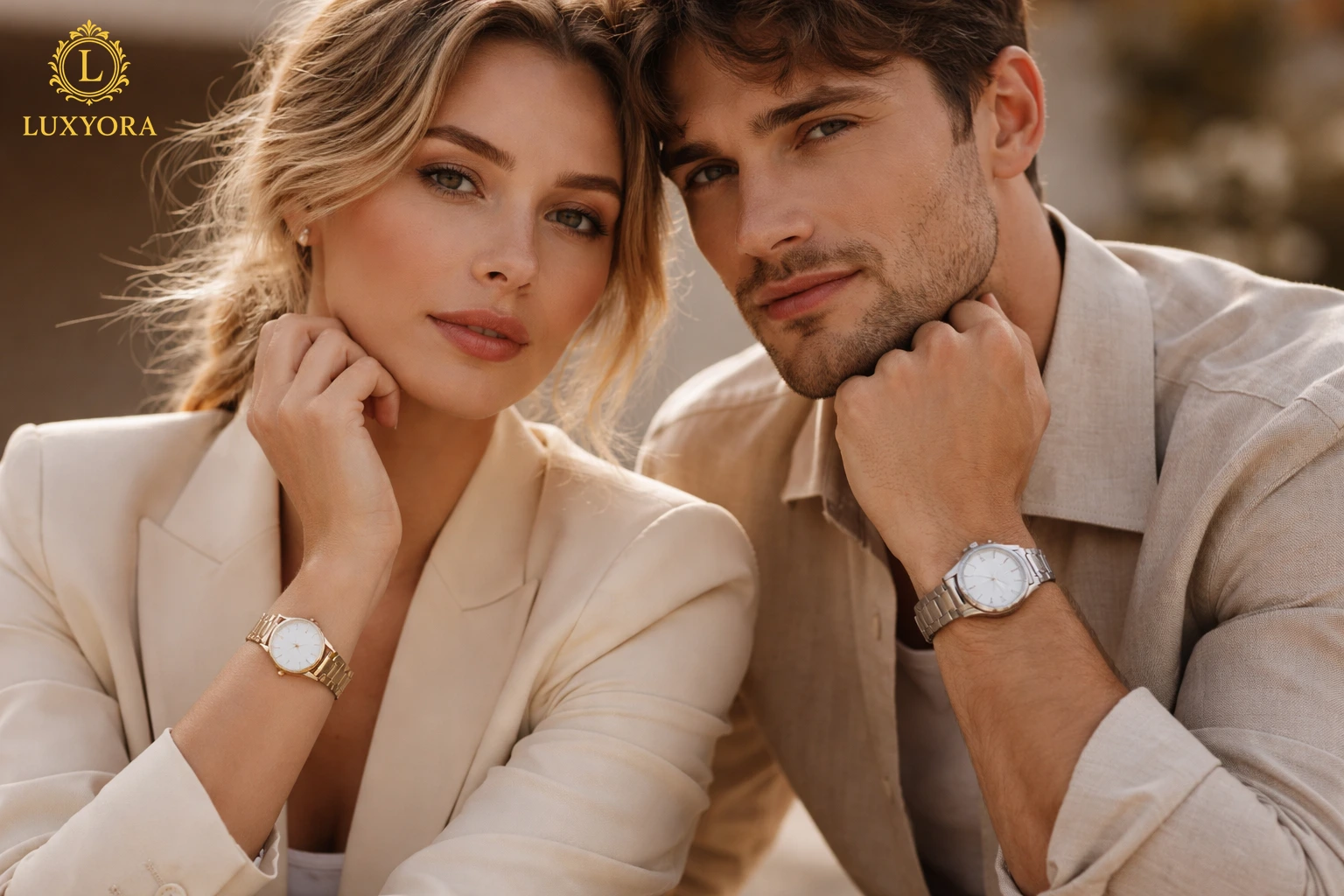
A smaller watch can read sharp with tailoring, seductive with eveningwear, cerebral with minimalist dressing, and striking when layered against jewelry. It can look deliberate rather than delicate. That distinction is everything.
The Quiet Power of Proportion in Luxury Styling
In styling terms, a compact watch changes the entire rhythm of a look. A large case often becomes the dominant object on the wrist. A smaller watch behaves differently. It collaborates.
That makes it especially powerful in luxury dressing, where texture, cut, and finish do more than logos ever could. A slim watch beside a cashmere sleeve, a crisp shirt cuff, a sculptural bracelet, or a silk blouse creates a composition rather than a single focal point. The effect is richer, softer, and more sophisticated.
This is why small watches appeal not just to collectors but to people who understand clothing. They share fashion’s oldest lesson: scale changes meaning.
What Buyers Should Look For in a Small Case Size Watch
Not every compact watch is a masterpiece. The best ones succeed because their proportions are coherent from every angle.
Prioritize lug-to-lug, not just diameter
A 34 mm watch with long, stiff lugs can wear larger and less gracefully than a 36 mm watch with short, curved lugs. Always assess the full wrist footprint.
Watch the thickness
A smaller diameter paired with an overly thick case can feel top-heavy or visually awkward. Compact elegance depends on profile as much as width.
Study the dial opening
A narrow bezel can make a small watch feel lively and open, while a heavy bezel can create a more jewel-like or architectural feel. Neither is wrong, but the balance must be intentional.
Consider finishing in natural light
Polished surfaces, brushing, chamfers, and dial textures reveal their quality best outside showroom lighting. Compact watches should still feel expressive at close range.
Think about strap and bracelet integration
On small watches, the strap width and taper matter enormously. A poor strap can flatten the watch’s personality. A well-cut one can make the entire piece sing.
Why This Trend Has Staying Power
Some trends burn hot and disappear. Small watches do not feel like that. Multiple forces support their return at once: vintage scholarship, comfort, changing gender norms in styling, renewed respect for classic proportions, and a broader cultural fatigue with excess.
Recent watch media suggest that mini and smaller sizes are not being treated merely as a novelty but as part of a wider conversation about wearability, elegance, and design maturity. That gives the movement credibility.
More importantly, compact watches answer a real emotional need. They feel tactile and thoughtful in a world crowded with loud objects. They suggest discernment. They offer beauty at the human scale.
And perhaps that is the deepest reason they are trending again: they do not just fit the wrist better. They fit the moment better.
The Future of Compact Timepieces
The next chapter for small-case-size watches will likely be even more nuanced. Expect more experimentation with slim profiles, stone and artisanal dials, refined bracelet geometry, vintage-inspired case architecture, and compact mechanical watches that privilege elegance without sacrificing personality. Editorial watch coverage across 2024 and 2025 already points toward stronger appreciation for mini sizing, dressier proportions, and ergonomic sophistication.
As buyers become more educated, they are also becoming more selective. They want craftsmanship they can feel, not just measurements they can post. That is very good news for compact timepieces, because smaller watches ask better questions of design, finishing, and purpose.
They are not trying to be louder. They are trying to be better.
Conclusion
The renewed fascination with small-case-size watches is about far more than size alone. It is about elegance returning to the center of the conversation. It is about proportion becoming luxurious again. It is about choosing detail over display, intimacy over spectacle, and craftsmanship over simple visual impact.
Compact timepieces are trending again because they offer something increasingly rare: refinement that feels modern without needing to prove it.
Luxyora Philosophy: True luxury is rarely the biggest thing in the room; it is the best considered. A beautifully proportioned watch reminds us that refinement is not about taking up space, but about giving meaning to every millimeter.
References:
Clymer, B. (2024, December 17). Editors’ picks: Our favorite dress watches of 2024. Hodinkee.
Crawford, M. (2024, February 12). How to wear a small watch for men and women. Hodinkee.
Crawford, M. (2024, April 12). The mini tank keeps small watch fever burning. Hodinkee.
Nooy, R. (2022, May 1). Four stand-out artisanal watchmakers we’ve seen during Geneva watch week. Monochrome Watches.
Thompson, A. (2022, August 22). Why some watches are uncomfortable & possible solutions to the problem. aBlogtoWatch.
Thompson, A. (2023, May 29). From the comments: Smaller watches aren’t going to hurt you. aBlogtoWatch.
Thompson, A. (2023, October 16). I guess I hate thick watches now. aBlogtoWatch.
Valdesolo, J. (2024, May 31). The mini Royal Oak. Hodinkee.
Various authors. (2023, November 19). Showcasing the mesmerizing art of dial decorations through six mechanical marvels. Monochrome Watches.
Various authors. (2025, December 19). The Voutilainen 28MPR, the farewell edition to the Vingt-8 series. Monochrome Watches.
Various authors. (2025, February 16). How a handful of brands dominate the secondary market. Watches by SJX.
Various authors. (2025, December 26). Year in review: Eight predictions for 2025. Watches by SJX.
Various authors. (2026, March 18). Seiko’s new Marinemaster gives the people what they want. Watches by SJX.