Men’s vs Women’s Watches : Style Differences Explained | Luxyora
Walk into any watch boutique, and you’ll still hear the old-school question: “Are you shopping for a men’s watch or a women’s watch?” But here’s the modern truth: your wrist doesn’t care about a label. Your style does.
Still, the industry has built some consistent design patterns over the decades. Understanding them helps you shop smarter (and flex harder), whether you love a delicate, bracelet-like piece, a chunky steel sports icon, or something deliciously in between.
1) The silhouette story: size, proportion, presence
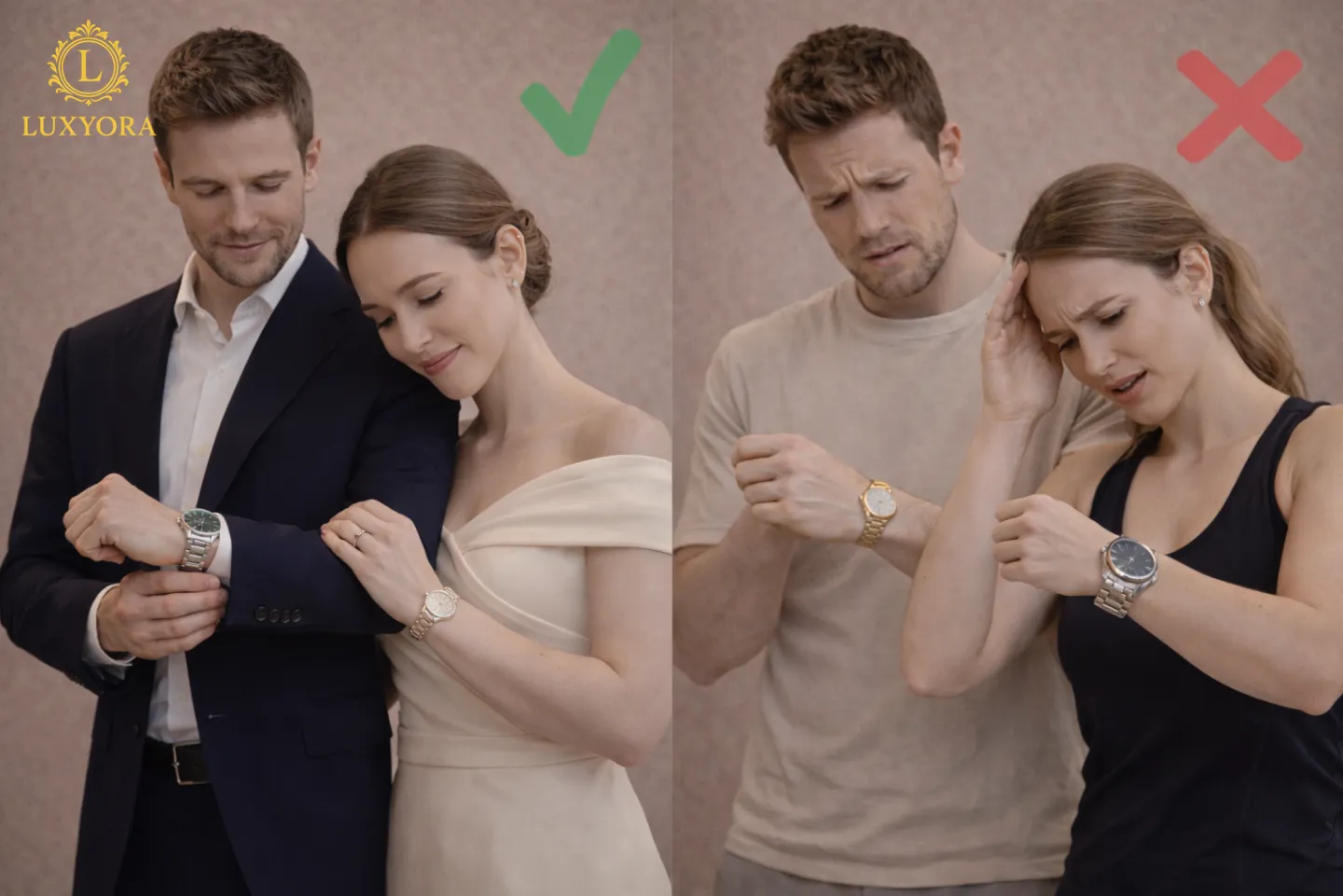
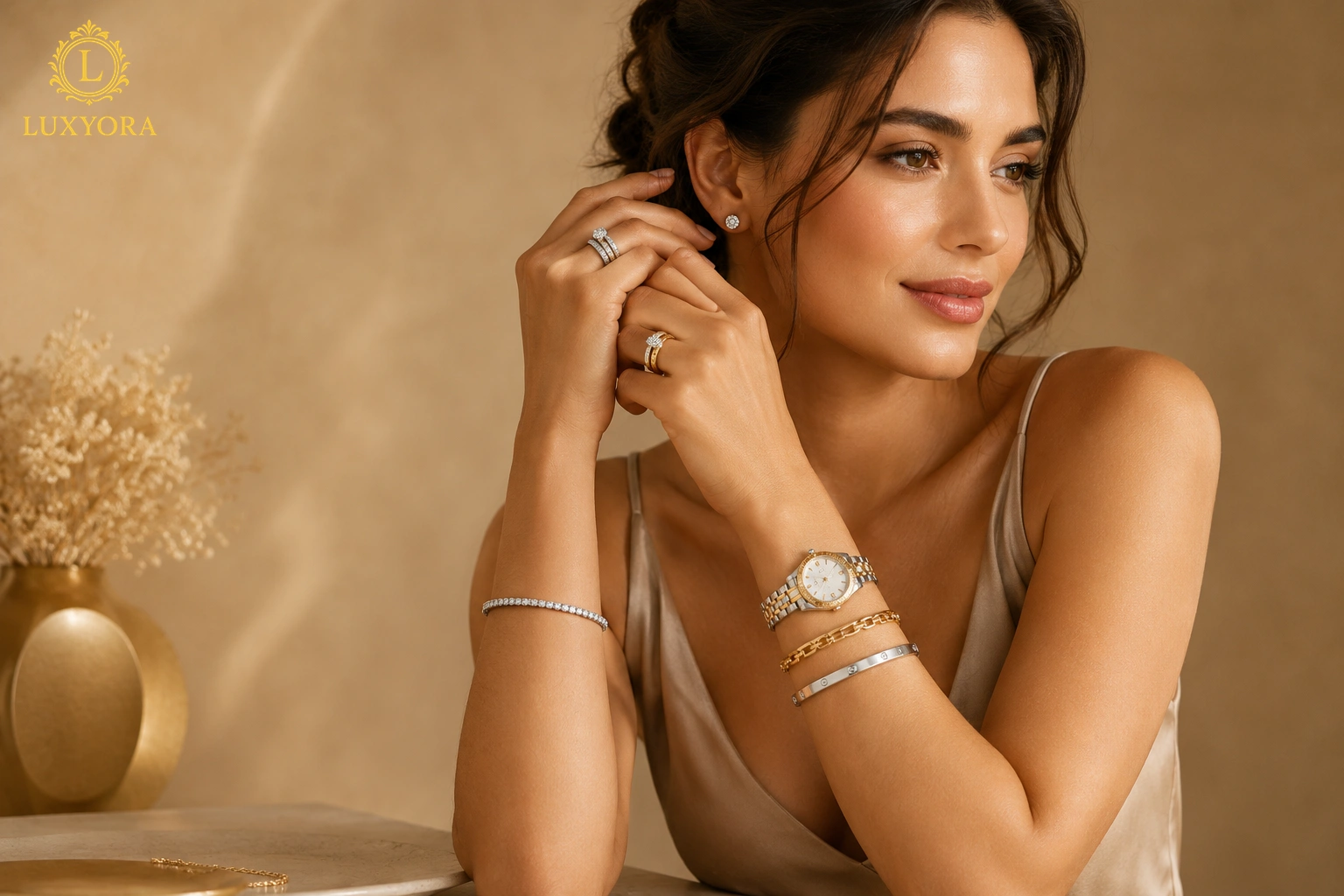
Traditionally, men’s watches are designed to read from across the room: larger case diameters, wider bezels, and more visual weight. Women’s watches, on the other hand, have often been designed to “wear like jewelry” with smaller cases, slimmer profiles, and more delicate bracelet or strap proportions.
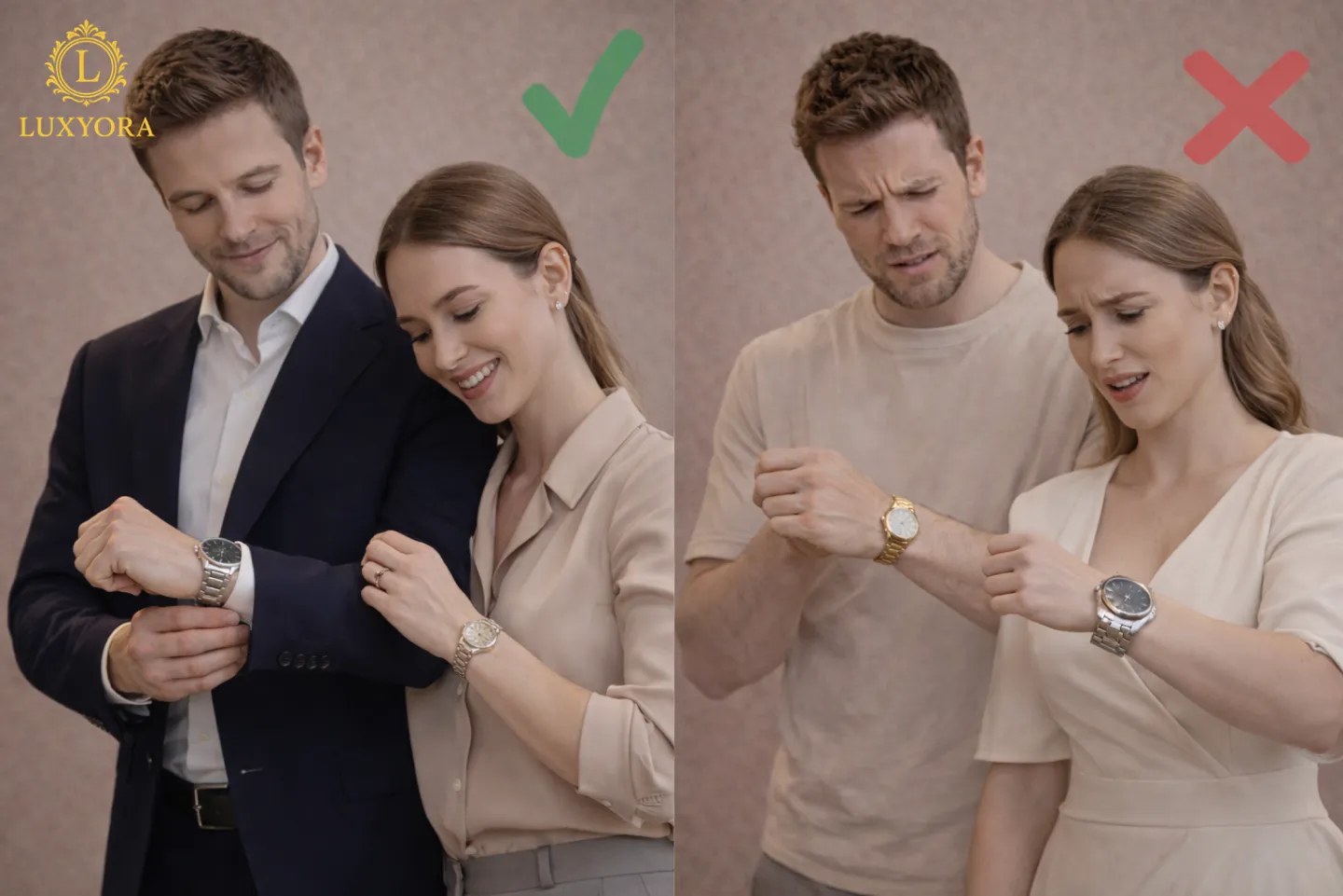
But the interesting part is what’s happening now: the “middle sizes” are having a moment. Collectors and fashion-forward buyers are increasingly leaning into smaller, classic proportions, while many women are embracing larger, bolder cases as an intentional style statement. In other words: size is no longer a gender rule; it’s a vibe.
Style takeaway:
- Want drama and wrist presence? Go bigger, thicker, more architectural.
- Want elegance and layering potential? Go slimmer, smaller, more refined.
- Want the sweet spot? Try mid-size cases that feel tailored rather than loud.
2) Dial design: bold tool energy vs jewel-box glamour (and all the hybrids)
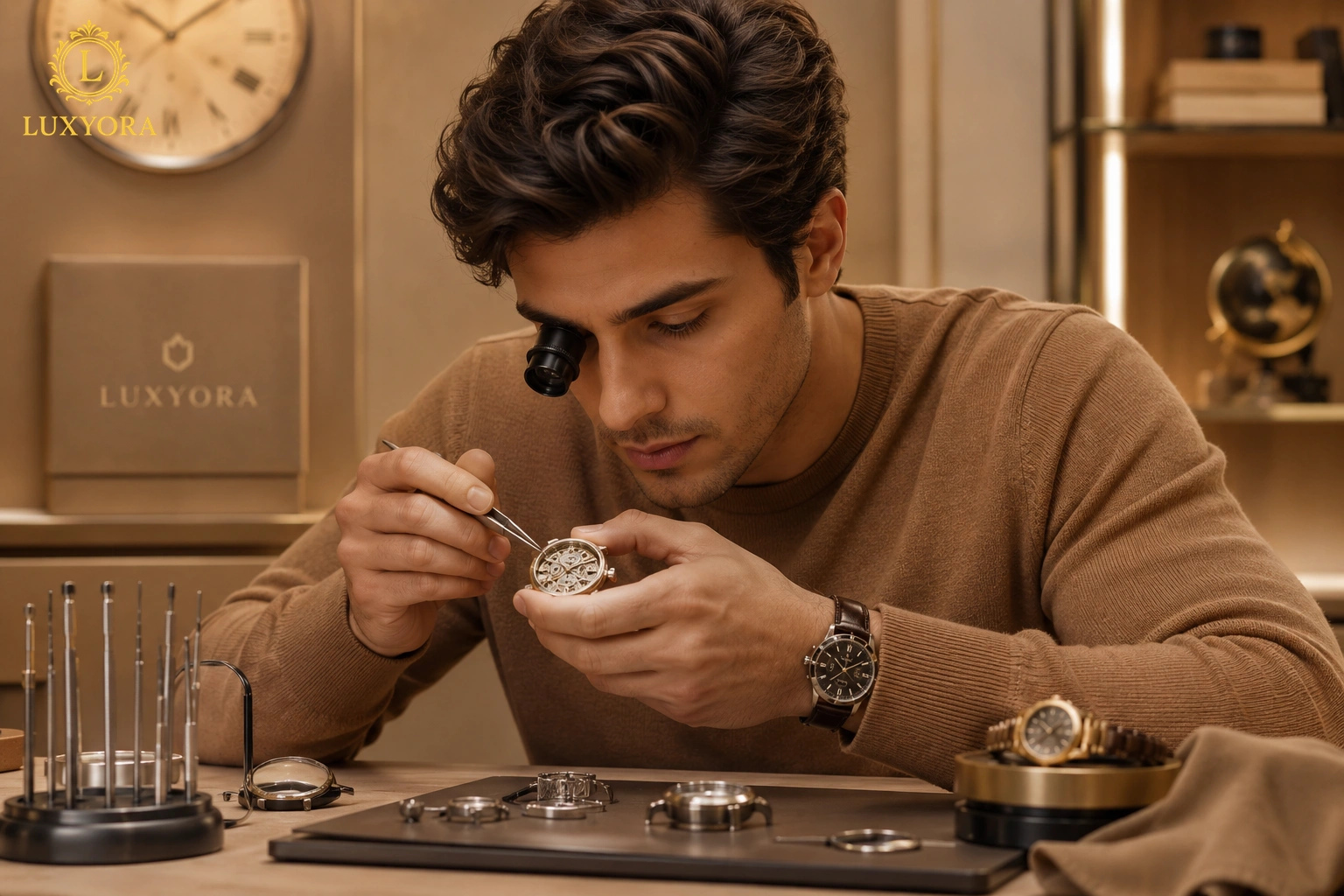
Classic “men’s” dials tend to prioritize legibility and function: high-contrast hands, strong indices, sporty lume and complications that look like they mean business. Think: crisp chronographs, dive bezels, or field-watch minimalism that feels purposeful.
Classic “women’s” dials have historically leaned into expressive detail: mother-of-pearl, diamond hour markers, decorative guilloché, floral textures, or softer palettes. But the gap is narrowing fast, because women are collecting serious mechanical watches and brands are finally responding with more technically ambitious “women-first” designs (not just smaller cases sprinkled with diamonds).
Style takeaway:
Dial language is your outfit’s punctuation. A clean, minimal dial reads like a sharp blazer. A diamond-set bezel reads like couture earrings, instant polish, zero effort.
3) Materials & finishing: sporty steel vs precious sparkle
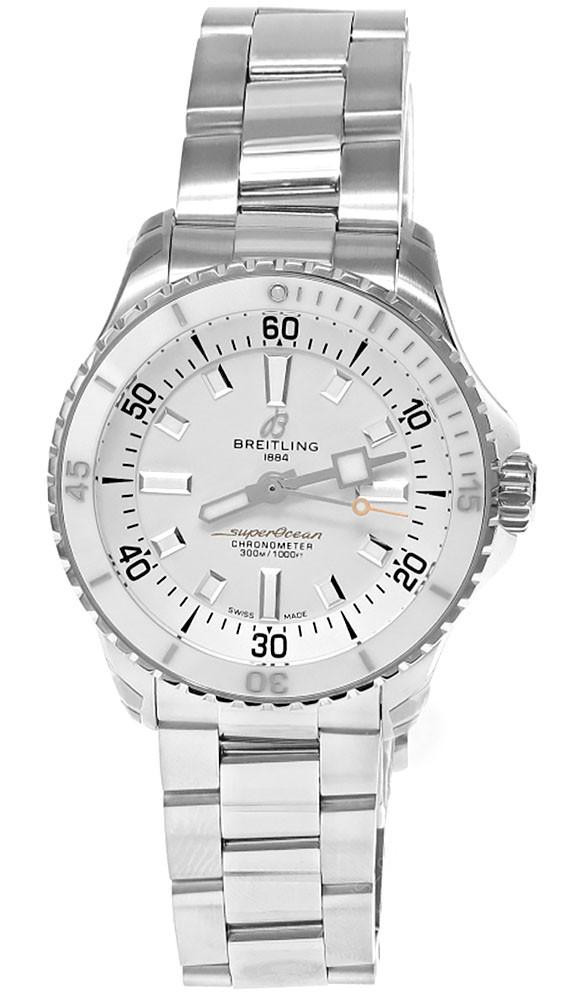
Men’s watches frequently show off rugged materials and finishes: brushed steel, ceramic bezels, titanium cases, sporty rubber straps, and tool-like detailing. Women’s watches are more likely to lean into precious metals, gem-setting, and high-shine finishes that catch candlelight and camera flash alike.
But luxury is getting more playful. Today, you’ll find gem-set sports watches, sleek steel pieces marketed for women, and men confidently wearing gold-toned, jewelry-like watches. The real divider isn’t gender, it’s whether you want your watch to feel like armor or adornment.
Style takeaway:
- Brushed finishes feel modern, cool, and understated.
- Polished finishes feel glamorous and “event-ready.”
- Gem-setting can be a subtle luxury if it’s done with restraint and craftsmanship.
4) Complications: what’s inside, what it signals
In the classic playbook, men’s watches often focus on complications that signal engineering: chronographs, GMTs, rotating bezels, power reserve indicators. Women’s watches have historically been offered in quartz more often (partly due to small-case constraints and past assumptions about demand).
That is changing. Watchmakers are investing in compact mechanical movements and complications that fit smaller cases without sacrificing performance. This isn’t just progress, it’s a whole new aesthetic: smaller watches that still have serious horological credibility.
What separates men’s and women’s watch styles isn’t just size or detailing, it’s also how design intent shifts alongside what powers the watch itself. Once you start looking closer, movement becomes part of the style conversation. Explore more in Watch Movements Explained Quartz vs Automatic vs Mechanical.
Style takeaway:
Complications are like tailoring details. Most people won’t “need” them, but they change the personality of the piece, and they tell a story about taste.
5) Straps & bracelets: comfort, styling, and wrist geometry
Gendered sizing is most obvious in strap and bracelet lengths; many “men’s” pieces ship longer by default, while “women’s” straps tend to be shorter and slimmer. Bracelet taper matters too: men’s watches often taper less (more weight, more presence), while women’s watches taper more (more elegance, more jewelry effect).
The good news: sizing is easily solved with strap swaps, extra links, or alternate clasp options. The better news: strap styling is where you make the watch yours. A leather strap turns sporty into refined. A bracelet makes everything look expensive. A rubber strap makes luxury feel effortlessly off-duty.
Style takeaway:
If the watch fits your wrist comfortably and looks balanced, it’s “for you.” Period.
6) The shopping behavior shift: what buyers actually want
One of the biggest shifts in the luxury watch world is that women are shopping more independently, digitally, and intentionally. Recent industry research also suggests that women tend to place a very high weight on price-to-value, design, and brand image. At the same time, smartwatches remain a major part of the wristwear conversation, and many buyers mix smart and traditional depending on lifestyle and occasion.
Shopping behavior is no longer just about what people buy, it’s about what they quietly prioritize when no one is looking. Beneath the surface of choice lies a growing divide in expectations, values, and identity. That shift becomes clearer in Mechanical Watches vs Smart Watches – Why Watch Lovers Are Split Between Them.
Style takeaway:
The modern watch wardrobe can be plural. You can love a smartwatch for weekdays and keep a mechanical piece for nights, travel, or “main character” moments.
7) So… what’s the real difference today?
The honest answer: “men’s vs women’s” is becoming shorthand for a few design defaults, bigger vs smaller, tool-like vs jewelry-like, matte vs shine, but it’s no longer a rulebook.
The most luxurious choice you can make is to buy based on proportion, comfort, and personal style, not the label on the tag. That’s how icons are worn: with intention.
Luxyora Philosophy: Luxury isn’t about following categories; it’s about choosing pieces that feel like an extension of your identity. Wear what fits your wrist, your life, and your story because true style always keeps time on its own terms.
References:
- Deloitte. (2023). The Deloitte Swiss Watch Industry Study 2023: A calibre of its own (10th ed.). Deloitte Switzerland.
- Deloitte. (2024, November 7). Spotlight on the female market (Swiss watch industry insights). Deloitte Switzerland. (Deloitte)
- (2025). Justin Bieber is officially on board the small-watch train (Watches of the Week). GQ. (GQ)
- Riche, R. (2025). The wonderful world of women’s watches: Beauty beyond time. Die Gestalten Verlag. (teNeues)
- Watchonista. (2025, June 18). Omega surprises with twelve new Aqua Terra 30mm models powered by a new movement. Watchonista. (Watchonista)
- Ethos Watches. (2025, June 18). Omega unveil their smallest Seamaster Aqua Terra yet, measuring just 30mm. The Watch Guide. (Ethos Watches)