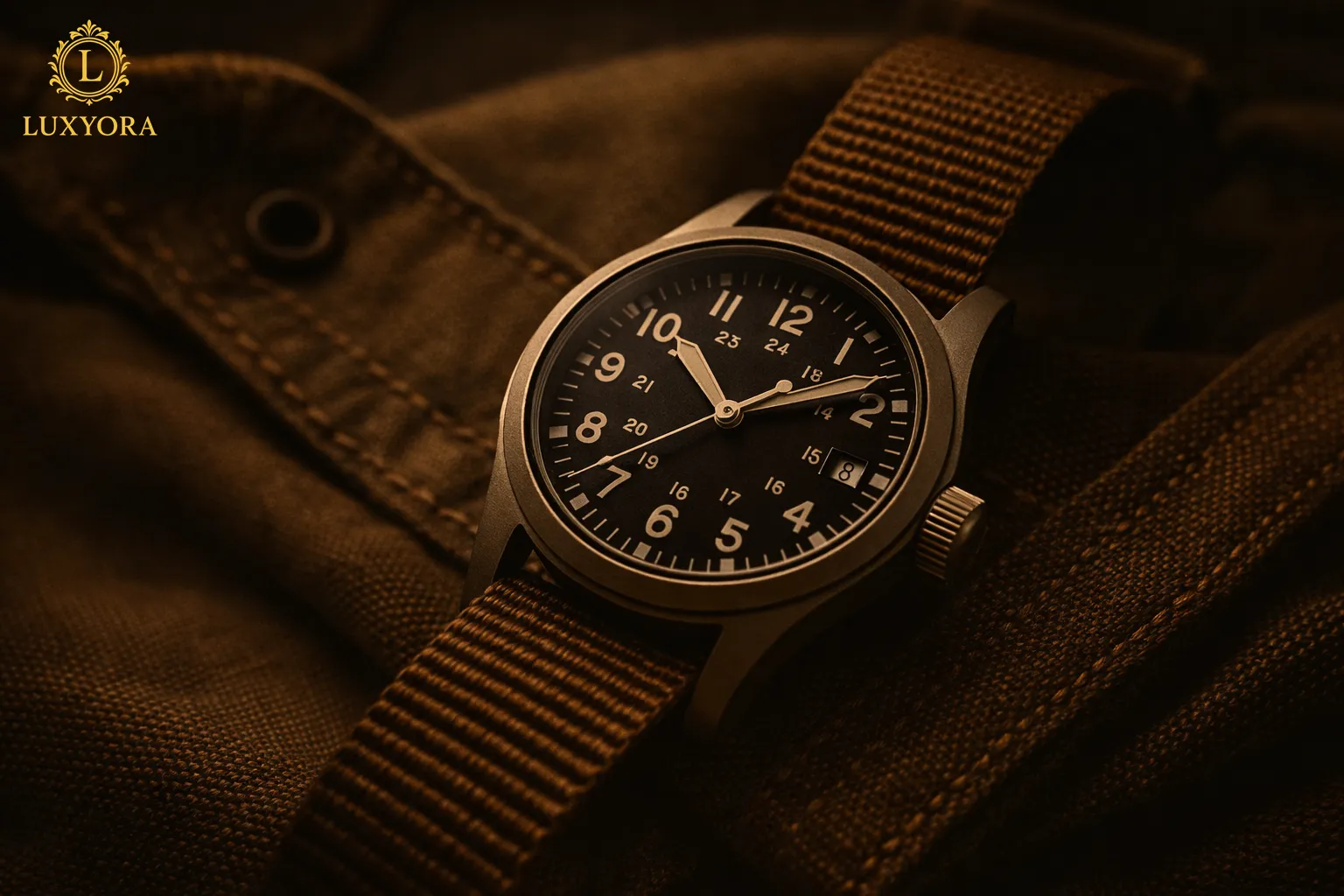
Field Watch : What is Field Watch
Introduction to Field Watch
If you’ve ever come across a watch that looks rugged, minimal, and highly readable, chances are you’ve seen a field watch. In the watch industry, the term “Field Watch” refers to a category of timepieces originally designed for military use, prioritizing durability, legibility, and reliability over luxury or complex features.
Today, field watches have evolved from battlefield tools into everyday essentials, admired for their practicality and timeless aesthetic. Whether you’re an outdoor enthusiast, a minimalist style lover, or someone looking for a dependable daily watch, field watches offer a unique blend of history and functionality.
What is a Field Watch?
A field watch is a straightforward, sturdy wristwatch designed for tough conditions such as military missions, hiking, or fieldwork. These watches are known for:
- Clear, easy-to-read dials
- Durable cases (often stainless steel or titanium)
- Reliable mechanical or quartz movements
- Modest case sizes (typically 36mm-42mm)
- Lightweight construction
- Water resistance and shock resistance
Field watches emphasize simplicity and efficiency, unlike dive or pilot watches, and are perfect for quick time checks during high-pressure situations.
The History of Field Watches
Military Origins
Field watches trace their origins back to World War I and World War II, when soldiers needed reliable wristwatches for coordination and navigation. Prior to this, pocket watches were common but impractical in combat.
During World War II, the U.S. military produced standardized watches called “A-11 watches,” which are often regarded as the precursor to modern field watches. These watches included:
- Black dials with white Arabic numerals
- Luminous hands for night visibility
- Manual winding movements
Post-War Evolution
After the wars, manufacturers began adapting military watch designs for civilian use. Brands like Hamilton, Timex, and Seiko popularized field watches, making them accessible to a broader audience.
Today, field watches maintain their military DNA but often feature modern enhancements such as sapphire crystals, automatic movements, and enhanced water resistance.
Key Features of a Field Watch
1. Legibility
The most defining feature of a field watch is its high readability. The dial is typically uncluttered, with large numerals and strong contrast.
Example scenario:
Imagine hiking in low-light conditions: you need to check the time quickly without squinting. A field watch’s clean design ensures instant readability.
2. Durability
Field watches are built to withstand tough environments. Common materials include:
- Stainless steel cases
- Scratch-resistant sapphire or mineral glass
- NATO or leather straps
Practical tip:
If you plan to use your watch outdoors frequently, opt for a sapphire crystal for better scratch resistance.
3. Reliable Movement
Field watches come in two main movement types:
- Quartz: Battery-powered, highly accurate, low maintenance
- Mechanical/Automatic: Traditional craftsmanship, powered by movement or manual winding
Example scenario:
If you’re traveling in remote areas without access to battery replacements, a mechanical field watch is a smart choice.
4. Water Resistance
While not as robust as dive watches, most field watches offer sufficient water resistance (30m-100m).
Practical tip:
For everyday use, a 50m water resistance rating is usually adequate for hand washing and light rain.
5. Compact Design
Field watches are designed to be unobtrusive. Their smaller case size makes them comfortable for long wear.
Example scenario:
If you work in a physically active job, a compact field watch won’t get in the way or feel bulky.
Field Watch vs Other Watch Types
Understanding how field watches differ from other categories helps clarify their unique value.
Watch Type | Primary Use | Key Feature |
Field Watch | Outdoor/military use | Simplicity & durability |
Dive Watch | Underwater activities | High water resistance |
Pilot Watch | Aviation | Large dials & complications |
Dress Watch | Formal occasions | Elegant design |
Field watches stand out for their versatility; they can be worn in casual, outdoor, and even semi-formal settings.
Why Field Watches Are Popular Today
1. Minimalist Aesthetic
In an era where minimalism is trending, field watches fit perfectly. Their clean design appeals to those who prefer understated style.
There’s something quietly confident about a field watch, functional, refined, and never overdesigned. Explore why simplicity remains one of watchmaking’s strongest style statements in Minimalist Watches: Style Guide.
2. Everyday Versatility
Field watches are often called “go-anywhere, do-anything” watches. They transition seamlessly from outdoor adventures to office wear.
Example scenario:
You can wear the same field watch during a morning hike and later at a casual dinner without looking out of place.
Originally designed for practicality, the field watch has quietly evolved into one of the most versatile pieces in modern style. See how certain watches move effortlessly through every part of the day in Day-to-Night Watches That Work for Every Occasion.
3. Affordability
Compared to luxury watches, many field watches are reasonably priced, making them accessible for beginners.
Practical tip:
If you’re new to watch collecting, starting with a field watch is a smart investment.
Popular Field Watch Styles
1. Classic Military Style
- Black dial
- White numerals
- Canvas or NATO strap
2. Modern Field Watch
- Sapphire crystal
- Automatic movement
- Enhanced water resistance
3. Vintage-Inspired Field Watch
- Faux patina lume
- Retro typography
- Leather straps
How to Choose the Right Field Watch
Consider Your Lifestyle
Ask yourself:
- Do you need it for outdoor activities?
- Will you wear it daily?
- Do you prefer low maintenance?
Choose the Right Movement
- Quartz: Best for accuracy and convenience
- Automatic: Best for enthusiasts and collectors
Strap Selection
- NATO straps for durability
- Leather straps for style
- Metal bracelets for versatility
Budget Considerations
Field watches range from affordable to mid-range luxury.
Example scenario:
A student might opt for a budget-friendly quartz model, while a professional may prefer a premium automatic version.
Practical Tips for Using a Field Watch
1. Maintenance Tips
- Clean regularly with a soft cloth
- Avoid extreme temperatures
- Service mechanical watches every 3-5 years
2. Strap Care
- Replace NATO straps periodically
- Condition leather straps to prevent cracking
3. Storage
Store your watch in a dry place when not in use. Use a watch box to prevent scratches.
Common Misconceptions About Field Watches
“They Are Only for Military Use”
While they originated in the military, field watches are now widely used in everyday life.
“They Are Too Basic”
Their simplicity is actually their strength. Field watches focus on essential functionality rather than unnecessary features.
“They Lack Style”
Modern field watches come in various designs, making them both functional and stylish.
Future Trends in Field Watches
The field watch segment continues to evolve with:
- Sustainable materials (recycled metals, eco-friendly straps)
- Solar-powered quartz movements
- Smartwatch-inspired hybrid features
As consumer preferences shift toward practicality and sustainability, field watches are likely to remain relevant.
Conclusion
Field watches represent the perfect balance between history, functionality, and modern design. From their origins on the battlefield to their place in today’s fashion and utility landscape, they continue to be a reliable choice for anyone seeking a practical and stylish timepiece.
Whether you’re exploring the outdoors or navigating daily life, a field watch offers unmatched versatility. Its durability, readability, and timeless appeal make it a must-have for both beginners and seasoned watch enthusiasts.
In an age where digital precision dominates, the analogue authenticity of a field watch remains an enduring expression of purpose, heritage, and masculine elegance.
References
Donzé, P.-Y. (2018). Swiss watch industry and globalization: From luxury to mass markets. Routledge.
Griffiths, A. (2020). The watch: Thoroughly revised. Thames & Hudson.
International Organization for Standardization. (2019). Horology—Water-resistant watches (ISO 22810:2010). ISO.
Müller, H. (2021). Evolution of military wristwatches and their influence on modern horology. Journal of Design History, 34(2), 145–160.
Reinhard, M. (2022). Field watches: Functionality meets minimalism. Horological Journal, 164(3), 34–41.
Smith, J. (2019). The enduring appeal of military-inspired watches. Journal of Consumer Culture, 19(4), 567–583.