What Happens Behind the Scenes of Luxury Bag Production | Luxyora
From the outside, a luxury handbag looks effortless, with polished hardware, clean lines, and that unmistakable weight when you lift it by the handle. But behind that serene perfection is a production story that’s anything but casual. Think: design studios that obsess over millimeters, workshops where artisans listen to the “click” of a clasp, and quality teams who treat a single crooked stitch like a scandal.
Luxury bag production isn’t one process; it’s a choreography. And it starts long before leather ever meets needle.
1) The Design Phase: Where Desire Becomes a Blueprint
A bag begins as a concept, but it quickly becomes a set of decisions that have real consequences: What silhouette will hold its shape for years? Where will the strap pull under the weight? How does the bag open smoothly, elegantly, quietly?
Designers work with technical teams to translate mood-board fantasy into patterns and specs. This is where the “invisible luxury” gets locked in: seam allowances, reinforcements, stitch density, edge treatments, and tolerances for hardware placement. If you’ve ever wondered why two bags that look similar can feel wildly different in your hands, it’s because luxury houses engineer experience like it’s architecture.
2) Material Sourcing: The Real Gatekeeping
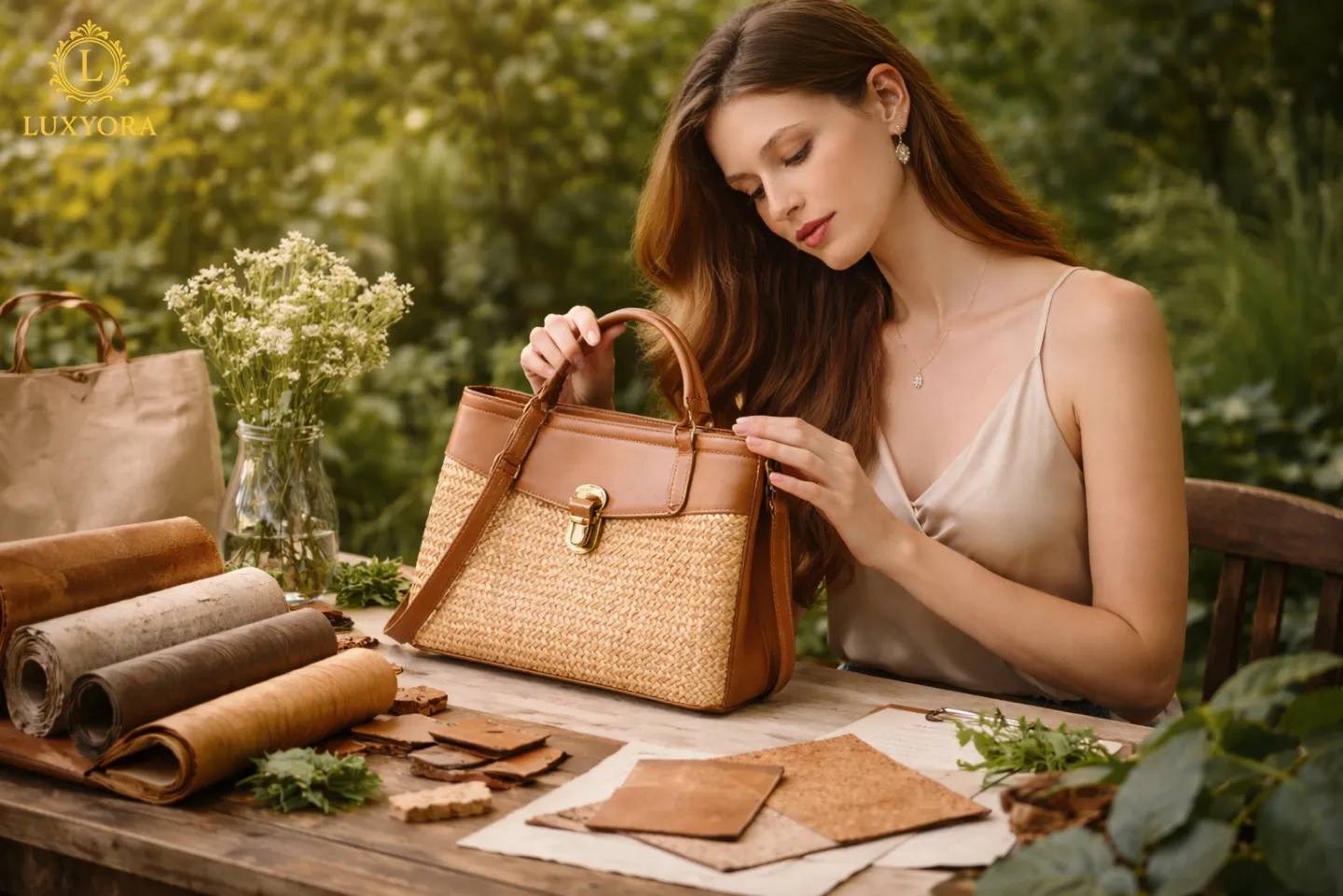
Before anything is cut, materials are vetted often ruthlessly. Leather is inspected for grain consistency, surface character, thickness, and long-term behavior. Hardware is checked for finish durability, weight, and smooth operation. Linings are chosen not just for beauty, but for abrasion resistance and stability.
Increasingly, brands also pressure suppliers to meet environmental and social performance expectations. Programs like the Leather Working Group (LWG) exist specifically to assess tanneries against environmental criteria and, in newer versions, expanded social responsibility expectations. In plain language: luxury doesn’t just want beautiful leather, it wants leather that can pass a modern audit.
3) Prototyping: The “Fit Test” for a Handbag
Luxury prototypes are not quick mockups. They’re rehearsals.
Workshops build early versions to test structure, weight distribution, pocket function, and closure mechanics. This stage is where a bag’s personality forms: does it stand on its own? Does the flap curve the right way? Will corners soften elegantly or collapse?
It’s also where brands decide what will be done by hand versus machine. Luxury production isn’t anti-technology. It’s selective. Machines may ensure consistency in certain seams, while handwork takes over where precision and finish are everything.
4) Cutting and Preparation: Precision That Looks Like Calm
Once materials are approved, the cutting room becomes a temple of control. Patterns are laid out to maximize yield and minimize visible variation across panels. Luxury houses often separate pieces by “zones” of a hide, saving the most flawless sections for the most visible parts of the bag.
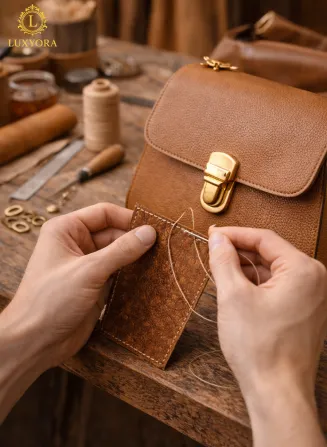
Then comes prep work: skiving (thinning) edges so folds sit cleanly, marking alignment points, pairing panels for symmetry, and pre-punching holes in areas destined for hand stitching. This is the quiet, unglamorous labor that makes the final bag look expensive without trying.
5) Assembly: Where the Bag Becomes “Real”
This is the part people imagine, and yes, it’s as meticulous as it sounds.
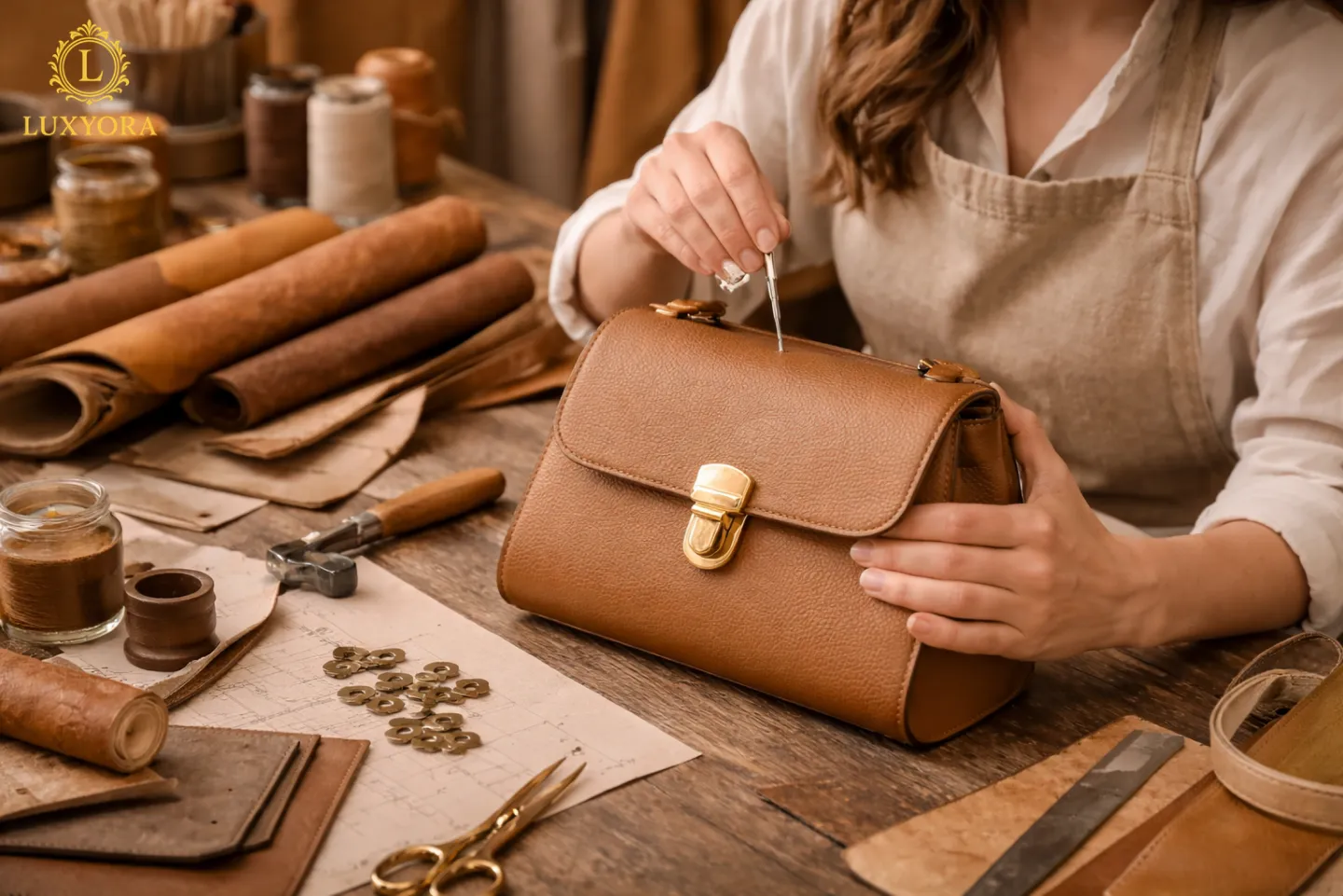
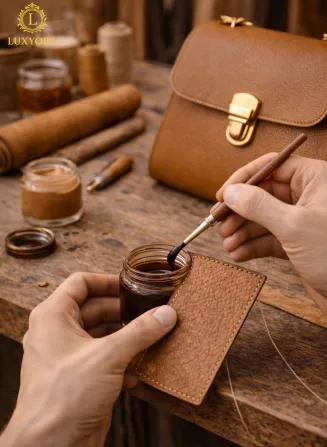
Panels are joined, linings fitted, reinforcement layers inserted, and hardware set. Edge finishing can involve multiple passes of painting, drying, sanding, and re-painting until the edge looks seamless rather than “coated.” Handles and straps are built to survive friction and movement, not just photos.
In some workshop models, one artisan completes a bag from start to finish (or nearly so), which builds accountability into the process. In others, teams specialize by component. Either way, craftsmanship is not “vibes.” It’s controlled repetition, trained hands, and an internal standard that doesn’t negotiate.
Behind every perfectly finished handbag lies a level of craftsmanship that few ever have the chance to witness. Uncover the journey in How Luxury Handbags Are Really Made.
6) Quality Control: The Part You Never See (And The Brand Never Forgets)
Luxury quality control is layered. Materials are checked on arrival. Work is inspected during assembly. Finished pieces undergo final audits: symmetry, stitch consistency, edge integrity, hardware movement, lining alignment, logo placement, and overall feel.
And yes, sometimes bags fail. Not every piece makes it to the boutique. A reporting investigation into luxury manufacturing challenges has even described scenarios where defects are destroyed rather than sold, because imperfect products risk brand trust more than they save margins.
Every flawless luxury handbag or accessory reflects countless quality checks long before it reaches the customer. Step behind the scenes in How Luxury Brands Control Quality at Scale.
This is the real luxury equation: perfection is expensive because rejection is expensive.
7) Training and the Human Factor: Craft is a Supply Chain
Luxury brands don’t just buy skill, they build it.
Many operate structured training pipelines to teach leather handling, saddle stitching, edge work, and finishing standards. Craft isn’t only about the final object; it’s about knowledge transfer. This is exactly how UNESCO frames traditional craftsmanship less as a product category and more as living skills that must be taught, practiced, and passed on.
Because without artisans, there is no “heritage.” There is only branding.
8) Traceability, Aftercare, and the Long Game
Behind the scenes, it now includes something modern luxury can’t ignore: lifecycle responsibility.
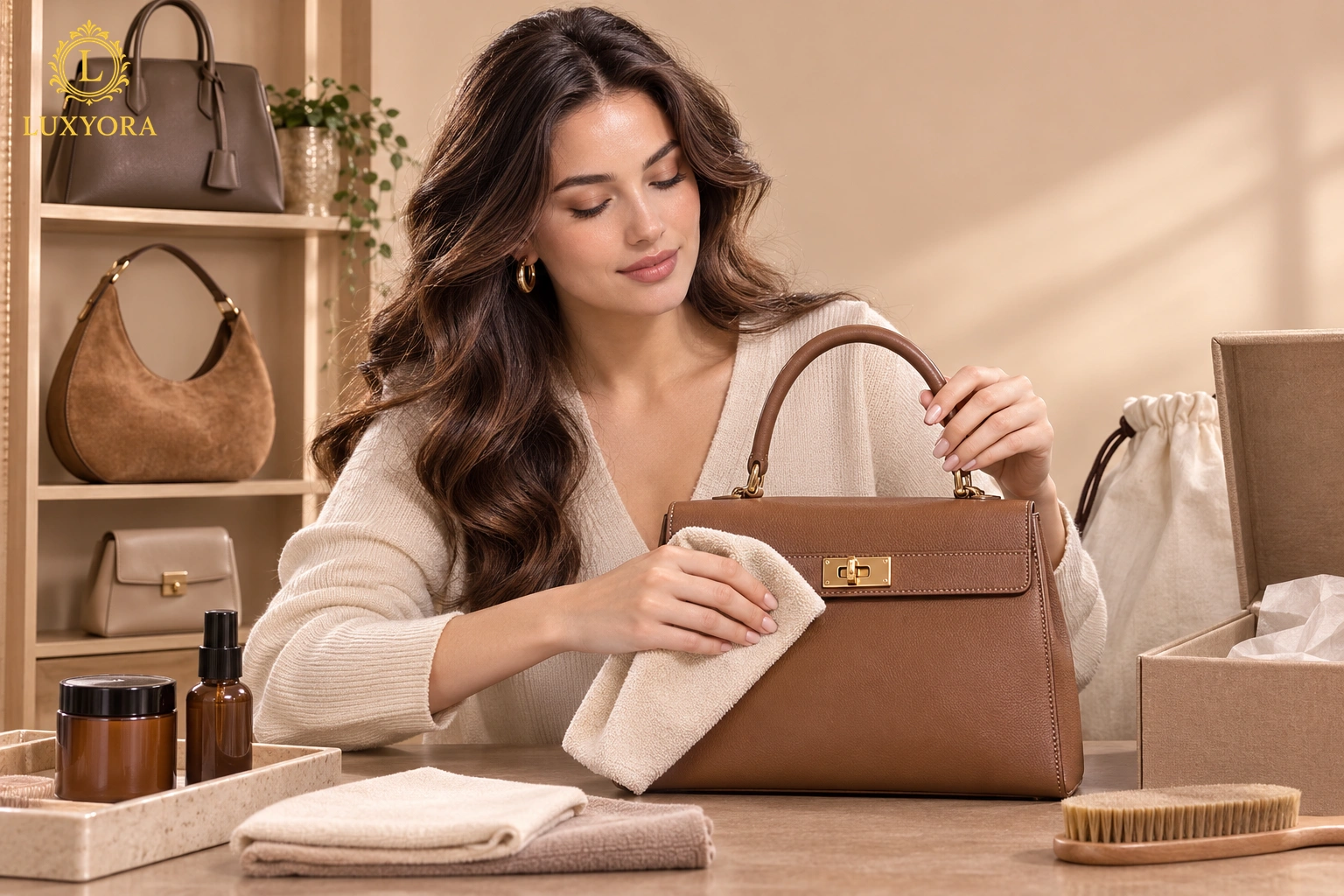
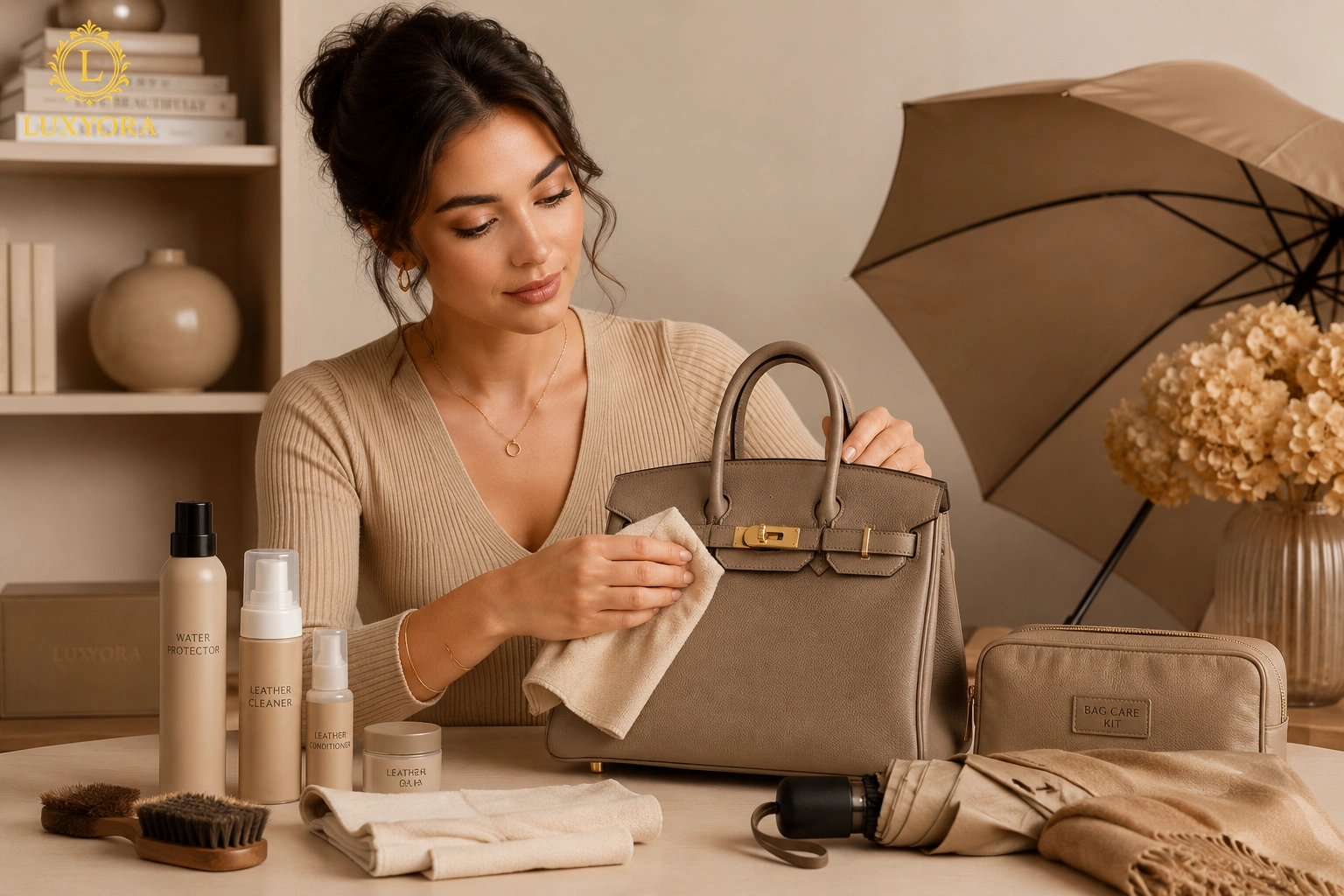
Circular economy thinking pushes brands toward repair services, refurbishment, and resale ecosystems, ways to keep products in use longer rather than treating them as disposable fashion. Luxury is naturally positioned here, because a well-made bag can be repaired, refreshed, and re-loved. The bag’s “afterlife” has become part of its value story.
And that’s why the behind-the-scenes world matters: the best bags are designed not just to debut beautifully, but to live beautifully.
Luxyora Philosophy: Luxury isn’t a moment of perfection; it’s a disciplined process that protects beauty over time. When craftsmanship is real, it shows up in what you don’t see: the standards, the skill, and the years a bag is built to survive.
References:
- Ellen MacArthur Foundation. (2019, September 15). Fashion and the circular economy (deep dive). Ellen MacArthur Foundation.
- Hermès. (n.d.). The leather school. Hermès.
- Hermès. (n.d.). A house of artisans and human values. Hermès.
- Leather Working Group. (2021). LWG Standard P7: Leather Manufacturer Audit Standard (Version 7). Leather Working Group.
- Leather Working Group. (2021). Leather manufacturer standard. Leather Working Group.
- Reuters. (2025, April 10). LVMH finds making Louis Vuitton bags messy in Texas. Reuters.
- UNESCO Intangible Cultural Heritage. (n.d.). Traditional craftsmanship. UNESCO.
- Vanity Fair. (2021, September). Inside the Hermès workshop that makes its iconic bags. Vanity Fair.