Sapphire Crystal : What is Sapphire Crystal
In watchmaking, a sapphire crystal is the transparent cover over the dial (and sometimes the caseback) made from synthetic sapphire, a lab-grown form of corundum (aluminum oxide, Al₂O₃). Although people often call it “sapphire glass,” it is not glass in the usual sense.
In industry parlance, sapphire is valued for its combination of excellent optical clarity and extremely high scratch resistance, making it a premium choice for everything from affordable sport watches to high-end luxury timepieces.
Why the Watch Industry Loves Sapphire Crystal
1) Elite scratch resistance (a major selling keyword)
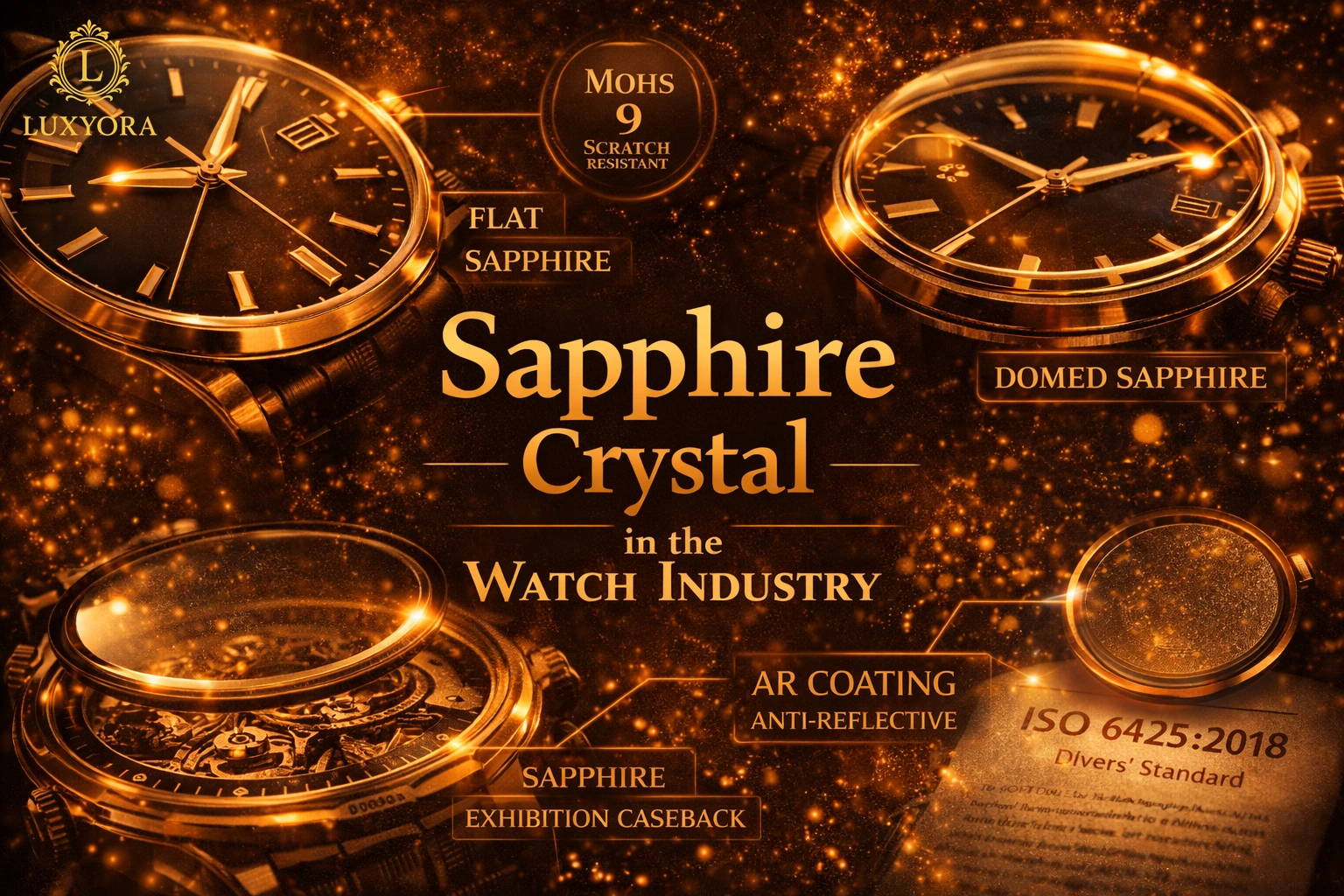
Sapphire is commonly described as having a Mohs hardness of 9, meaning it is much harder than ordinary mineral glass and can resist daily abrasion from common objects such as desk surfaces or keys.
What that means in real life:
- Sapphire is excellent at resisting scratches and haze over the years of use.
- It helps the dial look “new” longer, which is why sapphire is often marketed as a premium durability upgrade.
2) High clarity and a “luxury” look
Sapphire can be cut and polished to a very clean finish, giving watches a crisp, high-contrast appearance, especially with modern coatings and careful dial design.
The Trade-Off: Sapphire Is Hard, Not Unbreakable
A key educational point: hardness is not the same as toughness.
- Sapphire is hard (scratch-resistant) but can still chip or shatter under sharp impacts, especially at edges or under concentrated point loads.
- Softer materials, such as acrylic (Hesalite), are more easily scratched but may be more forgiving under impact in certain scenarios.
This is why professional tool watches often combine sapphire with protective case geometry (bezel lips, recessed crystals, or thicker profiles).
Sapphire vs Mineral vs Acrylic: A Watch Crystal Comparison
Sapphire crystal
- Best for: scratch resistance, premium feel, long-term clarity
- Watch-industry keywords: “scratch-resistant,” “premium crystal,” “AR-coated sapphire,” “domed sapphire,” “sapphire caseback.”
Mineral glass
- Best for: cost efficiency and decent durability
- Downside: scratches more easily than sapphire
Acrylic (hesalite/plexiglass)
- Best for: vintage style, impact tolerance, easy polishing of light scratches
- Downside: scratches more easily than sapphire
Anti-Reflective Coating: The “Hidden Tech” That Makes Sapphire Readable
Sapphire’s optical performance comes with a known challenge: it can be more reflective than mineral glass because of its higher refractive index. That extra reflection can reduce legibility in bright environments.
AR coating (Anti-Reflective) basics
To improve readability, brands apply AR coating to one or both sides of the sapphire. Educational sources note that AR coatings greatly reduce glare and can be applied via processes such as physical vapor deposition in modern production.
Important consumer insight:
Some “scratches” people see on sapphire are actually scratches in the AR coating, not the sapphire itself, especially when the coating is on the outer surface.
Common Sapphire Crystal Types in Watches
1) Flat sapphire
The standard option for many watches. It’s clean, modern, and easier to manufacture than complex shapes.
2) Domed sapphire
A domed crystal curves outward, often used for vintage aesthetics or to reduce visual edge distortion. It may appear beautiful, but it may require more careful manufacturing and can be more vulnerable at the edges, depending on the design.
3) Box sapphire
A “box” profile rises and then flattens, a feature popular in retro-inspired watches. It gives a classic look while still offering sapphire’s scratch resistance.
4) Sapphire exhibition caseback
Many mechanical watches use sapphire on the back to showcase the movement finishing, turning durability into a “display feature”.
How Synthetic Sapphire Is Made for Watch Crystals
Most sapphire watches are lab-grown. Manufacturing commonly starts by growing a large sapphire “boule,” then slicing and machining it into crystals.
Well-known sapphire growth approaches discussed in manufacturing and materials references include:
- Verneuil (flame fusion) is a historically significant method for producing synthetic gemstones.
- Kyropoulos and related bulk-growth methods are used to produce large, high-clarity sapphire suitable for optical applications and are often listed among modern sapphire production approaches.
After growth, sapphire is cut, ground, polished, and often coated. This machining is one reason sapphire crystals are often more expensive than mineral or acrylic alternatives.
Sapphire Crystal and Water Resistance: Why Standards Mention “Condensation”
Sapphire itself doesn’t make a watch water-resistant; the gaskets, case construction, crown system, and assembly do. However, the crystal is part of the sealed system, and water-resistance standards include tests that relate to what you can observe under the crystal.
For divers’ watches, ISO 6425:2018 specifies requirements and test methods for divers’ watches. The standard includes procedures that reference a condensation test and temperature cycling/water-resistance checks designed to detect moisture ingress that would appear under the crystal.
ISO 6425 also specifies that a diver’s watch must include a diving time indicator readable with a defined resolution over a defined duration.
Why this matters for consumers: Fogging or condensation beneath the crystal is a warning sign that the sealing system needs attention, regardless of the crystal material.
Buying and Care Tips: What to Look For in “Sapphire Crystal” Watches
Check these industry terms in listings/spec sheets:
- “Sapphire crystal” vs “mineral crystal” (not the same)
- “AR coating” (inside-only vs both sides)
- “Domed/box sapphire” (style + optical effect)
- “Sapphire caseback” (display feature)
Practical care guidelines
- Don’t assume sapphire can’t be damaged: avoid sharp impacts on edges.
- If the watch looks “scratched,” it may be the AR coating, not the sapphire.
- For dive watches, periodic pressure testing is more important than crystal material for ensuring water safety.
Why Sapphire Crystal Became the Industry Default “Premium”
Sapphire crystal has remained a core premium feature because it aligns with modern buyers’ preferences: durability, clarity, and long-term aesthetic value. It also complements contemporary watch design trends, including high-contrast dials, strong finishing, and display casebacks, making sapphire both a functional component and a clear signal of luxury.
References
Alpha Sapphire. (2025, April 14). Synthetic sapphire manufacturing: Exploring key production processes. (Alpha Sapphire)
Bangalore Watch Company. (2025, July 17). Sapphire crystals in BWC watches. (Bangalore Watch Company™)
Botta Design. (n.d.). Sapphire crystal glass and anti-reflective coating. (BOTTA design)
Ethos Watches. (2024, February 1). Sapphire crystal: What is it & how is it used in watch making. (Ethos Watches)
freudiger S.A. (n.d.). Kyropoulos sapphire. (Freudiger SA)
International Organization for Standardization. (2018). ISO 6425:2018—Horology—Divers’ watches. (ISO)
Just In Time. (2025, August 12). What is sapphire crystal in watches? (Just In Time)
Momentum Watch. (2024, February 1). What’s the benefit of sapphire crystal? Sapphire vs mineral crystal. (Momentum Watches)
Orbray. (2021, April 14). Production of sapphire. (Orbray)
Stone, G., & Pulvirent, S. (2018). The watch, thoroughly revised: The art and craft of watchmaking. Abrams. (ABRAMS)
Teddy Baldassarre. (2022, December 12). Why do watches use sapphire crystals? A brief history and explanation. (Teddy Baldassarre)