Tailored Cape Coats : Structured Outerwear Making a Comeback | Luxyora
Tailored cape coats are sweeping back into the fashion conversation with quiet authority. Structured, sculptural, and unapologetically dramatic, this refined outerwear silhouette is reclaiming its place in modern wardrobes. Once reserved for aristocratic portraits and mid-century couture ateliers, the cape coat has reemerged as a statement of intelligent luxury where craftsmanship meets commanding presence.
But this revival isn’t about fantasy dressing. It’s about architecture in motion. The modern tailored cape coat fuses precision tailoring with fluid drape, offering structure without restriction and elegance without effort. In an era increasingly drawn to intentional design and investment dressing, the cape coat feels less like a trend and more like a return to form.
Let’s explore why tailored cape coats are making a comeback and why structured outerwear is once again defining contemporary luxury.
The Anatomy of a Tailored Cape Coat
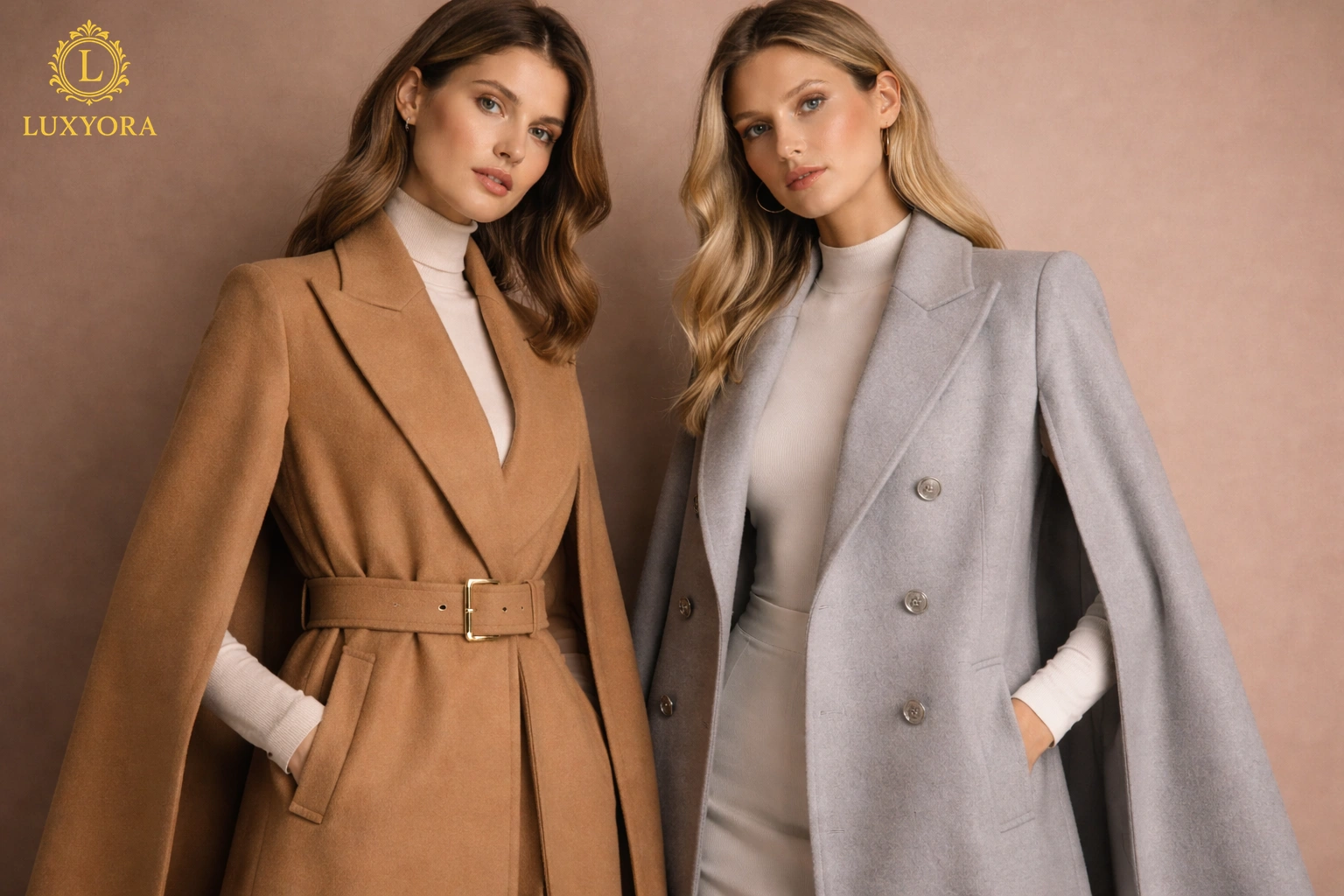
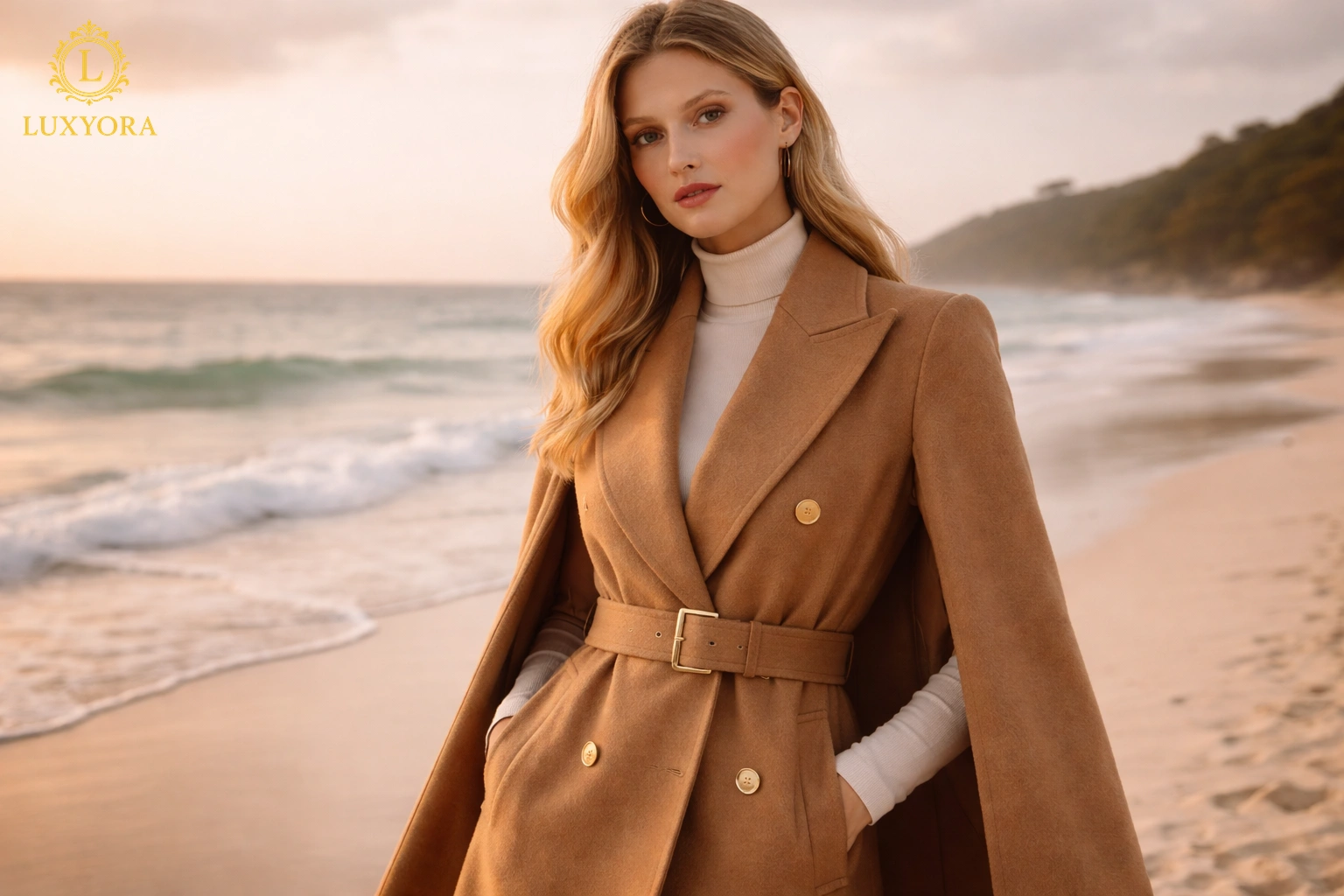
At its core, a tailored cape coat is a hybrid. It carries the discipline of a structured coat, sharp shoulders, defined seams, strategic shaping, while eliminating traditional sleeves. Instead, it drapes or falls from the shoulders in clean lines, sometimes with arm slits or hidden openings to preserve functionality.
Unlike traditional capes that emphasize volume and theatricality, tailored cape coats are engineered. Their structure relies on:
- Precision-cut shoulder lines
- Balanced weight distribution
- Internal canvas or interfacing
- Meticulous seam placement
- Luxury wool, cashmere, or blended textiles
The difference between a costume-like cape and a tailored cape coat lies in construction. True tailoring ensures that the garment maintains its shape while allowing fluid movement. It should skim the frame, not swallow it.
In today’s revival, designers and ateliers are refining proportions, shorter lengths for urban polish, midi cuts for drama, and sharply defined collars for added authority.
Why Structured Outerwear Feels So Relevant
1. A Cultural Shift Toward Power Silhouettes
Fashion has always reflected social undercurrents. In recent years, structured silhouettes have gained traction as symbols of self-assurance and intentionality. According to fashion forecasting reports published between 2021 and 2024, structured tailoring has seen renewed consumer interest, particularly in outerwear categories.
The tailored cape coat embodies this resurgence. It communicates composure and confidence without appearing aggressive. The clean shoulder line creates a commanding presence, while the open drape softens the effect.
It’s power dressing reimagined.
2. A Response to Oversized Casualwear
After seasons dominated by oversized puffers and relaxed layering, structured outerwear offers contrast. Where casual silhouettes emphasize comfort through volume, the cape coat emphasizes comfort through intelligent construction.
It allows freedom of movement without sacrificing elegance. This balance between ease and authority resonates deeply with modern consumers who seek versatility in their wardrobes.
3. The Investment Mindset
Luxury shoppers increasingly prioritize longevity over impulse purchases. Industry reports since 2019 highlight a growing preference for timeless silhouettes crafted from premium materials.
The tailored cape coat aligns perfectly with this philosophy. Its historical roots and enduring elegance position it as a long-term wardrobe investment rather than a fleeting seasonal piece.
Craftsmanship: The Invisible Luxury
True luxury lies in what you don’t immediately see. Tailored cape coats demand exceptional technical skill.
Shoulder Engineering
The shoulder is the structural anchor. Unlike sleeved coats, cape coats rely heavily on reinforced shoulder construction to maintain line and balance. Tailors often incorporate hidden padding or lightweight canvas to preserve shape without bulk.
Fabric Selection
Material choice determines everything. The most refined cape coats use:
- Double-faced wool for seamless interiors
- Cashmere blends for softness and insulation
- Virgin wool for durability
- Technical wool blends for lightweight structure
Double-faced wool, in particular, requires expert hand-finishing. Seams are often invisibly stitched, eliminating the need for heavy lining and allowing the fabric to drape naturally.
Edge Finishing
Edges must be razor clean. Because the silhouette exposes more surface area, unfinished or poorly stitched edges are immediately noticeable. Precision topstitching or hand-finished hems elevate the garment from ordinary to extraordinary.
Craftsmanship is not optional here; it’s foundational.
A beautifully tailored coat can capture attention instantly, but lasting appeal is usually hidden in the details you notice later. Read more about What to look for when buying quality apparel.
Styling the Tailored Cape Coat
The versatility of structured cape outerwear is one of its greatest strengths.
Over Tailoring
Layer it over a sharply tailored suit for a monochromatic power look. The cape enhances vertical lines, elongating the silhouette and adding architectural depth.
With Eveningwear
Draped over a sleek gown or minimalist dress, a tailored cape coat offers warmth without disrupting elegance. Its fluid movement feels cinematic without being costume-driven.
Casual Refinement
Even paired with denim and boots, the cape coat instantly elevates. Its structure brings balance to relaxed basics, transforming everyday dressing into considered styling.
The key lies in proportion. Slim trousers or streamlined dresses pair beautifully with the cape’s controlled volume.
Fabric Innovation and Sustainability
Sustainability has become central to luxury fashion conversations since 2018. Research in fashion sustainability underscores growing consumer demand for responsibly sourced materials and transparent production processes.
Modern tailored cape coats increasingly feature:
- Ethically sourced wool
- Recycled fiber blends
- Low-impact dyeing techniques
- Traceable supply chains
Structured outerwear, by nature, supports sustainable consumption. Its timeless appeal encourages long-term wear, reducing the need for frequent replacement.
The emphasis on craftsmanship further reinforces durability. A well-constructed cape coat can last decades with proper care.
The comeback of tailored cape coats suggests that statement outerwear is becoming more intentional. Beneath the sharp silhouettes and elegant lines, the conversation is shifting toward materials that are designed to last. Explore the Sustainable fabrics you’ll want in your closet right now.
The Psychology of the Cape
There’s something undeniably symbolic about capes. Historically associated with nobility, intellect, and authority, they carry subtle theatrical undertones.
Fashion psychology research highlights how clothing shapes perception, both self-perception and social interpretation. Structured garments, especially those with defined shoulders, are often associated with leadership and confidence.
The tailored cape coat delivers that impact without rigidity. It allows movement and softness within its structure. It feels protective yet liberating.
In uncertain times, garments that evoke strength and composure hold particular appeal.
Modern Interpretations
Today’s cape coats are far from uniform. Variations include:
- Belted waist designs for added definition
- High-collar styles for sculptural impact
- Cropped silhouettes for contemporary minimalism
- Floor-length cuts for dramatic presence
- Hidden arm slits for practical wear
Neutral tones dominate camel, charcoal, deep navy, and ivory, reinforcing their timelessness. However, jewel tones and monochrome winter whites are also gaining attention.
The modern iteration avoids excessive embellishment. Instead, it focuses on line, proportion, and material integrity.
Tailoring as Art
Tailoring is often described as architecture for the body. The tailored cape coat exemplifies this philosophy.
Creating a balanced cape requires advanced pattern drafting. Because sleeves are absent, the pattern must account for weight distribution and movement differently. Small miscalculations can distort the drape or cause uneven pull.
Expert tailoring ensures that:
- The garment falls symmetrically
- The neckline sits flush without gaping
- The hemline remains balanced
- The fabric moves fluidly with the wearer
This level of construction distinguishes luxury outerwear from mass-produced alternatives.
Why the Comeback Feels Permanent
Some trends resurface briefly before fading again. The tailored cape coat feels different.
Its resurgence is tied not only to nostalgia but to a broader shift toward structured elegance and considered dressing. As wardrobes become more curated, statement outerwear pieces serve as focal points.
Unlike trend-driven shapes that quickly date, the cape coat draws on centuries of sartorial history. It evolves, but it never disappears entirely.
The current revival reflects maturity in consumer taste, a desire for craftsmanship, heritage, and design integrity.
A Wardrobe Investment
A tailored cape coat isn’t just outerwear; it’s an heirloom in the making.
When crafted from premium materials and maintained properly, it transcends seasons. Its ability to layer across formal and casual contexts enhances cost-per-wear value.
Investing in structured outerwear is about embracing garments that define presence. It’s about selecting pieces that feel deliberate rather than disposable.
In a world increasingly saturated with fast cycles, the tailored cape coat stands as a reminder that elegance is patient.
The Future of Structured Outerwear
Looking ahead, structured outerwear is poised to remain central to luxury fashion. Industry analyses suggest continued demand for refined silhouettes and quality materials.
Cape coats may evolve lighter constructions for transitional seasons, modular designs for versatility, but their essence will remain intact.
They represent confidence without excess, structure without stiffness, and drama without noise.
And perhaps that’s exactly what modern luxury requires.
Luxyora Philosophy:True elegance is built, not borrowed. When structure meets intention, style becomes a quiet declaration of strength.
References:
Fletcher, K. (2019). Sustainable fashion and textiles: Design journeys (2nd ed.). Routledge.
Joy, A., & Peña, C. (2019). Sustainability and luxury fashion: A contradiction or a new paradigm? Fashion Theory, 23(5), 627–650.
Kim, H., & Sullivan, P. (2019). Emotional branding and consumer identity in fashion retail. Journal of Retailing and Consumer Services, 50, 202–210.
McKinsey & Company. (2023). The state of fashion 2023: Resilience in the face of uncertainty.
Thomas, D. (2019). Fashionopolis: The price of fast fashion and the future of clothes. Penguin Press.
WGSN. (2022). Outerwear forecast 2023–2025: Structured tailoring and heritage revival.