The Best Trail Shoes for Hiking | Luxyora
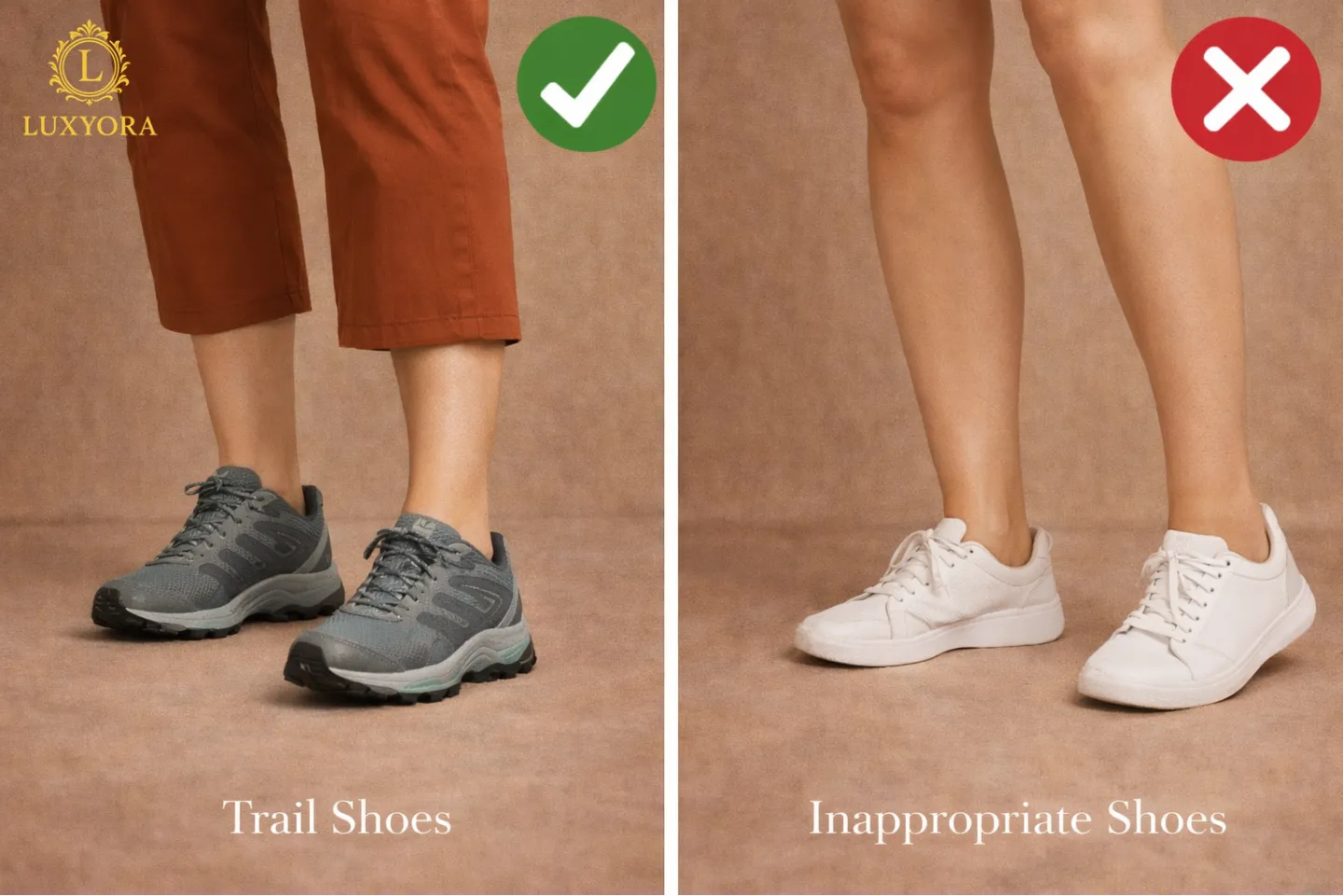
Hiking has a funny way of turning us into romantics. We’ll plan a route like it’s a love letter to the landscape, pack snacks with main-character energy, and then, if we’re not careful, ruin the whole mood with the wrong shoes. Because trail shoes are the quiet power move of any hike: they decide whether you glide over roots and rocks like you own the mountain, or spend the day negotiating every step.
The “best” trail shoes for hiking aren’t one magical pair. They’re a perfect match between your terrain, your pace, your pack weight, and the weather you’re about to flirt with. Below is the luxe-but-practical guide to choosing trail shoes that feel light, look sleek, and keep you steady when the trail gets unpredictable.
Step One: Choose Your Trail-Shoe Personality
1) Hiking shoes (low-cut hikers)
These are the polished all-rounders: sturdier than trail runners, lighter than boots. They’re built for day hikes and varied trails, with protective uppers and grippy outsoles ideal if you want stability without the bulk. Think: everyday trail confidence.
2) Trail runners (hiking’s “cool, fast” option)
Trail runners have become a serious hiking staple because they’re light, breathable, and quick-drying, especially useful for warm weather, long miles, and frequent stream crossings. The trade-off is durability and underfoot protection; many hikers replace them more often than traditional hiking shoes.
Grip, stability, and comfort are essential for great trail shoes, yet some outdoor enthusiasts eventually look for something that bridges the gap between hiking and speed. The answer may lie in a new generation of trail-ready boots. Read more about Top 10 Hiking Boots for Trail Running.
3) Approach shoes (the sleek climber-adjacent choice)
If your hikes include lots of rock, scrambling, or “hands-on” sections, approach shoes offer sticky traction and a more precise feel. They’re the fashion-meets-function option for technical terrain, but they can feel firmer underfoot on long, soft trails.
4) Light hiking boots (when you need more structure)
Yes, boots can still be the right call, especially for heavier packs, colder conditions, or long days on rough terrain where you want extra support and protection. Not everyone needs the added height, but many people love the secure, locked-in feel.
The Five Features That Make a Trail Shoe “The One”
Traction that actually bites
On trails, traction isn’t a vibe; it’s safety. Look for deeper lugs and a rubber compound designed for dirt, rock, and wet surfaces. If you hike on slick rock, roots, or muddy paths, prioritize outsole grip like it’s the entire assignment.
Underfoot protection (without feeling like a brick)
The best trail shoes shield you from sharp stones and uneven ground. Some use rock plates; others rely on midsole geometry and thickness. If you routinely finish hikes with sore soles, you probably need more underfoot protection.
Stability and torsional control
You want a shoe that doesn’t twist like a soft slipper on side slopes. A stable platform helps when the ground tilts, the trail is rubble-strewn, or your ankles are tired. This matters even more if you carry a pack.
Fit that feels secure, not squeezed
Your heel should feel held, your midfoot should feel supported, and your toes should have room to spread, especially on descents when feet swell and slide forward. A secure fit reduces friction (blisters) and improves control on technical steps.
Traction and durability often get the spotlight when discussing hiking footwear, but seasoned hikers know that true comfort starts with understanding your own feet. Read more about How to Choose the Right Shoes for Your Foot Type.
Weather strategy: breathable vs waterproof
Waterproof shoes can be wonderful in cold, wet conditions, but they can trap heat and take ages to dry. Non-waterproof shoes often dry faster and feel cooler in warm climates. The best choice depends on whether you’re dealing with intermittent splashes or all-day wetness.
Trail Shoe “Edits” for Different Hiking Styles
The Day-Hike Minimalist
You hike for the joy of it, two to six hours, moderate terrain, light pack.
Choose: a lightweight hiking shoe or protective trail runner with reliable traction and moderate cushioning.
The Fast Hiker (Speed Walks Count)
You like a brisk pace, you take fewer breaks, and you prefer feeling nimble.
Choose: a trail runner with stable geometry, a secure heel, and enough protection for the terrain you frequent.
The Rocky-Route Romantic
Your hikes include loose stone, scrambles, ridgelines, or uneven rock gardens.
Choose: a hiking shoe or approach-style shoe with excellent grip, a protective toe bumper, and a stable platform.
The All-Weather Realist
You hike through wet grass, rain, or shoulder-season slush, and you still want to look composed.
Choose: a waterproof hiking shoe or light boot with dependable traction; prioritize warmth and protection over ultralight breathability.
The Pack Carrier
If you’re hauling more gear (or just like being prepared), your feet need support that stays consistent for hours.
Choose: a sturdier hiking shoe or boot built for load-bearing comfort and stability.
Try-On Rules That Save You From Regret
- Try shoes later in the day when your feet are slightly larger.
- Wear the socks you’ll hike in; trail socks can change fit dramatically.
- Test the downhill feel: your toes shouldn’t slam the front when you walk down an incline.
- Lock the heel: if your heel slips, blisters will RSVP immediately.
- Walk for a full few minutes: comfort should feel “right” now, not after a mythical break-in.
A Note on Ankles: Do You Need More Height?
A lot of hikers assume higher collars automatically “protect” ankles. Real-world stability is more nuanced: balance, fit, traction, and fatigue all play a role. Some research suggests collar height can influence ankle mechanics in certain contexts, but it’s not a universal guarantee. If you love the security of a boot, wear it, just don’t rely on height alone. A stable shoe with great grip can be just as confidence-inducing for many hikers.
A Few Smart Picks (Without Getting Lost in Brand Hype)
If you want a shortcut, look for models that consistently score well in reputable gear testing for hiking shoes and trail footwear, especially for traction, comfort, and durability. Use those roundups as a starting line, then let fit decide the finish.
Luxyora Philosophy: The most luxurious trail shoe is the one that disappears on your foot, so the only thing you notice is the view, the air, and the way confidence feels with every step.
References:
- Backpacker. (2025, July 31). Should you hike in boots or trail runners? Here’s how a Backpacker editor chooses. Backpacker.
- Haghighat, F., et al. (2024). How boots affect the kinematics and kinetics of lower limb joints during walking: A systematic review. Scientific Reports.
- Katugam-Dechene, K., et al. (2025). The effects of shoe structural features on agility and stability as a measure of locomotor performance (PDF). PeerJ.
- Lai, J. H. C., et al. (2020). The effects of shoe collar height on ankle sprain mechanics: A systematic review. Foot & Ankle Orthopaedics.
- OutdoorGearLab. (2025, October 13). Best hiking shoes: Tested & ranked. OutdoorGearLab.
- REI Co-op. (2025). How to choose hiking boots and shoes. REI Expert Advice.
- REI Co-op. (n.d.). Hiking boots vs. trail runners: The great debate. REI Expert Advice.
- SectionHiker. (2024, January 3). When are hiking boots better than trail runners? SectionHiker.
Trail runners have become a serious hiking staple because they’re light, breathable, and quick-drying—especially useful for warm weather, long miles, and frequent stream crossings. The trade-off is durability and underfoot protection; many hikers replace them more often than traditional hiking shoes.
On trails, traction isn’t a vibe—it’s safety. Look for deeper lugs and a rubber compound designed for dirt, rock, and wet surfaces. If you hike on slick rock, roots, or muddy paths, prioritize outsole grip like it’s the entire assignment.