Care, Maintenance & Longevity in Watches : The Luxury Owner’s Guide | Luxyora
A great watch is like a great leather jacket: it gets better when you treat it well, and it gets tragic when you don’t. Whether your timepiece is a sleek quartz essential, a mechanical heirloom-in-the-making, or a hard-working sports watch that lives through airport security and ocean weekends, longevity isn’t luck; it’s a few smart habits repeated over time.
The good news? Proper care doesn’t require a workshop or white gloves. It requires attention, a little consistency, and knowing which “common sense” ideas are actually myths.
1) Daily care: the quiet luxury routine
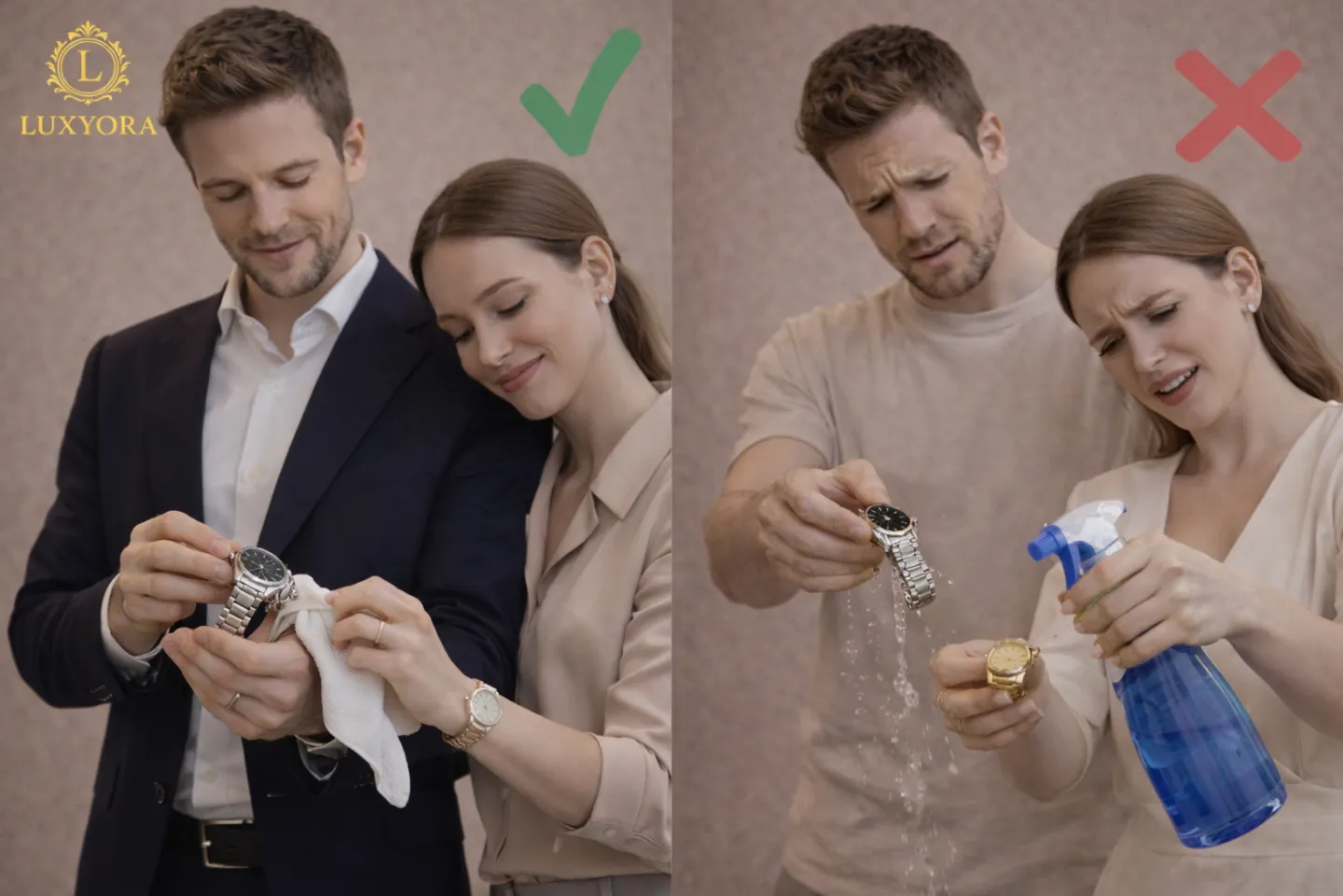
The most underrated watch-care step is also the simplest: wipe it down. Skin oils, fragrance, sunscreen, and everyday dust build up faster than you think, especially around bracelet links, clasps, and casebacks.
A soft microfiber cloth at the end of the day keeps the finish brighter for longer and prevents grime from becoming “permanent.” If you wear your watch daily, this habit alone can dramatically improve how it looks after a year.
Small but important detail: if your watch has a screw-down crown, always make sure it’s fully secured after setting the time. Loose crowns are a common path to moisture trouble (and very expensive regret).
2) Cleaning: do it safely, do it occasionally
Cleaning is where people get brave and where watches get hurt.
For many steel watches (especially those designed for water resistance), gentle cleaning can be done with mild soapy water and a soft brush, but only when you are confident the crown is properly secured and the watch is intended to handle water contact. If you’re unsure or if the watch is vintage, stick to dry cleaning with a microfiber cloth and get a professional pressure test before anything more adventurous.
Avoid harsh chemicals and random household sprays. They can damage gaskets, dull finishes, and degrade strap materials.
Bracelet tip: grime hides between links. Occasional careful cleaning keeps bracelets comfortable, prevents odor buildup, and preserves the look of polished edges and brushed surfaces.
3) Water resistance: “water-resistant” is not “waterproof”
This is the big one. Many watches are water-resistant; none are truly “waterproof” in a forever-guaranteed way. Water resistance is achieved through seals and gasket materials that naturally age and wear.
Here’s what matters in real life:
- Hot environments (like saunas and steam rooms) can stress seals.
- Sudden temperature changes can increase the risk of condensation.
- Saltwater and chlorine can be corrosive over time.
- Water resistance should be tested periodically, especially if you swim with the watch, travel with it, or have had it opened for battery changes or service.
If you treat your watch like a “set it and forget it” dive tool for ten years, you’re betting against physics. A pressure test is a small appointment that can prevent a movement rebuild.
4) Magnetism: the invisible time thief
Modern life is magnetic. Phone cases, tablet covers, speakers, and bag clasps may contain magnets strong enough to affect the accuracy of mechanical watches.
If your mechanical watch suddenly starts running noticeably fast, magnetism is a common culprit. The good news: demagnetizing is usually quick and straightforward for a qualified watchmaker. The better news: you can reduce the risk by not resting your watch directly on magnetic accessories and by storing it away from strong magnetic sources.
5) Shocks and scratches: manage what you can
Watches are tougher than they look, but a sharp impact can still damage a movement, knock hands out of alignment, or chip crystals, especially on older pieces.
Longevity-minded habits:
- Take your watch off for high-impact workouts.
- Be mindful around door frames and desk edges.
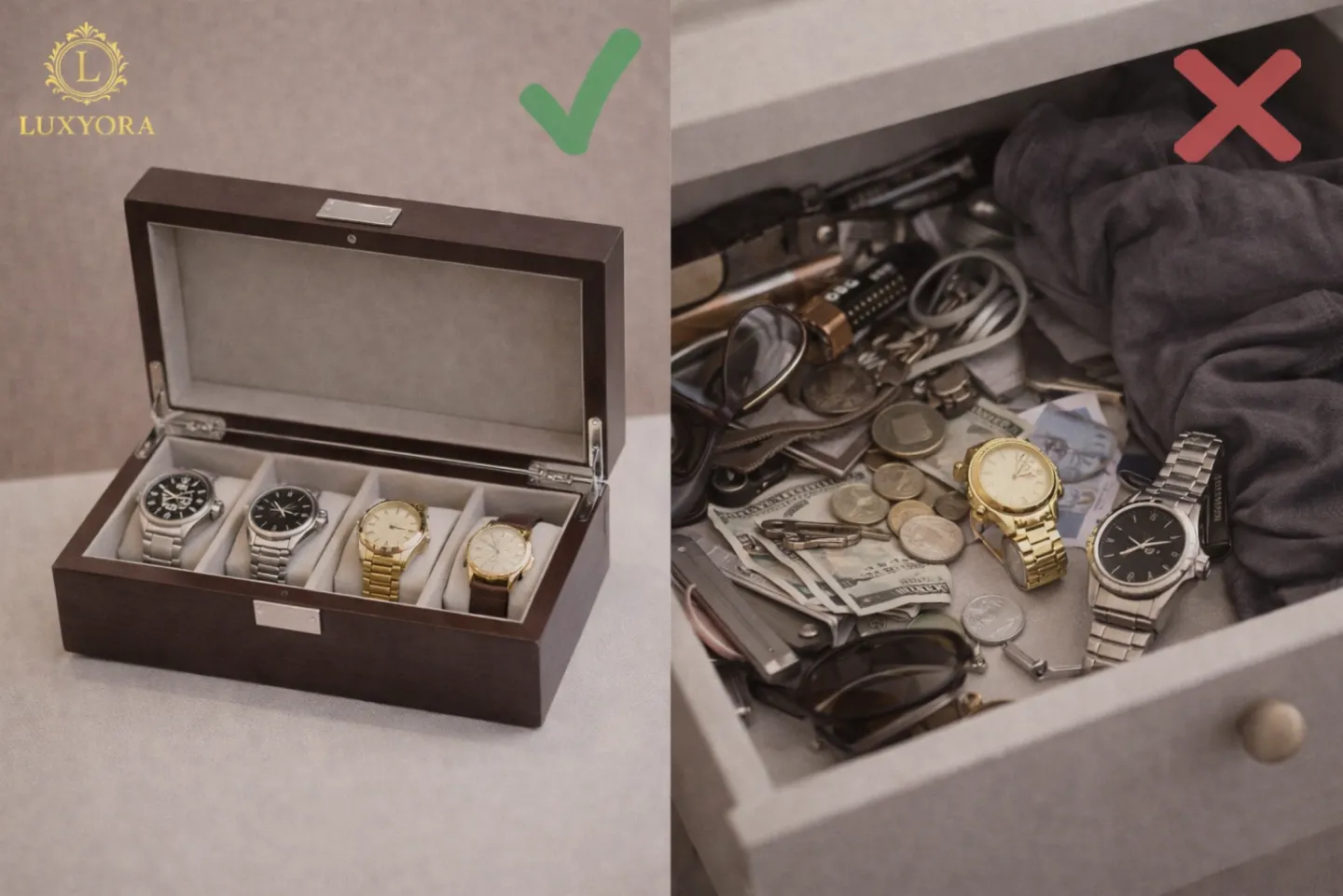
- Don’t throw your watch into a bag with keys.
Scratches are part of the story, but deep gouges and dented bezels can affect water resistance and resale value. Wear confidently, just don’t wear recklessly.
6) Storage: where your watch sleeps matters
If you rotate watches, storage becomes your behind-the-scenes hero.
- Store watches in a dry place, away from direct sunlight.
- Avoid humid bathrooms and hot windowsills.
- For leather straps, keep them away from prolonged moisture and extreme heat.
For mechanical watches, occasional winding helps distribute lubricants. If you have an automatic watch and don’t wear it for an extended period, a watch winder can be convenient, but it’s not mandatory. Think of it as comfort, not a requirement.
7) Servicing: the grown-up part of watch ownership
Servicing is where longevity becomes real. Mechanical movements rely on lubricants that degrade over time. Seals age. Components wear. Even a watch that “seems fine” can be quietly grinding toward expensive damage if it runs for too long without maintenance.
Many luxury brands recommend periodic functional checks and service intervals that depend on model and usage. The exact timing varies, but the principle is consistent: preventative servicing is cheaper than repairing avoidable wear.
Signals your watch may need attention sooner:
- noticeable loss of accuracy
- difficulty winding or setting
- moisture/fogging under the crystal
- crown or pushers that feel rough or loose
- unusual noises (especially rotor sounds in automatics)
A proper service typically includes disassembly, cleaning, lubrication, regulation, replacement of worn components, and water-resistance testing where applicable.
8) Straps: leather, rubber, and bracelets each have their own rules
Straps are the most “lifestyle-exposed” part of your watch.
Leather
- Keep it away from water and heavy sweat.
- Rotate straps if you wear the watch daily.
- Let straps dry naturally; never use direct heat.
Rubber
- Rinse after saltwater or chlorine exposure.
- Avoid storing in direct sun for long periods.
Metal bracelets
- Clean occasionally to prevent grime buildup.
- Ensure proper fit; too loose causes extra wear at contact points.
9) Quartz care: not “maintenance-free,” just different
Quartz watches are wonderfully low-fuss, but they still need care:
- Replace batteries promptly; leaving a depleted battery in the watch can risk leakage damage.
- After a battery change, seals should be checked and water resistance tested if the watch is designed for water use.
- Keep the exterior clean; grime still builds up.
Quartz longevity is excellent when battery changes are handled properly, ideally by a professional who treats the caseback and seals with respect.
Luxyora Philosophy: A watch lasts the longest when it’s treated like a companion, not a gadget worn often, cared for lightly, and serviced before it begs. The real luxury is time that keeps its beauty while it keeps its promise.
References:
- Cartier. (n.d.). Care recommendations (watch maintenance). Retrieved January 5, 2026, from Cartier Watch Services. (Cartier)
- International Organization for Standardization. (2010). ISO 22810:2010 Horology—Water-resistant watches. ISO. Retrieved January 5, 2026. (ISO)
- IWC Schaffhausen. (n.d.). Ten tips for watch care. Retrieved January 5, 2026, from IWC Schaffhausen. (iwc.com)
- IWC Schaffhausen. (n.d.). FAQ: Water-resistance testing and service information. Retrieved January 5, 2026, from IWC Schaffhausen. (iwc.com)
- Hodinkee. (2020, September 23). How to clean your watch. Hodinkee. (Hodinkee)
- Hodinkee. (2020, November 24). How to demagnetize your watch. Hodinkee. (Hodinkee)
- Hodinkee. (2023, January 23). Beginner’s guide: So you got a new watch…now what? Hodinkee. (Hodinkee)
- Rolex. (n.d.). Caring for your Rolex (watch care and service). Retrieved January 5, 2026, from Rolex. (Rolex)
- Schmidt, R. (2019). The wristwatch handbook: A comprehensive guide to mechanical wristwatches. ACC Art Books. (Amazon)
- Stone, G., & Pulvirent, S. (2018). The watch, thoroughly revised: The art and craft of watchmaking. Abrams. (Google Books)