Scalp Care Tips for Healthier Hair Growth | Luxyora
Suppose you’ve been treating your scalp like it’s just “the place where hair happens.” Consider this your gentle (but glamorous) intervention. Your scalp is skin complete with oil glands, a barrier to protect, and a whole ecosystem of microbes that can swing from harmonious to chaotic depending on how you treat it. When that environment is balanced, hair tends to look fuller, shinier, and more cooperative. When it’s inflamed, clogged with buildup, or constantly irritated? Growth can feel slower, shedding can look louder, and styling becomes a daily negotiation.
The vibe shift: stop obsessing over miracle lengths and start curating a scalp routine that enables growth.
1) Cleanse like you’re caring for skin, not “stripping hair”
Hair growth doesn’t require squeaky-clean. It requires clean enough meaning oil, sweat, pollution, and product residue don’t sit on follicles long enough to cause irritation or flaking.
Dermatologists keep it simple: wash based on how quickly your scalp gets oily. Straight hair and oily scalps may need frequent shampooing (even daily). Dry, textured, curly, or thick hair can often go longer and shampoo “when needed.”
Scalp-care move:
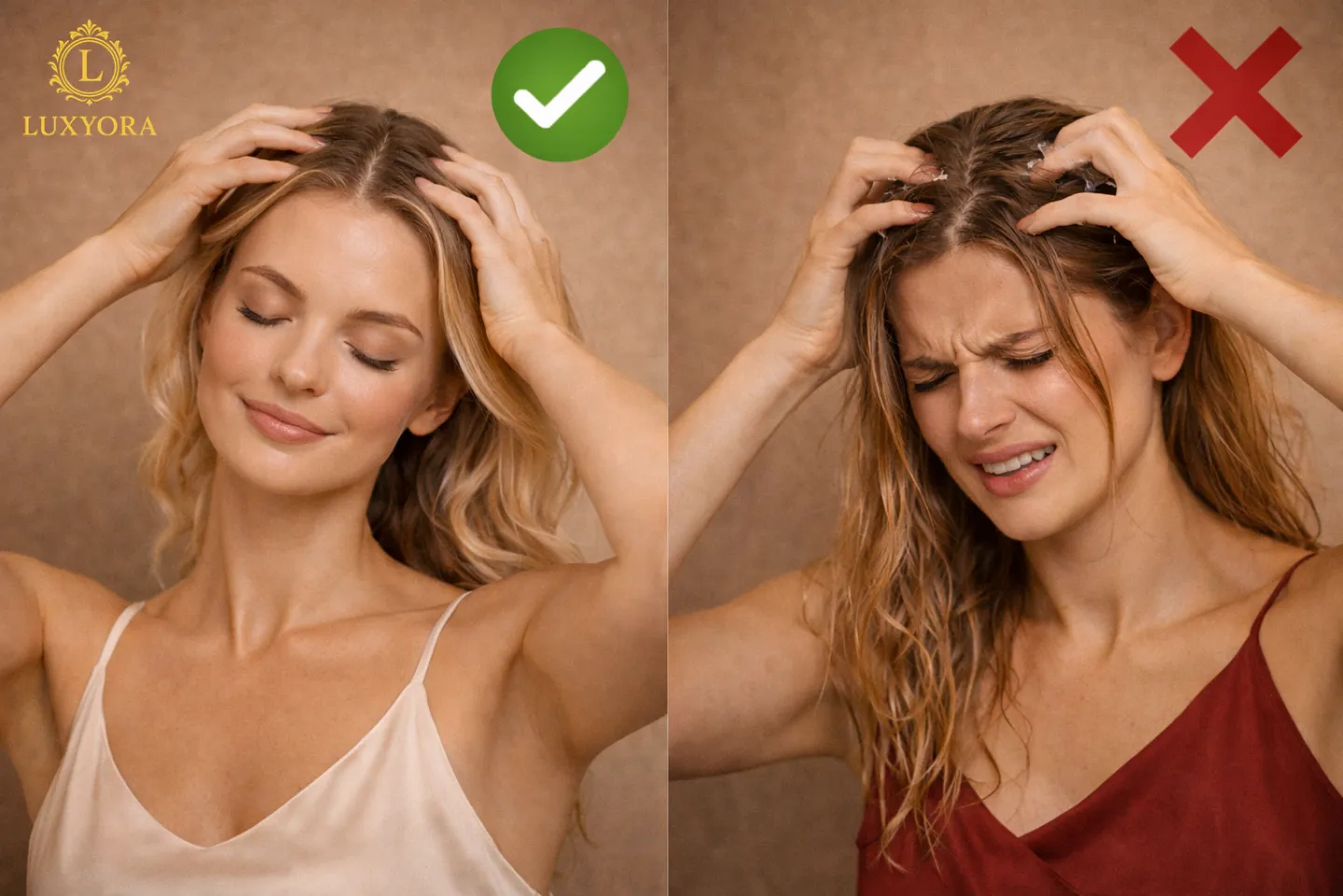
Concentrate shampoo at the roots, massage with fingertips (not nails), and let the lather rinse through the lengths.
2) Treat flakes like a scalp signal, not a personal failing
Dandruff and seborrheic dermatitis are extremely common, and they’re not solved by suffering through “less washing” if your scalp is actively flaking. If you have persistent flakes, itch, or greasy scaling, medicated shampoos may help, and frequency can matter.
AAD guidance for dandruff includes using dandruff shampoo in a way that fits your hair type (fine/straight may use it more often; curly/coily often needs a gentler cadence).
There’s also research interest in ketoconazole shampoo as a supportive option in androgenetic alopecia care, with reviews noting human studies showing increased hair shaft diameter with ketoconazole use (as part of therapeutic regimens, not as a solo “miracle”).
Scalp-care move: If flakes persist beyond a few weeks, or you see redness/soreness, consider a dermatologist because your “dandruff” might be something else.
3) Exfoliate-softly, strategically, and not like you’re sanding a table
Think of scalp exfoliation as skincare’s chic cousin: helpful when you have buildup, oiliness, itch, or heavy styling residue, but easy to overdo. A consumer health medical review notes that exfoliation can reduce buildup and flaking when performed safely and recommends avoiding it if the scalp is sunburned, injured, infected, or affected by certain conditions without professional guidance.
Even experts note that exfoliating 1-2 times per week can help unclog the scalp and enhance the effectiveness of topical products, while warning against harsh DIY methods.
Scalp-care move:
- Start once weekly if you use lots of product, sweat often, or get itchy.
- If your scalp is dry or reactive, try every other week (or skip and focus on gentle cleansing).
4) Make scalp massage your “low-effort, high-luxe” habit
Scalp massage is a ritual that is often perceived as indulgent and may at least be beneficial for stress, tension, and product distribution. But there’s also research suggesting it may influence hair parameters for some people.
A 2019 survey study of standardised scalp massage for androgenetic alopecia reported that many participants perceived stabilisation or regrowth, with a dose-response relationship between total effort and perceived improvement. (It’s self-reported, so not the same as a large clinical trial, but still an interesting signal.)
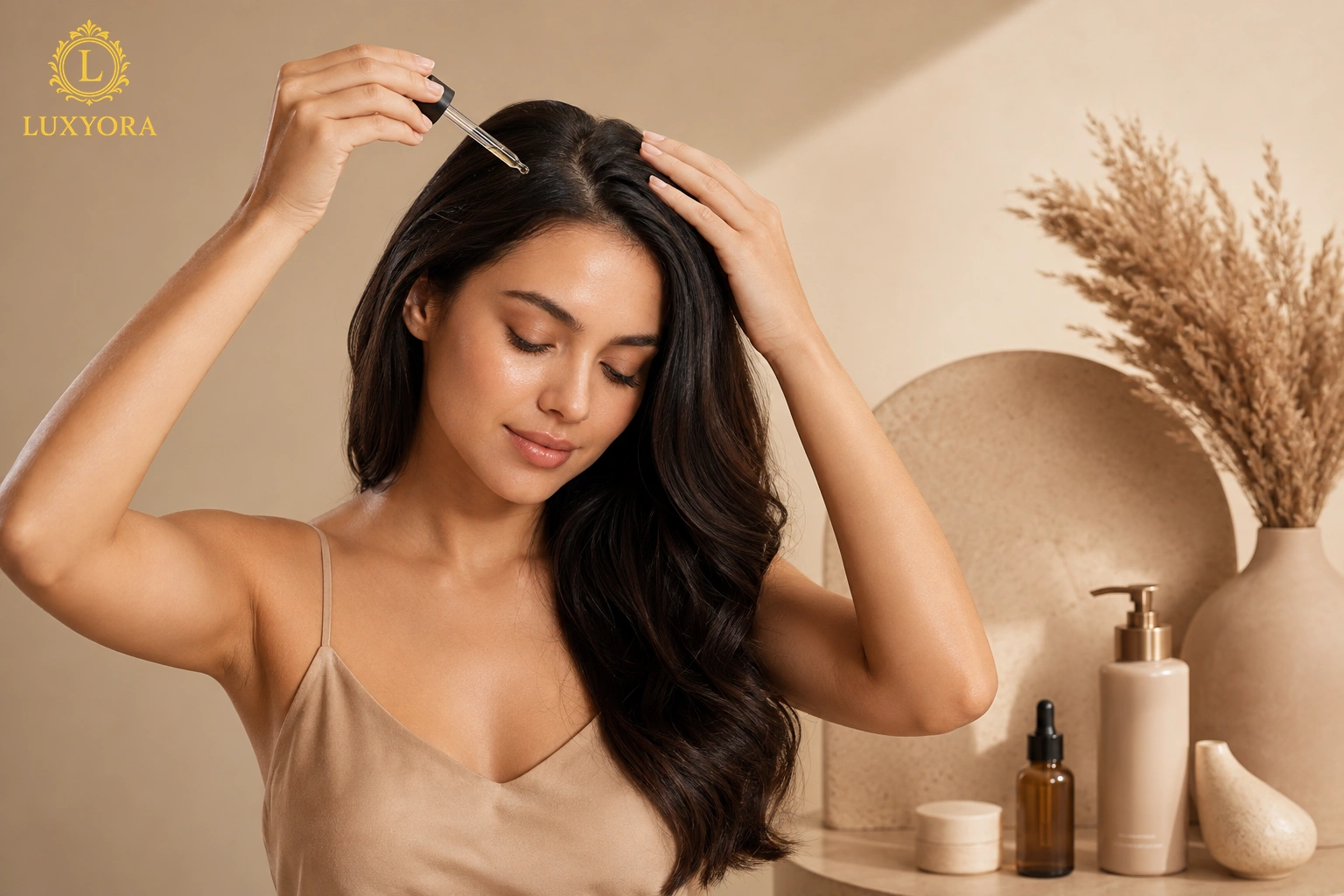
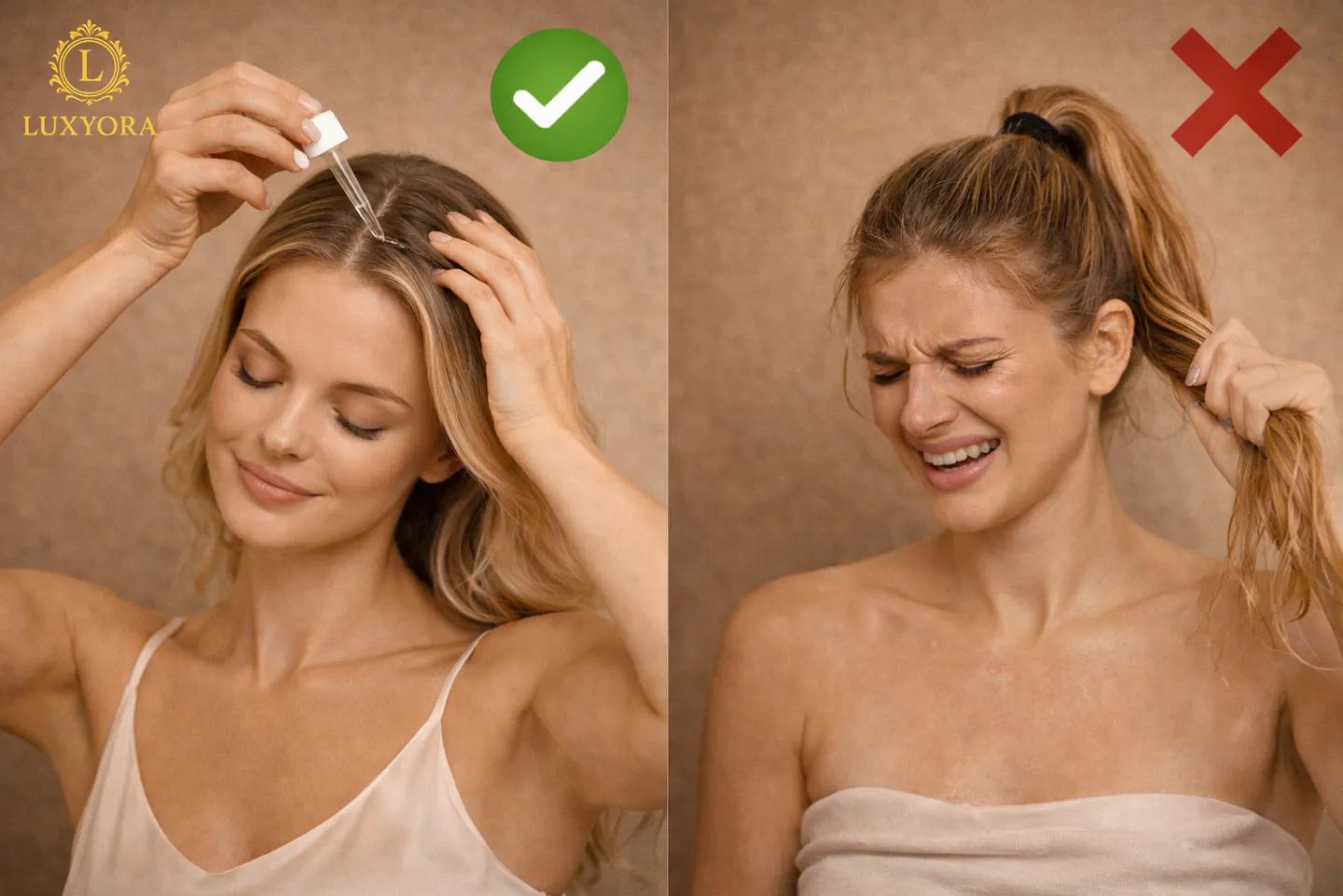
Scalp-care move: 3-5 minutes daily with fingertips, especially at the hairline and crown. If you’re using a serum, massage is your delivery system.
5) Respect the scalp microbiome: stop picking fights with it
The scalp microbiome (the community of bacteria and fungi living on the scalp) plays a role in scalp comfort, sebum balance, and flaking. Recent scientific work continues to link scalp dysbiosis (imbalance) with conditions such as dandruff and irritation, and explores how shifts in microbial balance correlate with symptom improvement.
Scalp-care move: avoid constant “scalp detoxing.” Rotate actives thoughtfully, and don’t stack exfoliating acids + medicated shampoo + harsh scrubs in the same week unless advised by a pro.
6) Protect your scalp from the sun (it’s the most ignored skincare zone)
If your part line burns, your scalp is screaming for SPF, especially if you have thinning or a wide part. The FDA notes that SPF primarily indicates protection against UVB and recommends choosing a broad-spectrum sunscreen to meet protection expectations.
AAD also explains how sunscreen labels like “broad spectrum” and SPF are defined by FDA standards, which are useful when you’re choosing a formula that actually protects.
Scalp-care move: hats, UV-protective styling (a shifted part), or a scalp-friendly SPF mist/powder.
7) Loosen your styles if you want to keep your edges
If you love a sleek ponytail, you don’t have to abandon it forever, but repeated tension can stress follicles. AAD warns that tight hairstyles can cause traction alopecia and recommends discontinuing tight styles if diagnosed and choosing lower-tension alternatives.
Scalp-care move: rotate styles, keep tension gentle, and give your hairline “rest days.”
8) Know when scalp care isn’t enough (and it’s time for treatment)
If you’re seeing widening parts, sudden shedding, bald patches, scalp pain, or scaling that won’t quit, don’t self-diagnose your way into chaos. Hair loss can have multiple causes; some need medical evaluation and targeted therapy. For androgenetic alopecia specifically, a 2022 clinical dermatology review notes that minoxidil is the only topical agent approved for pattern hair loss, and response can vary between individuals.
This doesn’t mean everyone needs it; it means there are evidence-based options when “clean scalp” isn’t the full story.
Scalp-care move: if hair changes are rapid or distressing, book a dermatologist appointment early. Timing matters.
The “quiet-luxury” scalp routine (copy/paste into your life)
- Wash as your scalp needs (oilier = more often; drier/textured = less often).
- Exfoliate 1x/week (or every other week if sensitive).
- Massage 3-5 minutes most days.
- Medicated shampoo only when you have a reason (flakes/itch), and use as directed.
- Sun-protect your part line and thinning areas.
- Style gently, especially around the hairline.
Luxyora Philosophy: Healthy hair growth starts with a scalp that feels calm, clean, and cared for. Luxury isn’t more products; it’s better rituals, done consistently.
References:
- American Academy of Dermatology Association. (2024, August 12). Tips for healthy hair. (American Academy of Dermatology)
- American Academy of Dermatology Association. (2024, November 6). Hairstyles that pull can lead to hair loss. (American Academy of Dermatology)
- American Academy of Dermatology Association. (2024, April 25). How to decode sunscreen labels. (American Academy of Dermatology)
- English, R. S., Jr., Barazesh, J. M., & Lu, L. S. (2019). Self-assessments of standardized scalp massages for androgenetic alopecia: Survey results. Dermatology and Therapy. (PMC)
- Fields, J. R., et al. (2020). Topical ketoconazole for the treatment of androgenetic alopecia: A systematic review. Dermatologic Therapy. (PubMed)
- Mayser, P. (2024). Scalp microbiome and dandruff—Exploring novel insights. Cosmetics, 11(5), 174. (MDPI)
- Maître, M., et al. (2025). Scalp microbiome dynamics can contribute to clinical improvement in seborrheic dermatitis/dandruff contexts. [Article on PMC]. (PMC)
- U.S. Food and Drug Administration. (2025, September 16). Sunscreen: How to help protect your skin from the sun. (U.S. Food and Drug Administration)
- Singh, S., & colleagues. (2022). Minoxidil pharmacology and clinical considerations for androgenetic alopecia. Clinical and Experimental Dermatology, 47(11), 1951–1957. (OUP Academic)
- Vogue. (2025). How scalp exfoliation can lead to stronger, shinier, and healthier hair. (Vogue)
- Verywell Health. (2024). How to exfoliate your scalp. (Verywell Health)