Anti-Ageing
Ageing is a natural biological process that affects every individual. However, the beauty industry has transformed the concept of ageing from something people simply accept into an area of active prevention, maintenance, and enhancement. Today, anti-ageing is one of the most influential sectors within the global beauty and skincare market, driven by scientific innovations, consumer awareness, and a growing desire for healthy, radiant skin at every age.
Modern anti-ageing is no longer solely focused on eliminating wrinkles. Instead, it encompasses a holistic approach that includes skin health, collagen preservation, hydration, protection against environmental damage, and lifestyle practices that support long-term skin vitality. Consumers are increasingly seeking evidence-based solutions that address visible signs of ageing while promoting overall skin wellness.
This comprehensive guide explores the meaning of anti-ageing, the science behind skin ageing, effective treatments, ingredients, practical skincare strategies, and emerging trends shaping the beauty industry.
What Is Anti-Ageing?
Anti-ageing refers to skincare practices, cosmetic treatments, lifestyle habits, and beauty products designed to reduce, delay, or manage visible signs of ageing. The primary goal is not necessarily to stop ageing but to maintain healthier, firmer, smoother, and more youthful-looking skin.
Common signs of skin ageing include:
- Fine lines and wrinkles
- Loss of skin elasticity
- Sagging skin
- Uneven skin tone
- Hyperpigmentation and age spots
- Dryness and dehydration
- Dull complexion
- Enlarged pores
- Reduced skin density
The anti-ageing beauty sector includes skincare products, professional aesthetic procedures, supplements, wellness solutions, and preventive skincare routines.
Understanding the Science of Skin Ageing
To understand anti-ageing strategies, it is important to know why skin ages in the first place.
Intrinsic Ageing
Intrinsic ageing is the natural ageing process controlled by genetics and biological factors. As we grow older:
- Collagen production decreases
- Elastin fibers weaken
- Cell turnover slows down
- Skin becomes thinner
- Natural oil production reduces
- Moisture retention declines
These changes contribute to wrinkles, dryness, and loss of firmness.
Extrinsic Ageing
Extrinsic ageing occurs due to external environmental influences. Major contributors include:
- Ultraviolet (UV) radiation
- Pollution
- Smoking
- Poor nutrition
- Chronic stress
- Lack of sleep
- Excessive alcohol consumption
Research suggests that photoageing caused by sun exposure accounts for a significant portion of visible skin ageing.
Why Anti-Ageing Matters in the Beauty Industry
The anti-ageing segment continues to dominate the beauty market because consumers increasingly prioritize prevention over correction.
Several factors drive this demand:
- Longer life expectancy
- Increased awareness of skincare science
- Social media influence
- Accessibility of professional treatments
- Growing male grooming market
- Preference for preventive skincare among younger consumers
Today, consumers often begin anti-ageing routines in their twenties and thirties rather than waiting until visible signs appear.
Key Anti-Ageing Ingredients Backed by Science
The effectiveness of anti-ageing skincare largely depends on active ingredients. Understanding these ingredients helps consumers make informed purchasing decisions.
Retinoids
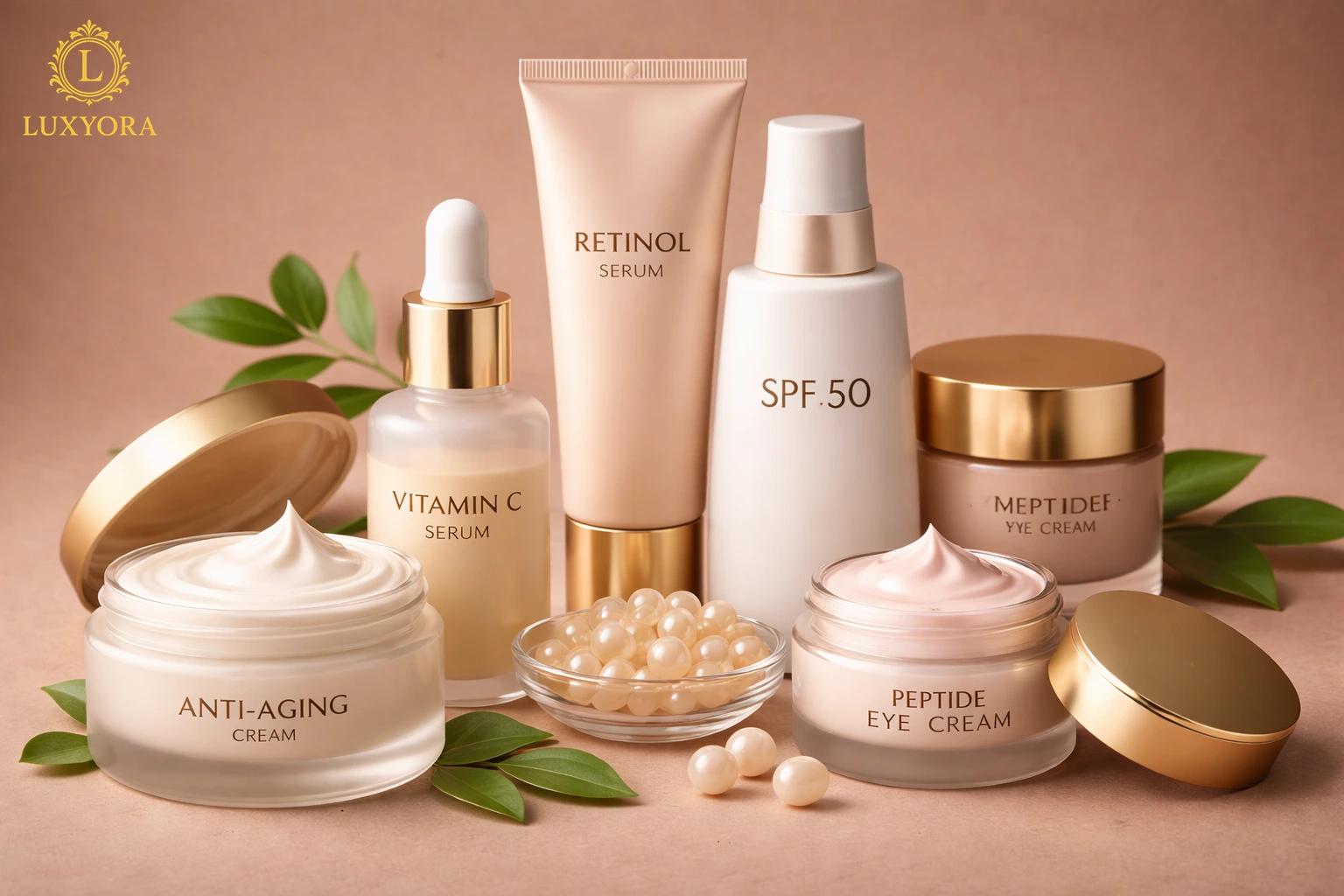
Retinoids, including retinol and prescription retinoic acid derivatives, are considered the gold standard in anti-ageing skincare.
Benefits include:
- Increased collagen production
- Reduced fine lines
- Improved skin texture
- Enhanced cell turnover
- Reduced pigmentation
Example Scenario:
A 42-year-old professional notices early crow ‘s-feet and uneven skin texture. Introducing a retinol serum gradually into her nighttime routine helps improve skin smoothness and reduce visible signs of ageing over several months.
Vitamin C
Vitamin C is a powerful antioxidant that:
- Protects against free radical damage
- Brightens skin tone
- Supports collagen synthesis
- Reduces hyperpigmentation
It is particularly effective when paired with daily sunscreen use.
Hyaluronic Acid
Hyaluronic acid attracts and retains moisture, helping skin appear:
- Plumper
- Smoother
- More hydrated
- More resilient
This ingredient is especially beneficial for mature and dehydrated skin.
Peptides
Peptides are chains of amino acids that support the production of collagen and elastin.
Benefits include:
- Improved firmness
- Better elasticity
- Reduced the appearance of wrinkles
Enhanced skin repair
Niacinamide
Niacinamide has become one of the most versatile anti-ageing ingredients due to its ability to:
- Strengthen the skin barrier
- Improve texture
- Reduce inflammation
- Minimize pore appearance
- Improve uneven skin tone
Alpha Hydroxy Acids (AHAs)
AHAs such as glycolic acid and lactic acid help:
- Exfoliate dead skin cells
- Improve skin texture
- Reduce fine lines
- Enhance product absorption
The Importance of Sunscreen in Anti-Ageing
If there is one anti-ageing product universally recommended by dermatologists, it is sunscreen.
UV radiation accelerates:
- Wrinkle formation
- Pigmentation
- Collagen breakdown
- Loss of elasticity
Daily use of broad-spectrum SPF 30 or higher significantly reduces the effects of photoageing.
Practical Tip
Even on cloudy days or when working indoors near windows, UV exposure can affect the skin. Applying sunscreen every morning should be a non-negotiable part of an anti-ageing skincare routine.
Building an Effective Anti-Ageing Skincare Routine
A successful anti-ageing routine does not require dozens of products. Consistency is far more important than complexity.
Morning Routine
- Gentle cleanser
- Vitamin C serum
- Moisturizer
- Broad-spectrum sunscreen SPF 30+
Evening Routine
- Cleanser
- Retinol or retinoid treatment
- Hydrating serum
- Moisturizer
Example Scenario
A 35-year-old marketing executive wants preventive anti-ageing care. Instead of purchasing numerous expensive products, she focuses on cleansing, sunscreen, vitamin C, and retinol. Within a year, her skin shows improved brightness and texture while maintaining firmness.
Professional Anti-Ageing Treatments
Modern aesthetic medicine offers numerous non-surgical anti-ageing procedures.
Chemical Peels
Chemical peels remove damaged outer skin layers and help:
- Improve texture
- Reduce pigmentation
- Minimize fine lines
Microneedling
Microneedling stimulates collagen production through controlled micro-injuries.
Benefits include:
- Improved firmness
- Reduced scars
- Enhanced skin rejuvenation
Laser Treatments
Laser technology can target:
- Pigmentation
- Wrinkles
- Sun damage
- Skin laxity
Radiofrequency Treatments
Radiofrequency treatments use heat energy to stimulate collagen remodeling, helping tighten and firm the skin.
Injectable Treatments
Popular options include:
- Neuromodulators
- Dermal fillers
- Biostimulators
These procedures can reduce dynamic wrinkles and restore facial volume when administered by qualified professionals.
Anti-Ageing Beyond Skincare
Healthy skin reflects overall wellness. Many anti-ageing strategies extend beyond cosmetic products.
Nutrition
Skin-supportive foods include:
- Fatty fish rich in omega-3s
- Leafy green vegetables
- Berries
- Nuts and seeds
- Lean proteins
Antioxidant-rich diets may help combat oxidative stress associated with ageing.
Hydration
Proper hydration supports:
- Skin elasticity
- Barrier function
- Cellular processes
Sleep
During sleep, the body performs essential repair processes.
Poor sleep quality may contribute to:
- Dull skin
- Fine lines
- Increased inflammation
Stress Management
Chronic stress can accelerate visible ageing through hormonal changes and increased inflammation.
Effective stress-management strategies include:
- Meditation
- Exercise
- Mindfulness practices
- Adequate rest
Common Anti-Ageing Myths
Myth 1: Expensive Products Work Better
Price does not always determine effectiveness. Evidence-based ingredients matter more than luxury branding.
Myth 2: Anti-Ageing Skincare Is Only for Older Adults
Preventive skincare often begins in the twenties and thirties, focusing on sun protection and collagen preservation.
Myth 3: Natural Products Are Always Safer
Natural ingredients can still cause irritation or allergic reactions. Safety depends on formulation and individual skin sensitivity.
Myth 4: Wrinkles Can Be Completely Eliminated
No product can completely stop ageing. The goal is to reduce visible signs and maintain healthy skin.
Emerging Trends in Anti-Ageing Beauty
The anti-ageing market continues to evolve rapidly.
Personalized Skincare
Brands increasingly use skin analysis tools and artificial intelligence to recommend customized anti-ageing regimens.
Skin Longevity
Rather than focusing solely on appearance, skin longevity emphasizes maintaining healthy skin function throughout life.
Microbiome-Friendly Formulations
Scientists are exploring how maintaining a balanced skin microbiome may support healthier ageing.
Sustainable Beauty
Consumers are seeking anti-ageing products with:
- Eco-friendly packaging
- Ethical sourcing
- Sustainable ingredients
Preventive Aesthetics
Younger consumers are increasingly investing in preventive treatments aimed at preserving collagen and delaying visible ageing.
Choosing the Right Anti-Ageing Products
When evaluating products, consumers should consider:
- Ingredient concentration
- Clinical evidence
- Skin type compatibility
- Packaging stability
- Dermatologist recommendations
A product containing proven ingredients with proper formulation is often more effective than one relying solely on marketing claims.
The Future of Anti-Ageing
The future of anti-ageing lies in combining science, technology, wellness, and personalization. Advances in dermatology, biotechnology, regenerative medicine, and skin diagnostics are creating opportunities for more effective and individualized approaches to skin health.
Consumers are becoming increasingly educated and selective, demanding transparency, scientific validation, and long-term benefits. As a result, the anti-ageing industry is moving toward evidence-based solutions that prioritize healthy ageing rather than unrealistic promises of eternal youth.
Conclusion
Anti-ageing has evolved into a sophisticated and science-driven segment of the beauty industry. Modern approaches focus on preserving skin health, protecting against environmental damage, supporting collagen production, and embracing preventive skincare practices. From retinoids and antioxidants to sunscreen and professional treatments, consumers now have access to a wide range of effective solutions.
The most successful anti-ageing strategy combines consistent skincare, healthy lifestyle habits, sun protection, and realistic expectations. Rather than attempting to stop time, anti-ageing today is about helping individuals look and feel their best at every stage of life. By understanding the science behind skin ageing and making informed beauty choices, consumers can support healthier, more radiant skin for years to come.
References
American Academy of Dermatology Association. (2024). Skin care and aging. American Academy of Dermatology.
Draelos, Z. D. (2023). Cosmetic dermatology: Products and procedures (4th ed.). Wiley-Blackwell.
Farage, M. A., Miller, K. W., Elsner, P., & Maibach, H. I. (2020). Intrinsic and extrinsic factors in skin ageing: A review. International Journal of Cosmetic Science, 42(3), 211–222.
Farris, P. K. (2022). The cosmetic dermatologist’s guide to skin care (2nd ed.). McGraw-Hill Education.
Ganceviciene, R., Liakou, A. I., Theodoridis, A., Makrantonaki, E., & Zouboulis, C. C. (2019). Skin anti-aging strategies. Dermato-Endocrinology, 11(1), 1–15.
Mukherjee, S., Date, A., Patravale, V., Korting, H. C., Roeder, A., & Weindl, G. (2018). Retinoids in the treatment of skin aging: An overview of clinical efficacy and safety. Clinical Interventions in Aging, 13, 1235–1248.
National Institute on Aging. (2024). Skin care and aging. U.S. Department of Health and Human Services.
Rinnerthaler, M., Bischof, J., Streubel, M. K., Trost, A., & Richter, K. (2018). Oxidative stress in aging human skin. Biomolecules, 8(1), 1–14.
Sadick, N., & Almohanna, H. (2021). Advances in non-invasive cosmetic procedures for skin rejuvenation. Journal of Cosmetic Dermatology, 20(9), 2621–2632.
Yaar, M., & Gilchrest, B. A. (2021). Photoaging: Mechanism, prevention and therapy. In K. Wolff et al. (Eds.), Fitzpatrick’s Dermatology (9th ed.). McGraw-Hill.