The Best Fabrics That Define Understated Luxury | Luxyora
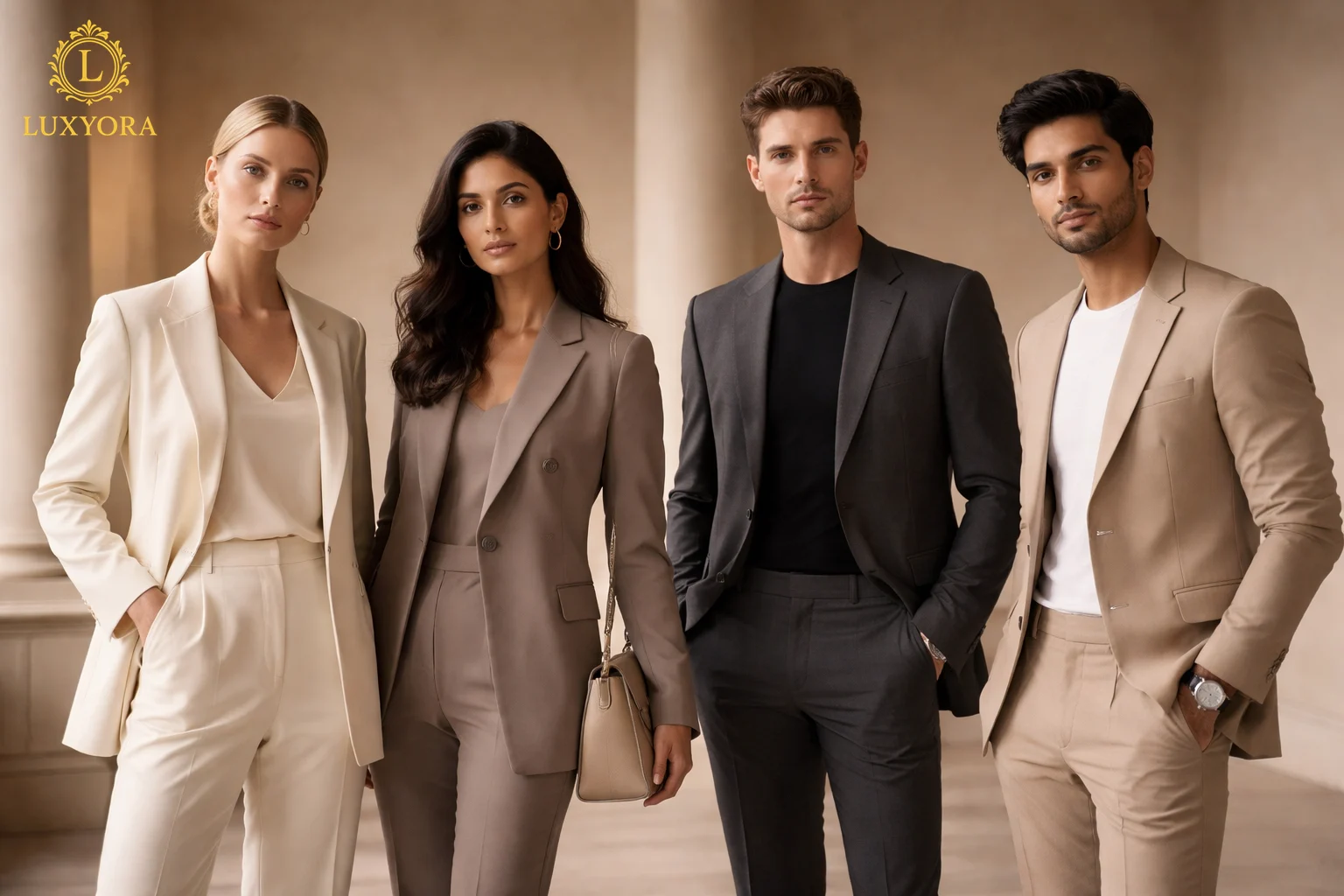
Luxury has evolved. The loud logos, overt embellishments, and attention-seeking finishes that once dominated fashion and interiors are quietly giving way to something far more enduring: material intelligence. Today, understated luxury is defined not by excess but by refinement, by the subtle confidence of impeccable fabrics, thoughtful tailoring, and craftsmanship that whispers rather than shouts.
At the center of this shift lies a deep appreciation for textiles. The way a coat drapes, the soft matte finish of brushed suede, the cool fluidity of linen blended with silk, these tactile experiences have become the new language of elegance. The modern luxury consumer is increasingly informed and values provenance, fiber quality, weaving techniques, and longevity over fleeting trends.
From featherlight merino wool to buttery cashmere and expertly tailored wool suiting, the best fabrics that define understated luxury are not simply beautiful; they are engineered through centuries of textile knowledge, artisanal processes, and sophisticated finishing techniques.
Why Fabric Matters More Than Ever in Modern Luxury
The contemporary luxury aesthetic is rooted in restraint. Rather than relying on ornamentation, understated luxury depends on silhouette, texture, and material authenticity. This is where exceptional fabrics become transformative.
A beautifully cut garment in inferior cloth will never achieve the same elegance as a minimalist silhouette crafted from superior fibers. Luxury fabrics possess a quiet visual depth, a richness that comes from the structure of natural fibers, skilled spinning, and artisanal finishing.
Consumers are also becoming increasingly aware of craftsmanship. Hand-combed cashmere, Super 120s wool, full-grain suede, and long-staple cotton are no longer niche terms reserved for textile experts. They are markers of quality that sophisticated buyers actively seek.
The appeal of understated luxury lies in this awareness. It is not about displaying wealth; it is about understanding quality.
Cashmere: The Soft Power of Quiet Luxury
Few fabrics embody understated luxury as completely as cashmere. Known for its extraordinary softness and insulating properties, cashmere has become synonymous with refined minimalism.
What Makes Cashmere Exceptional?
Cashmere originates from the fine undercoat fibers of goats raised in cold mountainous climates. The harsh environment produces ultrafine fibers that trap heat while remaining incredibly lightweight.
What distinguishes premium cashmere from ordinary variants is fiber length and micron count. Longer fibers resist pilling and create smoother yarns, while finer micron measurements produce the cloud-like softness associated with luxury knitwear.
High-quality cashmere undergoes careful dehairing, spinning, and finishing processes that preserve its integrity. The result is a fabric that feels warm without heaviness and luxurious without appearing flashy.
Why Cashmere Defines Understated Elegance
Cashmere does not rely on shine or embellishment. Its beauty lies in touch, drape, and subtle movement. A perfectly cut cashmere coat or relaxed knit instantly communicates sophistication through texture alone.
The fabric also ages beautifully when properly maintained. Over time, quality cashmere develops a lived-in softness that enhances its appeal rather than diminishing it.
In modern wardrobes, cashmere represents investment dressing, fewer pieces, better materials, and timeless wearability.
Linen-Silk Blends: Relaxed Sophistication with Fluid Texture
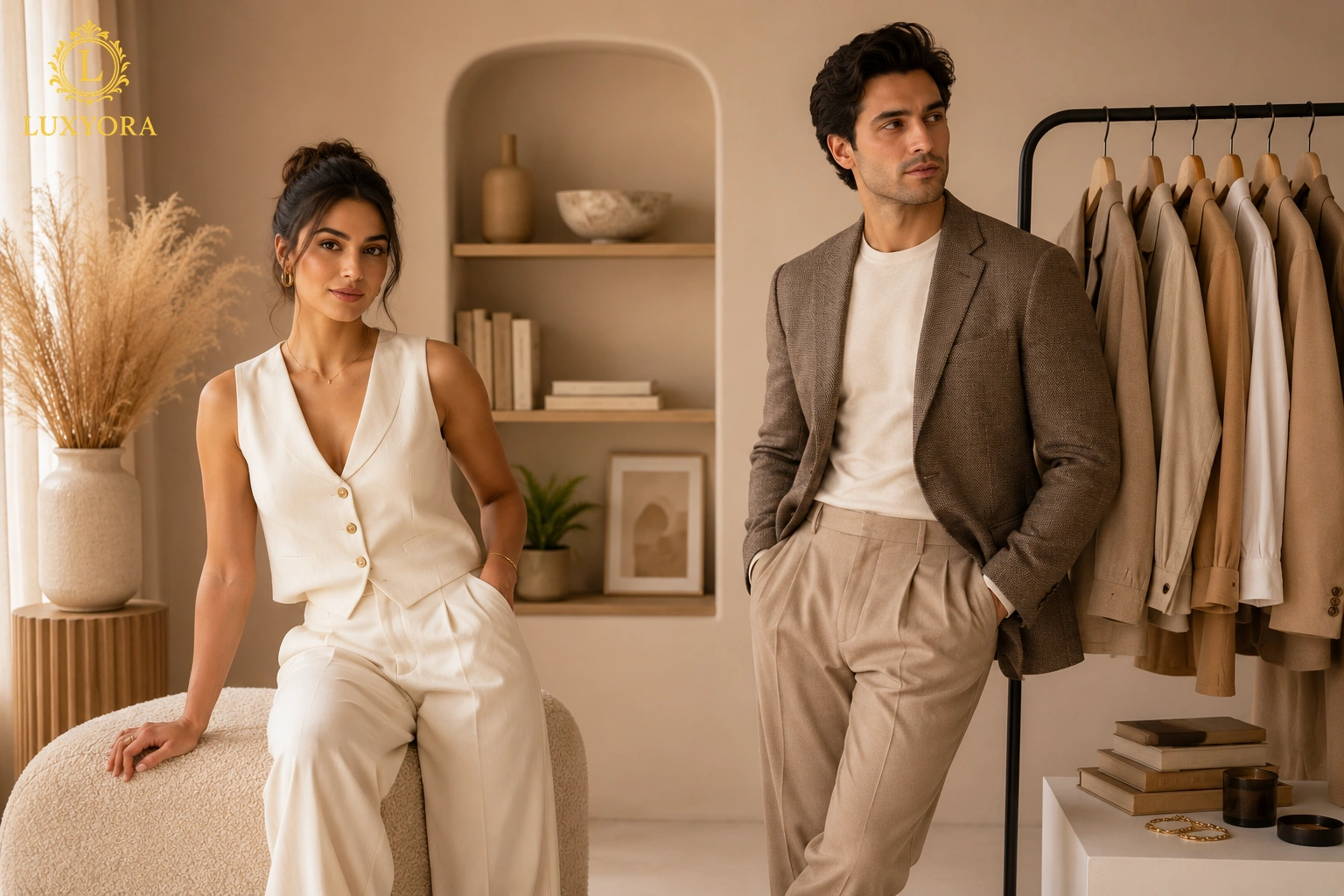
Linen and silk may appear to belong to different worlds: one crisp and earthy, the other luminous and fluid. Yet together, they create one of the most sophisticated fabric blends in luxury fashion.
The Beauty of Contrast in Textile Engineering
Linen is celebrated for its breathability, natural slub texture, and cooling properties. However, pure linen wrinkles easily and can sometimes feel overly rustic for elevated tailoring.
Silk changes the equation.
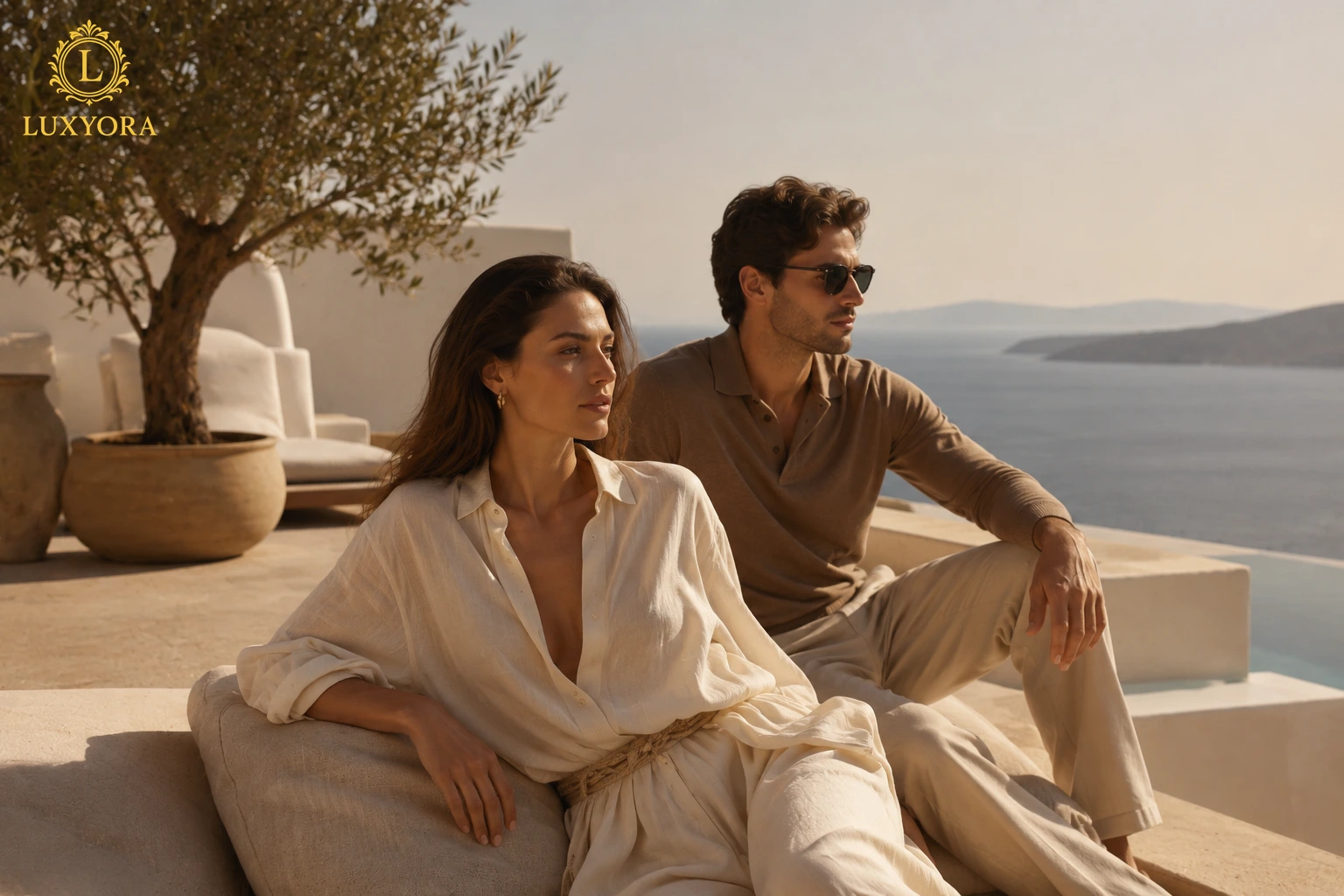
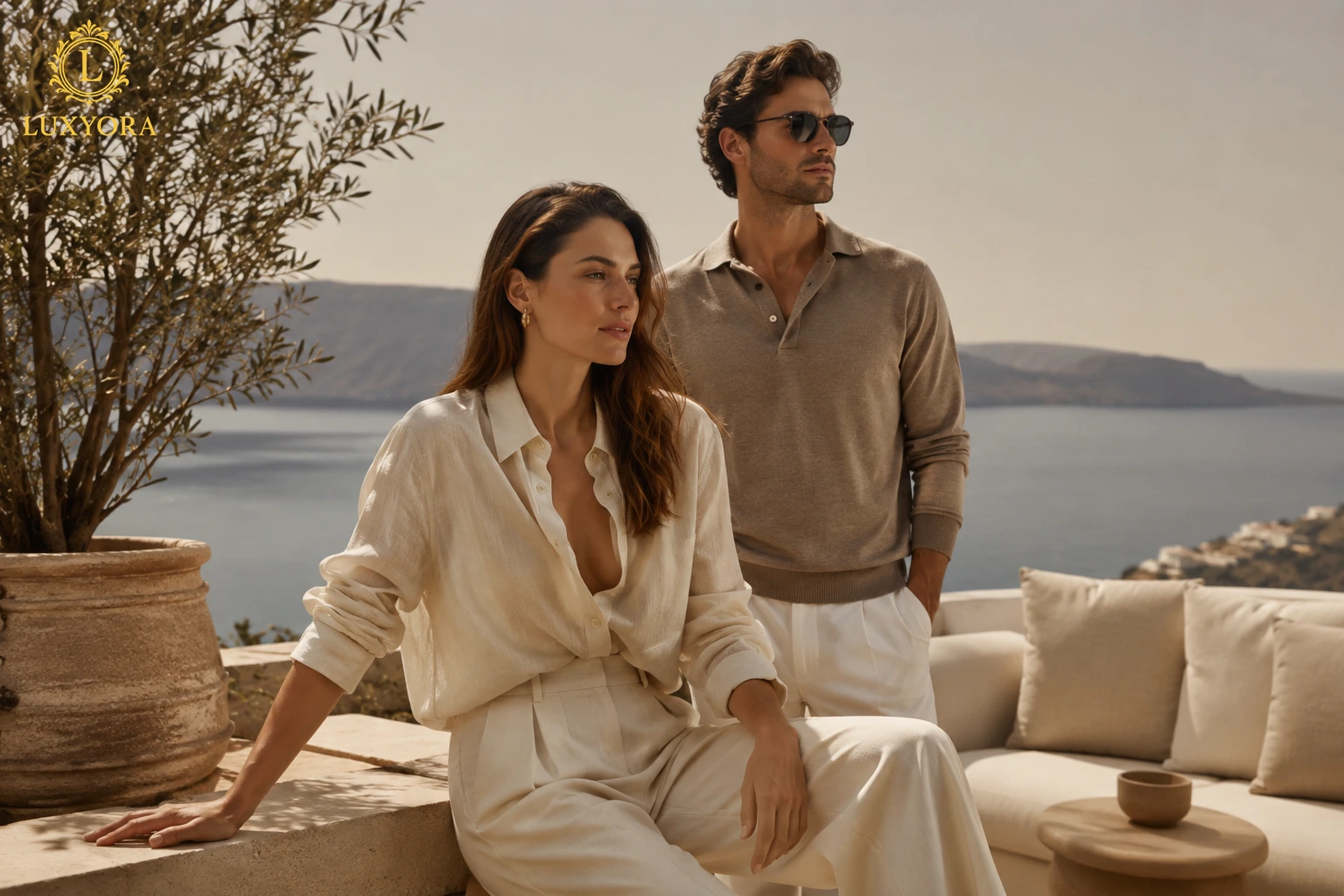
When blended with linen, silk softens the fabric’s structure, adds gentle sheen, and improves drape while preserving linen’s airy freshness. The result is a textile that feels simultaneously relaxed and polished, the hallmark of understated luxury.
Why Linen-Silk Blends Feel Effortlessly Expensive
The appeal of linen-silk lies in its imperfection. Unlike synthetic shine or heavily processed fabrics, linen-silk blends possess organic irregularities that create depth and movement.
These fabrics are especially prized in warm-weather tailoring, flowing dresses, lightweight blazers, and resort-inspired luxury clothing because they maintain structure without rigidity.
Their elegance feels natural rather than engineered, exactly what modern quiet luxury demands.
Merino Wool: Performance Meets Refinement
Merino wool has undergone a remarkable transformation in the luxury market. Once associated primarily with knitwear and outdoor performance garments, fine merino is now a cornerstone of elevated modern dressing.
The Science Behind Merino Wool
Merino fibers are significantly finer than traditional wool, making them softer, more breathable, and less itchy against the skin. The fibers naturally regulate temperature, wick moisture, and resist odor, making merino uniquely versatile.
What makes luxury-grade merino exceptional is fiber fineness. Ultra-fine merino can rival cashmere in softness while maintaining greater durability and resilience.
The fabric also responds beautifully to tailoring. Fine merino suiting fabrics drape elegantly while remaining lightweight enough for year-round wear.
Why Designers and Tailors Favor Merino
Understated luxury thrives on functionality disguised as elegance. Merino wool embodies this philosophy perfectly.
A fine merino sweater maintains crispness without stiffness. Tailored merino trousers move fluidly while retaining shape. Structured merino coats provide warmth without bulk.
The fabric’s versatility allows luxury wardrobes to feel effortless, an essential characteristic of modern sophistication.
Suede: Texture as a Statement of Refinement
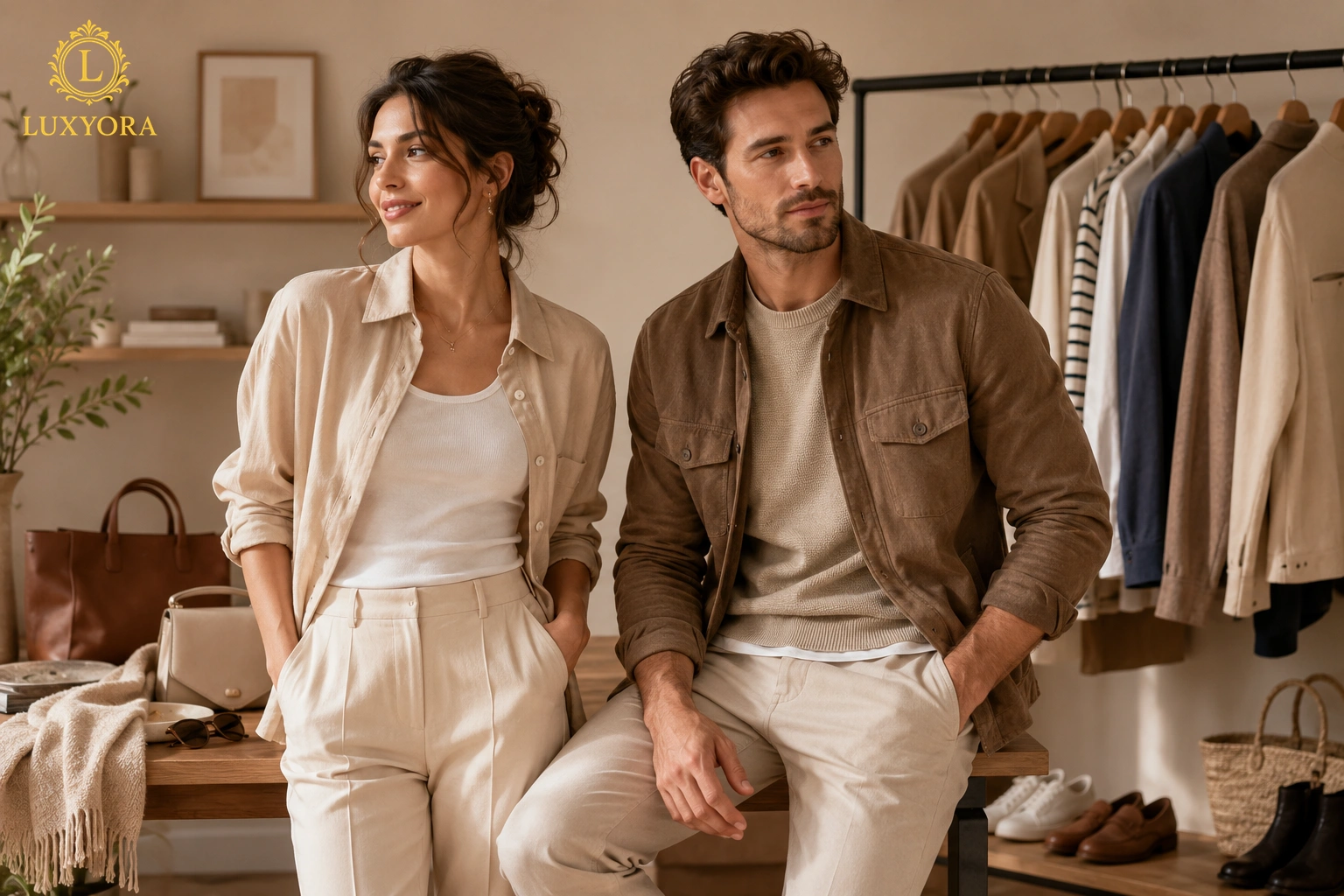
Suede occupies a unique position in luxury craftsmanship because its appeal is almost entirely tactile. Soft, velvety, and visually matte, suede introduces depth without visual noise.
Understanding Premium Suede
True luxury suede is crafted from the underside of high-quality leather hides and carefully buffed to create its signature nap.
The quality of suede depends heavily on hide selection, tanning methods, and finishing techniques. Superior suede has a uniform texture, rich color saturation, and a buttery hand feel that synthetic alternatives cannot replicate.
Artisans often favor calf or lamb suede for luxury products because of their finer grain and softer texture.
Why Suede Represents Quiet Sophistication
Unlike glossy leather, suede absorbs light rather than reflecting it. This muted finish gives suede an understated richness that aligns perfectly with contemporary luxury aesthetics.
Suede jackets, loafers, handbags, and accessories communicate refinement through material quality alone. The softness suggests comfort, while the craftsmanship signals exclusivity.
There is also a deeply human quality to suede. It develops character over time, creating patina and texture variations that make each piece feel personal and authentic.
Fine Cotton: The Foundation of Elevated Everyday Dressing
Fine cotton is often underestimated in discussions of luxury textiles because of its familiarity. Yet the world’s most sophisticated wardrobes are built on exceptional cotton fabrics.
What Separates Fine Cotton from Ordinary Cotton?
Luxury cotton begins with fiber length. Long-staple and extra-long-staple cotton fibers produce smoother, stronger, and softer yarns.
Premium cotton fabrics are woven with higher thread precision and finished using techniques that enhance softness, breathability, and durability without compromising natural texture.
Poplin, twill, voile, brushed cotton, and cotton sateen all offer different expressions of luxury depending on weave and finishing.
Why Fine Cotton Feels Luxurious
The finest cotton garments possess an effortless crispness and fluidity that cheaper fabrics struggle to replicate.
A beautifully tailored cotton shirt should feel cool against the skin, maintain elegant structure, and soften gracefully over time. High-quality cotton also holds dye exceptionally well, producing richer neutrals and cleaner whites.
In understated luxury, fine cotton becomes the quiet backbone of refined dressing, polished yet entirely unpretentious.
Tailored Wool: The Architecture of Timeless Luxury
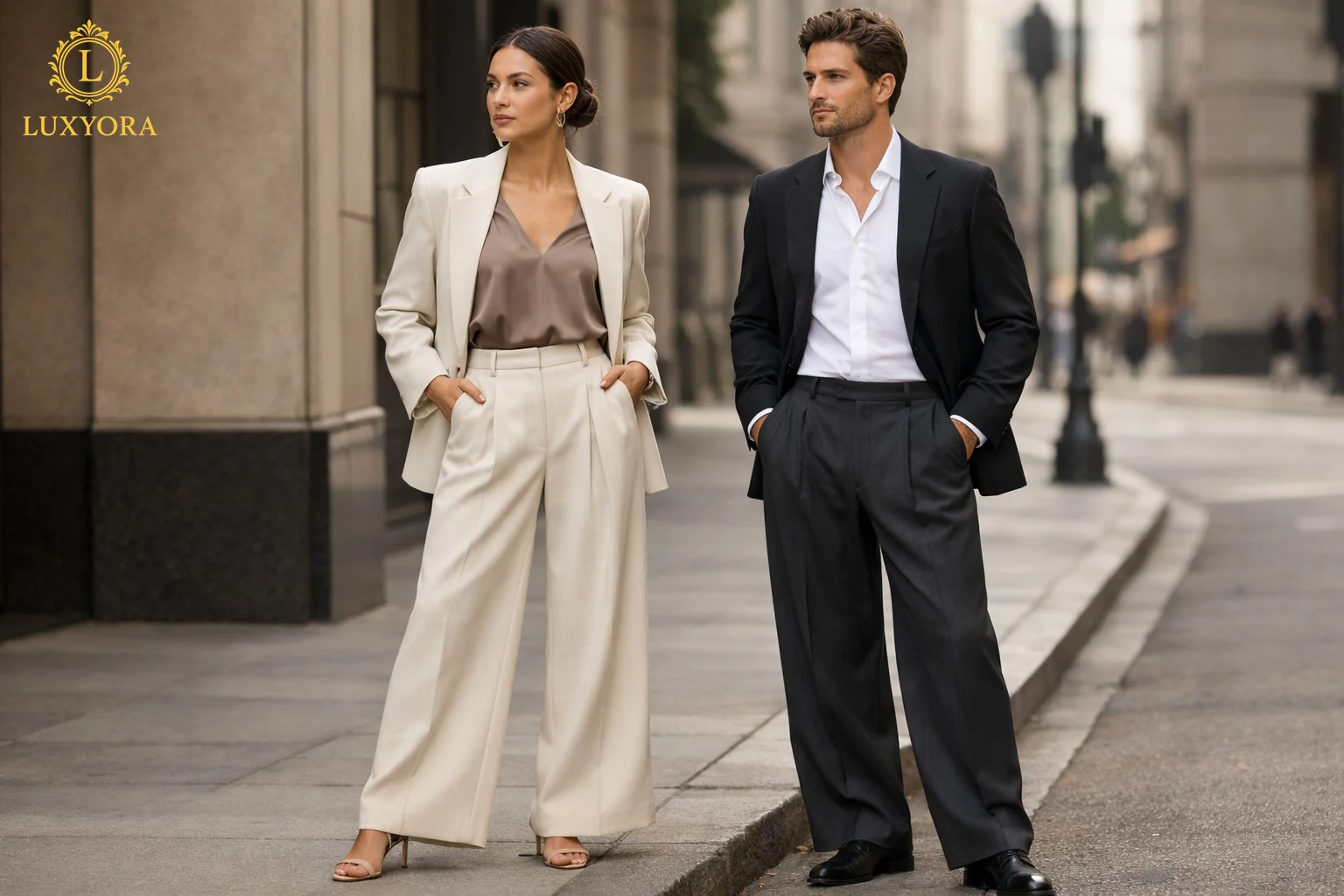
Tailored wool remains one of the most respected fabrics in luxury craftsmanship because it combines structure, movement, and durability in a way few materials can achieve.
The Art of Wool Tailoring
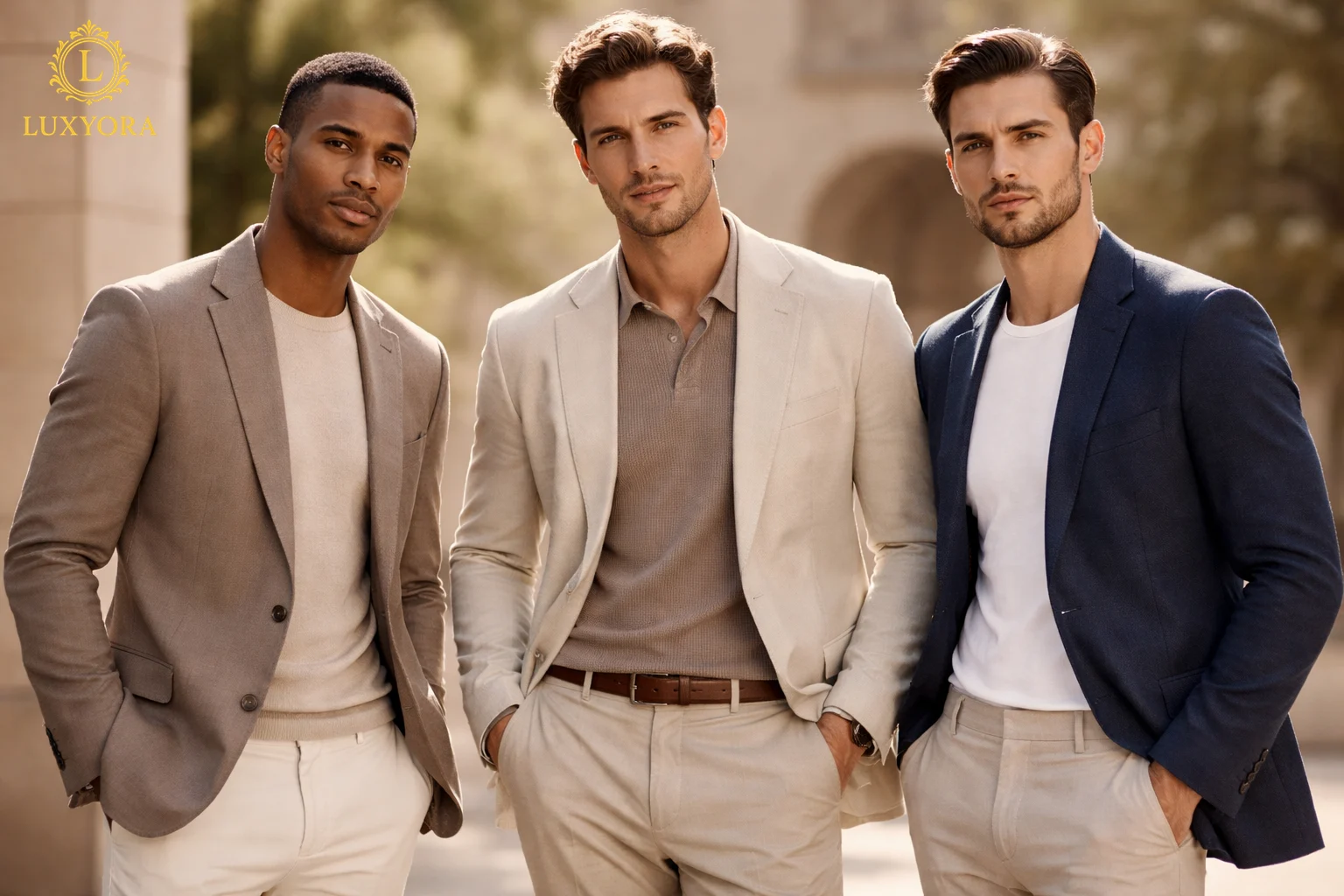
Luxury wool suiting fabrics are categorized by fineness, often expressed through “Super” numbers such as Super 100s or Super 150s. These classifications indicate fiber diameter and softness.
Higher-grade wool fabrics create smoother surfaces, superior drape, and lighter construction while retaining resilience.
The true magic of tailored wool emerges through craftsmanship. Expert cutting, canvas construction, and hand-finishing techniques allow wool garments to contour naturally to the body over time.
Why Tailored Wool Defines Lasting Sophistication
Tailored wool represents discipline in design. It does not rely on trend cycles because its elegance is rooted in proportion, fit, and textile excellence.
A beautifully tailored wool coat or impeccably cut blazer carries authority without aggression. It signals confidence through precision rather than spectacle.
This restrained elegance explains why tailored wool remains central to the philosophy of understated luxury.
Craftsmanship: The Invisible Luxury Behind Exceptional Fabrics
Luxury fabrics are only as impressive as the craftsmanship behind them.
Textile finishing, weaving density, spinning methods, garment construction, and dye quality all influence how a fabric behaves over time. Even the finest cashmere can feel mediocre if poorly spun or incorrectly finished.
The rise of understated luxury has renewed appreciation for artisanal production techniques such as:
- Hand-brushing wool for softness
- Slow weaving for improved fabric density
- Vegetable tanning in suede production
- Double-faced cashmere construction
- Natural enzyme washing for fine cotton
- Precision tailoring with floating canvas structures
These techniques are often invisible to the casual observer, yet they profoundly shape how garments feel, move, and age.
True luxury lives in these hidden details.
Why Understated Luxury Is Becoming the Future of Fashion
The growing preference for quiet luxury reflects a broader cultural shift toward intentional consumption. Consumers increasingly value longevity, versatility, and craftsmanship over trend-driven excess.
Fabrics now carry emotional meaning. People want clothing and accessories that feel comforting, intelligent, and enduring.
Cashmere offers softness without fragility. Linen-silk blends balance elegance with ease. Merino wool combines performance with sophistication. Suede introduces tactile richness. Fine cotton elevates daily essentials. Tailored wool provides timeless structure.
Together, these fabrics create wardrobes that feel deeply personal rather than performative.
Understated luxury is ultimately about confidence, the confidence to let quality speak quietly for itself.
Luxyora Philosophy: True luxury is never loud; it is felt in texture, craftsmanship, and the quiet confidence of timeless materials. The finest fabrics do not chase attention; they create enduring elegance through authenticity and refined simplicity.
References:
Black, S. (2022). Textiles and fashion: Materials, design and technology (2nd ed.). Bloomsbury Publishing.
Clarke, S., & O’Mahony, M. (2019). Luxury fashion and textiles: Craftsmanship, sustainability and innovation. Routledge.
Kadolph, S. J. (2021). Textiles (13th ed.). Pearson.
Llewellyn, D. (2020). The modern guide to textile properties and performance. Fairchild Books.
Muthu, S. S. (2019). Luxury and sustainable fashion supply chain management. Springer.
Rissanen, T., & McQuillan, H. (2020). Zero waste fashion design. Bloomsbury Publishing.
Smithsonian Center for Education and Museum Studies. (2021). The history and craftsmanship of natural fibers in luxury textiles. Smithsonian Textile Studies Journal, 14(2), 44–58.
The Woolmark Company. (2023). Merino wool and modern tailoring innovations. Textile Innovation Review, 11(3), 18–27.
Thomas, D. (2019). Fashionopolis: The price of fast fashion and the future of clothes. Penguin Press.
Wilson, J. (2022). Quiet luxury and the return of material craftsmanship in fashion culture. International Journal of Fashion Studies, 9(1), 61–78.