Fragrance Longevity
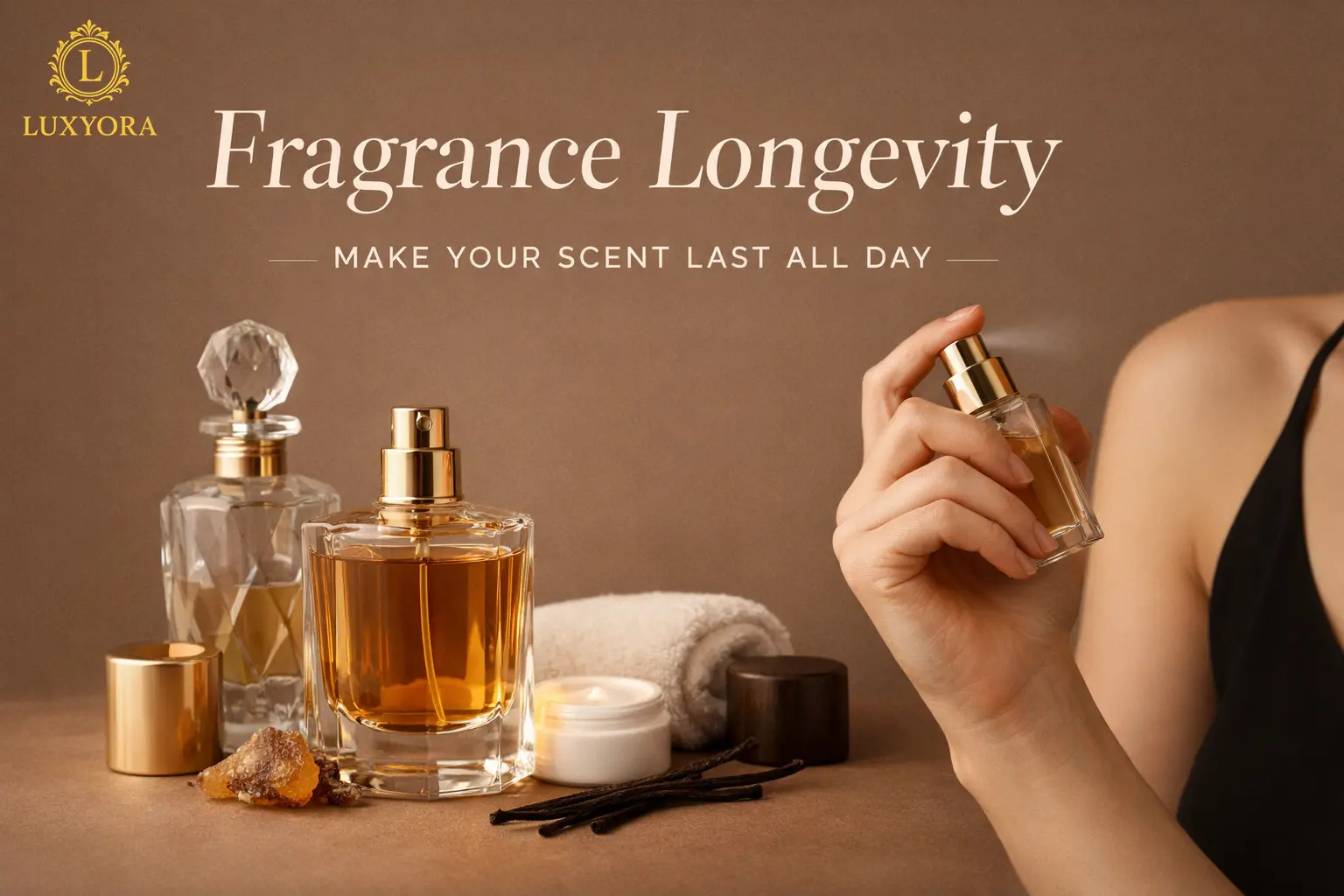
Fragrance longevity is a key aspect in the perfume world that many people often misunderstand. Whether you’re splurging on a luxury scent or picking out your everyday signature fragrance, knowing how long a perfume stays with you and the reasons behind it can truly elevate your experience and help you make better choices.
In this easy-to-follow guide, we’ll explore everything you need to know about how long fragrances last. We’ll include the science behind it, the factors that influence longevity, useful tips to help your fragrances last even longer, and some real-life examples to guide you in making better fragrance choices.
What Is Fragrance Longevity?
Fragrance longevity is about how long you can enjoy that lovely scent on your skin after applying, not just how strong it smells at first. It’s really about the way the scent develops and stays with you all day long.
A fragrance typically unfolds in three stages:
- Top Notes: The initial impression (lasts 15-30 minutes)
- Heart Notes (Middle Notes): The core scent (lasts 2-4 hours)
- Base Notes: The long-lasting foundation (can last 6-24 hours or more)
Longevity primarily relies on the base notes’ ability to cling to your skin and the rate at which the fragrance evaporates.
Why Fragrance Longevity Matters
Fragrance longevity directly impacts:
- Value for money: A longer-lasting perfume requires fewer reapplications
- Personal impression: Your scent leaves a lasting memory
- Convenience: Less need to carry and reapply throughout the day
For example, if you’re attending a wedding or a long office day, a fragrance with poor longevity may fade before the event ends, leaving you feeling incomplete.
Key Factors That Affect Fragrance Longevity
1. Perfume Concentration
One of the biggest factors is concentration level:
- Eau de Cologne (EDC): 2-5% oils (lasts 1-2 hours)
- Eau de Toilette (EDT): 5-15% oils (lasts 3-5 hours)
- Eau de Parfum (EDP): 15-20% oils (lasts 6-8 hours)
- Parfum (Extrait): 20-40% oils (lasts 8-24+ hours)
Higher concentration = longer-lasting scent.
2. Skin Type
Your skin plays a major role:
- Oily skin: Holds fragrance longer
- Dry skin: Causes faster evaporation
Scenario:
If two people wear the same perfume, the one with oily skin may still smell it after 8 hours, while the other may lose it in 4 hours.
3. Fragrance Composition
Certain notes last longer than others:
A citrus-based fragrance may smell amazing initially but fade quickly, while a woody or oriental scent tends to linger.
4. Climate and Weather
- Hot weather: Speeds up evaporation → shorter longevity
- Cold weather: Slows evaporation → longer longevity
Example:
A perfume that lasts 10 hours in winter might last only 5-6 hours in summer.
5. Application Technique
Where and how you apply fragrance matters:
- Pulse points (wrists, neck) generate heat → better diffusion
- Clothes hold scent longer than skin
Over-rubbing can break fragrance molecules
6. Storage Conditions
Improper storage reduces longevity over time:
- Exposure to heat, light, and air degrades fragrance
- Keep bottles in cool, dark places
How to Make Your Fragrance Last Longer
1. Moisturize Before Application
Dry skin absorbs and dissipates fragrance quickly.
Tip: Apply an unscented lotion or petroleum jelly before spraying perfume.
2. Apply on Pulse Points
Best areas include:
- Neck
- Wrists
- Behind ears
- Inner elbows
These areas enhance projection and longevity.
3. Layer Your Fragrance
Use:
- Matching body wash
- Lotion
- Perfume
Layering creates a stronger scent foundation.
4. Spray on Clothes (Carefully)
Fabric holds scent longer than skin.
Caution:
Avoid delicate fabrics like silk or white clothing to prevent stains.
5. Don’t Rub Your Wrists Together
This common habit:
- Breaks down top notes
- Alters fragrance evolution
Instead, let it dry naturally.
6. Use Hair as a Fragrance Carrier
Hair retains scent well.
Tip:
Spray lightly from a distance or use a hair mist to avoid dryness.
The secret to enjoying your favorite fragrance from the first spray to the final hours of the day often begins with knowing how to make it last. Discover how in How to Make Perfume Last All Day on Your Skin.
Fragrance Longevity vs Projection vs Sillage
Understanding related terms helps clarify expectations:
- Longevity: How long the scent lasts
- Projection: How far the scent radiates
- Sillage: The trail left behind
A fragrance can have:
- Strong projection but low longevity
- Moderate projection but excellent longevity
Common Misconceptions About Fragrance Longevity
“Expensive perfumes always last longer.”
Not always true. Some niche fragrances are designed for subtlety rather than longevity.
“More sprays = longer lasting”
Over-applying doesn’t necessarily improve longevity; it may just overwhelm others.
“You can’t smell it, so it’s gone.”
Your nose adapts quickly (olfactory fatigue). Others may still smell your fragrance even if you can’t.
Choosing a Long-Lasting Fragrance
Look for These Notes
- Oud
- Amber
- Patchouli
- Vanilla
- Musk
These are known for their durability.
Choose the Right Concentration
Opt for:
- Eau de Parfum or Parfum for longer wear
- Avoid lighter concentrations if longevity is your priority
Test Before Buying
Always test on skin, not paper, because:
- Skin chemistry affects performance
- Longevity varies from person to person
Real-Life Scenarios
Office Wear
You need something subtle but long-lasting:
- Choose moderate projection with good base notes
- Example: Woody or musky EDP
Date Night
Longevity and sensuality matter:
- Opt for warm, sweet, or spicy fragrances
- Vanilla and amber-based scents perform well
Outdoor Events
Heat reduces longevity:
- Reapply mid-day
- Choose stronger concentrations
Travel
Limited luggage space:
- Pick a versatile, long-lasting fragrance
Carry a travel-size atomizer
Industry Insights on Fragrance Longevity
Modern perfumery has evolved with:
- Synthetic fixatives to improve longevity
- Sustainability practices affecting ingredient choices
- Skin-safe formulations that may reduce harsh, long-lasting chemicals
Consumers today prefer:
- Clean, long-lasting fragrances
Balanced performance over overpowering scents
Final Thoughts
Fragrance longevity is a blend of science, chemistry, and personal habits. It’s not just about choosing the right perfume; it’s about how you wear it, store it, and understand its behavior.
By selecting the right concentration, applying it correctly, and considering your skin type and environment, you can significantly extend your fragrance’s longevity.
In the end, the goal isn’t just longevity, it’s creating a scent experience that stays with you and those around you in the best possible way.
References
Calkin, R. R., & Jellinek, J. S. (2018). Perfumery: Practice and Principles. Wiley.
Sell, C. (2019). The Chemistry of Fragrances: From Perfumer to Consumer (3rd ed.). Royal Society of Chemistry.
Stevenson, R. J. (2020). An Introduction to the Psychology of Smell. Oxford University Press.
Ohloff, G., Pickenhagen, W., & Kraft, P. (2022). Scent and Chemistry: The Molecular World of Odors (2nd ed.). Wiley-VCH.
Spence, C. (2021). Sensehacking: How to Use the Power of Your Senses for Happier, Healthier Living. Viking.