The Best Shoes for Flat Feet | Luxyora
Flat feet have a reputation for being “a problem,” when really they’re just a foot type that deserves smarter styling choices. Some people have arches that never fully develop; others have arches that flatten under pressure; and some develop “fallen arches” later in life. Mayo Clinic describes flatfeet as a common condition where the arches flatten when standing, often causing the feet to point outward and the soles to contact the ground more fully.
The goal isn’t to “fix” your feet with one magical sneaker. It’s to choose shoes that help you move comfortably by supporting your arch shape, guiding alignment, and controlling the kind of rolling-in (overpronation) that can make your ankles, knees, and hips work overtime.
Here’s the real-world guide to what flat feet actually need and the shoe types that deliver.
First, a quick reality check: not all flat feet hurt
Many people with flat feet have zero pain. But if you do have discomfort, especially along the inside of the ankle, arch, or heel, it’s worth paying attention. Adult acquired flatfoot can be linked to issues such as posterior tibial tendon problems (the tendon that helps support the arch). AAOS notes that this condition (also called progressive collapsing foot deformity) is associated with pain and swelling along the posterior tibial tendon and changes in foot shape over time.
If you have new or worsening pain, or your arch seems to be changing, consider a visit to a clinician. Shoes help, but they shouldn’t be the only plan when something’s progressing.
What flat feet want from a shoe (the non-negotiables)
1) Structure + stability (not just softness)
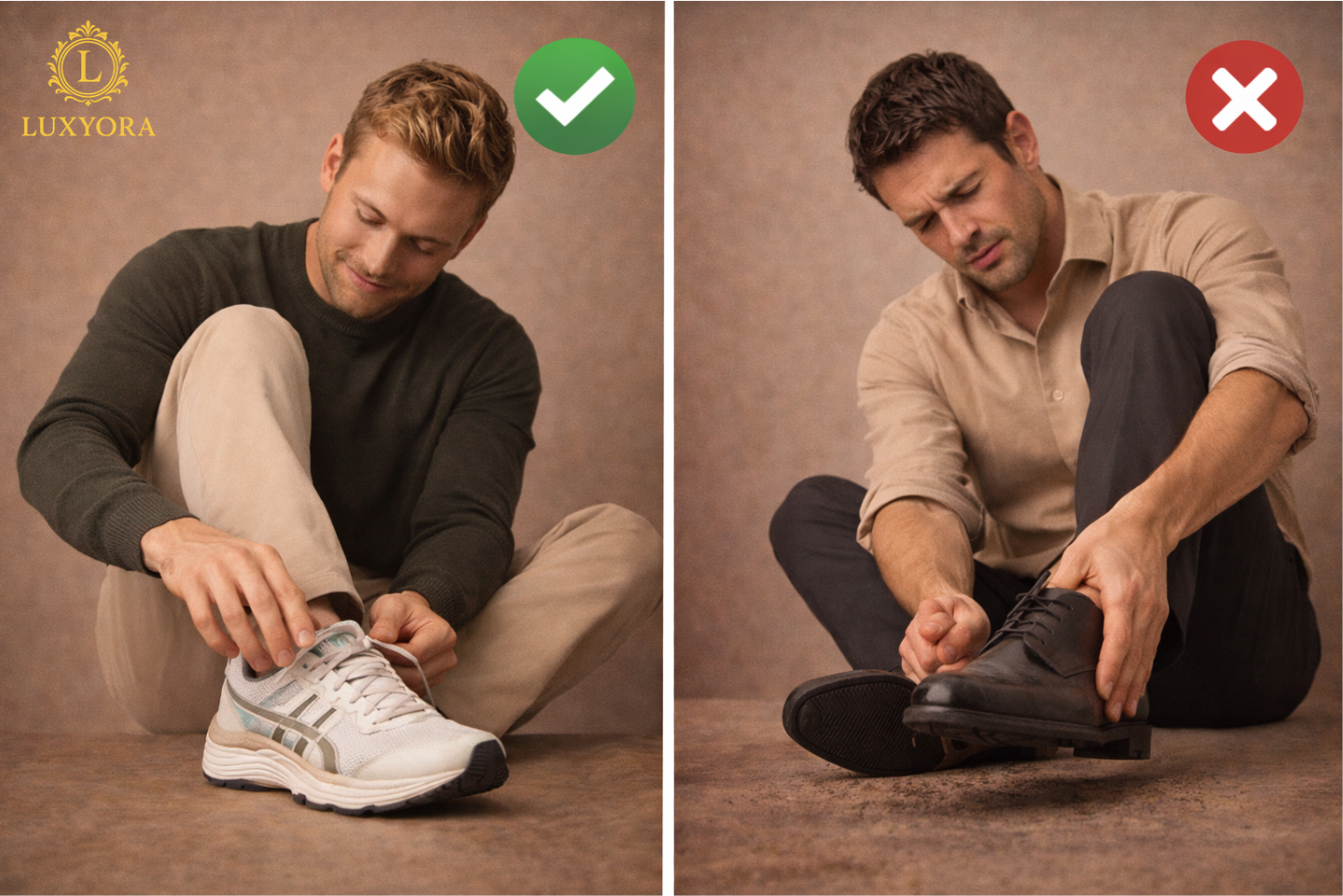
Flat feet often do best with stability: a shoe that resists collapsing inward and keeps your foot centered. The American Podiatric Medical Association (APMA) specifically recommends stability and motion-control running shoes for low arches because they help correct overpronation.
Look for:
- A firm heel counter (the back of the shoe shouldn’t fold like paper)
- A stable midfoot (not twisty or floppy)
- A slightly wider base for better balance
2) Arch support that matches your foot
You don’t need a dramatic “mountain arch” if it hurts. You need supportive contouring that feels natural. When unsure, start moderate and adjust with insoles.
Mayo Clinic notes that arch supports (orthotic devices) can help relieve pain from flatfeet, and nonprescription supports may be enough for many people.
3) Cushioning strategic, not marshmallow
Cushioning is lovely, but too-soft foam can make flat feet work harder to stabilize. Think comfort with control: a supportive midsole that absorbs impact while keeping alignment.
4) Enough toe room
Flat feet can come with a wider forefoot or splay. A squeezed toe box forces compensation and fatigue. Your toes should be able to exist comfortably.
The best shoe types for flat feet (and why they work)
1) Stability running shoes (your everyday hero)
If you want one pair that can handle walking, errands, travel, and long days, start here. Stability shoes typically add guidance features (like firmer medial support) to reduce excessive inward rolling.
Mayo Clinic Health System’s arch-type guidance says low arches may benefit from walking shoes with a straight last and motion control to help stabilize the feet.
The best footwear choices for flat feet often balance comfort, stability, and ease in ways that go beyond everyday wear. Interestingly, some of the smartest lessons come from shoes designed with movement in mind from the start. Explore the details in The Best Running Shoes for Beginners.
Best for: daily wear, long walks, commuting, standing-heavy days.
2) Motion-control shoes (for stronger guidance)
If you feel like your ankles “collapse in,” or you wear down the inside edge of your shoe quickly, motion-control styles can feel like a revelation. They’re often firmer and less “bouncy,” but incredibly steady.
Best for: noticeable overpronation, heavier wearers, long-distance walking.
3) Supportive walking shoes (quiet luxury for your joints)
Walking shoes tend to be less aggressive than performance runners but still structured. They’re ideal if you want comfort with polish, especially in leather or minimalist silhouettes.
Best for: city life, travel, office-to-dinner days.
4) Hiking shoes/boots with stability (for trails and uneven ground)
Uneven terrain exposes instability quickly. A stable hiking shoe with a supportive midsole and secure heel can reduce fatigue and help your foot stay aligned.
The search for better support doesn’t always end with daily wear. Sometimes the most interesting lessons about fit, grip, and all day comfort appear in places designed for more demanding paths. Continue reading in The Best Trail Shoes for Hiking.
Best for: weekend trails, uneven sidewalks, rainy weather walking.
5) Sandals with real arch support (yes, they exist)
Flat, floppy sandals are a common summer trap. Look for sandals with:
- contoured footbeds
- supportive midsole
- a secure strap system (not just a toe thong)
Best for: warm weather without the “my arches are screaming” aftermath.
Insoles and orthotics: the secret weapon (when your shoe is close, but not perfect)
If you find a shoe you love but wish it had more support, an insole can bridge the gap. Evidence around orthoses is nuanced, but research does show potential benefits, particularly for pain outcomes in adults. A 2021 systematic review on foot orthoses for adults with flatfoot summarizes evidence in this area.
A 2023 systematic review similarly notes that while results vary, meta-analysis showed pain reduction in adults using orthoses compared with no/sham orthoses in the included studies.
Practical approach:
- Start with a quality over-the-counter arch support
- If pain persists or your foot mechanics are complex, consider custom orthotics via a podiatrist/orthopedist
The fit checklist (so you don’t buy “support” that still hurts)
Try shoes later in the day (feet swell), and do a quick test:
- Heel feels secure (no slippage)
- Midfoot feels held, not squeezed
- Arch support feels present but not poking
- After 10 minutes walking, you feel stable, not wobbly or tired
And watch your wear pattern: if you shred the inner edge fast, you likely need more stability.
When to get medical input
If you have persistent pain, swelling on the inside of the ankle, or a noticeable change in foot shape, it’s worth getting assessed. AAOS highlights clinical signs and evaluation for progressive collapsing flatfoot/posterior tibial tendon issues.
Shoes are powerful, just not a substitute for diagnosis when something is evolving.
Luxyora Philosophy: Comfort is a form of confidence. When your shoes support your natural shape, you don’t just walk, you glide through your day as if you belong there.
References:
- American Academy of Orthopaedic Surgeons. (n.d.). Progressive collapsing foot deformity (flatfoot). OrthoInfo. (Accessed February 9, 2026). (OrthoInfo)
- Herchenröder, M., et al. (2021). Evidence for foot orthoses for adults with flatfoot: A systematic review. Journal of Foot and Ankle Research, 14, Article 64. (PMC)
- Mayo Clinic. (2022, August 16). Flatfeet: Symptoms and causes. (Mayo Clinic)
- Mayo Clinic. (2022, August 16). Flatfeet: Diagnosis and treatment. (Mayo Clinic)
- Mayo Clinic Health System. (2022, March 23). How to determine your foot arch type. (Mayo Clinic Health System)
- Oerlemans, L. N. T., et al. (2023). Foot orthoses for flexible flatfeet in children and adults: A systematic review. Journal of Foot and Ankle Research, 16, Article 1. (PMC)
- American Podiatric Medical Association. (n.d.). Which running shoe is right for you? (Accessed February 9, 2026). (APMA MAIN)