The Ultimate Guide to Handbag Hardware: Types, Materials, and Styles | Luxyora
If leather is the soul of a handbag, hardware is the attitude. It’s the satisfying click of a turn-lock, the whisper-smooth glide of a zipper, the glint of a chain strap catching soft light as you walk into a room, as you own it. Hardware is also the part that gets touched the most, scratched the fastest, and judged the hardest, especially on luxury bags, where every detail is basically a close-up.
And yet, hardware is wildly misunderstood. “Gold” doesn’t always mean gold. “Silver” doesn’t always mean stainless. That glossy finish can be plated, coated, lacquered, or treated in ways that change how it ages. Some hardware is built to patina beautifully; some is built to stay mirror-bright; some… is built to look good until the third brunch.
So let’s make handbag hardware feel simple and glamorous again without the guesswork. This guide breaks down the main hardware types, the most common materials, the finishes you’ll see in the luxury world, and how to pick what works for your style and your lifestyle.
Why Hardware Matters More Than You Think
Hardware does three big jobs:
- Function: Closures, adjusters, strap attachments, zipper systems, basically everything that keeps your bag usable and secure.
- Structure: Rivets, feet, frame components, reinforcement pieces, quite engineering.
- Aesthetic: The polish, the tone, the branding, the “signature look” that makes a bag recognizable from across a room.
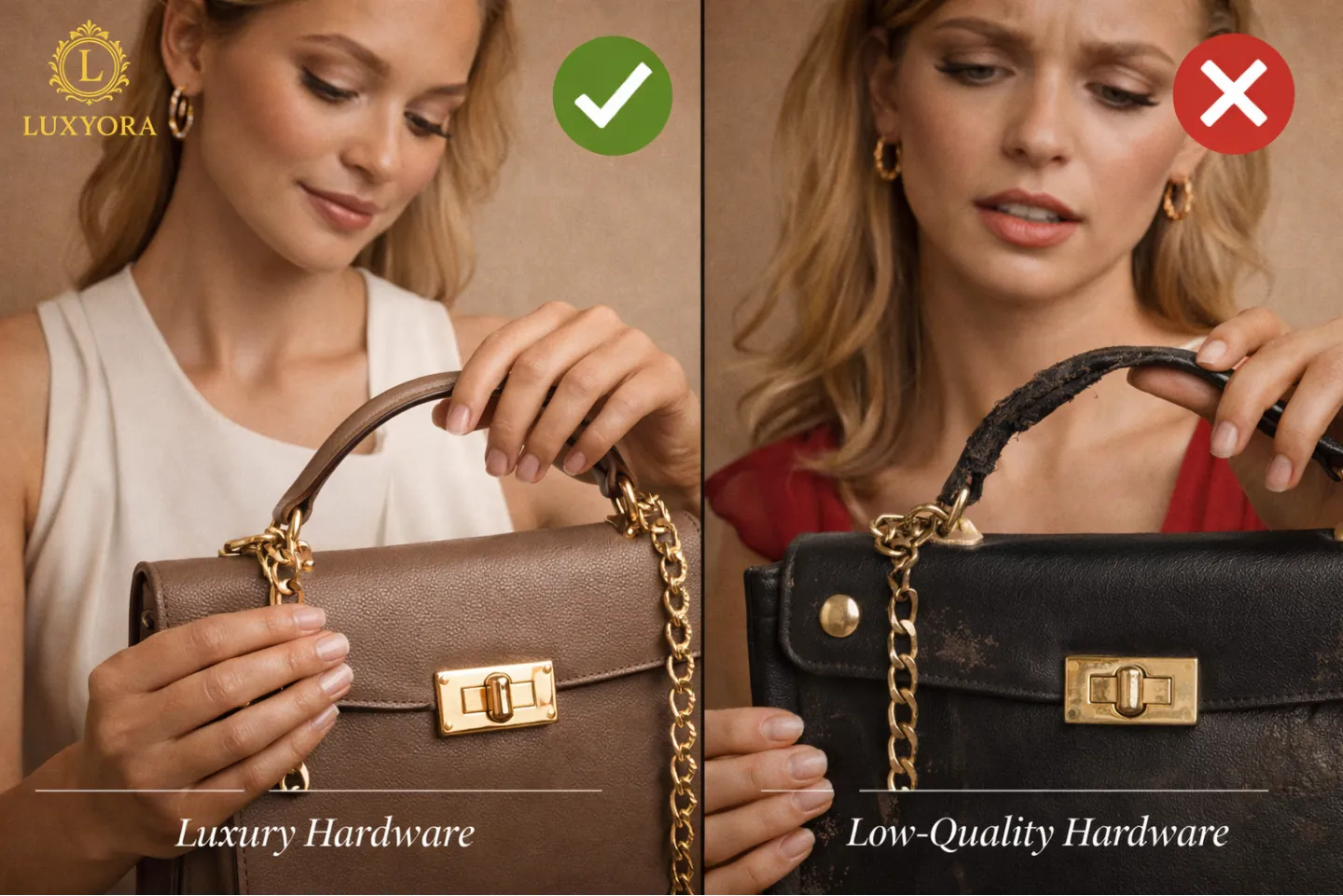
Luxury bags often feel “expensive” because the hardware is thoughtfully scaled, beautifully finished, and consistently designed. Cheap hardware gives itself away fast: lightweight, sharp edges, flaking finishes, sticky zippers, and that hollow sound that screams “cost-cutting.”
Hardware Types: The Essentials You’ll See on Most Bags
What it is: A handheld bag designed to carry the bare essentials: phone, cards, lipstick, and keys.
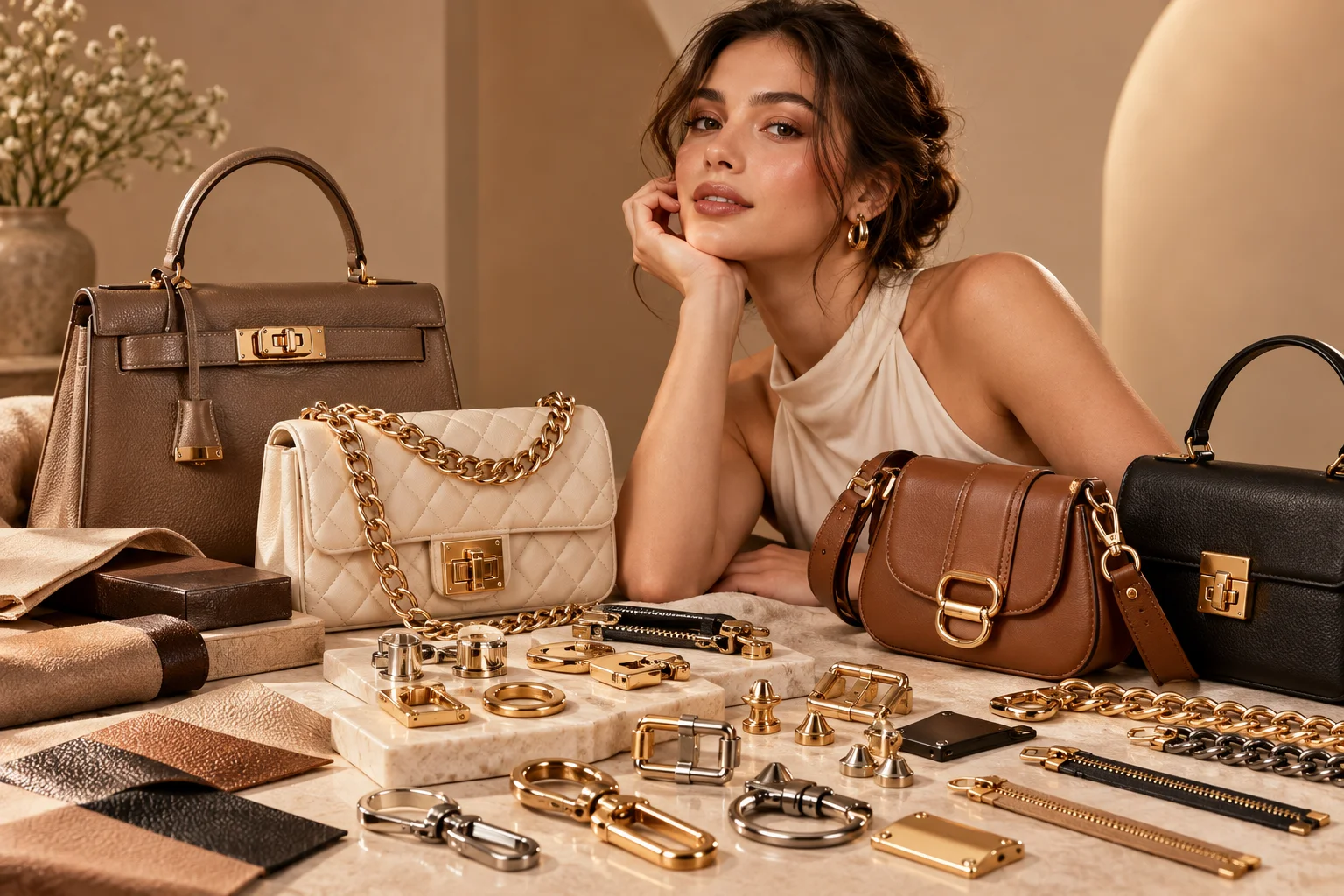
1) Closures and Locks
These are the bag’s handshake, your first interaction, repeated daily.
- Zippers: Secure and practical. Look for smooth action, aligned teeth, and a pull that feels substantial (not tinny).
- Magnetic snaps: Elegant for quick access, common in totes and flaps. Best when the magnet is strong and well-seated, so it doesn’t “bubble” the leather.
- Turn-locks / twist-locks: A classic luxury signal. They create structure and feel ceremonial in the best way.
- Push locks/press locks: Sleek, often seen on structured satchels; they should close with precision, not force.
- Kiss locks/frame clasps: Vintage glamour, especially on evening bags. Gorgeous when engineered well; fussy when not.
2) Strap and Handle Hardware
This is where comfort meets longevity.
- D-rings / O-rings / rectangular rings: The connection points that keep straps secure. These should feel thick, stable, and properly sized to the strap width.
- Swivel clasps/lobster clasps: Found on detachable straps. The swivel should rotate cleanly without squeaking or stiffness.
- Buckles and sliders: For adjustable straps. A good slider doesn’t slip, and a good buckle doesn’t nick or catch the leather.
3) Reinforcement and Detail Hardware
These pieces don’t scream for attention until they fail.
- Rivets: Reinforce stress points (handles, strap tabs, corners). Quality rivets sit flush and feel tight, with no wobble.
- Bag feet: Protect the base. Especially useful on structured leather bags that touch floors, counters, and reality.
- Grommets/eyelets: Used for drawstrings, lacing, strap systems, and decorative touches. Clean edges are everything here, no roughness, no sharpness.
4) Decorative and Branding Hardware
Luxury loves a signature.
- Logo plates, monograms, and plaques: The placement should be centered, aligned, and consistent in tone with the rest of the hardware.
- Chains: Strap chains, charm chains, decorative drapes. Look for comfortable edges and plating that doesn’t rub off easily where it hits clothing.
Hardware Materials: What Your “Gold” Hardware Is Really Made Of
Solid Brass
Brass is a luxury favorite because it’s strong, corrosion-resistant, and can develop a beautiful patina over time. It also has a satisfying weight. Many premium brands use brass for key pieces, especially when they want longevity and a richer feel.
Zinc Alloy (Often Known as Zamak)
Zinc alloys are widely used because they’re easy to cast into complex shapes perfect for logo plaques, locks, and decorative pieces. The trade-off is that zinc alloy usually relies heavily on surface finishing (plating/coating) for its final look and durability.
Stainless Steel
Stainless steel is tough, corrosion-resistant, and a great choice for components that need strength. You’ll often see it in premium zipper parts, some locks, and certain structural elements.
Aluminum
Aluminum is lightweight and modern. It can be used to reduce overall bag weight, though it may not deliver the same “heirloom heft” as brass.
Plastic/Resin Hardware
Yes, even luxury uses resin especially for modern, playful designs. Resin can be stunning and sculptural, but it’s not the same durability story as metal. Treat it like jewelry: avoid rough abrasion and store thoughtfully.
Finishes: The Difference Between “Looks Luxe” and “Stays Luxe”
Hardware finishes are where the magic (and the heartbreak) happens.
Electroplating
A thin metal layer is deposited on the base metal to create the desired color and shine. It’s common and can look beautiful, but thinner plating can wear over time, especially on high-friction areas like chain straps, corners, and clasps.
PVD Coating
Often considered a premium option, PVD coatings are known for strong wear resistance and durability in many applications. In fashion hardware, it’s frequently used to help maintain a crisp finish longer, particularly for darker tones and high-contact parts.
Lacquered/Coated Finishes
Some hardware uses protective topcoats to slow tarnish and reduce scratching. These can help, but they can also show wear if the coating chips or abrades.
Brushed vs. Polished vs. Matte
- Polished: High shine, very glam, shows scratches more easily.
- Brushed: Softer shine, hides wear better, feels modern and refined.
- Matte: Understated and editorial, but can show oil marks or burnishing depending on the finish.
Color Families: Choosing the Hardware Tone That Flatters Your Style
Hardware color isn’t just “gold or silver.” It’s a mood.
- Yellow gold: Classic, warm, instantly “dressy.” Gorgeous with camel, chocolate, black, and jewel tones.
- Champagne gold / light gold: Softer and more modern, quiet luxury energy.
- Silver/chrome: Crisp, clean, slightly cool. Stunning with grey, navy, white, and monochrome looks.
- Gunmetal: Urban, chic, and forgiving, less prone to looking “flashy.”
- Antique brass: Vintage warmth and depth; looks especially good on textured leather and heritage shapes.
- Black hardware: Dramatic, fashion-forward, and often associated with a sleeker, sharper aesthetic.
Style trick: match hardware tone to your most-worn jewelry (or intentionally contrast it). The key is consistency; your bag should look considered, not accidental.
Practical Luxury: What to Look For When You’re Buying
Here’s how to “read” hardware like an insider, whether you’re shopping new or pre-loved.
The Weight Test
Good hardware tends to feel solid, not hollow. Weight isn’t everything, but feather-light metal often signals lower durability or thinner construction.
The Edge Test
Run a finger lightly along rings, clasps, and chains. Luxury hardware feels smooth and finished, never sharp.
The Movement Test
- Zippers should glide smoothly without snagging.
- Clasps should close with a confident click, not a struggle.
- Chains shouldn’t squeak or pull hairs (we’ve all been there).
The Consistency Test
All metal elements on the bag should match in tone and finish. Mismatched shades can make even a gorgeous bag look “off.”
The Wear Map
On pre-loved bags, examine high-contact areas:
- Zipper pulls
- Turn-lock edges
- Chain strap contact points
- Bottom feet
If you see flaking or exposed base metal, that’s a sign the finish has worn through, not necessarily a dealbreaker, but it should affect price and expectations.
Skin Sensitivity and Compliance: The Quiet Factor
If you have sensitive skin or metal allergies, hardware matters even more. Many markets regulate the release of substances and metals from consumer articles intended for prolonged skin contact (and reputable brands and manufacturers test for compliance). If you’re allergy-prone, consider:
- Bags with leather straps instead of chain straps
- Hardware marketed as nickel-safe or compliant with relevant standards
- Minimizing direct skin contact with metal components in the summer months
Caring for Hardware So It Stays Beautiful
Luxury hardware doesn’t need drama, just consistency.
- Wipe hardware with a soft microfiber cloth after use (especially after humid days or events with perfume/hairspray).
- Avoid harsh chemicals on metal finishes.
- Store bags so chains don’t press into leather and leave marks.
- For scratches: avoid DIY polishing unless you know the finish type, as polishes can remove coatings.
The best hardware aging looks intentional: gentle softening, subtle patina, and a finish that still feels like it belongs to the bag.
Style Glossary: Hardware Details That Signal “Premium”
If you love the little things (same), look for:
- Cleanly engraved logos (not shallow stamping)
- Crisp screwwork (aligned, tidy, not stripped)
- Reinforced attachment points (especially on straps)
- Thoughtful scale (hardware proportionate to the bag, not too tiny, not cartoonishly oversized)
Hardware isn’t just decoration. It’s proof of design intelligence.
Luxyora Philosophy: Luxury lives in the details you touch every day, the click, the gleam, the craftsmanship that turns a bag into a signature.
References:
- Buckleguy. (2022). PVD plating: What is it? Buckleguy (industry article).
- European Chemicals Agency. (2017). Draft guideline on articles intended to come into direct and prolonged contact with the skin (nickel restriction under REACH). ECHA.
- European Commission. (2021). Titles and references of standards to be used as test methods for demonstrating conformity of articles under entry 27 of Annex XVII to REACH (Nickel). European Commission.
- Gachet, S. (2024). The handbag book: 400 designer bags that changed fashion. Abrams.
- MNG PVD. (2024). PVD coating in fashion hardware. MNG PVD (technical overview).
- Nickel Institute. (2023). Nickel and nickel allergic contact dermatitis: Nickel release and prolonged skin contact. Nickel Institute.
- SGS. (2021). EU harmonizes EN 12472:2020 for nickel restriction under REACH. SGS SafeGuardS.
- TÜV SÜD. (2023). EC adopted EN 1811:2023 for nickel release (REACH Annex XVII entry 27). TÜV SÜD (technical update).
- Weaver Leather Supply. (2022). Anatomy of a handbag: A guide to types of bags, purse hardware & more. Weaver Leather Supply (educational guide).