Footwear Designed to Be Replaced vs Maintained | Luxyora
There are two kinds of shoes in the world: the ones you wear until they “give up,” and the ones you wear until they become yours. The difference isn’t just sentimental, it’s engineered. Some footwear is built like a season’s fling: lightweight, convenient, and never meant to be complicated by repair. Other pairs are built like a long-term relationship: structured, serviceable, and quietly expecting you to come back for maintenance the way you would for tailoring or a timepiece.
For a luxury-minded wardrobe, this isn’t a moral lecture. It’s a style strategy. Because once you understand whether a shoe is designed to be replaced or maintained, you stop shopping unquestioningly and start buying with intention.
The “Replace” Shoe: Fast, Flexible, and Often Glued into Finality
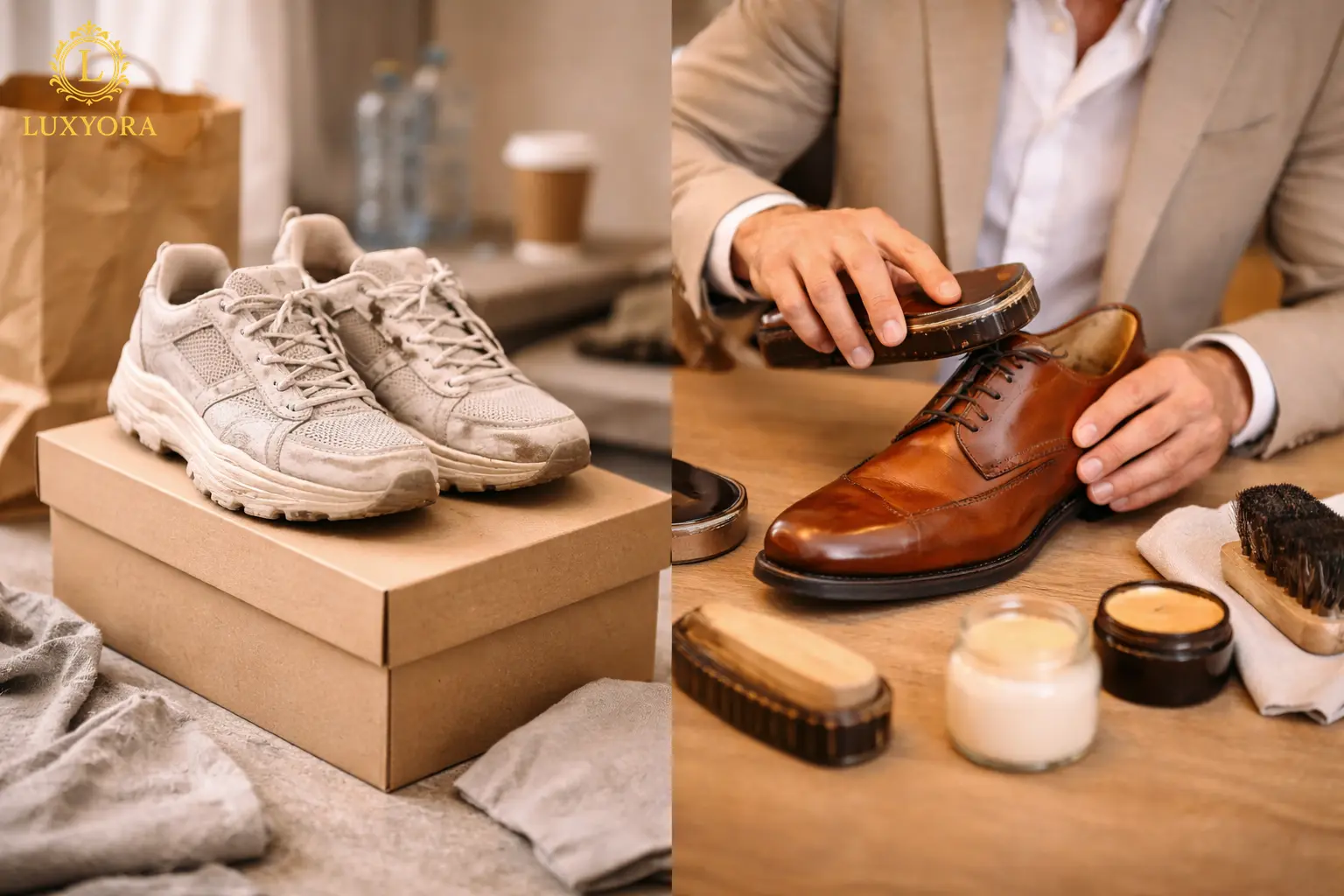
Footwear designed to be replaced is usually optimized for speed and cost efficiency. The most common marker is construction that’s difficult (or uneconomical) to repair, think cemented soles (glued), molded units, lightweight foams, and bonded layers that don’t separate cleanly. When these shoes wear out, you can’t simply replace a heel tip or swap an outsole; the whole structure tends to age at once.
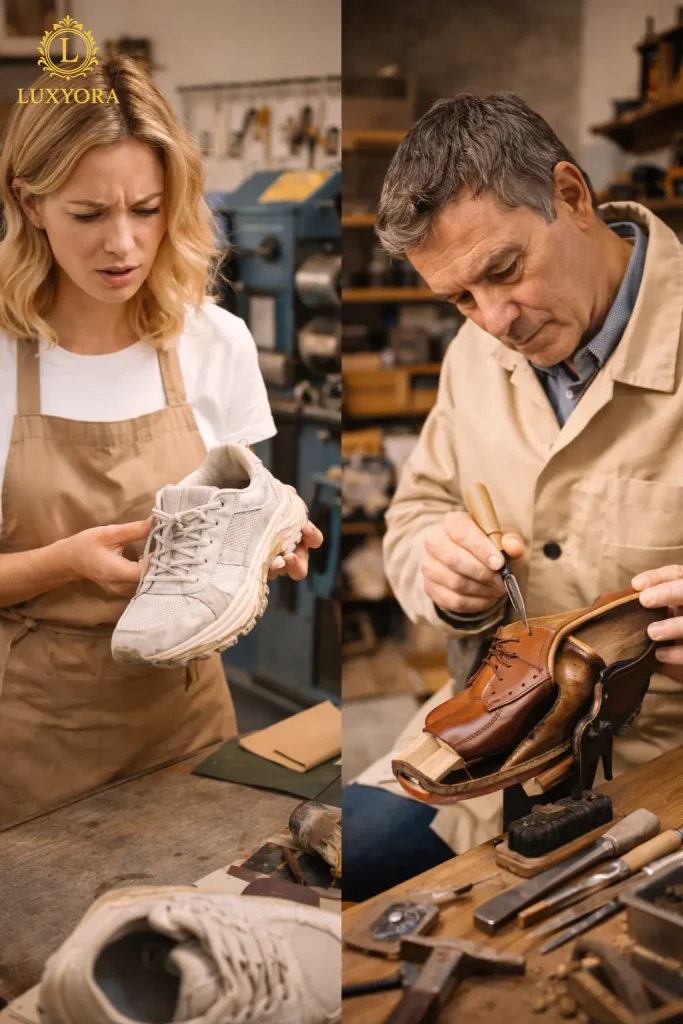
This category isn’t automatically “cheap” or “bad.” Many performance sneakers live here because the materials that make them feel featherlight, EVA foams, complex multi-material outsoles, and integrated uppers also make them tricky to repair at scale. Some are so optimized for cushioning and weight that resoling them would be like rebuilding a car tire while it’s still attached to the rim. Possible in theory, but rarely the business model.
The replacement design also thrives in trend cycles. When the silhouette is meant to rotate quickly, the shoe becomes less an heirloom and more a vibe: easy to buy, easy to discard, easy to replace with the next version.
The “Maintain” Shoe: Designed with a Second (and Third) Life in Mind
Maintained footwear is built around a simple, confident premise: parts wear out, but the shoe doesn’t have to. This usually means repair-friendly construction stitching, welts, or build methods that allow a cobbler to remove and replace a sole without destroying the upper.
Classic examples include welted or stitched constructions often found in premium dress shoes and high-quality boots. Their magic is not just durability; it’s serviceability. The upper becomes the “investment,” while soles and heels become consumables like replacing watch straps, not tossing the watch.
And the wearer benefits immediately: maintained shoes often feel more stable over time because their structure is designed to hold shape. They break in rather than break down. They develop character rather than fatigue.
What Decides a Shoe’s Destiny? Construction, Materials, and Design Philosophy
If you want the quick litmus test, look at three things:
1) How the sole is attached
- Glued (cemented): often replace-oriented; repair can be limited or not cost-effective.
- Stitched/welted: more maintainable; soles can often be replaced multiple times.
2) Material complexity
Shoes with many bonded materials, such as foams, plastics, adhesives, and layered textiles, are harder to disassemble and recycle. That complexity can be a performance feature, but it often limits repair and end-of-life options.
3) Whether the brand expects you to “care”
Some brands build product ecosystems around care: conditioning guidance, authorized resoling, repair services, replacement parts. Others focus on the next release. Neither is inherently wrong, but they create very different relationships with ownership.
The Hidden Luxury: Maintenance as a Personal Ritual
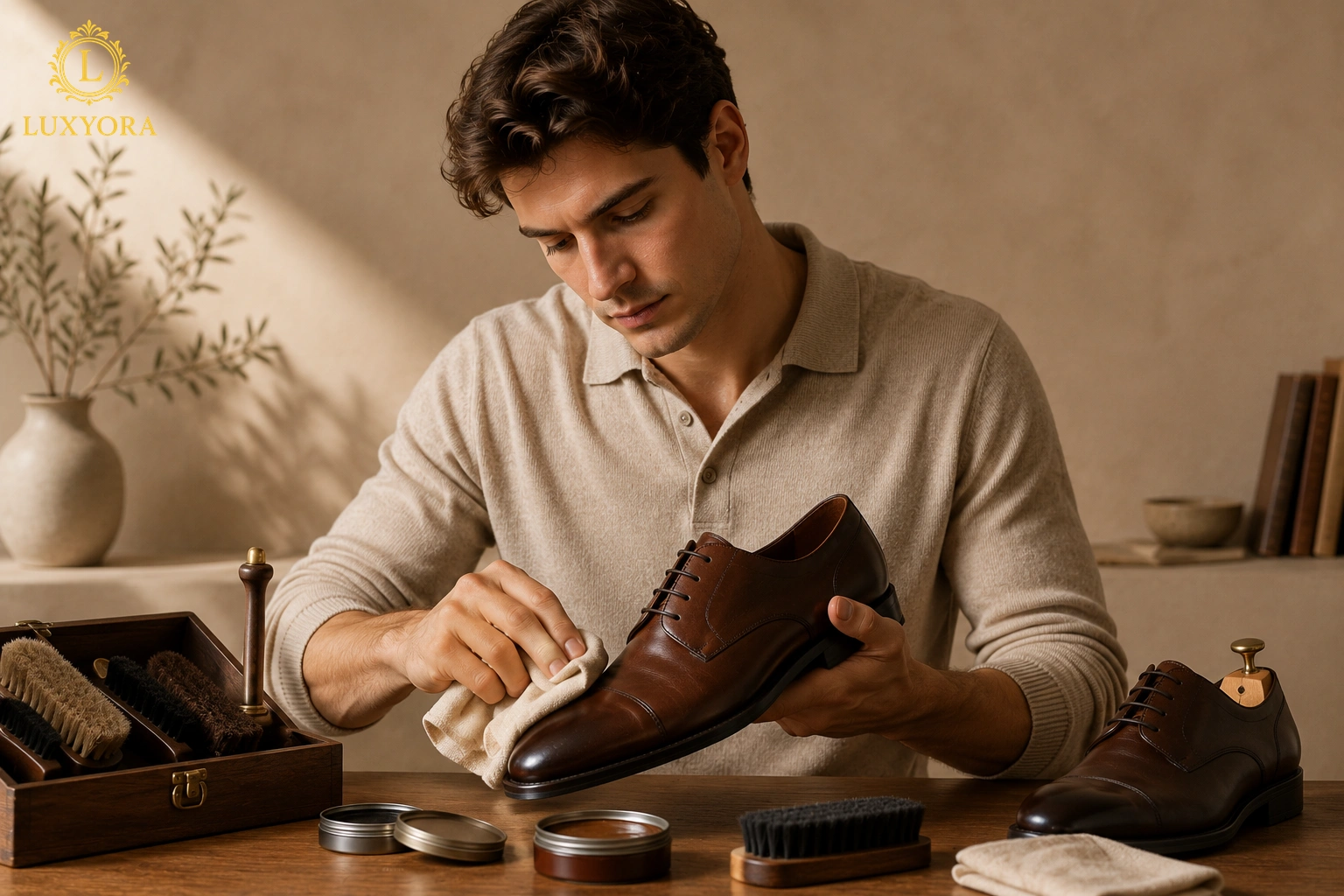
Maintained footwear has a particular kind of elegance: it invites you to participate. You brush off dust. You condition leather. You use shoe trees. You resole when needed. You treat the shoe as a piece of craftsmanship, not a disposable object.
That ritual doesn’t just preserve the shoe; it preserves your presence. A maintained pair tends to look composed longer, which matters in professional and social settings. Clean lines, intact heels, and stable soles broadcast a quiet message: you care about details, and you don’t rush through the world.
In a luxury context, maintenance is the new status symbol, not because it’s flashy, but because it signals discernment. Anyone can buy something once. Not everyone knows how to keep it exquisite.
There’s a kind of luxury that never announces itself: the habit of caring for the things you choose to keep. What begins as maintenance can become part of the experience itself. Explore the details in Shoe Care Secrets: How to Make Your Favorites Last Longer.
Sustainability Meets Reality: Why “Replace” Dominates, and Why “Maintain” is Resurging
Shoes are famously difficult to recycle because they’re often made from many materials bonded together. That makes full circularity, turning an old shoe into a new shoe, an engineering challenge. The industry’s push toward circular design is growing, but the obstacles are real: disassembly, collection logistics, and material recovery.
At the same time, public policy is moving toward a repair culture. Europe, for example, has adopted rules to make repair easier and more attractive for consumers and to encourage longer product lifespans. Even when footwear isn’t the primary target, the cultural direction is unmistakable: repair is becoming a modern expectation, not an old-fashioned hobby.
And consumers are changing, too. The rise of “buy less, buy better” is not about deprivation, it’s about edit-level sophistication. When you choose maintained footwear, you’re choosing a quieter, longer story.
The Price-Per-Wear Truth: Replaced Shoes Can Be Expensive in Disguise
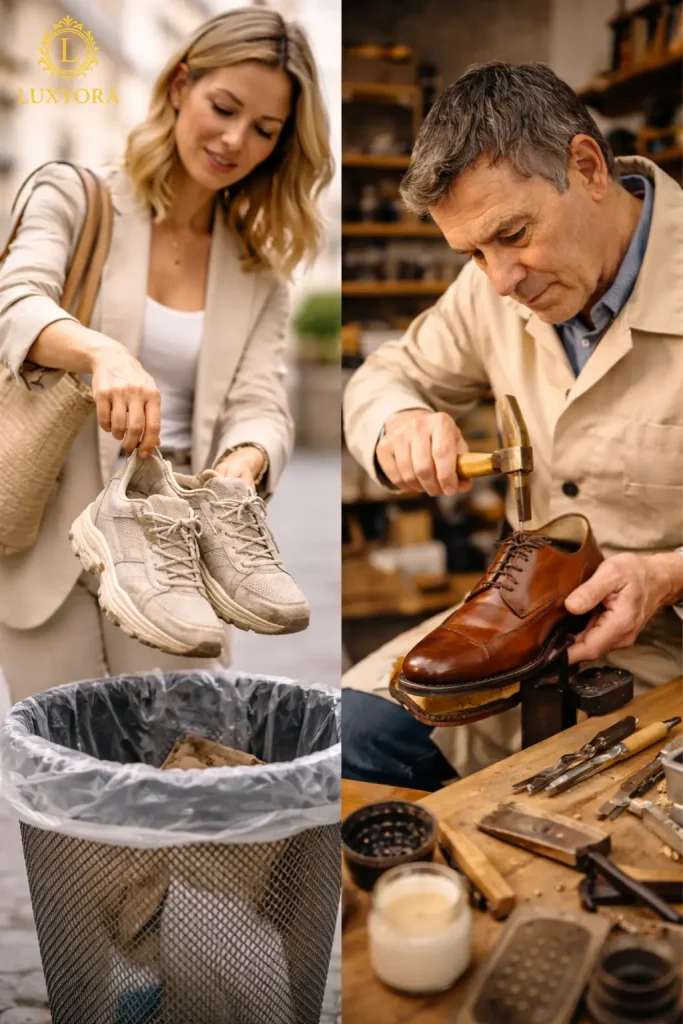
Replace-oriented footwear can feel like a bargain until you do the math. If a pair loses structure quickly, gets uncomfortable, or can’t be repaired, you end up repurchasing sooner. Maintained footwear may cost more upfront, but it often wins on cost-per-wear, especially when resoling extends its life for years.
The same logic applies to comfort. Once a sole collapses, your body pays. The most expensive shoe is the one that makes you tired.
A Modern Middle Ground: Designed-to-be-Replaced Shoes That Behave Responsibly
Not every shoe needs to be maintained forever. Some categories are naturally replace-oriented, such as certain athletic shoes, specialty performance footwear, and trend-driven pieces. The modern upgrade is choosing replaceable shoes that are still designed with responsibility in mind: fewer materials, easier disassembly, take-back programs, and more durable components.
The dream wardrobe isn’t “all repairable, all the time.” It’s a thoughtful mix:
- Maintain your core icons (boots, loafers, formal shoes, signature leather pieces).
- Replace strategically where performance or trend matters, but choose brands that plan for end-of-life and design durability into the “disposable” category.
The Luxyora Philosophy: True luxury isn’t just owning something beautiful, it’s owning it well. Choose footwear that respects your time, your movement, and the planet: replace what must be replaced, and maintain what deserves to last.
References:
- European Commission. (2024). Directive on common rules promoting the repair of goods. European Commission.(Reference)
- Niinimäki, K., & Durrani, M. (2020). From disposable to repairable. In Transitioning to Responsible Consumption and Production. MDPI. (Reference)
- Terzioğlu, N. (2021). Repair motivation and barriers model: Investigating user perspectives related to product repair towards a circular economy. Journal of Cleaner Production, 289, 125644.(Reference)
- Alves, D. I., et al. (2024). Upcycling of industrial footwear waste into nonwoven thermal and acoustic insulation materials. Journal of Environmental Management, 356, 120296. (Reference)
- Pichel-Juan, N. (2020). The use of recycled materials in footwear: Challenges for brands and manufacturers. Satra Bulletin.(Reference)
- Ellen MacArthur Foundation. (2021). The trends and trailblazers creating a circular economy for fashion. Ellen MacArthur Foundation.(Reference)
- The Guardian. (2023, January 5). Running in circles: The race to create a recyclable sneaker. The Guardian.
- Reuters. (2024, April 23). EU parliament approves rules requiring companies to repair worn-out products. Reuters.