How Different Soles Change the Experience of Walking | Luxyora
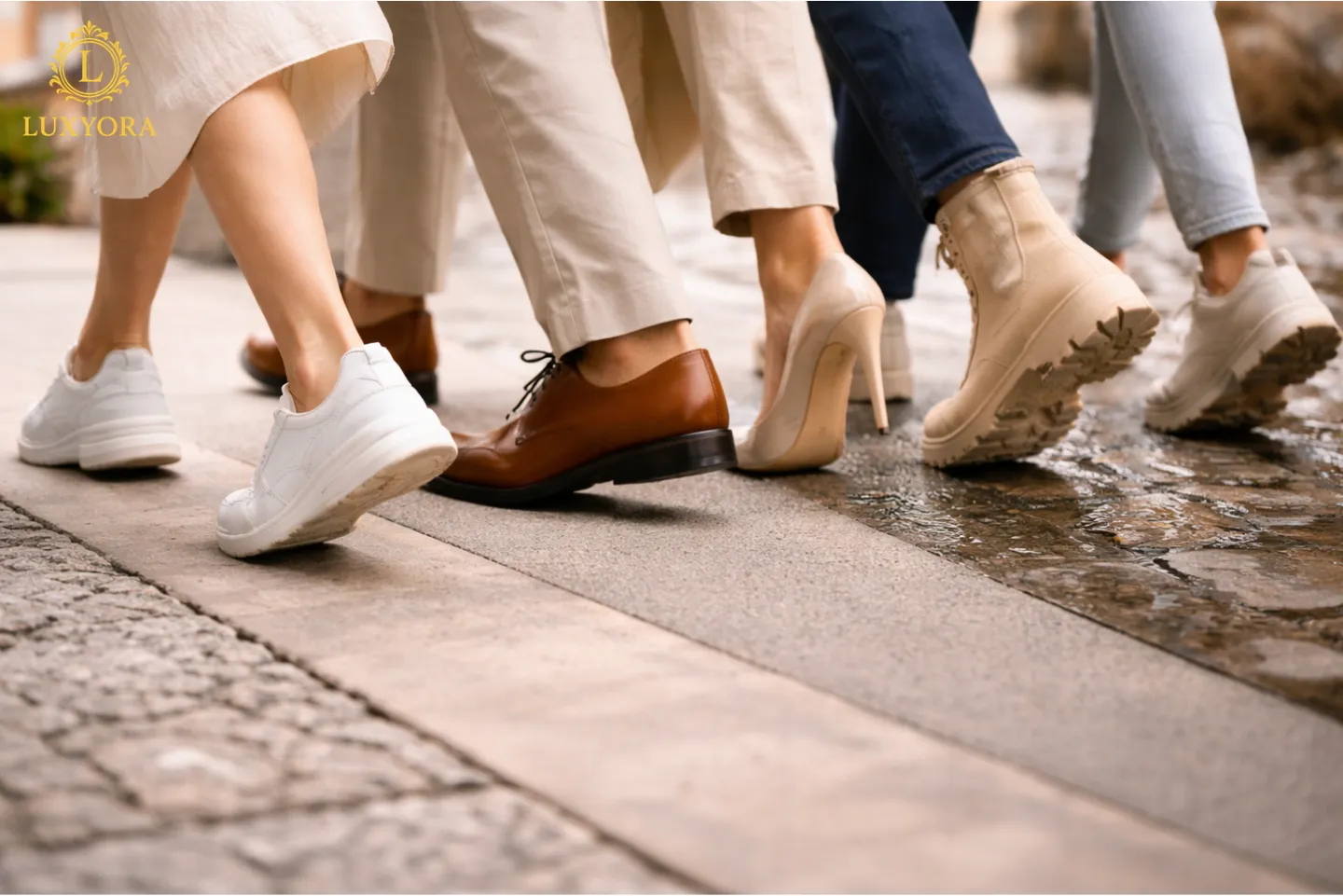
The upper might be what you fall in love with first: the glossy leather, the sculpted lines, the way a loafer can make you feel instantly “put together.” But the soul is where the relationship becomes real. It’s the part of the shoe that actually negotiates with the world: pavement heat, marble chill, rainy crosswalks, office carpets, cobblestones, airport terminals, and the occasional slippery “why is this floor so shiny?” moment.
Soles are the unseen stylists of your stride. They can make walking feel silent and assured, springy and energized, grounded and intimate, or, on a bad day, heavy and vaguely exhausting. If you’ve ever put on two shoes that look equally polished but feel completely different after three blocks, you’ve already met the power of sole design.
The sole is your interface with the planet
Walking is essentially a series of controlled falls. Your foot lands, your body absorbs force, you roll forward, you push off, you repeat. Soles influence every stage of that cycle. They change how much you feel the ground, how much shock your body has to manage, how stable your foot is at contact, and how efficiently you move forward.
The “walking experience” isn’t just comfort. It’s also confidence, sound, pace, posture, and how quickly your legs start negotiating for mercy.
Hard soles: the crisp, classic, and surprisingly athletic feel
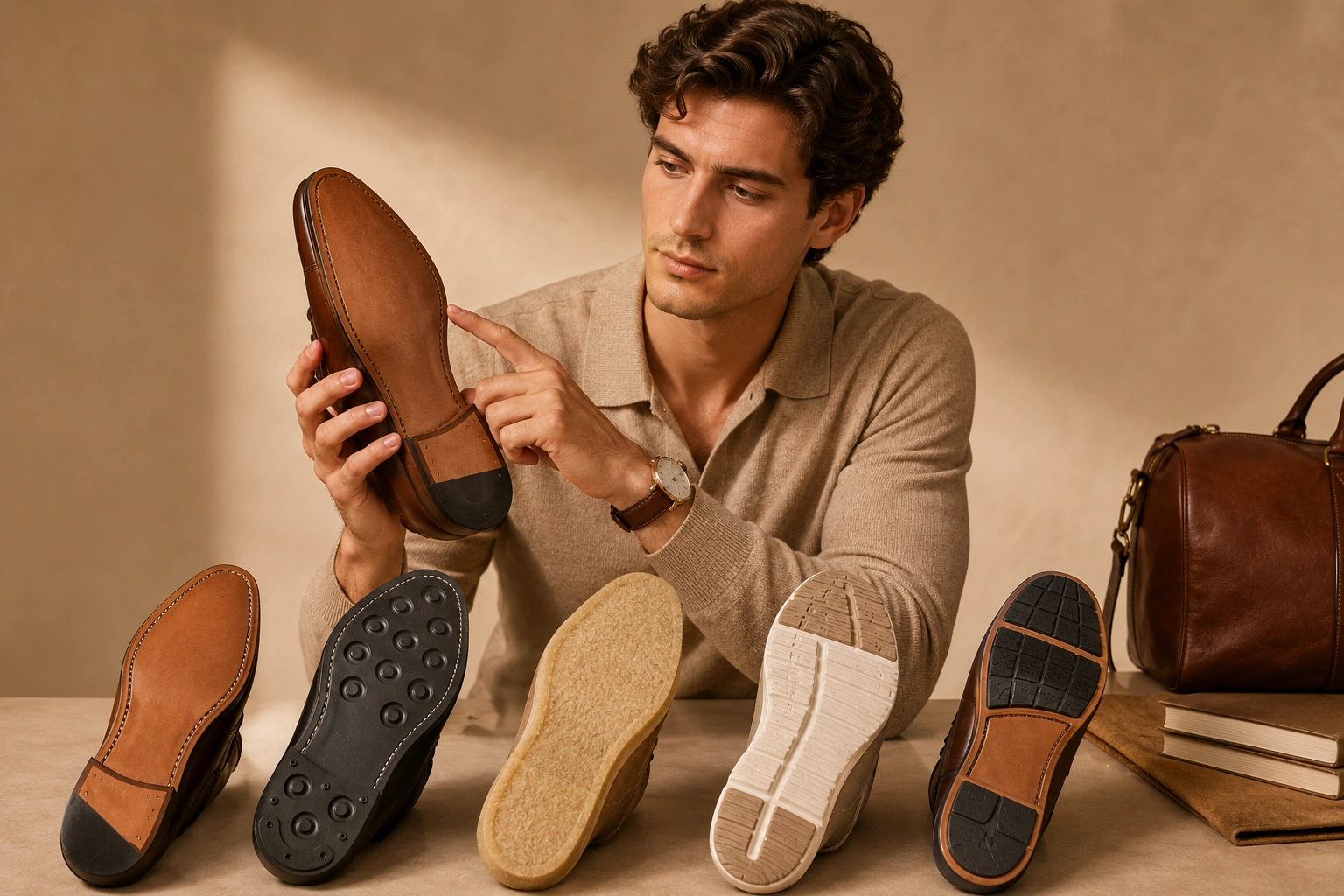
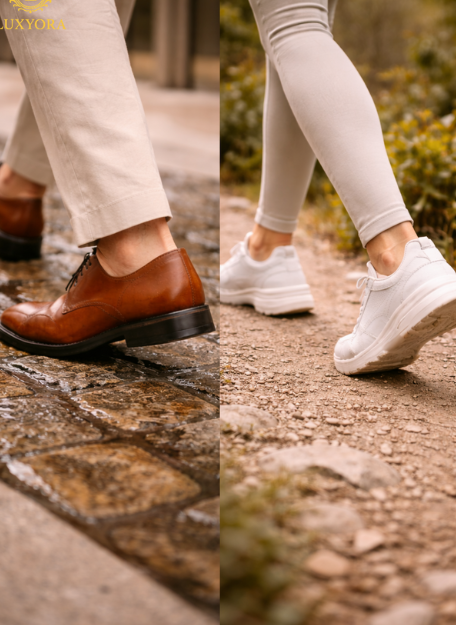
Think leather soles and very firm dress-shoe constructions. Hard soles tend to feel precise, like your feet are speaking in clean sentences. They can encourage a confident, upright posture and a smooth, elegant step, especially on stable indoor surfaces.
But there’s a trade-off: hard soles often offer less shock absorption, which can translate to more impact traveling up through the body, particularly on unforgiving concrete. They can also be less forgiving on wet surfaces unless designed with traction features. In luxury terms, hard soles are the stiletto of soles: refined, direct, and best when the environment behaves.
Rubber soles: traction, quiet power, and modern practicality
Rubber soles are the easy yes of real-life walking. They grip better, dampen sound, and tend to feel more forgiving underfoot. If you’ve ever walked into a lobby and felt instantly steadier, chances are the rubber did that.
Rubber also brings a different kind of confidence, less “look at me,” more “I can handle this.” That quiet competence is why rubber-soled loafers, boots, and dress sneakers have become the modern uniform for people who want polish without fragility.
Crepe and gum: the soft, cushy glide
Crepe soles and gum rubber often feel like walking with a subtle filter between you and the world. They’re pliable, comfortable, and naturally shock-absorbing, which can make long days feel kinder.
They can also create a distinctive “planted” sensation, less clack, more hush. The downside is that some crepe compositions wear faster and can pick up dirt or discoloration more easily. Still, for day-to-night city pacing, they’re the equivalent of choosing silk over sequins: still beautiful, just more livable.
Foam midsoles: the comfort era, engineered
Now we enter the world of EVA and TPU-based cushioning, where walking becomes noticeably less work. Cushioned foam soles absorb impact and can reduce the sensation of harsh ground contact. Many people experience these soles as “lighter” to walk in, even when the shoe itself isn’t dramatically lighter, because the body isn’t bracing as much on each step.
But cushioning is not a one-note upgrade. Highly cushioned shoes can also change how your legs behave. Research in athletic footwear shows that increased cushioning can alter impact loading and leg stiffness in running; while walking isn’t running, the same idea applies: the body adapts to what’s underfoot. Some people feel wonderfully protected; others feel slightly disconnected from the ground, especially if the foam is tall and soft. The most luxurious cushioning feels balanced, plush without being wobbly.
Stiffness: when the sole decides how your foot should move
Flexibility is a personality trait in soles. Flexible soles allow the foot to bend naturally and can feel nimble and “close to the ground.” Stiffer soles can feel supportive and powerful, especially during push-off, because they reduce how much the foot has to bend.
This is why stiff elements (including plates in performance footwear) are a big topic of conversation in sports science: changing bending stiffness can shift how work is distributed across joints and influence efficiency. In everyday walking, stiffness can create a smooth, gliding stride, particularly in structured loafers, certain boots, and modern “support” shoes, but too much stiffness can feel restrictive if the shoe doesn’t match your natural gait.
Rocker soles: the subtle conveyor belt effect
Rocker soles, the ones that curve upward at the toe (and sometimes the heel), are designed to encourage forward roll. When they work well for you, walking can feel easier, like the shoe is gently escorting you through each step.
Rocker designs are also used in therapeutic contexts because they can shift pressure patterns and change joint demands. In style-forward life, they’re a quiet hack for long days on your feet, especially if you want height or statement shape without the fatigue tax of a hard, flat sole.
The key is moderation. Rocker soles that are too aggressive can feel unstable, particularly when standing still or turning quickly. The best ones feel like an assist, not a lesson in physics.
Lug soles: traction as attitude (and safety)
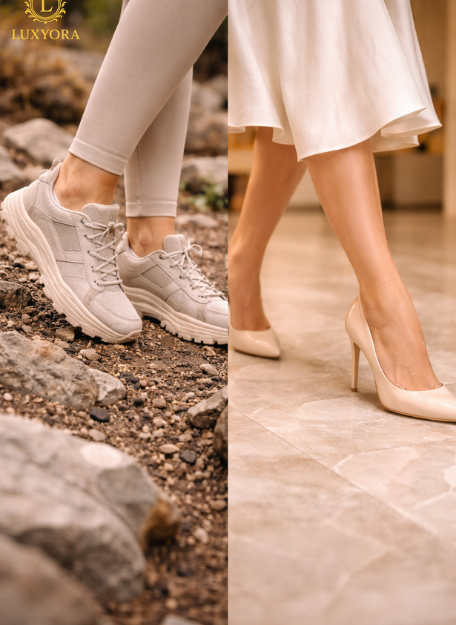
Lug soles bring grip, structure, and a certain authority. Even on a minimal boot, a lugged sole signals readiness for rain, winter, uneven sidewalks, and slippery transitions. They can significantly change the confidence of walking because you’re less likely to hesitate.
They also add weight and height, which can make the stride feel slower and more deliberate. That’s not a flaw; it’s a mood. If you want to feel grounded and unshakeable, a lug sole delivers.
Outsole geometry: the pattern that changes everything
Beyond material, the tread pattern and contact area matter. Small design choices affect how a shoe behaves on different surfaces, especially when wet. Studies in occupational footwear and slip-resistant design underline how traction and stability can meaningfully affect gait mechanics and safety. In shared environments, that’s not just personal preference, it’s practical elegance.
Choosing the right sole is choosing your day
Here’s the luxury truth: the “best” sole is contextual.
- For long city days: cushioned rubber or balanced foam with stable geometry.
- For formal indoor settings: leather or refined rubber with quiet grip.
- For travel: lightweight cushioning with dependable traction.
- For unpredictable weather: lug soles and slip-conscious rubber.
- For all-day standing: supportive, slightly stiff constructions that don’t collapse.
Soles aren’t merely a technical feature. They’re your relationship with movement, how effortless it feels to go from place to place, how steady you feel when you arrive, and how much energy you still have when the day asks for more.
Some shoes feel effortless from the very first step, while others tell a completely different story. The secret often lies in the sole and understanding the materials beneath your feet reveals why certain pairs perform the way they do. Explore A Guide to Sole Types : Rubber, Leather, and More.
The Luxyora Philosophy: Luxury is not only about how a shoe looks, but also about how it carries you through the world. Choose soles that make every step feel intentional because the most elegant pace is the one you can sustain.
References:
- Chen, H., Niu, W., & Mei, Q. (2022). Effects of footwear with different longitudinal bending stiffness on biomechanical characteristics and muscular mechanics of lower limbs in adolescent runners. Frontiers in Physiology, 13, 907016. (Reference) (Frontiers)
- Cigoja, S., Fletcher, J. R., & Nigg, B. M. (2021). Can changes in midsole bending stiffness of shoes affect the onset of lower limb joint work redistribution during a prolonged run? Sports Medicine – Open, 7, 46. (Reference) (PMC)
- Derby, H., Ringleb, S. I., et al. (2022). Occupational footwear design influences biomechanics, balance, and perception on slippery surfaces. Applied Sciences, 13(1), 116.(Reference) (MDPI)
- Kulmala, J.-P., Kosonen, J., Nurminen, J., & Avela, J. (2018). Running in highly cushioned shoes increases leg stiffness and amplifies impact loading. Scientific Reports, 8, 17496. (Reference) (ResearchGate)
- Ren, X., Zhang, J., Zhang, Y., & Li, Z. (2022). Barefoot walking is more stable in the gait of balance recovery in older adults. BMC Geriatrics, 22, 781.(Reference) (Springer)
- Sun, X., Lam, W.-K., Zhang, X., Wang, J., & Fu, W. (2020). Systematic review of the role of footwear constructions in running biomechanics: Implications for running-related injury and performance. BioMedical Engineering Online, 19, 7.(Reference) (PMC)
- Van Alsenoy, K., van der Linden, M. L., Girard, O., & Santos, D. (2021). Increased footwear comfort is associated with improved running economy: A systematic review and meta-analysis. European Journal of Sport Science. Advance online publication. (Reference) (Wiley Online Library)