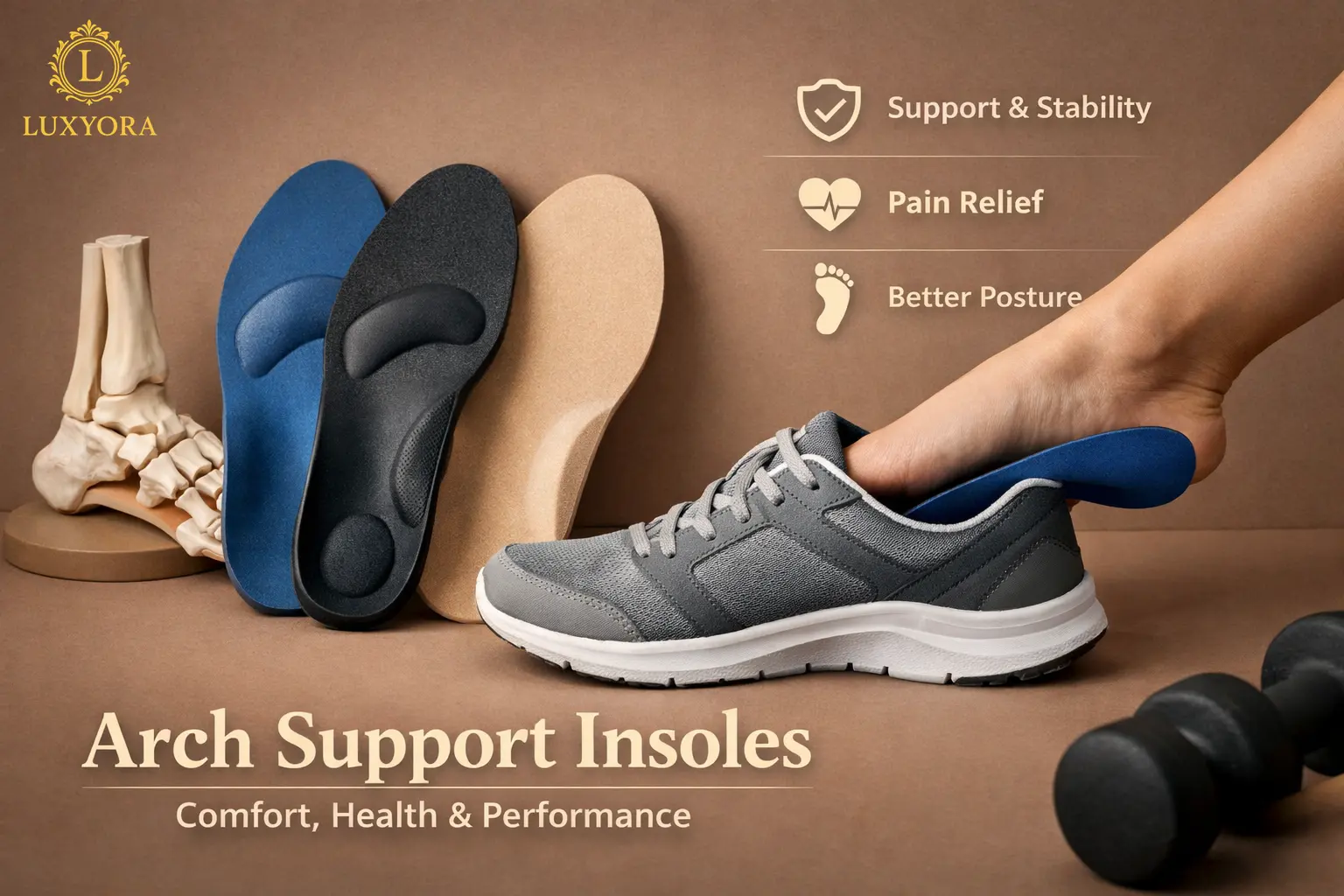
Arch Support Insoles
Arch support insoles are a wonderful help for anyone experiencing foot discomfort, posture challenges, or spending long hours on their feet. Whether you’re an athlete, a dedicated professional, or someone managing foot pain, learning about how arch support insoles work can make a meaningful difference in your daily comfort and overall well-being.
In this informative guide, we’ll take a friendly look at what arch support insoles are, how they function, who might find them helpful, and how to pick the perfect pair. We’ll also share practical tips, real-life examples, and trusted advice from experts to help you make the best choice.
What Are Arch Support Insoles?
Arch support insoles are specially designed inserts that go inside your shoes to support the natural shape of your arch. Unlike flat insoles, these are gently contoured to match the foot’s structure, helping to evenly distribute pressure and keep you comfortable throughout the day.
The human foot has three main arches:
- Medial longitudinal arch (inner side)
- Lateral longitudinal arch (outer side)
- Transverse arch (across the midfoot)
Arch support insoles primarily target the medial arch, which is most commonly associated with issues like flat feet or overpronation.
Why Arch Support Insoles Matter
Many people overlook how important proper foot alignment truly is. Your feet serve as the foundation for your entire body. When they’re not aligned correctly, it can impact everything from your ankles all the way up to your spine, highlighting just how vital foot health is for overall well-being.
Key Benefits
- Improved Foot Alignment
Arch support insoles help maintain proper foot posture, preventing excessive inward rolling (overpronation) or outward rolling (supination).
- Pain Relief
They are commonly used to relieve:
- Plantar fasciitis
- Heel pain
- Flat feet discomfort
- Shin splints
- Knee and lower back pain
- Enhanced Comfort
If you spend long hours standing or walking, these insoles reduce fatigue by evenly distributing body weight.
- Injury Prevention
Proper arch support minimizes stress on ligaments and joints, reducing the risk of overuse injuries.
Types of Arch Support Insoles
Not all insoles are the same. Choosing the right type depends on your foot structure and lifestyle.
1. Rigid Arch Support Insoles
- Made from hard materials like plastic or carbon fiber
- Best for controlling motion and stabilizing the foot
- Ideal for severe overpronation or structural issues
2. Semi-Rigid Insoles
- Combine firm support with cushioning
- Suitable for athletes and active individuals
- Provide balance between control and comfort
3. Soft Cushioning Insoles
- Made from gel, foam, or silicone
- Focus more on comfort than correction
- Ideal for people with diabetes or sensitive feet
Who Needs Arch Support Insoles?
You don’t need to have a diagnosed condition to benefit from arch support insoles. Here are some common scenarios:
Scenario 1: Office Worker with Lower Back Pain
If you sit or stand for long hours, poor foot alignment can lead to back pain. Arch support insoles help maintain posture and reduce strain.
Scenario 2: Retail Worker Standing All Day
Standing on hard surfaces can flatten your arches over time. Insoles provide cushioning and prevent fatigue.
Scenario 3: Athlete or Runner
Runners often experience stress injuries due to repetitive motion. Proper arch support improves biomechanics and reduces injury risk.
Scenario 4: Flat Feet or High Arches
People with flat feet need structured support, while those with high arches require cushioning to absorb shock.
How to Choose the Right Arch Support Insoles
Choosing the wrong insole can do more harm than good. Here’s what to consider:
1. Know Your Arch Type
- Flat feet: Low or no arch → need structured support
- Neutral arch: Moderate arch → balanced support
- High arch: Elevated arch → need cushioning
2. Shoe Compatibility
Ensure the insoles fit your shoe type:
- Athletic shoes
- Formal shoes
- Work boots
3. Material Matters
- EVA foam: Lightweight and shock-absorbing
- Gel: Excellent for cushioning
- Cork: Durable and molds to your foot over time
4. Activity Level
- Daily use: Comfort-focused insoles
- Sports: Performance and stability insoles
5. Custom vs. Over-the-Counter
- Custom orthotics: Prescribed by specialists, tailored to your feet
- OTC insoles: Affordable and widely available
Common Mistakes to Avoid
1. Choosing Based on Price Alone
Cheap insoles may lack proper support and durability.
2. Ignoring Fit
An ill-fitting insole can cause more discomfort than relief.
3. Not Replacing Worn-Out Insoles
Most insoles last 6-12 months, depending on usage.
4. Skipping Break-In Period
Your feet need time to adjust; start with a few hours per day.
Practical Tips for Using Arch Support Insoles
Tip 1: Start Gradually
Wear your insoles for 2-3 hours initially and increase usage over time.
Tip 2: Pair with Proper Footwear
Even the best insoles won’t help if your shoes lack support.
Tip 3: Maintain Hygiene
Remove and air out insoles regularly to prevent odor and bacteria.
Tip 4: Monitor Changes
If pain persists or worsens, consult a podiatrist.
Real-Life Example
Imagine a warehouse worker named Raj who spends 10 hours a day on concrete floors. He experiences heel pain and fatigue by the end of each shift.
After switching to arch support insoles:
- His foot pain reduced within two weeks
- He noticed improved posture
- His overall energy levels increased
This highlights how small changes can significantly impact daily life.
Arch Support Insoles vs Orthotics
Many people confuse insoles with orthotics.
Feature | Arch Support Insoles | Custom Orthotics |
Cost | Affordable | Expensive |
Customization | Limited | Fully customized |
Availability | Over-the-counter | Prescribed |
Use Case | General comfort | Medical conditions |
Industry Trends and Innovations
The arch support insole market has evolved significantly in recent years.
1. Smart Insoles
Some brands now offer insoles with sensors that track walking patterns and posture.
2. 3D Printing Technology
Custom insoles can now be created using 3D scans of your feet.
3. Sustainable Materials
Eco-friendly insoles made from recycled materials are gaining popularity.
Are Arch Support Insoles Safe?
Yes, when used correctly. However:
- Overuse without proper fitting may cause discomfort
- People with severe foot conditions should seek professional advice
Final Thoughts
Arch support insoles are more than mere accessories; they offer a practical way to enhance foot health, improve posture, and increase overall comfort. Whether addressing chronic pain or seeking better support, choosing the right pair can lead to a meaningful improvement.
By understanding your foot type, selecting appropriate materials, and using them correctly, you can gradually improve your daily experience.
References
- Bonanno, D. R., & Landorf, K. B. (2018). Effectiveness of foot orthoses for the prevention of lower limb overuse injuries. Sports Medicine, 48(3), 513–526.
- Chuter, V. H., & Janse de Jonge, X. A. K. (2019). Proximal and distal contributions to lower extremity injury: A review of the literature. Gait & Posture, 75, 226–233.
- Hawke, F., Burns, J., Radford, J. A., & du Toit, V. (2018). Custom-made foot orthoses for the treatment of foot pain. Cochrane Database of Systematic Reviews.
- Nigg, B. M., & Wakeling, J. M. (2019). Impact forces and muscle tuning: A new paradigm. Exercise and Sport Sciences Reviews, 47(2), 107–114.
- Redmond, A. C., Crosbie, J., & Ouvrier, R. A. (2020). Development and validation of a novel rating system for scoring standing foot posture. Journal of Foot and Ankle Research, 13(1).
- Sinclair, J., & Selfe, J. (2021). The influence of footwear and foot orthoses on lower extremity biomechanics. Footwear Science, 13(2), 75–89.
- Zhang, X., Paquette, M. R., & Zhang, S. (2022). A systematic review of the effects of foot orthoses on balance and gait. Journal of Biomechanics, 134, 111000.
-