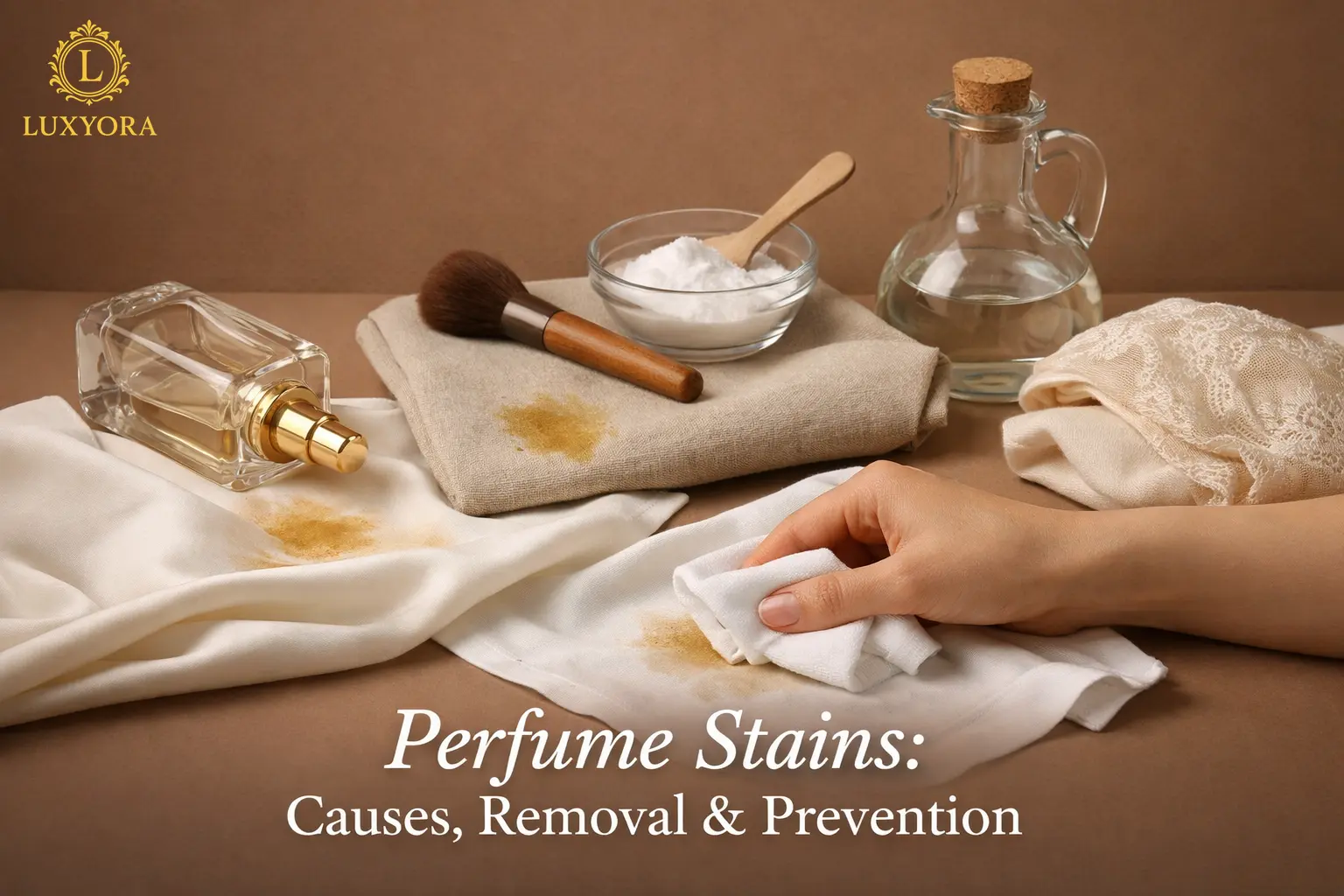
Perfume Stain
Perfume stains are a common problem that many people encounter, especially on clothing, upholstery, and delicate fabrics. While fragrances help us feel confident and attractive, their chemicals can sometimes leave stubborn marks that are tricky to remove. By understanding what causes perfume stains, learning the best ways to remove them, and knowing how to prevent them, you can save yourself time and money.
This comprehensive guide covers all you need to know about perfume stains, including their chemical properties, effective removal techniques, and prevention tips. Whether you’re dealing with a recent spill or a stubborn, set-in stain, this article offers practical advice to help you restore and protect your items.
What Is a Perfume Stain?
A perfume stain happens when the liquid parts of a fragrance, mainly alcohol, essential oils, and synthetic aromas, come into contact with fabric fibers. This interaction can leave visible marks or discoloration. Depending on the ingredients and type of fabric, these stains might look like oily spots, faded patches, or even yellowish residues.
Why Do Perfumes Cause Stains?
Perfumes are complex mixtures that typically include:
- Alcohol (ethanol) – Acts as a solvent but can weaken dyes
- Fragrance oils – Leave oily residues
- Fixatives – Help scent last longer, but may discolor fabrics
- Colorants – Some perfumes contain dyes that stain directly
When sprayed onto clothing, these components can react with fibers, especially delicate ones like silk or wool, causing lasting damage.
Types of Perfume Stains
Understanding the type of perfume stain helps determine the best removal method.
1. Oil-Based Stains
These are the most common and are caused by fragrance oils. They leave greasy marks and are harder to remove.
2. Alcohol-Induced Discoloration
Alcohol can strip color from fabrics, leading to faded spots rather than traditional stains.
3. Dye Stains
Perfumes with added colorants can leave visible pigment stains, especially on light-colored clothing.
4. Residue Build-Up
Repeated spraying on the same area can cause buildup, leading to stiff or discolored patches.
Common Fabrics Affected by Perfume Stains
Different fabrics react differently to perfume exposure.
Delicate Fabrics
- Silk
- Satin
- Chiffon
These are highly sensitive and prone to discoloration.
Natural Fibers
- Cotton
- Linen
Absorb oils easily, making stains more visible.
Synthetic Fabrics
- Polyester
- Nylon
More resistant but can still retain oily residues.
How to Remove Perfume Stains
Removing a perfume stain depends on how fresh it is and the type of fabric involved.
Step-by-Step Removal for Fresh Stains
- Blot Immediately
Use a clean cloth to absorb excess liquid without rubbing. - Rinse with Cold Water
Flush the stain from the back to push it out of the fabric. - Apply Mild Detergent
Gently work a liquid detergent into the stain. - Rinse and Repeat
Continue until the stain fades. - Air Dry
Avoid heat until the stain is completely gone.
Removing Set-In Perfume Stains
For older stains:
- Use a mixture of white vinegar and water
- Apply a baking soda paste
- Try a fabric-safe stain remover
Let the solution sit for 10-15 minutes before rinsing.
Special Care for Delicate Fabrics
- Use cold water only
- Avoid scrubbing
- Consider professional dry cleaning
Practical Scenarios and Solutions
Scenario 1: Perfume Stain on a Silk Dress
A light mist of perfume lands on a silk dress before an event. Within minutes, a dark spot appears.
Solution:
Blot gently, rinse with cold water, and use a silk-safe detergent. Avoid heat drying.
Scenario 2: Repeated Perfume Use on Shirt Collar
Daily spraying leads to yellowish discoloration.
Solution:
Soak in a vinegar-water solution and wash regularly to prevent buildup.
Scenario 3: Perfume Spill on Upholstery
A bottle tips over onto a fabric sofa.
Solution:
Blot immediately, apply a mild soap solution, and use a vacuum extractor if available.
Preventing Perfume Stains
Prevention is always better than removal.
Best Practices
- Apply perfume before dressing
- Let it dry completely
- Avoid spraying directly on fabrics
- Use pulse points (wrists, neck)
Smart Application Techniques
- Spray from a distance of 6-8 inches
- Use minimal quantity
- Opt for alcohol-free perfumes for sensitive fabrics
Industry Insights: Why Perfume Stains Matter
In the fashion and textile industry, perfume stains are a significant concern. High-end garments often carry warnings about fragrance exposure due to potential damage.
Impact on Clothing Longevity
Repeated exposure can:
- Weaken fibers
- Causes permanent discoloration
- Reduce garment lifespan
Retail and Laundry Industry Perspective
Dry cleaners frequently encounter perfume stains, especially on formal wear. Specialized cleaning techniques are often required, increasing maintenance costs.
Eco-Friendly and DIY Solutions
For those who prefer natural methods:
DIY Cleaning Mix
- 1 part vinegar
- 2 parts water
- A few drops of mild soap
Benefits
- Non-toxic
- Cost-effective
- Safe for most fabrics
Common Mistakes to Avoid
- Rubbing the stain aggressively
- Using hot water immediately
- Applying bleach without testing
- Drying before stain removal
These mistakes can permanently set the stain.
Advanced Tips for Stubborn Stains
- Use enzyme-based cleaners
- Try isopropyl alcohol (patch test first)
- Consult professional cleaners for luxury fabrics
Final Thoughts
Perfume stains are more than just minor inconveniences; they can cause permanent damage if not handled properly. By understanding the composition of perfumes and how they interact with different fabrics, you can take proactive steps to prevent and treat stains effectively.
From quick fixes for fresh spills to advanced techniques for stubborn marks, this guide equips you with the knowledge needed to maintain your garments and fabrics in pristine condition. With the right approach, you can enjoy your favorite fragrances without compromising your wardrobe.
References
- Beheshti, M., & Jones, R. (2019). Textile Chemistry and Fabric Care. Springer Publishing.
- Chen, Y., & Burns, L. D. (2020). Fabric stain removal techniques and consumer practices. Journal of Textile Science, 45(3), 210–225.
- Smith, J. (2021). Laundry Science: Principles and Practice. CRC Press.
- U.S. Environmental Protection Agency. (2022). Safer cleaning products and stain removal guidelines.
- International Fabric Care Institute. (2018). Guide to stain removal and fabric preservation.