Jewellery for Religious and Cultural Ceremonies | Luxyora
Religious and cultural ceremonies come with their own kind of elegance, one that isn’t about trends, but about meaning. Whether you’re attending a wedding ritual, a naming ceremony, a prayer service, a coming-of-age celebration, a festival gathering, or a memorial rite, jewellery carries more than sparkle. It carries signals: respect, modesty (when required), heritage, and sometimes even a family story that has outlived generations.
The challenge is that ceremonies aren’t styled like parties. You’re dressing for a space that may be sacred, intergenerational, and full of unspoken rules. The best jewellery choice is the one that looks beautiful and stays quiet when it needs to, is radiant when it can be, and never disrupts.
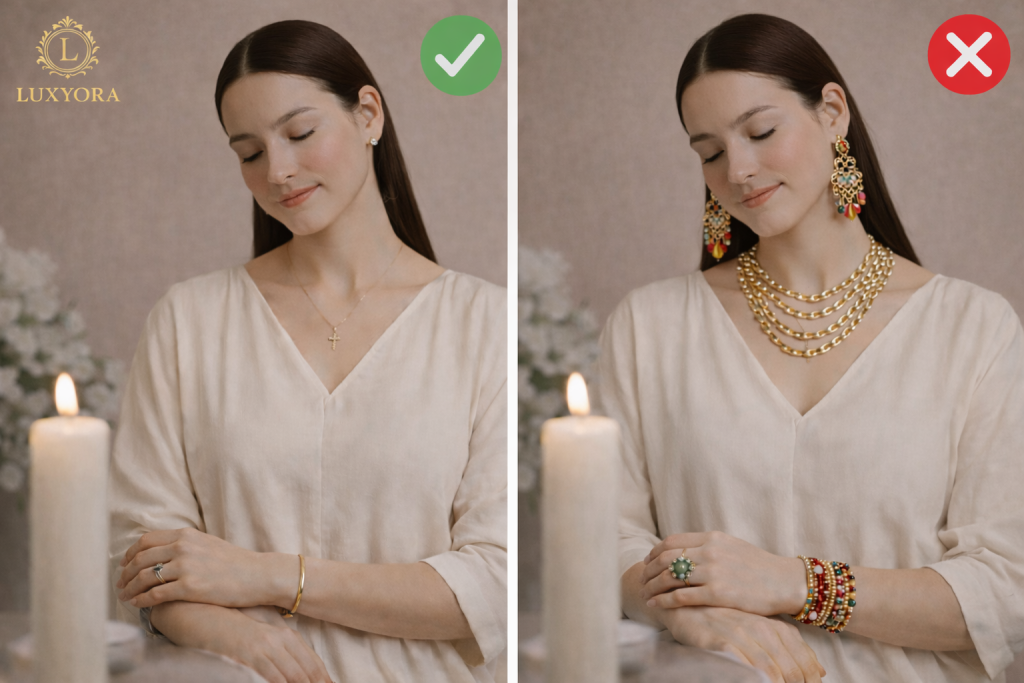
Here’s how to choose jewellery that fits the moment, honors the culture, and still feels luxurious.
1) Start with the ceremony’s “tone”: sacred, celebratory, or solemn
Not every ceremony is meant for glamour, even if the attire is stunning.
- Sacred / prayer-focused: Jewellery should be refined, and low-noise think small earrings, a delicate chain, a single ring.
- Celebratory / milestone: You can elevate statement earrings, heritage pieces, richer metals, while still keeping the look balanced.
- Solemn / memorial: Keep it minimal, subdued, and emotionally respectful. Avoid “party sparkle” and anything that feels attention-seeking.
If you’re unsure, choose understated elegance. It’s never the wrong language in a sacred room.
2) Respect the “modesty map”: what the space expects
Some ceremonies prefer restraint in visible adornment. Others celebrate it. Your goal is to align with the room, not override it.
A simple way to decode it:
- If attendees are dressed conservatively, keep jewellery fine and minimal.
- If attendees are wearing heritage finery and ceremonial jewellery, a more elevated look is usually welcome; avoid turning it into a costume.
Also consider practical modesty: long, swinging earrings or noisy stacks can distract during quiet prayers or readings.
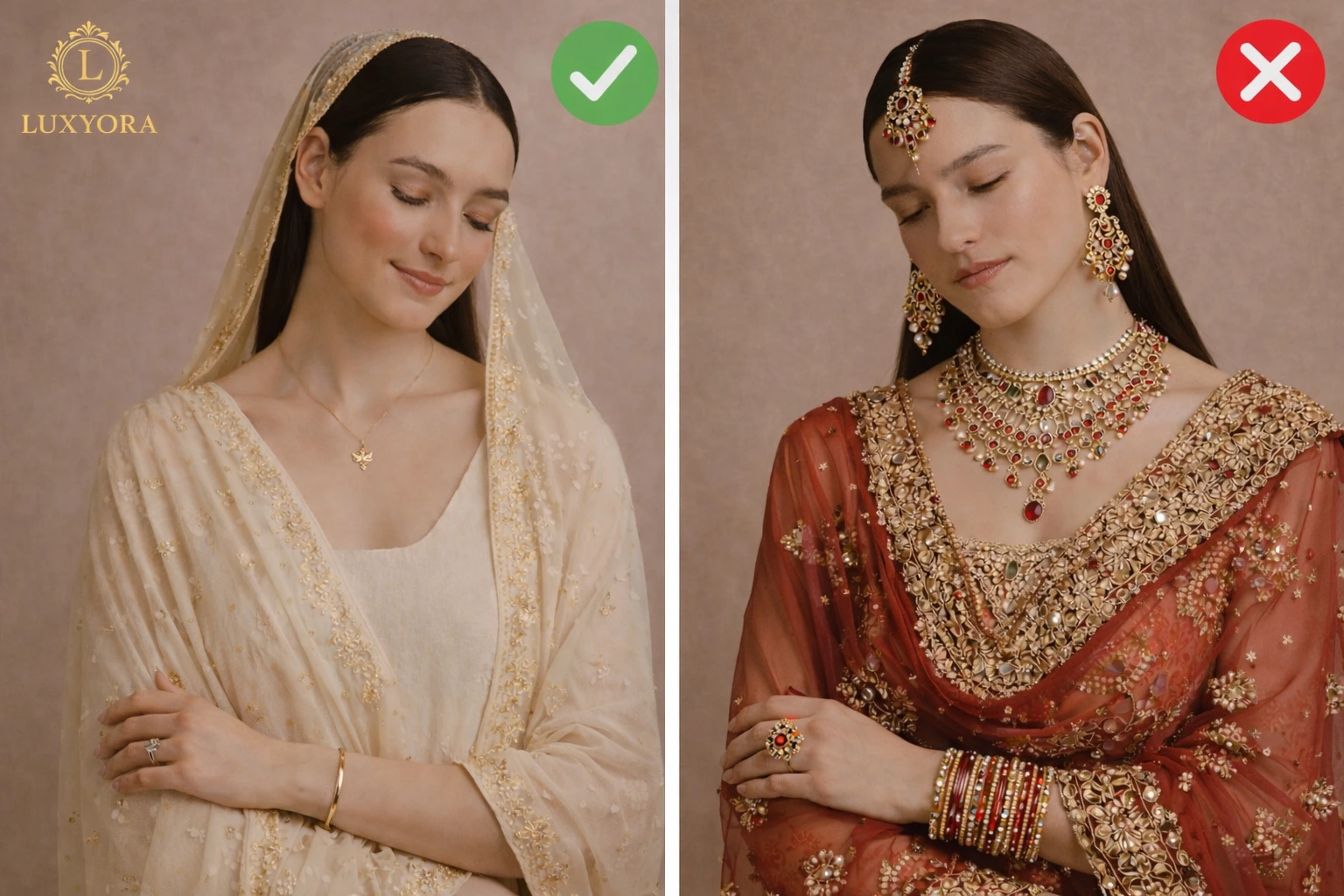
3) One hero piece is the most respectful kind of luxury
This rule works across cultures because it’s both stylish and considerate.
Pick one hero:
- Heritage earrings
- A meaningful pendant
- A single statement bangle
- A classic chain with a ceremonial charm
- A ring with cultural symbolism
Then keep everything else quiet. The look reads intentional and polished, never overwhelming.
4) Match jewellery to fabric and craftsmanship, not just color
Ceremonial clothing often has texture, such as brocade, embroidery, lace, handwoven silk, or ceremonial robes. When the outfit is rich in detail, jewellery should either:
- Echo the craftsmanship (antique finishes, handworked designs, traditional forms), or
- Cleanly contrast it (simple diamonds/pearls with a refined silhouette)
What usually looks “off” is mixing a highly traditional outfit with jewellery that feels unrelated in mood, like hyper-trendy pieces with no visual connection to the attire’s heritage language.
The secret to a truly memorable ceremonial look often lies in one overlooked detail, how beautifully your jewellery complements your traditional attire. Discover why in How to Match Jewellery with Traditional Attire.
5) Choose metals thoughtfully: tone is a cultural cue
Metals aren’t neutral. They send messages.
- Yellow gold often reads classic, warm, traditional, and ceremonial.
- White metal reads modern, crisp, and formal, beautiful for minimalist ceremonies or sleek traditional looks.
- Antique gold finishes can feel deeply heritage-coded and often sit beautifully with traditional textiles.
If you’re mixing metals, keep it deliberate (a two-tone “bridge” piece helps). In sacred or conservative settings, consistency typically reads more respectful.
6) Let the neckline and head styling guide the jewellery
Many ceremonies involve head coverings, veils, scarves, or hair styled in traditional ways. Jewellery should support that silhouette.
- High necklines or covered necks: skip necklaces; focus on earrings and a neat wrist piece.
- Open necklines: a single pendant or short necklace looks polished without dominating.
- Head coverings/veils: avoid oversized earrings that catch fabric; choose studs, small hoops, or short drops.
- Hair adorned (flowers, pins, veils): let the hair detail be the hero; keep jewellery cleaner.
In ceremonial spaces, “secure and comfortable” is part of elegance.
7) Consider “sound etiquette”: jewellery shouldn’t interrupt the moment
Quiet ceremonies highlight sound. Avoid:
- Stacks of bangles that clink loudly
- Charm bracelets that jingle
- Oversized earrings that knock against hair accessories
Instead, choose pieces that sit close and move silently. Luxury is often the absence of distraction.
8) Cultural symbolism matters, especially for borrowed or sacred pieces
Some items are purely decorative; others are deeply symbolic. If you’re wearing pieces tied to a specific tradition (or borrowing from family), treat them with care:
- Wear them correctly (placement and pairing can matter)
- Avoid combining sacred items with overly casual styling
- If you’re uncertain, ask a family member or host what’s appropriate
This isn’t about gatekeeping, it’s about respect. Jewellery in many cultures is part of identity and ritual, not just aesthetics.
9) Practical care: ceremonies can be long, emotional, and hands-on
Religious and cultural ceremonies often include greeting lines, blessings, food service, incense, oils, water rituals, or long hours. Choose jewellery that can survive real life:
- Secure earring backs and reliable clasps
- Rings that won’t snag on delicate fabric
- Pieces that won’t react badly to fragrance, sweat, or ceremonial products
Pearls, in particular, are sensitive to many chemicals and should be handled gently. Keep them away from perfume, hairspray, and harsh conditions.
10) The modern approach: heritage + minimalism
One of the most elegant current styling directions is pairing one traditional or symbolic piece with modern minimal supports:
- Heritage earrings + clean neckline
- Ceremonial pendant + subtle studs
- Traditional bangle + minimal rings
It preserves meaning, looks luxurious, and avoids the “overdone” trap.
Luxyora Philosophy: The most beautiful ceremonial jewellery isn’t the loudest, it’s the most intentional: worn with respect, chosen with meaning, and styled with quiet confidence.
References:
- CIBJO—The World Jewellery Confederation. (2024). Pearl Book: Natural, cultured, composite cultured products and imitations of pearls—Terminology and classification (nomenclature) (Pearl Commission 2024-1). CIBJO.
- CIBJO—The World Jewellery Confederation. (2021). Guide for classifying natural pearls and cultured pearls (Pearl Commission 2021-1). CIBJO.
- Gemological Institute of America. (n.d.). Pearl care and cleaning guide. GIA.
- Holcomb, M. (Ed.). (2019). Jewelry: The body transformed. The Metropolitan Museum of Art.
- Samir, J. L. (2018). Jewelry in Hinduism: A mission challenge. Journal of Adventist Mission Studies.
- SAARC Cultural Centre. (2018). SAARC Culture (Vol. 6): 2018. SAARC Cultural Centre.
- The Associated Press. (2025). How to care for jewelry so it stays shining, untangled and valuable. AP News.