Why Fragrance Often Feels More Intimate Than Fashion | Luxyora
Fashion is the art of being seen. Fragrance is the art of being remembered.
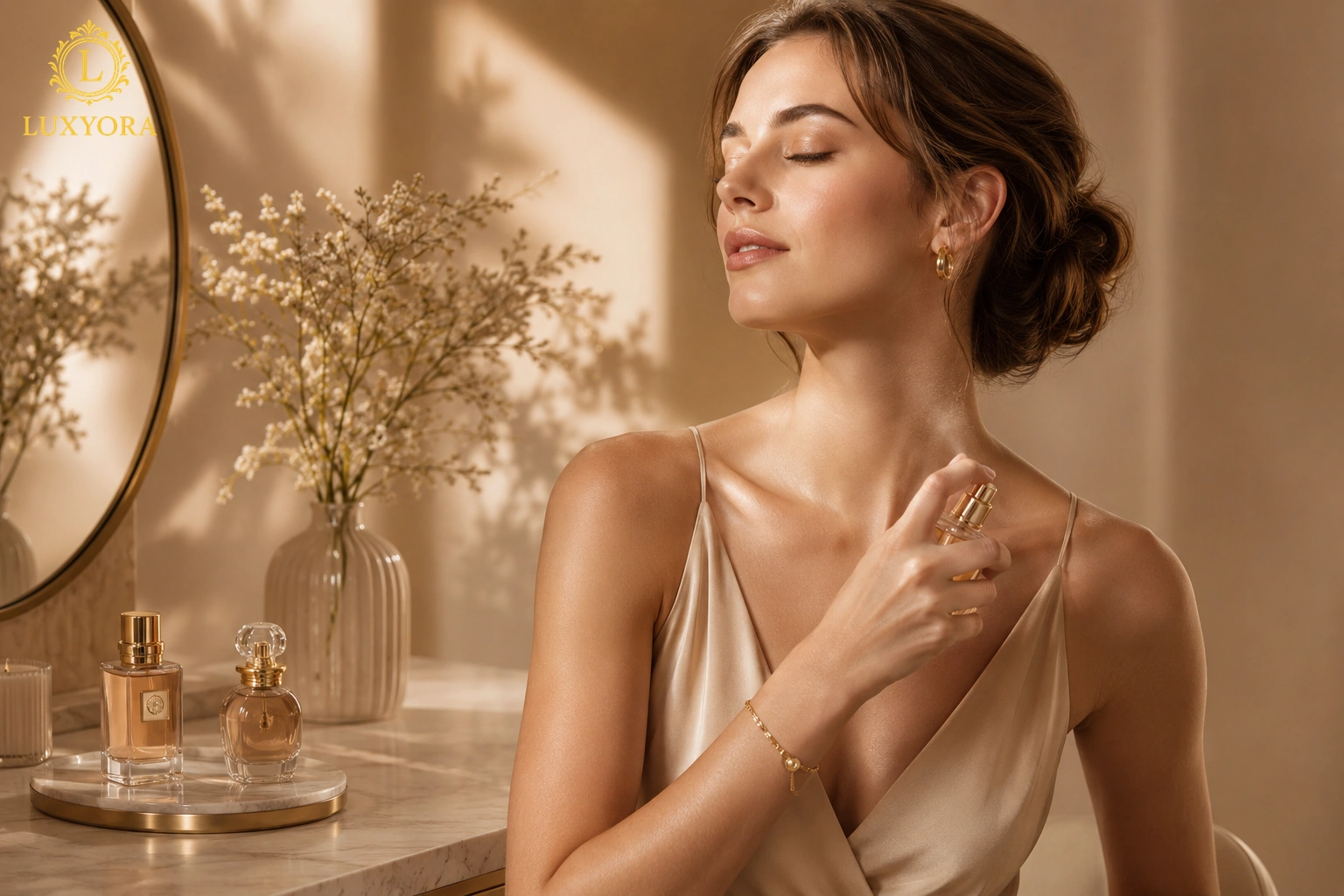
You can spot a great coat from across the street. You can clock a gorgeous shoe the moment it lands on pavement. But perfume works differently: it doesn’t sit at arm’s length, waiting to be admired. It lives in the air between people. It has to be experienced, not merely observed. And that’s exactly why, for so many of us, fragrance feels more intimate than anything we hang in a closet.
Because fashion is a statement. Fragrance is a confession.
Fragrance enters the body, not just the room
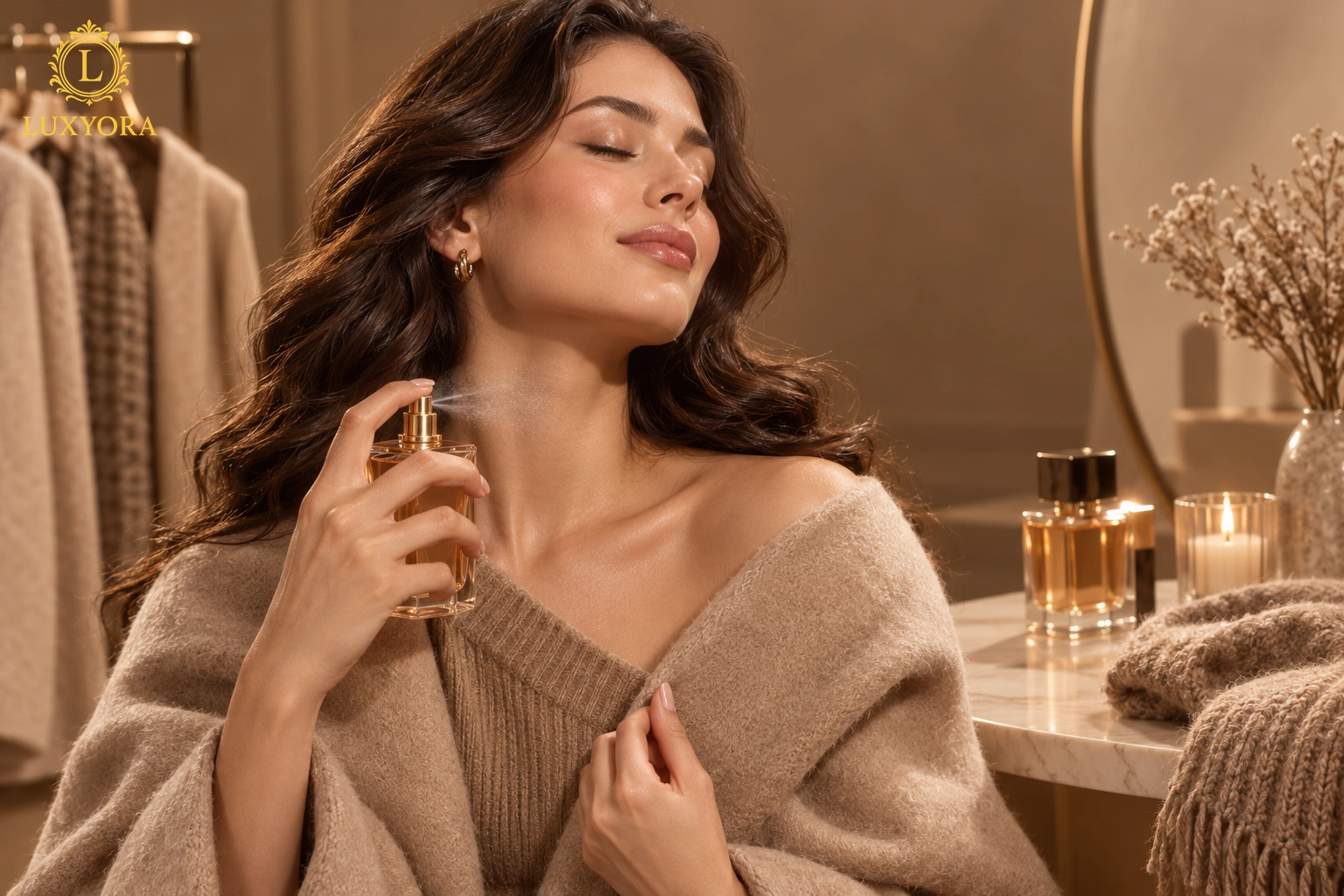
Clothing reads like a headline: clear, immediate, and public. Scent is more like a song you didn’t know you loved until it starts playing. That’s partly because smell is tightly braided into the brain systems linked to emotion and memory. It doesn’t ask for analysis first. It delivers a feeling fast.
This is why fragrance can feel emotionally “louder” than a red lip. You don’t just notice it; you react to it. A certain note can soothe, sharpen, seduce, steady, or soften you. And because the emotional response is so personal, wearing scent becomes a kind of private mood styling done for yourself first, and the world second.
Choosing a perfume is rarely just about liking a scent. The fragrances we return to again and again often reveal something meaningful about our preferences, emotions, and individuality. Explore the connection in How to Choose the Right Perfume for Your Personality.
It’s discovered at close range, not broadcast from afar
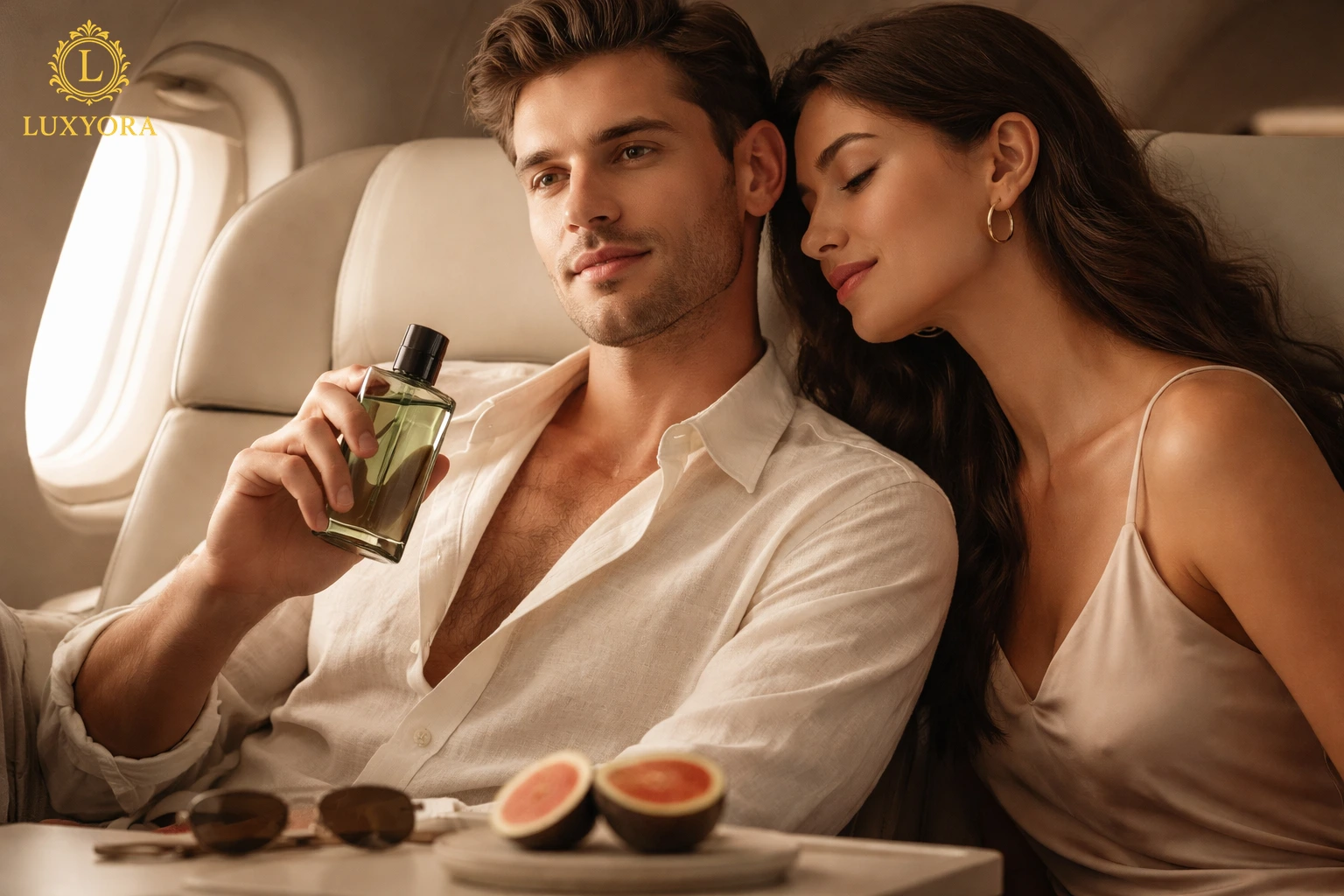
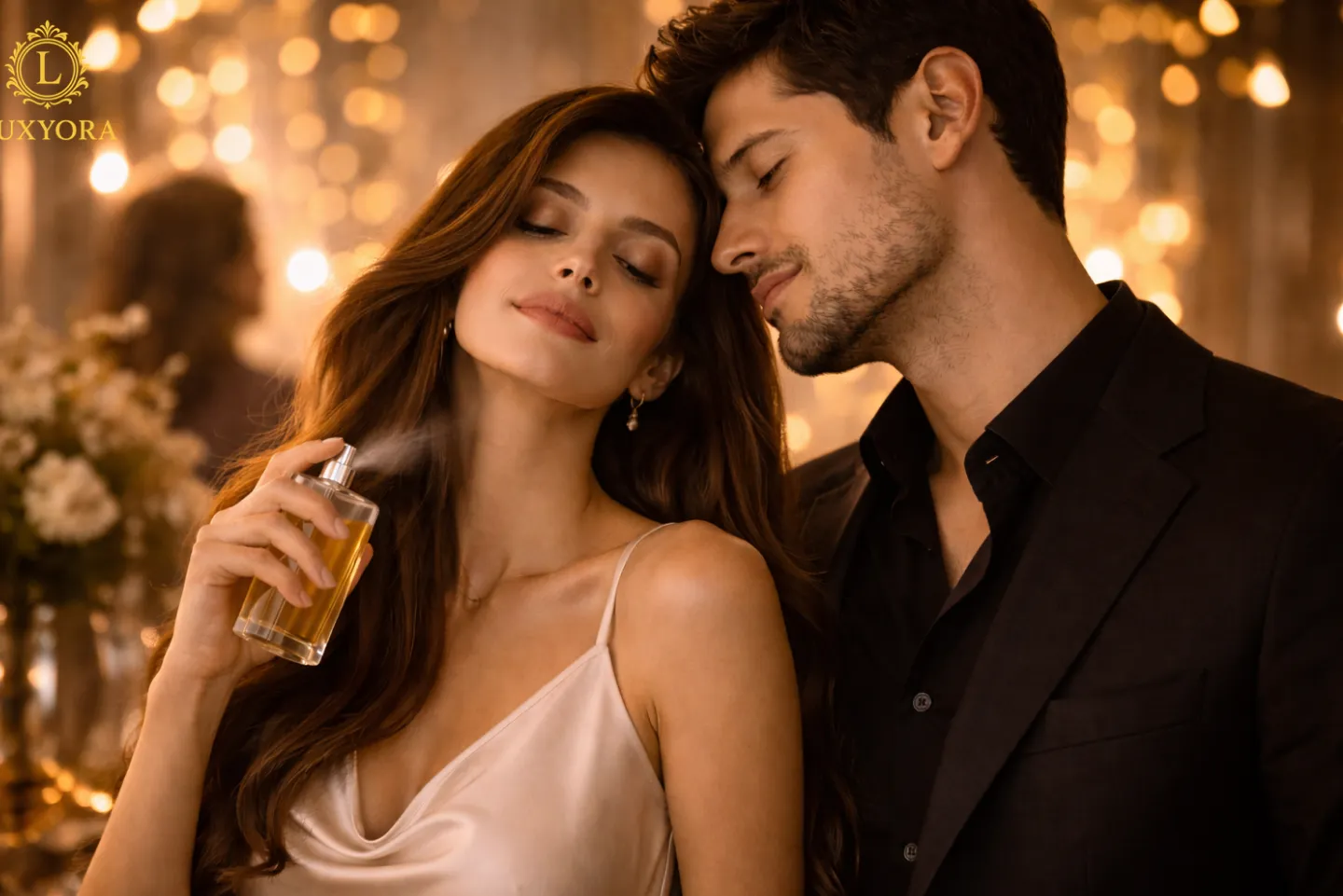
Fashion can be appreciated from a distance. Fragrance usually requires proximity. Someone has to step closer during a greeting, a hug, a conversation at the edge of a party to really catch it. That closeness creates intimacy by design.
And because scent arrives in layers, bright top notes, a warm heart, a lingering base, it mimics the way real intimacy works: gradual, unfolding, earned. A bag announces a brand. A fragrance invites curiosity.
Why does a fragrance smell bright and airy at first, yet become warm and comforting by the end of the day? The answer lies in layers that quietly shape every olfactory journey. Learn more in Understanding Perfume Notes: Top, Middle & Base Notes Explained.
Fragrance becomes a collaboration with your skin
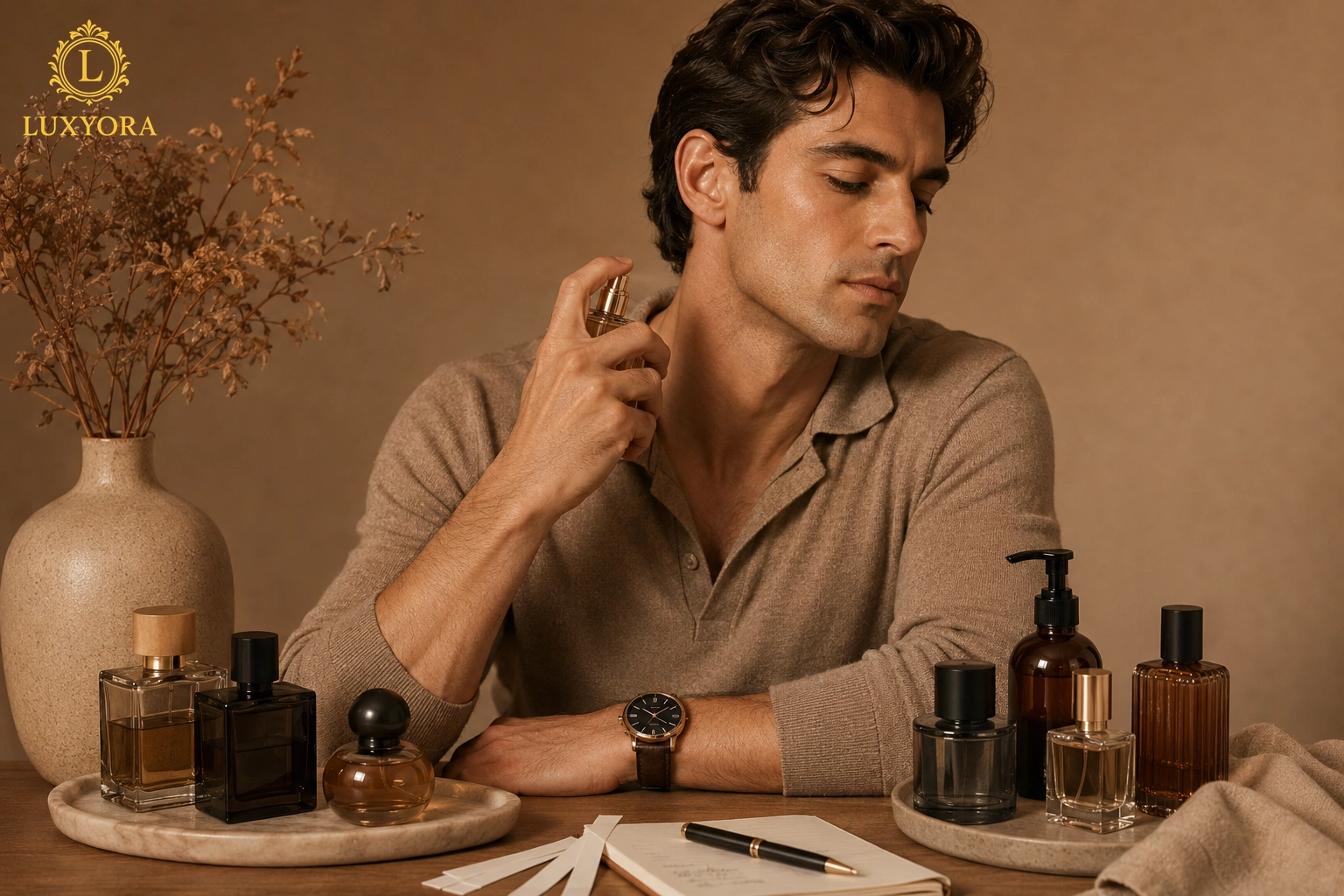
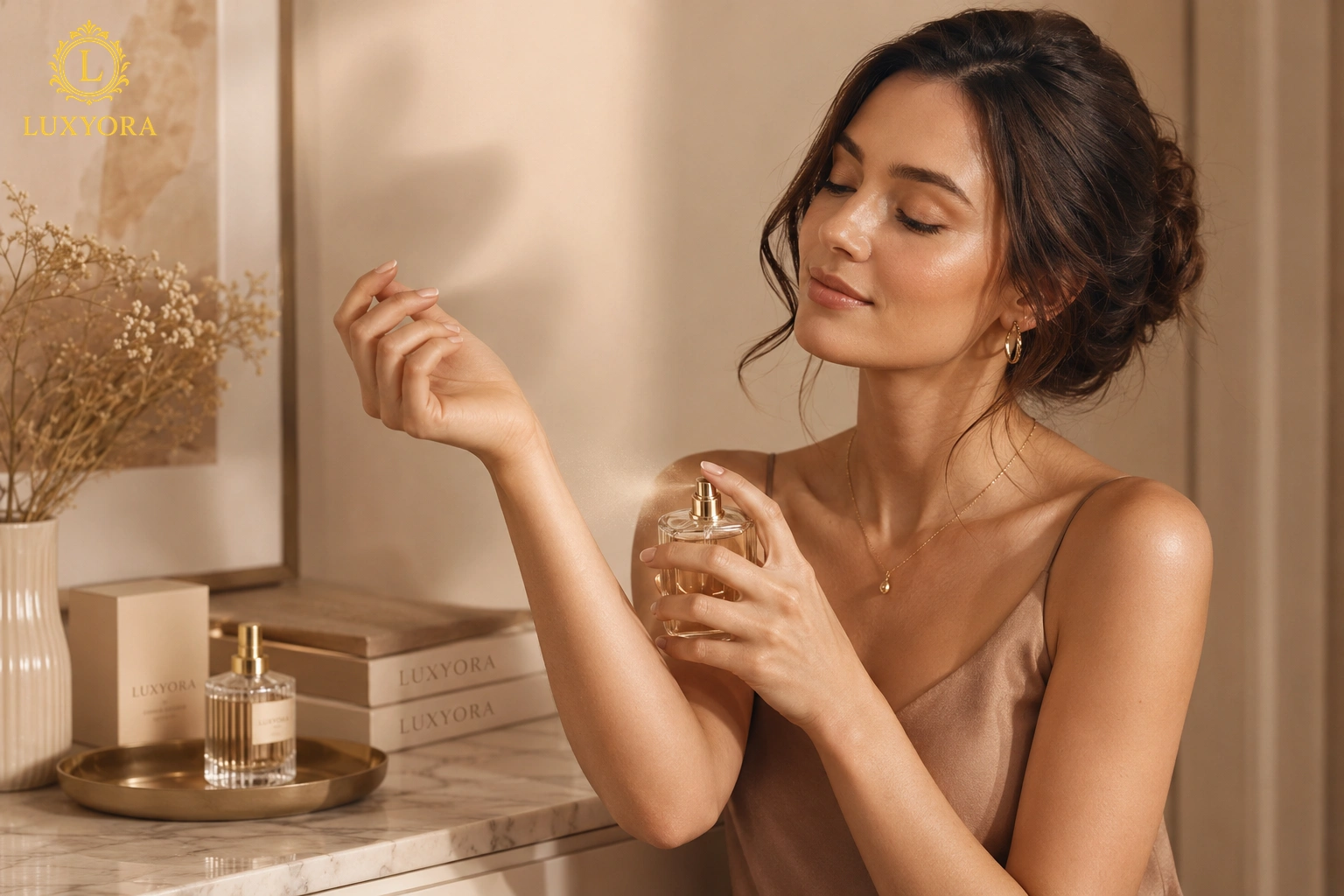
Here’s the deliciously unfair truth: the same perfume can smell different on different people. Your skin’s warmth, oil balance, and micro-environment can alter how notes bloom and how long they last. So while fashion is something you choose, fragrance is something you co-create. It becomes part formula, part biology, part chemistry, part you.
This is why fragrance can feel more personal than style. A blazer will look like a blazer on most bodies. But perfume? Perfume can turn into a signature something that feels less like “a scent” and more like “your presence.”
The most captivating perfumes are sometimes the quietest ones fragrances that blend seamlessly with your natural scent and become almost indistinguishable from you. Explore this subtle olfactory trend in Soft Skin Scent Perfumes: Subtle Fragrances That Smell Like You.
It attaches to memory like silk to skin
We all have a scent that time-travels us. One inhale, and you’re suddenly in a different version of your life, an old apartment, a first love, a long-haul flight, a summer that felt endless. Researchers continue to explore how odor-evoked memories can be unusually vivid and emotionally loaded, which helps explain why scent often feels like a direct pipeline to the self.
Fashion can remind you of an era, sure. But fragrance can resurrect it, complete with the feeling in your chest.
That’s why people hoard discontinued bottles like heirlooms. They’re not preserving liquid. They’re preserving a chapter.
Unlike clothing, a scent can transport us to a specific place, person, or moment with just a fleeting trace in the air. Explore why fragrance holds such emotional power in The Science of Scent: How Fragrance Affects Mood and Memory.
It’s the most private kind of “luxury.”
Fragrance is luxurious in a very specific way: it’s largely invisible. No one can fully “verify” it from across the room. It’s not about being seen wearing something expensive, it’s about inhabiting something beautiful.
In that sense, fragrance can feel like a private indulgence even when it’s worn publicly. It’s self-expression without the performative edge. You can wear a scent under the simplest outfit and still feel exquisitely put together, like you’re holding a secret the world doesn’t need to understand.
It shapes presence in ways fashion can’t
Clothes can change how you look. Scent can change how you carry yourself.
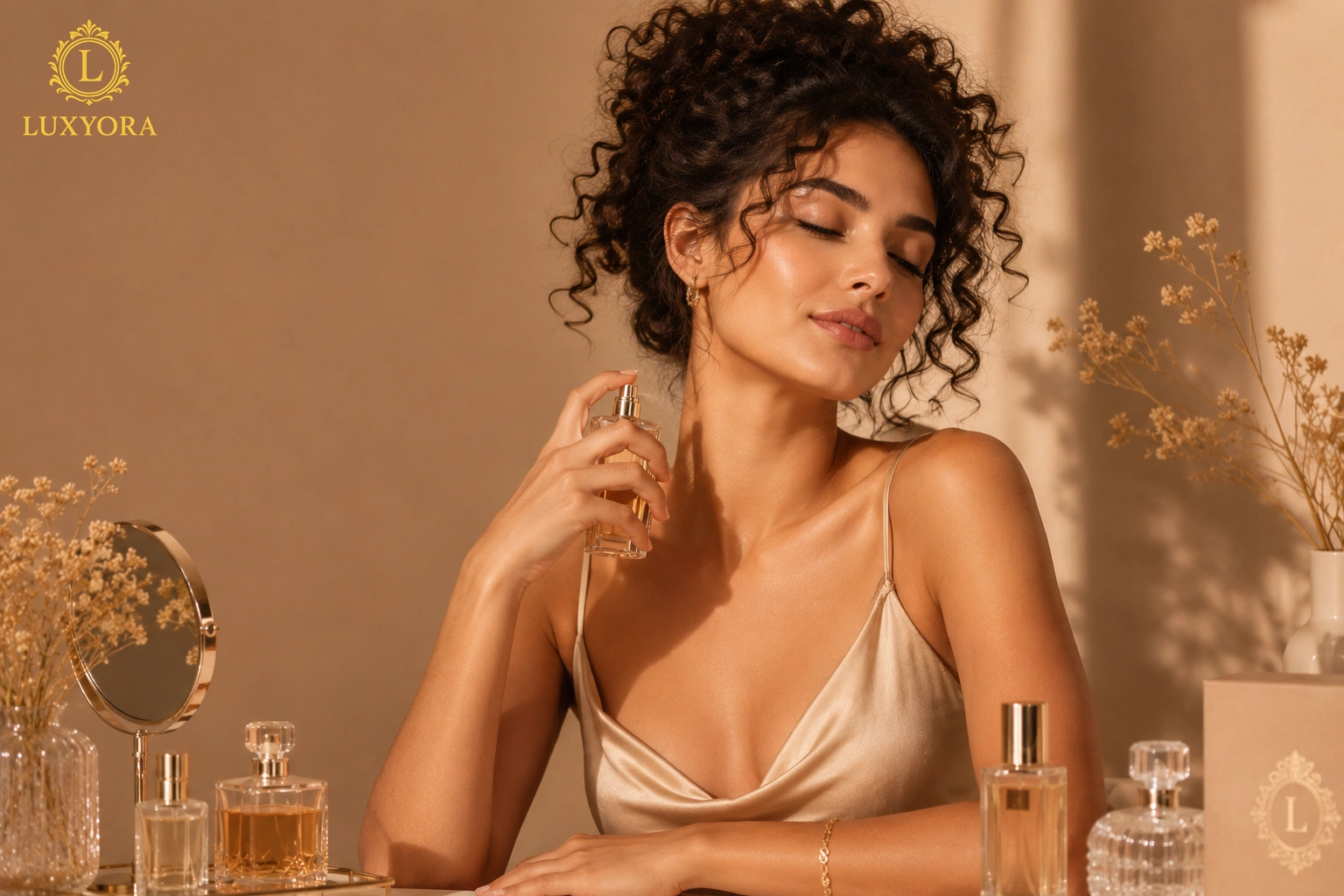
A fragrance you love can act like invisible posture: shoulders back, chin slightly lifted, voice steadier. Part of that is ritual, the little pause before you step into the world. Part of it is psychology, the way scent can nudge emotion, and emotion changes body language.
And part of it is social. Studies suggest that fragrance can subtly influence how people judge characteristics such as attractiveness and confidence. Not because scent replaces personality, but because it adds atmosphere, an emotional “lighting” to your presence.
The most memorable perfumes often have an effect that extends far beyond scent itself, quietly inspiring a sense of confidence, ease, or self-assurance. Explore why in How Wearing a Scent Changes the Way You Carry Yourself.
Fashion is social; fragrance is relational
Fashion has rules: dress codes, seasons, trends, the soft pressure of being perceived. Fragrance has far more freedom. You can wear a scent purely for how it makes you feel confident, comforted, magnetic, and calm without anyone needing to approve.
And fragrance has a relational quality that clothing rarely reaches. Because it’s sensed close up, it becomes part of shared space and shared memory. Someone might forget what you wore to dinner. They may never forget how you smelled when you hugged them goodbye.
Why it matters for luxury
Luxury isn’t only about price. It’s about intention. It’s about choosing details that feel like they belong to you.
Fragrance delivers that sense of intention in the most intimate format possible: a personal aura that can’t be copied exactly, because it lives on your skin and in your life. It turns routine into ritual. It turns presence into a signature. It turns the invisible into something unforgettable.
And that’s why fragrance often feels more intimate than fashion: clothing dresses the body, but scent dresses the self.
A beautifully chosen scent can become an invisible part of your presence, quietly enhancing the way you are perceived in social moments. Learn more in The Quiet Power of Luxury Fragrance in Social Settings.
Luxyora Philosophy: True luxury is what becomes uniquely yours, felt on the skin, carried in memory, and recognized without needing to be seen.
References:
- Bratman, G. N., et al. (2024). Nature and human well-being: The olfactory pathway. Science Advances. (Science)
- Croijmans, I. M., et al. (2021). The role of fragrance and self-esteem in perception of body odors and impressions of others. PLOS ONE. (PLOS)
- Davies-Owen, J., et al. (2024). Fragrance modulates attractiveness, confidence and related face perception outcomes. Physiology & Behavior. (ScienceDirect)
- Khair, N., Elhajjar, S., & Hamzeh, Z. (2024). Personal branding through perfume in the Middle East: Investigating the role of fragrance in self-presentation, impression management, and cultural identity. Fashion Theory. (Taylor & Francis Online)
- Kontaris, I., & East, B. S. (2020). Odor and emotion: A review of the links between olfaction, mood, and emotion. Frontiers in Behavioral Neuroscience. (Frontiers)
- Lopis, D., Valentin, D., & Manetta, C. (2023). Odor-evoked memories: The importance of choosing the right odor. Acta Psychologica. (ScienceDirect)
- Nez Éditions. (2020). The Big Book of Perfume: For an Olfactory Culture (J. Doré, Ed.). Nez Éditions. (Nez Éditions)