Common Perfume Myths : True vs False | Luxyora
Perfume culture is full of inherited habits, tiny rituals passed down like lipstick shades and blow-dry tricks. Spray, rub, sniff coffee beans, store them in the bathroom because it “looks cute,” and assume anything labeled “natural” is automatically safer. The problem? A lot of these rules are more folklore than fact.
So consider this your chic myth-busting column: what’s true, what’s not, and what to do instead so your fragrance wears better, lasts longer, and actually smells like what you paid for
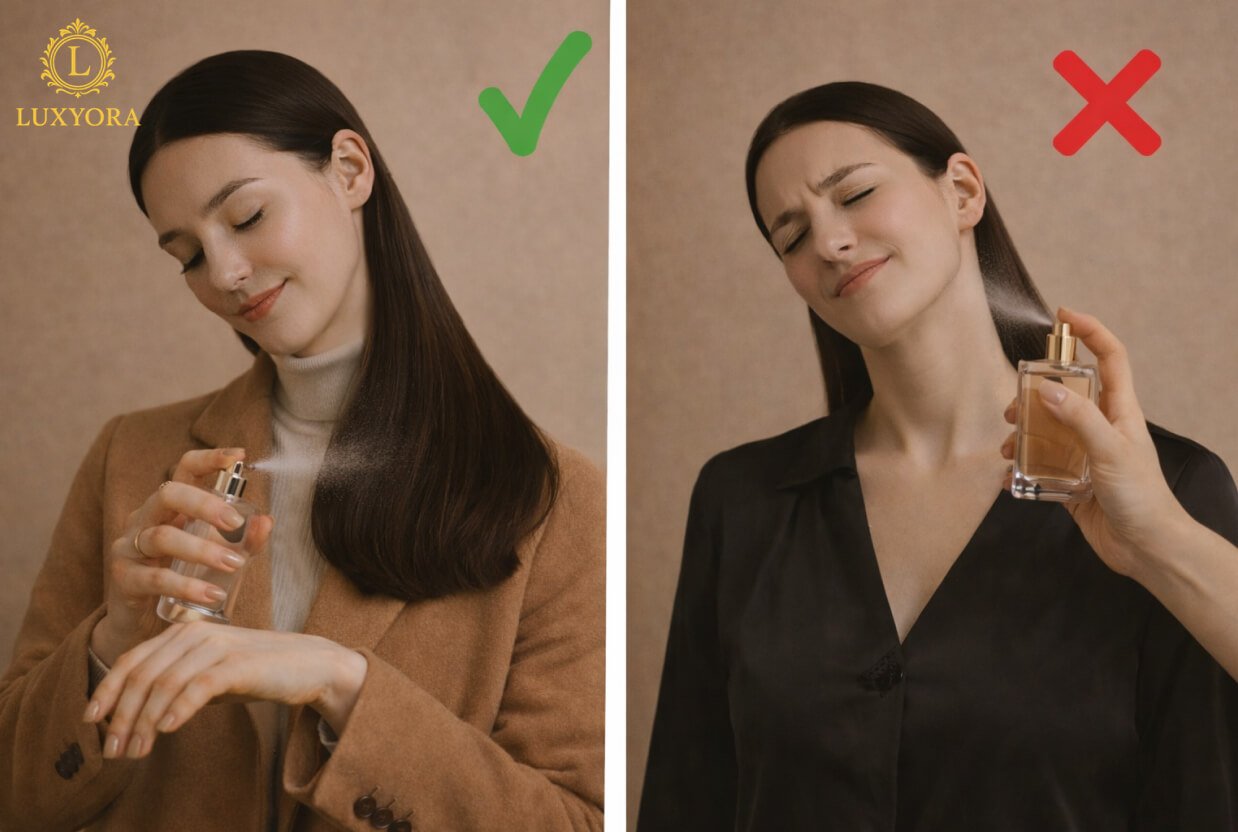
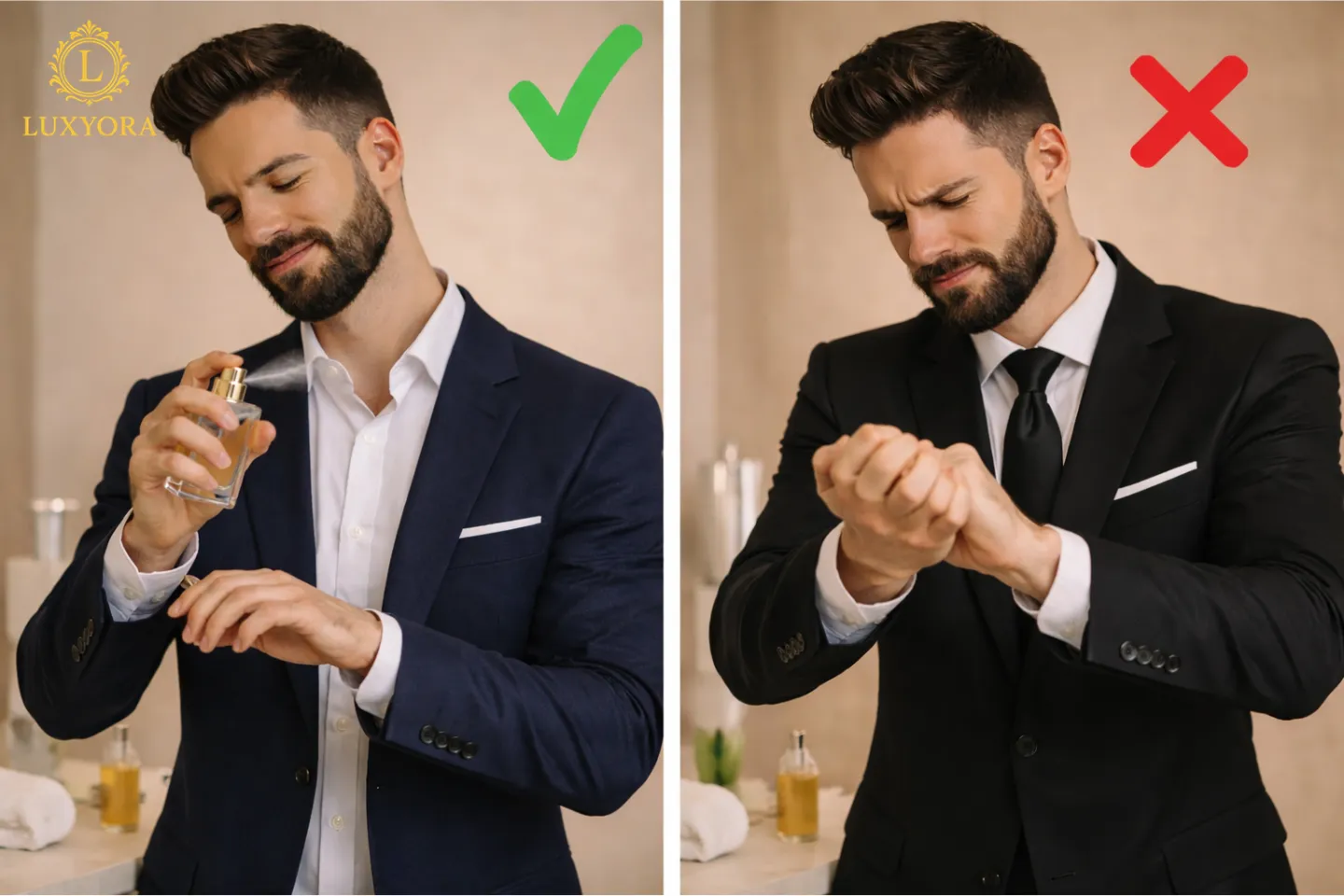
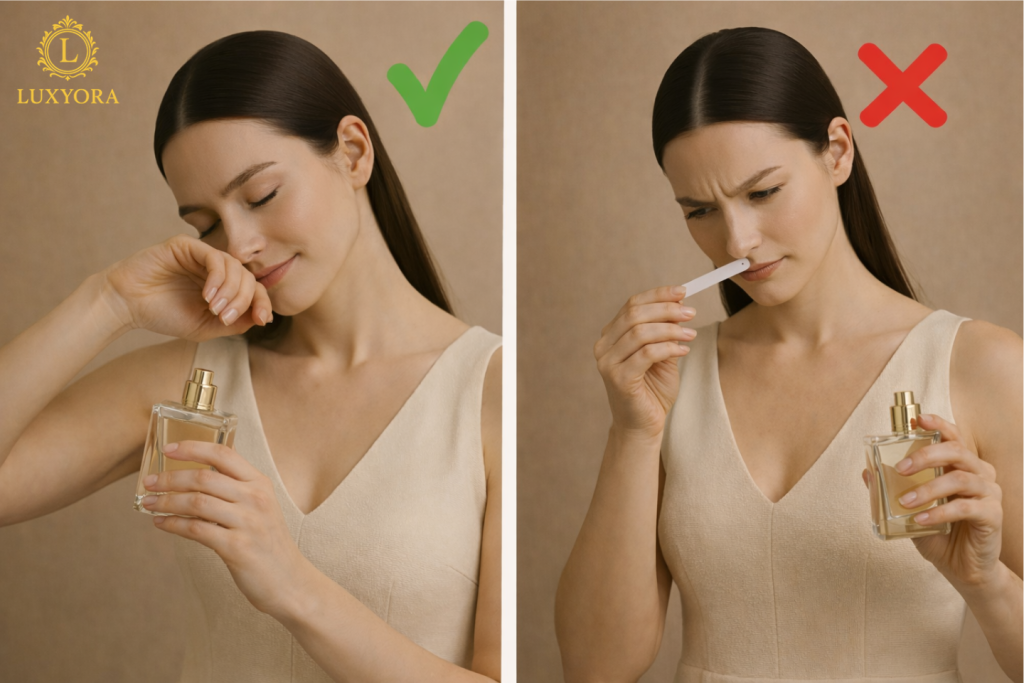
Myth #1: “Rubbing your wrists helps perfume last longer”
Debunked. Rubbing your wrists creates friction and heat, which can disrupt how a perfume develops, especially its brighter top notes. Real Simple’s fragrance experts specifically call out wrist-rubbing as a common mistake because it can crush delicate top notes and interfere with the intended evolution.
Do this instead: Spray, wait, and let the scent settle. If you must touch your wrists, do it lightly, not vigorous rubbing
Myth #2: “Coffee beans reset your nose between perfumes”
Mostly debunked. It’s a fragrance-counter tradition, but it doesn’t “reset” your olfactory receptors in any scientific, magical way. Despite the common belief, coffee beans don’t truly reset your sense of smell, a point supported by research often referenced in fragrance training.
Do this instead: Step away for fresh air, smell your clean sleeve, or take a short break. Your nose needs rest, not another strong smell layered on top.
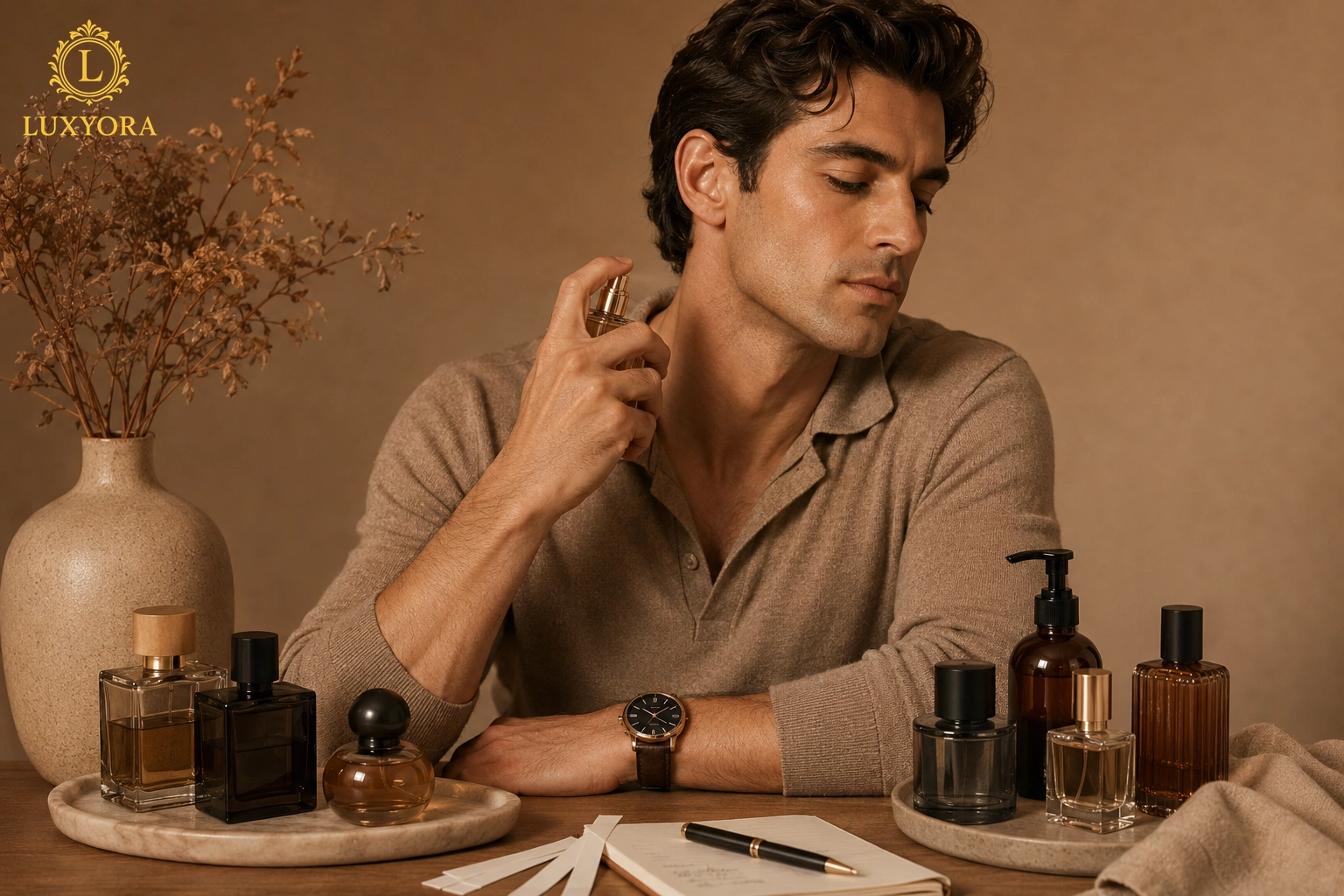
Myth #3: “If a perfume smells good on a paper strip, it’ll smell the same on me”
Debunked. Blotters are helpful, but they’re not reality. Perfume interacts with your skin temperature, moisture, and natural oils, affecting how quickly it evaporates and how notes develop over time. That’s why the top/heart/base structure exists in the first place.
Some of the most widely repeated perfume beliefs persist because we rarely consider what is happening beneath the surface of a fragrance. Learn how understanding a perfume’s hidden layers can change the way you experience scent in Understanding Perfume Notes: Top, Middle & Base Notes Explained.
Do this instead: Use blotters to shortlist, then test on skin and check again at 30 minutes and 4-6 hours.
Myth #4: “More sprays = better performance”
Debunked (and socially risky). Overspraying doesn’t necessarily make a scent last longer; it often just makes it louder at the start and overwhelming to everyone in your orbit. Fragrance longevity is improved more reliably by hydrated skin and smart placement than by doubling the number of sprays. Real Simple recommends moisturizing first because dry skin won’t hold scent as well.
Do this instead: Moisturize, then apply 2-4 strategic sprays. If you need a refresh, reapply lightly later instead of overloading at the beginning.
Myth #5: “Natural perfumes are always safer than synthetic”
Debunked. “Natural” isn’t a guarantee of safety. IFRA (International Fragrance Association) is clear that natural ingredients can still be allergenic or irritating, and “natural” does not automatically equal safer.
This is especially relevant because many natural extracts are complex mixtures that naturally contain allergenic constituents.
Some of the most persistent perfume myths revolve around ingredients, with natural and synthetic fragrances often placed in opposition without understanding the nuances between them. Discover the truth behind this debate in Natural vs Synthetic Perfumes: Which Is Better for You?
Do this instead: Shop based on how your skin reacts, patch-test when needed, and don’t let “natural” do all the decision-making for you.
Myth #6: “Synthetic = toxic”
Debunked (as a blanket statement). Synthetic fragrance materials range widely, and safety depends on dose and use conditions, not whether something grew on a plant. The RIFM-IFRA safety framework explains how standards are derived from safety assessments and used as risk-management measures for consumer products.
Do this instead: Look for reputable brands that adhere to recognized safety standards and are transparent about their responsible formulation.
Myth #7: “Eau de Parfum is always better (and always lasts longer) than Eau de Toilette”
Debunked-ish. Concentration matters, but it isn’t the whole story. An airy EDP can wear more softly than a bold EDT, depending on materials and formulation. Even industry-facing guidance emphasizes typical ranges rather than rigid, universal definitions.
Do this instead: Choose based on your lifestyle:
- Want presence + longevity? Try EDP.
- Want daytime flexibility? EDT can be perfect.
Then test because your skin gets the final vote.
The world of fragrance is filled with assumptions about stronger scents, lasting power, and concentration levels, yet the answers often lie in understanding two of perfumery’s most familiar terms. Learn more in The Ultimate Guide to Understanding Eau de Parfum vs Eau de Toilette.
Myth #8: “Perfume expires quickly, so you should finish it fast”
Debunked (with a caveat). Perfume can last for years if stored correctly, but it degrades faster with heat, light, humidity, and frequent air exposure. Memo Paris advises avoiding temperature changes and heat sources, exactly the kind of conditions your bathroom often provides. Memo Paris
Do this instead: Store perfume in a cool, dry, dark place, such as a dresser drawer or closet shelf, not on a sunny windowsill or in a steamy bathroom.
A treasured fragrance does not necessarily come with an urgent expiration date. In many cases, the environment surrounding the bottle can have a greater influence on its longevity than the calendar itself. Explore why in A Complete Guide to Storing Perfume – the Right Way.
Myth #9: “Notes listed are literal ingredients”
Debunked. Notes are sometimes real raw materials, but often they’re accords: crafted effects built from multiple ingredients to create a “smells like” impression (amber, cashmere woods, clean musk, etc.). This is why a note list is better read as a scent map than a recipe.
Terms like “powdery,” “fresh,” or “woody” often shape our expectations of a perfume, yet these descriptions can be far more nuanced than they first appear. Explore the art of decoding fragrance language in How to Read Perfume Descriptions and Notes Like an Expert.
Myth #10: “Cologne is for men and perfume is for women”
Debunked (and dated). “Cologne” is a concentration category historically associated with a fresher style, but in everyday language, it’s often just shorthand for “men’s fragrance.” Scent itself isn’t gendered; marketing is.
Do this instead: Wear what you love. If it feels like you, it’s correct.
Luxyora Philosophy: Perfume is personal science with a touch of poetry. Believe your skin, not the myths, and let your scent be intentional, not accidental.
References:
- International Fragrance Association. (n.d.). Questions about fragrance: Are natural fragrances better or safer than synthetic ones? Retrieved December 21, 2025.
- International Fragrance Association. (n.d.). IFRA Standards documentation. Retrieved December 21, 2025. (IFRA)
- Research Institute for Fragrance Materials (RIFM) & International Fragrance Association (IFRA). (2019, December 12). Guidance for the use of IFRA Standards (PDF).(RIFM)
- Real Simple. (2025). You’re probably wasting perfume—here’s where to spray for it to last the longest (includes common mistakes like rubbing wrists and storing in heat/humidity).(Real Simple)
- The Perfume Society. (2023). Do coffee beans help ‘refresh’ your nose?(The Perfume Society)
- Memo Paris. (n.d.). Preserving your perfume: Essential tips for proper fragrance storage. Retrieved December 21, 2025.(Memo Paris)
- Fragrances of the World. (n.d.). Explore Michael Edwards’ Fragrance Wheel. Retrieved December 21, 2025.(fragrancesoftheworld.com)