The Ultimate Guide to Understanding Eau de Parfum vs Eau de Toilette | Luxyora
If you’ve ever stood in a perfume aisle holding two versions of the same fragrance, one labeled Eau de Parfum and the other Eau de Toilette, and thought, Is this just marketing with better typography?… you’re not alone.
But here’s the truth: EDP vs EDT isn’t just a price jump or a fancier box. The difference is mostly about concentration, intensity, and how the scent behaves over time, and learning the basics will instantly make you a smarter fragrance shopper (and a more strategic sprayer).
Let’s break it down: practical, a little glamorous, and designed to help you wear perfume like it was made for you
1. First: what “Eau de…” actually means
“Eau de” literally translates to “water of,” and in fragrance, it’s shorthand for how concentrated the perfume oils are in the formula. In general:
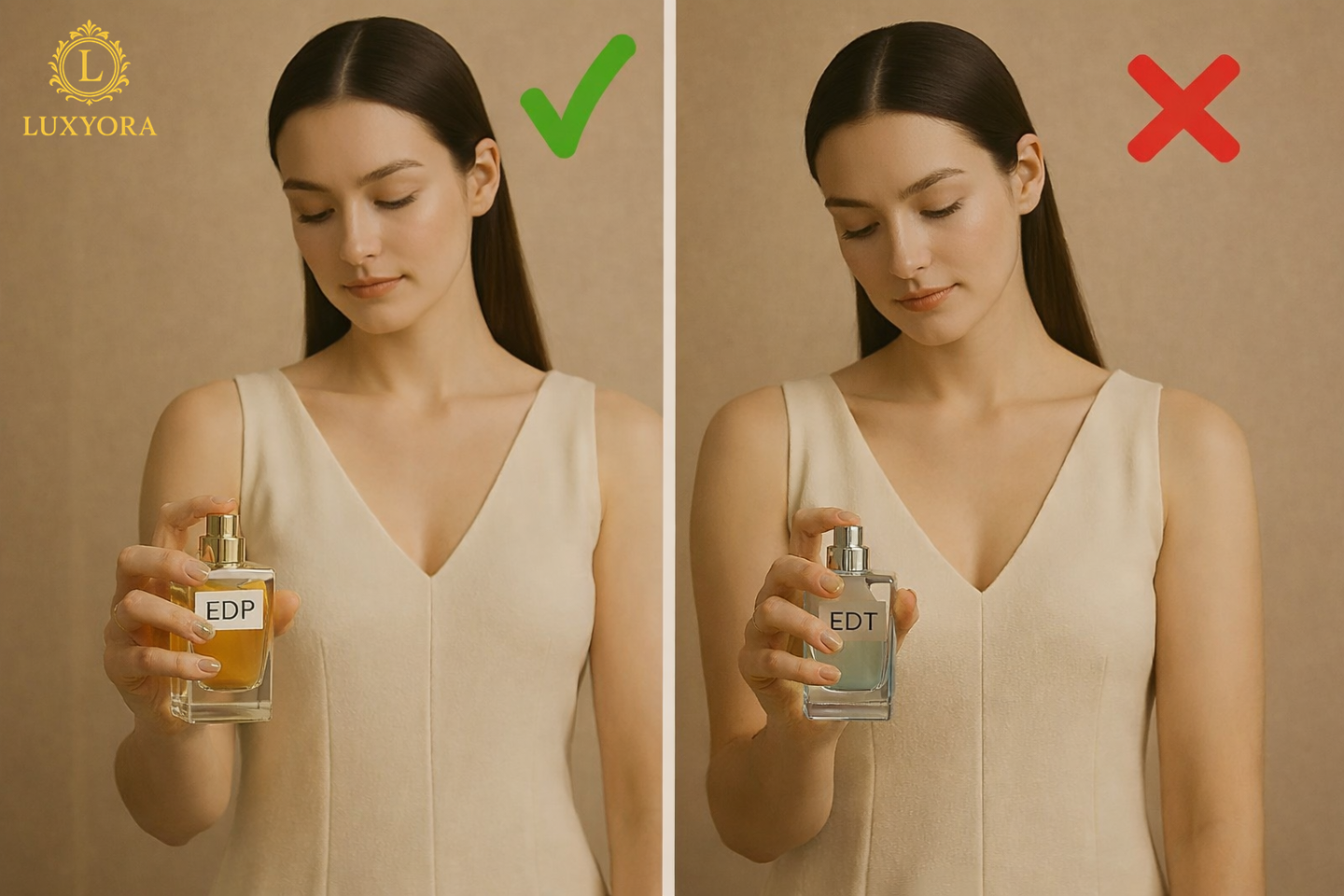
- Eau de Toilette (EDT) tends to be lighter
- Eau de Parfum (EDP) tends to be richer
- Extrait/Parfum tends to be the most concentrated and intense
A common guideline places EDT at about 5–15% and EDP at 15–20%, explaining why EDP typically lasts longer and smells stronger.
One important nuance (because fragrance people love nuance): there isn’t one universal global rule for exact percentages. IFRA (the International Fragrance Association) notes typical usage ranges and shows overlap. EDT commonly sits around 5–15%, and EDP (and related formats) commonly lands around 10–20%.
The secret behind a perfume’s intensity, longevity, and presence often lies in details that many fragrance lovers overlook. Explore the nuances in Eau de Parfum vs Eau de Toilette vs Cologne: Full Comparison Guide.
Translation: labels help, but the exact formula varies by brand.
2. Eau de Toilette (EDT): The effortless, daytime “it-girl”
EDT is usually described as lighter, fresher, and easier to wear. That’s partly because it often has more lift in the opening think citrus, airy florals, clean musks, watery notes.
EDT is softer, more understated, and ideal for everyday wear, as it’s easy to reapply without overwhelming the room.
What EDT feels like in real life:
- Office days, coffee runs, warm weather
- “I want to smell good, not like I’m auditioning.”
- The kind of scent that makes people lean in closer, not step back
Typical longevity: often around 2-4 hours, depending on the formula and your skin, with reapplication being normal. Byrdie
3. Eau de Parfum (EDP): The richer, longer-wearing statement
EDP typically has more fragrance oils, which often gives it:
- more depth
- stronger presence
- longer wear
Experts explain that EDP’s higher concentration lasts longer, often up to six hours, making it ideal for evenings, special occasions, or fewer touch-ups.
What EDP feels like in real life:
- Dinners, date nights, events, travel days
- Cool weather (when warm notes bloom beautifully)
- When you want your perfume to feel like part of your outfit
Typical longevity: often around 4–6 hours, sometimes longer.
4. Does EDP always smell “the same but stronger” than EDT?
Not always, and this is where fragrance gets deliciously interesting.
Sometimes EDT and EDP share a similar “DNA” but differ in balance:
Other times, brands subtly reformulate so the EDP isn’t just “more” it’s different, with a smoother or deeper profile.
It’s often noted that scent concentration doesn’t equal quality; composition and materials matter, and “intense” versions aim to feel deeper, not just stronger.
Understanding the difference between Eau de Parfum and Eau de Toilette becomes even more fascinating when you discover how fragrance notes unfold within each composition. Explore the layers behind every scent in Perfume Notes Explained: Top, Middle & Base Notes for Beginners.
5. The biggest myth: “EDP lasts longer, so it’s always better”
EDP lasts longer more often, yes, but “better” depends on your life.
If you work in close quarters, commute on crowded trains, or sit through meetings in small rooms, EDT can be the more considerate choice. EDP vs EDT explainer highlights that EDT can be ideal for everyday use because it’s subtler and easier to refresh.
Also, some people prefer the way EDT wears more breezy, less dense, less “sticky” in heat.
6. How to choose between EDP and EDT (without overthinking it)
1) Choose by occasion
- EDT: day, office, gym-to-dinner, hot weather
- EDP: evening, events, cold weather, long days
A fragrance’s concentration can influence when and where it shines best, but the most memorable scent choices are often guided by the occasion itself. Explore the art of selecting the perfect match in How to Choose the Perfect Perfume for Every Occasion.
2) Choose by climate
Warm climates make fragrance bloom faster. Higher concentrations can feel heavier in heat, so many people prefer lighter scents in summer.
3) Choose by your sensory style
- If you like fragrance that feels like a “soft aura” → EDT
- If you like fragrance that feels like “presence” → EDP
4) Choose how often you want to reapply
If you love the ritual of a midday refresh, EDT is perfect. If you want one-and-done, EDP is usually easier.
7. How to make either one last longer (the smart way)
Longevity advice consistently returns to technique because of how you wear perfume.
A few wardrobe-worthy tips:
- Apply to moisturized skin (dry skin lets scent evaporate faster)
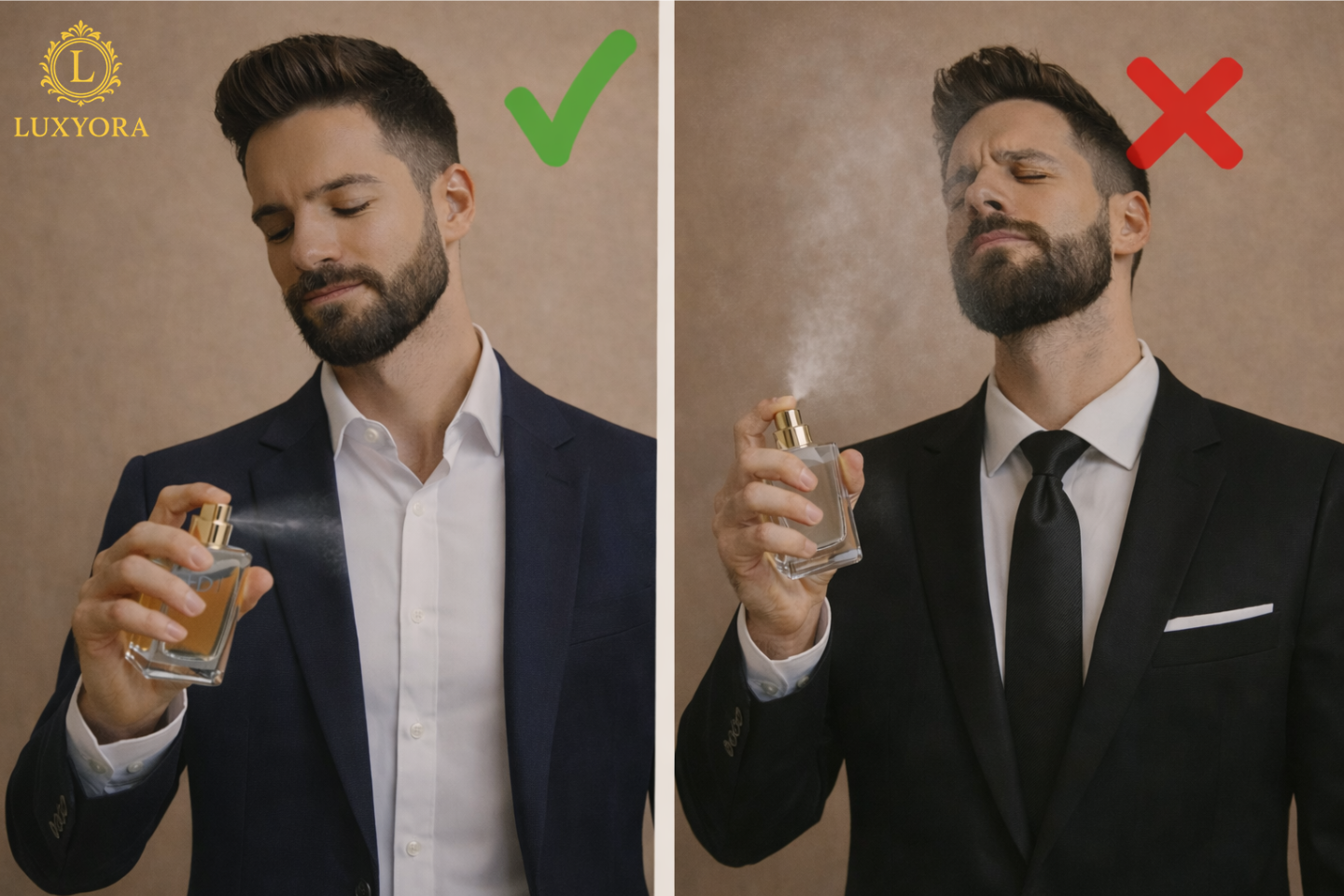
- Don’t rub wrists together (it can disrupt the opening)
- Consider a light spray on fabric or hair (with care for staining)
- Store fragrance away from heat/light/humidity so the formula stays stable
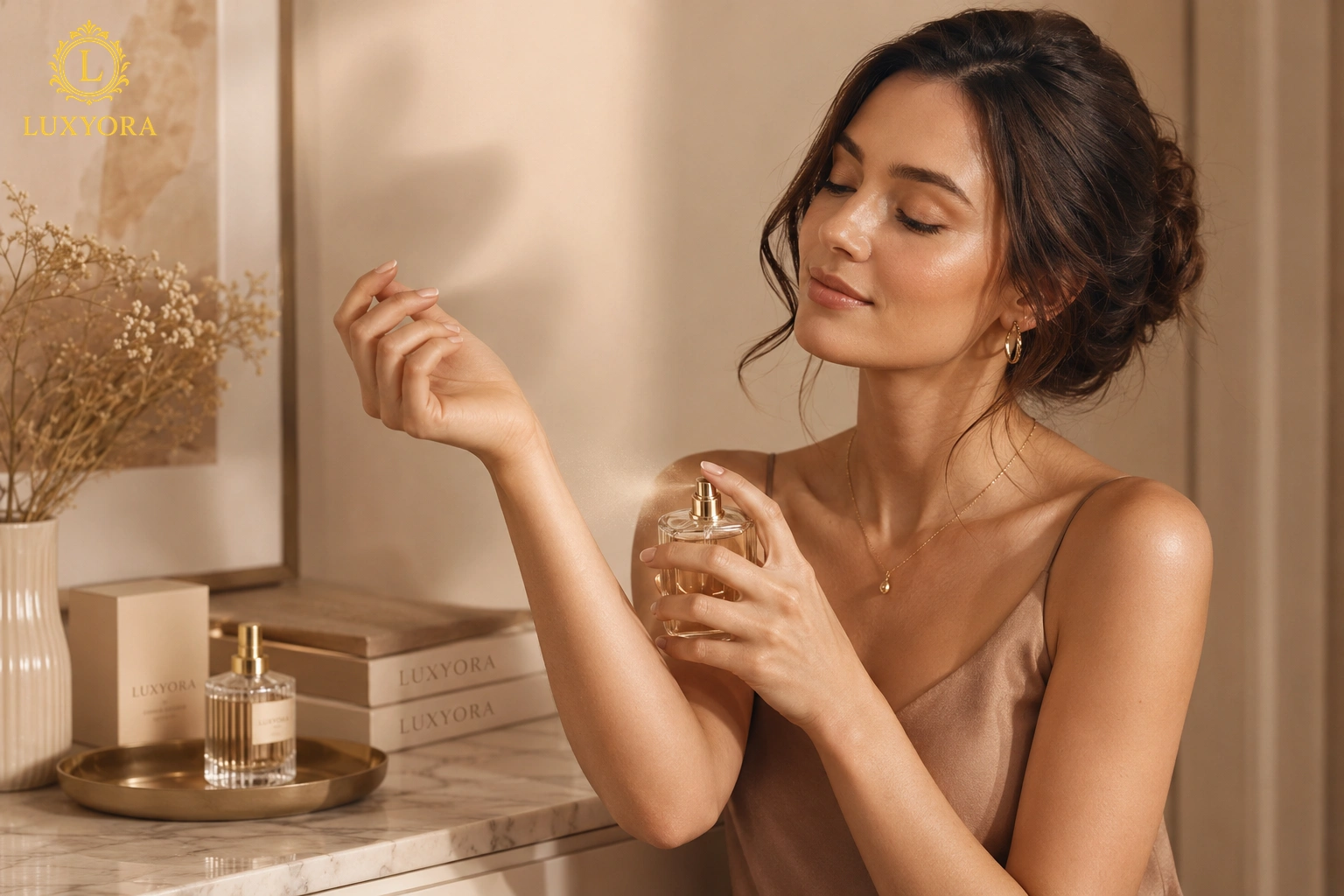
A perfume’s concentration may shape its intensity and longevity, yet even the most beautifully composed fragrance relies on thoughtful application to reveal its full potential. Explore the finer details in Where to Apply Perfume for Long-Lasting Scent (Pulse Points Guide).
Quick cheat sheet
Pick EDT if you want:
Freshness, subtlety, daytime ease, easy reapplication
Pick EDP if you want:
Depth, longer wear, stronger presence, cooler-weather elegance
And if you’re torn? Many fragrance lovers keep both EDT for day, EDP for night, like owning both sneakers and heels.
If you are a perfume lover living in the UK, participating in events like Barnes Fragrance Fair 2026 and Niche Show London 2026 helps you explore emerging perfume brands and unique scents.
The Luxyora Philosophy: Luxury is knowing what works for you, not what sounds fanciest on the label. Choose your concentration like you choose your style: for your mood, your moment, and your life.
References:
- International Fragrance Association. (n.d.). Using the IFRA Standards. IFRA+1
- Turin, L., & Sanchez, T. (2018). Perfumes: The Guide 2018. Perfüümista OÜ. Amazon India+1
- Vogue. (2024). Eau de parfum vs eau de toilette: What’s the difference? Vogue
- Vogue UK. (2025, January 15). Eau de parfum vs eau de toilette. British Vogue
- Vogue. (2025). The best long-lasting perfumes you can smell all day. Vogue
- Vogue. (2025). How extreme is your fragrance? Vogue
- Byrdie. (2025). What are the different types of perfumes? Here’s your complete fragrance dictionary. Byrdie
- Vogue India. (2022, April 12). Tips to choose your ideal summer fragrance. Vogue India