Repair Marks as Part of a Shoe’s Identity | Luxyora
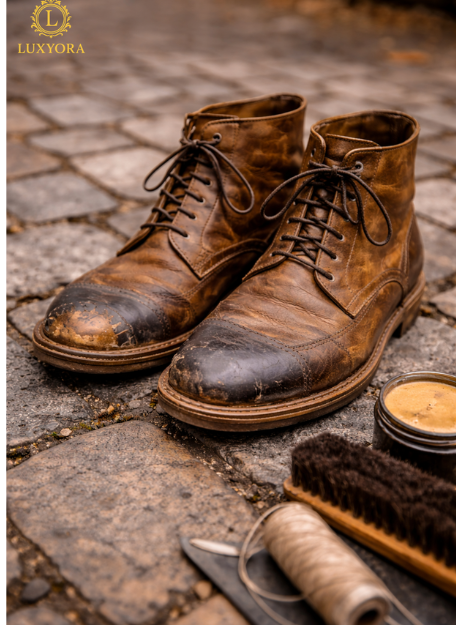
There’s a particular poetry in a scuffed toe, a patched sole, a hand-stitched reinforcer along a worn edge. It’s the kind of detail that doesn’t just show use, it shows history. In the world of shoes, repair marks are often misunderstood as blemishes, something to be hidden or replaced. But for those who understand craft and story, these marks are far more than utilitarian. They are the personal signature of time, experience, and attachment woven directly into the leather and sole.
When a shoe has been repaired, it carries more than material integrity. It carries a narrative, a quiet testament to shared journeys, sage places walked, and choices made about care over consumption. In contemporary discourse about sustainability, craftsmanship, and personal style, repair marks are emerging not as signs of wear alone but as elements of identity.
This change in perspective reframes what we call “imperfection.” Instead of viewing it as a flaw, we start to see it as a nuance, like patina on leather or brushstrokes on canvas. And that shift matters profoundly in how we relate to the objects we invite into our lives.
The Beauty of Impermanence
Luxury once meant objects built to last multiple lifetimes. Shoes were constructed to be resoled and re-healed. Goodyear welted, stitch-down, Blake stitched. These techniques weren’t just functional choices; they were designs for longevity. Shoes built this way invite repeated repair, not as a last resort but as an expected chapter in the object’s lifespan.
Today’s fashion landscape often celebrates the brand-new: pristine edges, untarnished materials, no narrative scars. But within that “freshness” lies a paradox: what’s new can feel fleeting, disconnected from continuity. Repair marks invite a more grounded aesthetic: one where history is visible, where the sole owns its miles, not despite them but because of them.
The Japanese concept of wabi-sabi, finding beauty in imperfection and transience, applies here. A carefully repaired shoe doesn’t erase its past. It honors it. Repair marks tell a story of conservation rather than depletion.
Marked by Movement
Each mark, crease, and patch originates from walking through parks, commuting in the rain, dancing at gatherings, and standing in important moments. Unlike the surface, which is polished back to perfection, repairs tend to linger in areas that experienced friction first. A patched heel cap, a restaurant-rescued scuff, and a resoling after months of wear all become memory points.
In cognitive science, objects with personal history engage memory differently from generic ones. Psychological research indicates that people tend to assign more meaning and emotional value to items that connect with personal experience. When a shoe is repaired rather than replaced, it transitions from a commodity to a chronicle.
Shoes with repair marks become almost autobiographical, but subtle. They aren’t shouting their past; they’re wearing it with dignity.
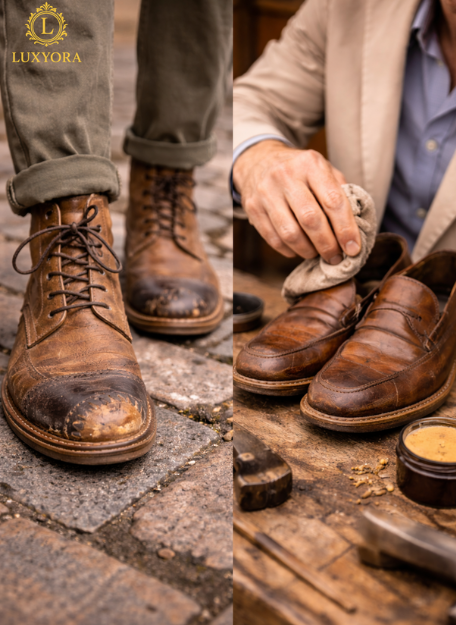
The scuffs, repairs, and signs of care on a well loved pair of shoes often become part of its identity. They raise an interesting question: why are some shoes expected to age gracefully while others are treated as temporary possessions? Explore Footwear Designed to Be Replaced vs Maintained.
Craftsmanship, Sustainably Expressed
Repair culture dovetails with rising awareness about sustainability in fashion. The environmental footprint of footwear is significant: intensive material use, chemical treatments, manufacturing emissions, and the global logistics of production and distribution. Extending the life of a shoe through repair not only reduces waste but also celebrates craft in action.
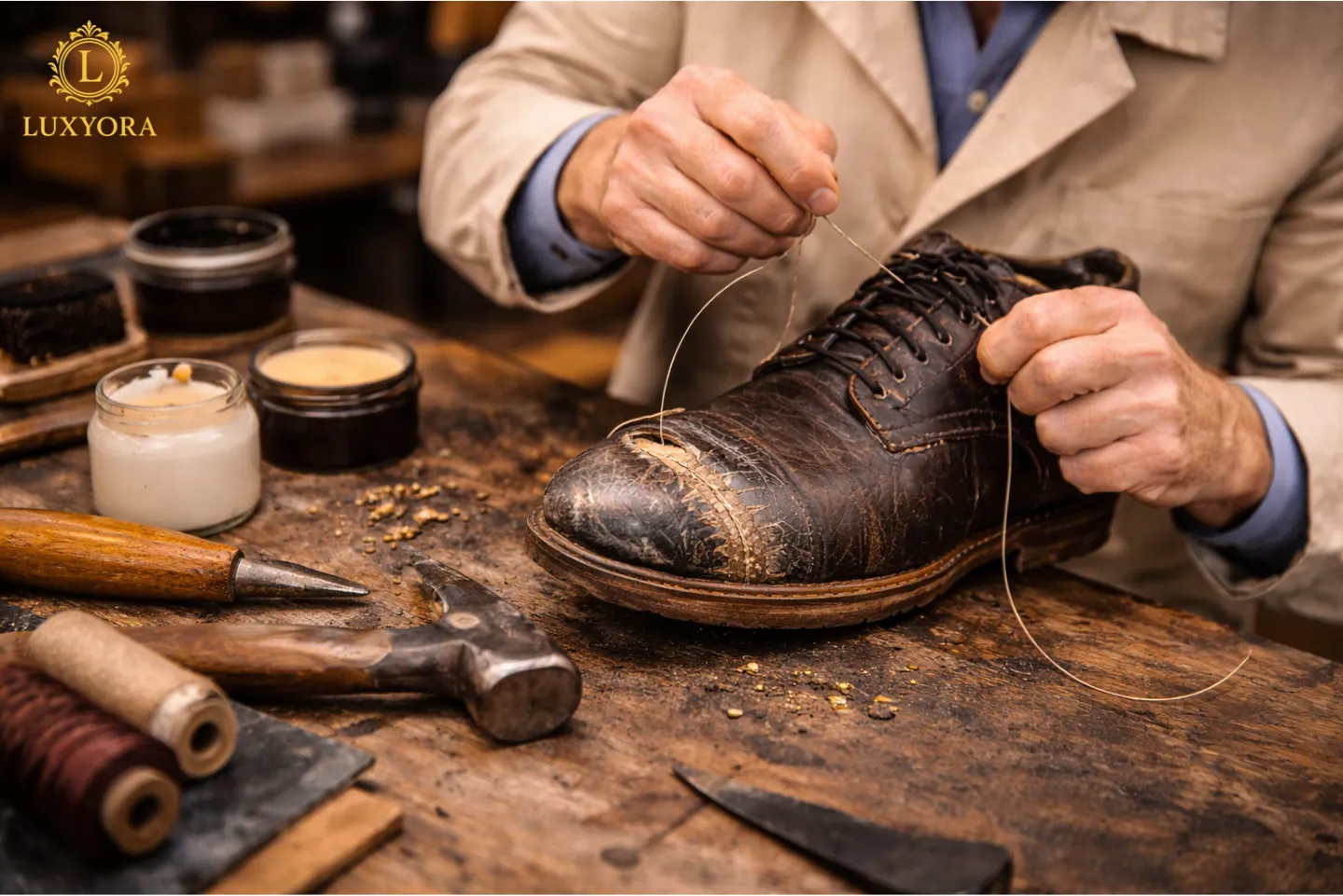
Craftspeople, cobblers, resolers, and leather specialists don’t just fix shoes; they collaborate with the original maker’s intent. They honor design, while reinforcing it. And their marks, the choice of thread, the blend of material, the subtly different texture, finally become part of a shoe’s visual and tactile identity.
Rather than seeing a repaired shoe as “less than,” premium consumers increasingly see it as an upgrade. A bespoke patch here, a reinforced sole there, each intervention adds a layer of intentionality.
The Semiotics of Repair Marks
In fashion, semiotics, the study of signs and symbols, extends to material language. A deliberate repair sends signals about values: longevity over disposability, care over convenience, sustainability over excess. These aren’t just internal values; they become readable cues in social spaces.
When you wear a shoe with a tasteful repair, it suggests a narrative about yourself. Not “I couldn’t afford new shoes,” but rather, “I value quality, care, and continuity.” Repair marks can transform a shoe’s story from transactional to relational, and in luxury spaces, that shift resonates deeply.
Identity Through Interaction
Unlike synthetic soles that crumble into dust, or glued constructions that fail without clear repair paths, well-made leather shoes build patina, a unique surface finish that only time and use can create. Repair marks are a part of this living patina. They don’t flatten experience into uniformity; they differentiate it.
Each person’s pattern of wear is different. Taller individuals might show creases at different points than someone who walks with a lighter step. Urban streets leave different signatures than pastoral paths. When you repair rather than replace, your shoes reflect your story physically and symbolically.
The process also engages the wearer. Choosing to repair invites reflection: what do we keep? Why? What’s worth preserving? These questions are both aesthetic and philosophical. A repaired shoe isn’t a leftover; it’s a deliberate continuation.
The Contemporary Turn Toward Repair Culture
Repair culture isn’t a nostalgic fad; it’s a convergence of values and necessities. Contemporary consumers care about sustainability, but they also care about authenticity. Mass-produced footwear, by design, discourages repair. Its parts are welded, glued, and engineered to be durable enough but not serviceable. Repairable footwear, on the other hand, champions longevity as a design principle.
Around the world, there’s a resurgence in artisanal footwear repair shops and resoling services, often supported by boutique brands that offer lifetime maintenance plans. These services aren’t cheap, but they’re valuable because they do more than extend life; they transform the object into a co-created artifact. A repaired shoe is not merely fixed. It is renewed.
The renewed shoe arrives at a threshold between past and future. It carries echoes of the journeys it has seen and readiness for those yet to come.
The imperfections left behind by repairs often give shoes their character. Somewhere between wear and sentiment lies the reason some pairs are impossible to let go of, even when newer options are within reach. Read more about Emotional Value vs Functional Lifespan in Shoes.
Luxury, Worth, and the Art of Intentional Wear
Luxury once meant exclusivity through rarity. Today, it means exclusivity through meaning. Repair marks help define that meaning. They parallel concepts found in haute horology, where watch collectors cherish repaired and serviced timepieces. The marks of service don’t diminish the object; they authenticate it.
What if every well-made shoe were understood as something to invest in? Not just financially, but emotionally and ethically? Repair culture suggests a worldview that’s not about discarding the old for the sake of novelty, but about deepening engagement with the things that go with us through life’s terrain.
Luxyora Philosophy: It’s a testament. Its marks are not flaws, but signatures of life lived with intention.
References:
- Bianchi, C., & Birtwistle, G. (2019). Consumer clothing disposal behavior. International Journal of Consumer Studies, 43(1), 68–76.
- Chapman, J. (2020). Emotionally Durable Design: Objects, Experiences and Empathy (2nd ed.). Routledge.
- Hethorn, J., & Ulasewicz, C. (2020). Sustainable Fashion: What’s Next? A Conversation About Issues, Practices, and Possibilities. Bloomsbury.
- Kozlowski, A., Searcy, C., & Bardecki, M. (2018). Strategies for sustainable apparel production. Sustainable Production and Consumption, 15, 162–175.
- Niinimäki, K., & Hassi, L. (2019). Emerging design strategies in sustainable production and consumption of textiles and clothing. Journal of Cleaner Production, 237, 117710.
- Sandin, G., & Peters, G. M. (2018). Environmental impact of textile reuse and recycling—A review. Journal of Cleaner Production, 184, 353–365.