No products in the cart.
LVMH Moët Hennessy Louis Vuitton SE is a French luxury group that brings together more than 75 distinguished Maisons across fashion and leather goods, wines and spirits, perfumes and cosmetics, watches and jewellery, selective retailing and other luxury activities. Headquartered in Paris, the Group operates 6,283 stores worldwide and works with more than 211,000 employees. In 2025, it generated revenue of €80.8 billion, making LVMH not simply a collection of prestigious names, but one of the most extensive creative, commercial and artisanal organisations in the global luxury industry.
Its portfolio spans some of the most recognised houses in their respective fields. Louis Vuitton, Christian Dior, Fendi, Loewe, Loro Piana and Celine operate in the fashion and leather goods sectors. Bulgari, Tiffany & Co., Chaumet, TAG Heuer, Hublot and Zenith contribute jewellery and watchmaking expertise. Moët & Chandon, Dom Pérignon, Krug, Ruinart and Hennessy represent centuries of winemaking and distillation heritage, while Sephora, DFS and Le Bon Marché extend the Group’s influence into selective retailing.
The breadth of LVMH is remarkable, but its significance lies beyond size. The Group has developed a business model intended to preserve the identity of individual Maisons while giving them access to investment, international distribution, property expertise, technology, talent development and long-term strategic support. This combination of individuality and shared strength has become central to the modern LVMH story.
LVMH was created in 1987 through the merger of Louis Vuitton and Moët Hennessy. The union brought together two complementary traditions: Louis Vuitton’s heritage in trunks, travel goods and leather craftsmanship, and Moët Hennessy’s position in champagne, cognac, wines and spirits. Bernard Arnault has headed the Group since 1989, shaping its development around creativity, product quality, selective distribution and the long-term cultivation of its Maisons.
The roots of the Group, however, extend much further back than 1987. Moët & Chandon traces its history to 1743, while Louis Vuitton established his Paris workshop in 1854. Other LVMH Maisons bring their own histories: Loewe was founded in Madrid in 1846, Bulgari in Rome in 1884, Fendi in Rome in 1925 and Tiffany & Co. in New York in 1837.
This accumulation of histories gives LVMH an unusually broad cultural foundation. Its Maisons emerged in different countries, periods and disciplines, yet many share a dedication to exceptional materials, specialised knowledge and recognisable creative identities.
Bernard Arnault serves as Chairman and Chief Executive Officer of LVMH. Before assuming control of the Group, he had acquired Financière Agache and the Boussac group, whose assets included Christian Dior. Dior became an important foundation for his wider vision of a globally competitive French luxury enterprise.
Under his leadership, LVMH expanded through a combination of internal development, carefully selected acquisitions and sustained investment in established Maisons. The strategy has generally focused on houses with meaningful heritage, specialised expertise, strong creative potential or an opportunity to develop internationally.
The Group’s leadership structure also combines central strategic direction with experienced executives responsible for individual divisions and Maisons. Stéphane Bianchi serves as Group Managing Director, while Cécile Cabanis has been Chief Financial Officer since February 2025. In February 2026, Antoine Arnault joined the Executive Committee with responsibility for image, communications and sustainability, and Véronique Courtois joined as the executive overseeing the Beauty division while continuing to lead Parfums Christian Dior.
One of the defining principles of LVMH is its decentralised organisation. The Group does not attempt to make its Maisons look or operate alike. Instead, they retain substantial creative and managerial autonomy, enabling them to remain responsive to their clients and faithful to their individual identities.
This distinction is essential in luxury. Louis Vuitton must retain its ties to travel, leather goods, and the Monogram. Dior must continue to express its couture heritage and evolving creative language. Bulgari draws on Roman design and colour, while Tiffany & Co. carries a recognisably New York identity. The value of these houses depends partly on their ability to feel culturally and creatively specific.
At the same time, the Maisons benefit from the resources of the wider organisation. LVMH can support manufacturing, property development, retail expansion, digital infrastructure, supply chain expertise, and talent mobility across its presence in 81 countries. The Group also encourages appropriate synergies while stating that these must respect the independence of each house.
Vertical integration is another important element. Depending on the Maison, LVMH may oversee several stages of the value chain, from sourcing and manufacturing to logistics, communications and selective retailing. This structure supports close attention to product quality, presentation and the client experience.
LVMH organises its operations around six business groups.
The Wines and Spirits division includes internationally established champagne, cognac, wine and spirits houses. Moët & Chandon, Dom Pérignon, Veuve Clicquot, Krug, Ruinart, Hennessy, Glenmorangie, Belvedere and Château d’Yquem are among its best-known names.
Many of these Maisons are inseparable from their places of origin. Champagne production is connected to its protected French region, while Hennessy’s identity is rooted in Cognac. Vineyards, cellars, ageing methods and the knowledge passed between generations are therefore central to the value of the final product.
Fashion and Leather Goods is the Group’s largest business division. Its portfolio includes Louis Vuitton, Christian Dior Couture, Fendi, Loewe, Loro Piana, Celine, Givenchy, Kenzo, Berluti, Emilio Pucci, Patou, Rimowa and Moynat.
Each house occupies a particular creative territory. Louis Vuitton unites travel heritage with fashion, leather goods, watches, jewellery and cultural projects. Dior connects haute couture traditions with ready-to-wear, accessories and exceptional store environments. Loro Piana is closely associated with rare fibres and refined textiles, while Loewe has developed a distinctive dialogue between fashion, art and craft.
In 2025, Fashion and Leather Goods generated €37.77 billion in revenue, representing the largest share of LVMH’s annual sales.
The Perfumes and Cosmetics division brings together Parfums Christian Dior, Guerlain, Parfums Givenchy, Benefit Cosmetics, Fresh, Make Up For Ever, Maison Francis Kurkdjian, Acqua di Parma, and Fenty Beauty, among others.
The division ranges from historic French perfumery to contemporary beauty brands. Guerlain, founded in 1828, carries nearly two centuries of fragrance and cosmetics knowledge. Maison Francis Kurkdjian represents modern high perfumery, while Benefit and Fenty Beauty speak to broader international beauty communities.
LVMH describes the division’s approach as combining innovation with selective distribution. Product development, ingredients, packaging, retail presentation, and brand storytelling are managed to protect each Maison’s positioning.
LVMH’s Watches and Jewellery portfolio includes Bulgari, Tiffany & Co., Chaumet, Fred, Repossi, TAG Heuer, Hublot, Zenith, Daniel Roth, Gérald Genta and L’Epée 1839.
The acquisition of Tiffany & Co., completed in 2021, significantly expanded LVMH’s position in global jewellery. Founded in New York in 1837, Tiffany brought an extensive heritage in diamonds, high jewellery, sterling silver and American design to the portfolio. LVMH has since supported renewed store experiences, including the reopening of Tiffany’s transformed New York flagship, known as The Landmark.
In 2024, LVMH acquired Swiza, the owner of L’Epée 1839. The Swiss manufacture specialises in high-end clocks and mechanical objects that combine horological engineering with decorative artistry. Its addition reinforced the Group’s engagement with specialist watchmaking skills and mechanical craftsmanship.
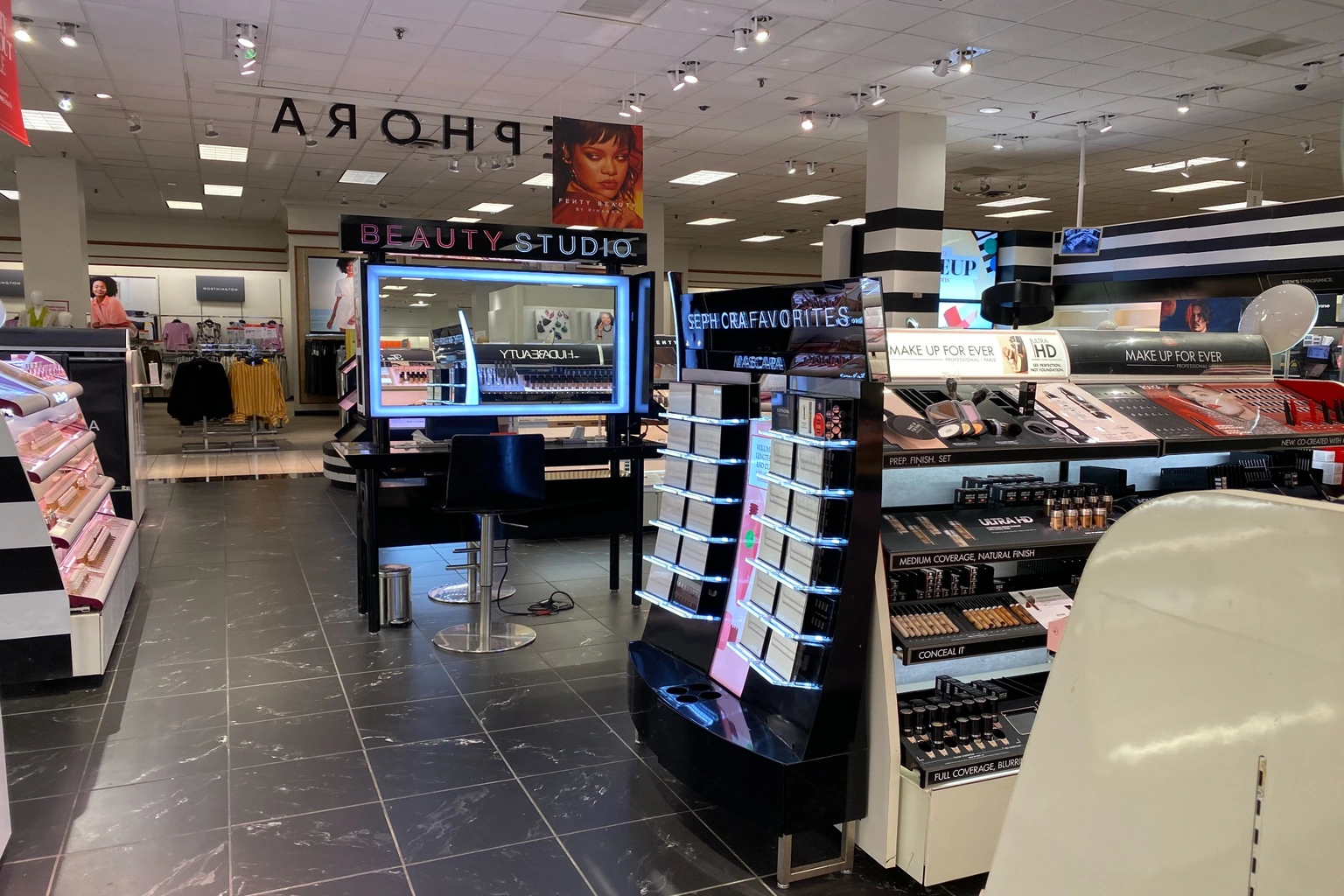
Selective Retailing includes Sephora, DFS, Le Bon Marché Rive Gauche and La Grande Épicerie de Paris. These businesses provide LVMH with direct expertise in beauty retail, department stores, travel retail and carefully curated shopping environments.
Sephora has developed into a major international beauty retailer, bringing together established houses, independent labels, and its own collection across physical and digital stores. Its open-sell format, product discovery model and beauty community have helped shape contemporary cosmetics retail.
Le Bon Marché, founded in Paris in 1852, offers a different expression of selective retailing. Its identity is built around curation, service, art installations, fashion, design and food, rather than conventional department-store scale alone.
LVMH’s other activities extend the Group’s presence into culture, hospitality, media and distinctive experiences. They include the Cheval Blanc hotel collection, Belmond, the Fondation Louis Vuitton and the Jardin d’Acclimatation.
These operations illustrate how the Group’s understanding of luxury has expanded beyond products. Architecture, travel, gastronomy, art and service can all become part of a Maison-led experience, provided they are delivered with the same attention to detail expected from fashion or jewellery.
Tiffany & Co. remains one of the most significant additions to the modern LVMH portfolio. Its international recognition, design archive and association with New York broadened the Group’s presence in jewellery, particularly within the United States.
LVMH has invested in Tiffany’s products, stores, and communications, while drawing renewed attention to established collections such as HardWear, Lock, T, and Knot. High-jewellery presentations and renovated flagships have also strengthened the house’s position at the highest level of jewellery design.
In the first quarter of 2026, LVMH reported an excellent performance from Tiffany, supported by its iconic collections and the continued renewal of its retail network.
LVMH became a Global Luxury Partner of Formula 1 in 2025 under a ten-year agreement. The collaboration brings together Louis Vuitton, TAG Heuer and Moët Hennessy, linking the Group with one of the world’s most visible sporting championships.
Louis Vuitton produces bespoke trophy trunks for leading Grand Prix events, continuing the Maison’s long connection with travel and trophy cases. TAG Heuer serves as Formula 1’s Official Timekeeper, renewing a relationship with motorsport that has played an important role in the watchmaker’s history. Moët & Chandon participates as the Official Champagne of Formula 1, bringing the Maison’s celebration heritage to race weekends.
The partnership works because it connects complementary ideas: precision, performance, innovation, international travel and ceremony. It also enables the participating Maisons to engage with Formula 1 audiences through products, hospitality, content, and experiences, rather than relying solely on a conventional sponsorship format.
LVMH launched its Prize for Young Fashion Designers in 2013. The programme is open to qualifying designers from around the world and has developed into a highly regarded platform for emerging fashion talent. Winners receive financial support and a year of tailored mentorship from LVMH specialists.
For the 2026 edition, the principal LVMH Prize carries an endowment of €400,000 and one year of mentorship. The Karl Lagerfeld Prize and Savoir-Faire Prize each provide €200,000 and mentorship.
The value of the programme lies partly in the range of knowledge available to designers. Mentorship may address sourcing, production, intellectual property, sustainability, communications, distribution or financial management the practical foundations required to turn creative vision into a lasting fashion business.
LVMH’s commitment to savoir-faire is expressed through training, apprenticeships and public programmes. The Institut des Métiers d’Excellence, launched in 2014, offers work-study education in craft, design and client-experience professions. By the end of 2024, more than 3,300 apprentices had been trained through the programme across eight countries.
Les Journées Particulières offers another perspective on craftsmanship. Created in 2011 by Antoine Arnault, the initiative opens selected workshops, stores, vineyards, cellars, archives, family homes and manufacturing sites to visitors free of charge. It gives the public an opportunity to meet artisans and understand the skills behind the Maisons.
The 2026 edition encompasses 65 venues across 11 countries. Rather than presenting luxury only through finished objects, the programme reveals the environments in which materials are selected, designs are refined and specialist techniques are practised.
LVMH approaches technology as a means of supporting creativity, operational knowledge and client relationships. Its activities include data platforms, artificial intelligence, product digitisation, traceability systems, immersive retail tools and technologies designed for individual Maisons.
The Group has worked with Google Cloud since 2021 on a shared data and artificial-intelligence foundation. The intention is not to erase the individuality of its houses, but to provide adaptable infrastructure that can support their different commercial and client-service needs.
At VivaTech 2025, LVMH presented 15 collaborations between Maisons and technology partners, organised around luxury customer experience, brand desirability and leadership. Projects included the use of product digitisation and generative AI to help Louis Vuitton transform physical products into a variety of digital assets.
The Group’s position is best understood as human-led innovation. Technology can help organise information, enhance product presentation, improve internal processes or support personal service, while creative direction and artisanal judgement remain essential.
LIFE 360 is LVMH’s environmental roadmap for the period from 2021 to 2030. It is structured around climate, biodiversity, creative circularity, traceability and transparency, and engagement with stakeholders. The programme is designed to translate Group-level objectives into practical action across individual Maisons.
Between 2019 and 2024, LVMH reduced its Scope 1 and Scope 2 greenhouse-gas emissions by approximately 55%, reaching its original 2026 reduction target two years ahead of schedule. Renewable and low-carbon energy represented 71% of the Group’s energy mix in 2024. By the same year, the Group reported that 3.8 million hectares of natural habitat had been preserved, restored or regenerated.
Traceability is particularly relevant to luxury because many products depend on specialised natural materials. LVMH’s environmental framework therefore considers the origins and processing of materials, as well as emissions, energy use, water use, packaging, and circular design.
The LIFE 360 Awards, introduced in 2025, recognise projects created within the Maisons. The first edition honoured 13 initiatives, encouraging environmental innovation to emerge from the individual businesses as well as from the centre of the Group.
LVMH recorded revenue of €80.8 billion in 2025. Profit from recurring operations reached €17.8 billion, equivalent to an operating margin of 22%. Group-share net profit was €10.9 billion, while operating free cash flow rose to €11.3 billion.
Fashion and Leather Goods generated €37.77 billion in revenue. Selective Retailing recorded €18.35 billion, Watches and Jewellery €10.49 billion, Perfumes and Cosmetics €8.17 billion, and Wines and Spirits €5.36 billion. These figures demonstrate the importance of fashion while also showing the extent of LVMH’s diversification across luxury categories.
At the April 2026 Annual General Meeting, the approved dividend for the 2025 financial year was €13 per share, comprising a €5.50 interim dividend and a €7.50 final balance.
LVMH began 2026 with first-quarter revenue of €19.121 billion. Organic revenue grew by 1%, while reported revenue reflected a 7% negative currency effect. Watches and Jewellery achieved organic growth of 7%, Wines and Spirits grew by 5%, and Selective Retailing grew by 4%.
The quarter also reflected continuing creative development across the Maisons. LVMH highlighted new products from Jonathan Anderson at Dior, collection renewals at Celine, Loewe, and Givenchy, strong momentum at Loro Piana, continued store expansion at Tiffany, and sustained growth at Sephora.
These developments show how the Group combines financial scale with a continuous cycle of design, store investment, cultural programming and client engagement. Its performance is not dependent on a single product category, region or creative house
LVMH has helped define how a global luxury group can operate without entirely dissolving the individuality of its constituent houses. Its decentralised structure acknowledges that heritage and creative distinction cannot be generated through uniformity. Each Maison requires its own voice, leadership, pace and relationship with clients.
At the same time, the Group demonstrates the advantages of scale. Access to capital, international property, manufacturing knowledge, technology, retail networks and executive talent can help a historic house develop while maintaining high standards.
LVMH’s broader significance is also evident in the territory it now occupies. Its world extends from couture ateliers and jewellery workshops to vineyards, beauty stores, hotels, art institutions and international sporting events. Luxury, in this model, is not confined to ownership of a product. It can also be expressed through service, cultural discovery, travel, architecture and the opportunity to encounter exceptional craft.
The Group’s enduring strength lies in its understanding that luxury is both tangible and emotional. Materials, construction and technique matter, but so do memory, place, imagination and trust. By bringing these qualities together across more than 75 different Maisons, LVMH has created one of the most distinctive organisations in contemporary fashion and luxury.
How Ralph Lauren, LVMH and Miu Miu Are Changing Luxury Fashion Through Sport
Harlem’s Fashion Row Opens New York Fashion Week 2026
Luxury’s 2026 Earnings: Jewellery Leads, Fashion, and Beauty Rebound
Chanel Posts 16% First-Half Sales Surge as ‘Blazymania’ Drives Growth
Google Cloud. (2025). Inside LVMH’s data estate, where luxury AI agents are taking root. Google Cloud Transform.
LVMH. (2024, June 25). LVMH strengthens its Watches Division with the acquisition of L’Epée 1839.
LVMH. (2025). 2024 universal registration document, including corporate sustainability reporting.
LVMH. (2025). LVMH at VivaTech 2025: Maisons and technology partners.
LVMH. (2025, April 17). 2025 annual general meeting.
LVMH. (2025, December 10). LIFE 360 Awards 2025: LVMH recognises 13 standout initiatives by its Maisons.
LVMH. (2026). 2025 annual report.
LVMH. (2026). 2025 social and environmental responsibility report.
LVMH. (2026). 2025 universal registration document, including corporate sustainability reporting.
LVMH. (2026). Bernard Arnault, Chairman and Chief Executive Officer.
LVMH. (2026). History of the LVMH Group.
LVMH. (2026). LVMH Group key figures.
LVMH. (2026). LVMH Group operating model.
LVMH. (2026). LVMH Prize for Young Fashion Designers: Thirteenth edition.
LVMH. (2026). LVMH and Formula 1.
LVMH. (2026, January 27). Solid performance in a disrupted global economic and geopolitical environment: 2025 annual results.
LVMH. (2026, February 9). Appointments to the LVMH Executive Committee.
LVMH. (2026, April 13). LVMH continues to achieve organic growth in the first quarter of 2026.
LVMH. (2026, April 23). 2026 annual general meeting.
LVMH. (2026). Les Journées Particulières 2026: 65 venues across 11 countries.
Stay inspired with exclusive brand features, luxury insights, and the latest in fine fashion and beauty — directly in your inbox.