How Ralph Lauren, LVMH and Miu Miu Are Changing Luxury Fashion Through Sport
A new Bain report puts a number on something the luxury industry has been doing by instinct for years. More than 80 percent of the global luxury market value is now represented by brands that actively sponsored sport in the past 12 months. The statistic, published this week as part of the Bain-Altagamma mid-year luxury market update, is the clearest confirmation yet of something most houses have already acted on. This summer, three of those houses are visible at once.
Ralph Lauren's 20-Year Wimbledon Partnership
Tennis has drawn luxury brands for decades, partly because of its audience. Affluent, international, and at Wimbledon specifically, surrounded by one of sport’s most controlled visual environments, it is a natural fit for houses that build identity on heritage and restraint. Rolex has been the tournament’s Official Timekeeper since 1978, establishing early that watches and then, eventually, fashion had a place on Centre Court. Ralph Lauren arrived in 2006 and has not left.
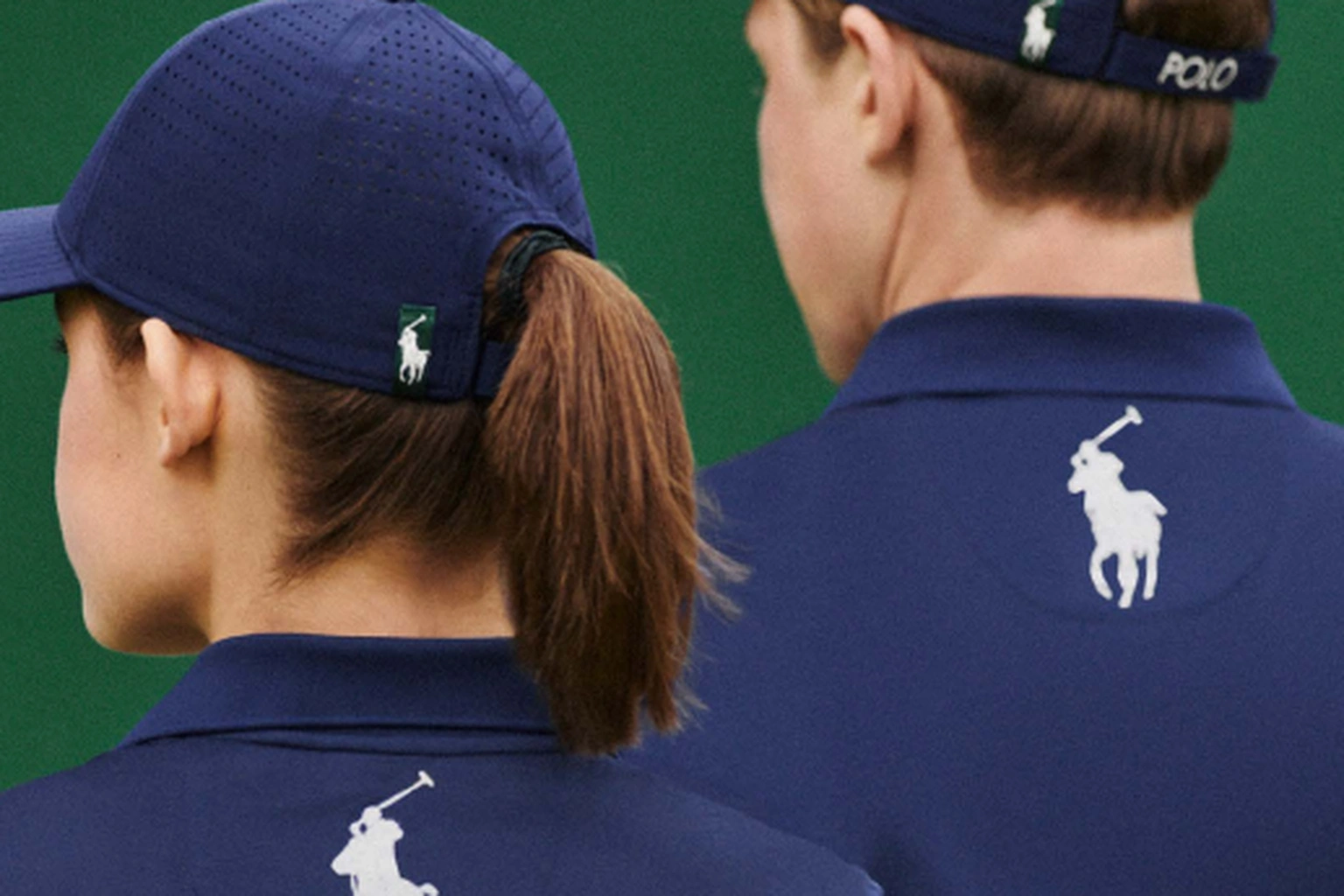
No other fashion house has ever been named the Official Outfitter of The Championships. This year marks the beginning of its third decade in the role. Twenty years of dressing ball boys, ball girls, line judges, and chair umpires across the most-watched fortnight in British sport. No rival has come within reach of the title.
The 2026 partnership is anchored by the debut of a Purple Label Wimbledon capsule, designed and produced in Italy, marking the first time the brand’s highest tier has been brought into the tournament’s official collection. The capsule includes a reversible Forsythe jacket in cotton-cashmere twill and a cable-knit cardigan in cotton, linen, and mulberry silk. Below that sits the Polo Ralph Lauren x Wimbledon 2026 range: a linen-silk Camp Shirt with floral motifs, the Wimbledon Performance dress, and the Wimbledon tennis bag. Exclusive vintage Polo pieces from 2006 to 2020 are available at New Bond Street, Sloane Square, and the Wimbledon Shops.
A month-long Sloane Square pop-up runs from 15 June through the tournament’s close on 12 July, centred around the RL Clubhouse with panels, outdoor games, and oversized Polo Bear grass sculptures. Ralph Lauren’s revenue crossed $8 billion in fiscal 2026. Whether the Wimbledon machine contributed to that or simply ran alongside it, the brand has not separated the two in twenty years of partnership.
LVMH and the Olympics: The Blueprint
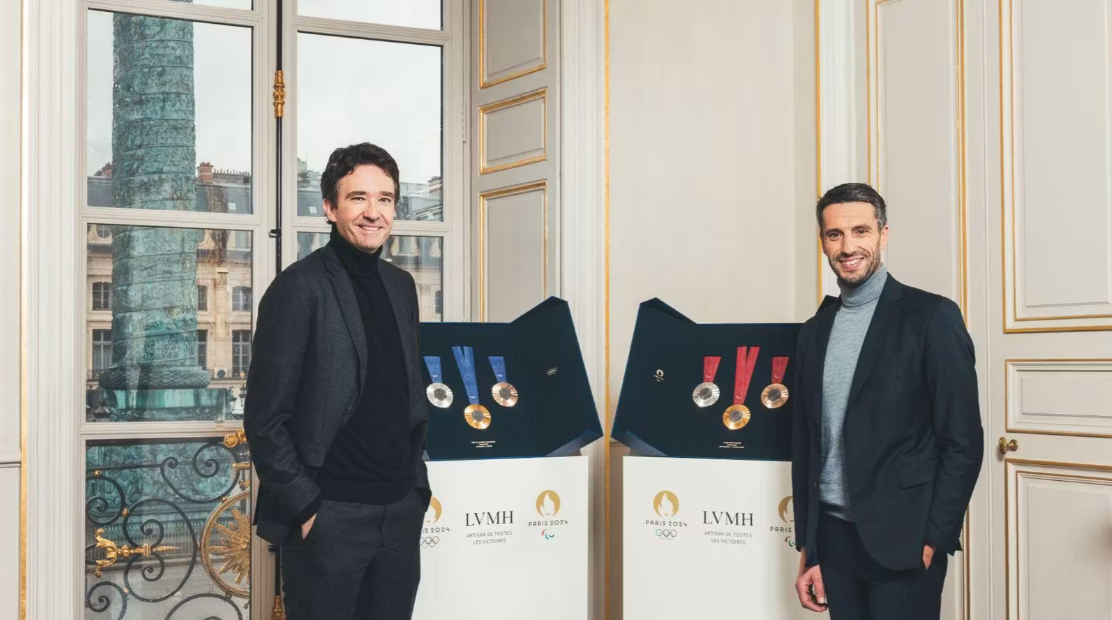
The template was already in use before the Formula 1 deal was signed. At Paris 2024, LVMH served as Premium Partner of the Olympic and Paralympic Games, with Chaumet designing the medals, Berluti dressing Team France for the opening ceremony, and Louis Vuitton crafting the trunks for the medals and torches. No logos on athletes’ chests. No trackside banners. The group’s presence was built into the objects and moments that the whole world was already watching. Formula 1 is the same thinking, extended to a ten-year contract and a calendar of 24 races.
LVMH's Formula 1 Strategy Goes Beyond Sponsorship
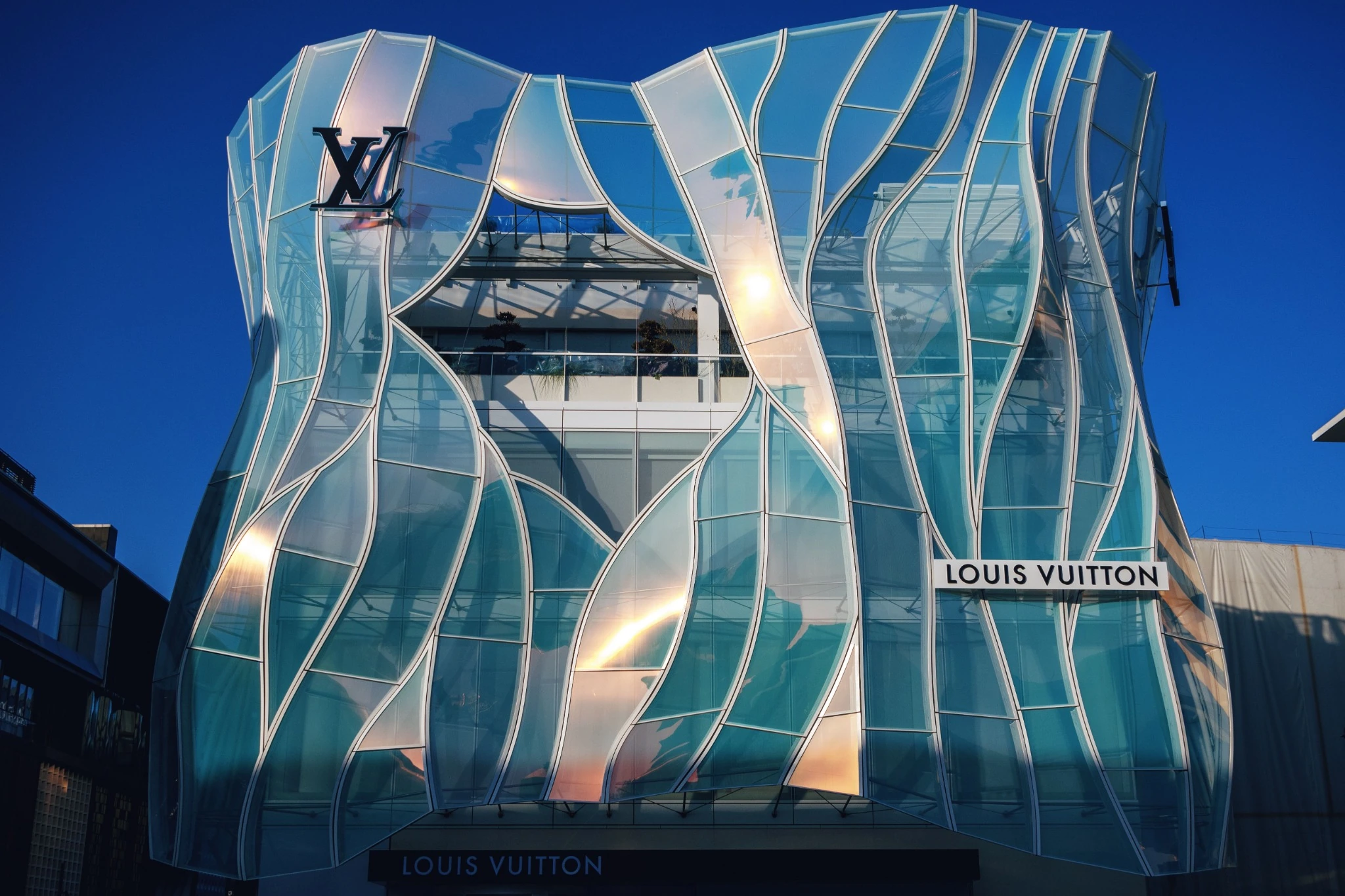
Since 2025, LVMH has been the Global Luxury Partner of Formula 1 under a 10-year agreement involving Louis Vuitton, Moët Hennessy, and TAG Heuer. Louis Vuitton designs handcrafted trophy trunks for the podium at every Grand Prix, made at its Asnières atelier outside Paris. TAG Heuer is the official timekeeper; its name carried in every on-screen timing graphic across every broadcast. Moët & Chandon handles the podium celebrations.
The 2026 Monaco Grand Prix was officially known as the Formula 1 Louis Vuitton Grand Prix de Monaco. A race that predates Formula 1 itself now carries a fashion house’s name. Kering confirmed separately that Gucci will become the title partner of the Alpine F1 team from 2027, racing as the Gucci Racing Alpine F1 Team. The two largest luxury conglomerates in the world are now both in the paddock. They got there differently, and they want different things from it.
Luxury Fashion's Biggest Marketing Opportunity in Football
The approach luxury brands are taking to football looks nothing like either of those. It is not about dressing officials or embedding a name into race documentation. It is about the athlete’s body and what it carries into every room it enters.
On the eve of this summer’s FIFA Club World Cup, Louis Vuitton announced a multiyear partnership with Real Madrid, the first time the house had placed its tailoring expertise at the service of athletes beyond the pitch. The formal travel collection put Jude Bellingham, Kylian Mbappé, Thibaut Courtois, and others in Vuitton on the way to matches. Bellingham has been a Vuitton ambassador since 2025. Mbappé is the face of Dior. Jacquemus dressed the French national team during training sessions and official events ahead of the World Cup.
The strategy is explicit: brands are no longer seeking visibility at tournaments so much as an association with athletes whose visibility does not switch off between competitions. A footballer with 40 million Instagram followers does not stop existing between fixtures. His wardrobe does the same job on a Tuesday morning that it does on match day. Hublot, which had been the FIFA World Cup’s official timekeeper for four consecutive tournaments, quietly ended that arrangement in December 2025, with no equivalent luxury brand named as a replacement.
What the Miu Miu Moment Adds
Women’s sport has become an increasingly important entry point for luxury brands, and Coco Gauff is one reason why Miu Miu built a capsule around her specifically for SW19, which sits somewhere between the approaches playing out across this summer.
Bain’s 80 percent figure is not a prediction. It describes what has already happened. Ralph Lauren did not wait for data to validate two decades at SW19. LVMH did not need a consultant’s report to commit a billion dollars to Formula 1 over ten years. The houses that moved first and spent real money are the ones with the most embedded presence now. A tournament title, a trophy trunk, a footballer’s travel wardrobe. Three very different bets, placed years apart, all currently running. Courtside, in the paddock, and in the tunnel, the trunks are already packed.