Handbag Dimensions
Choosing the right handbag involves more than just style; it’s also about how well it fits your needs. Whether you’re eyeing a sleek clutch, a roomy tote, or a smart work bag, getting familiar with handbag dimensions can make a big difference. In our fashion-forward, practical world, understanding sizing helps you make smarter choices, leading to greater satisfaction and confidence in your purchases.
This detailed guide covers all you need to know about handbag dimensions, including standard sizes and how measurements influence usability, fashion, appearance, and your health.
What Are Handbag Dimensions?
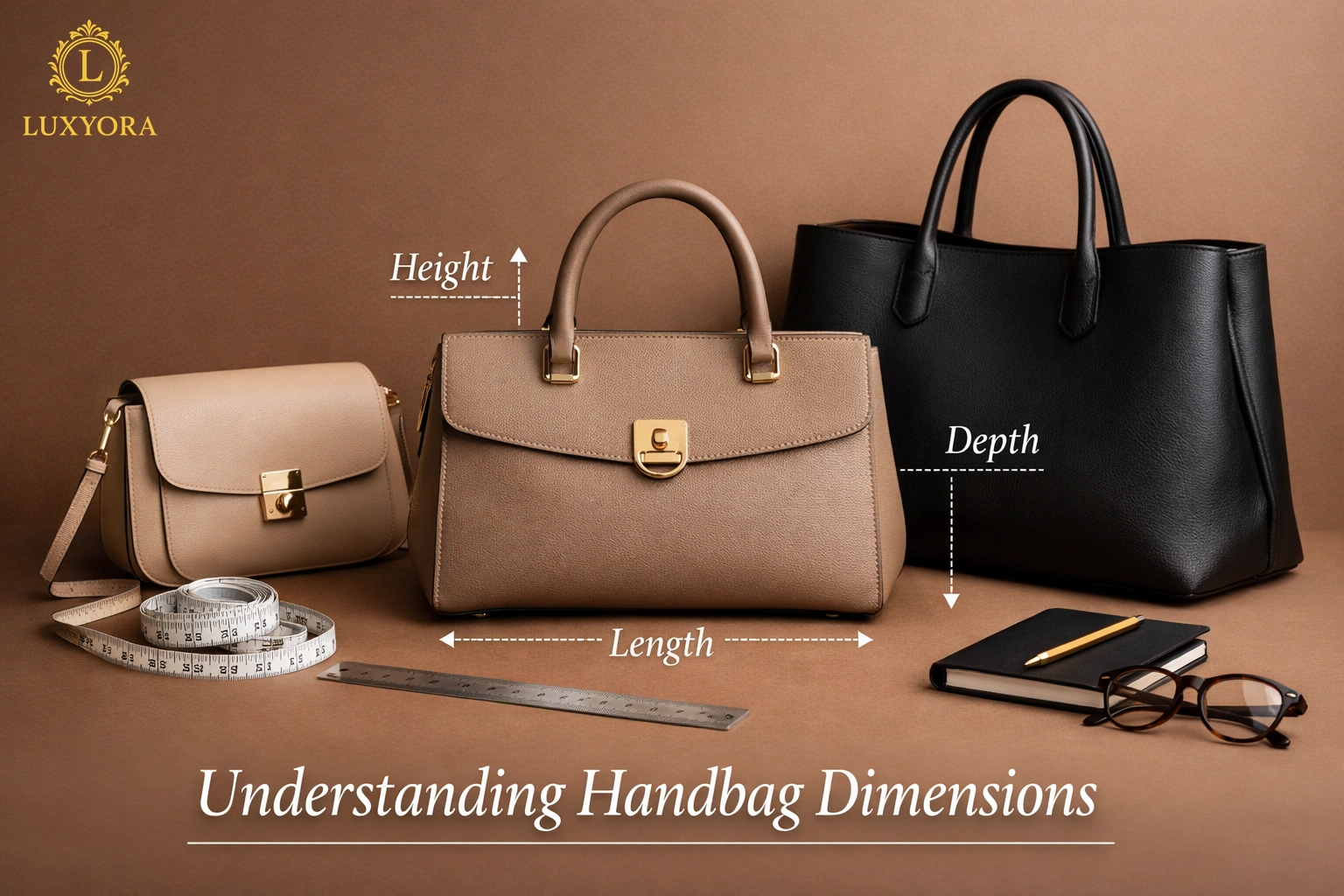
Handbag dimensions refer to the physical measurements of a bag, typically expressed in length (width), height, and depth. These dimensions are usually measured in inches or centimeters and determine how much the bag can hold and how it fits into your daily life.
Standard Measurement Format
Most brands follow this order:
- Length (L): Side-to-side measurement across the base
- Height (H): Bottom to top of the bag
- Depth (D): Front to back (thickness)
For example: A handbag listed as 30 cm x 25 cm x 10 cm means:
- Length: 30 cm
- Height: 25 cm
- Depth: 10 cm
Understanding this format is essential when comparing products online or in-store.
Why Handbag Dimensions Matter
Handbag dimensions are not just numbers; they directly impact usability, comfort, and even your overall appearance.
Functionality
A bag that’s too small may not hold essentials, while an oversized bag can feel bulky and disorganized. Proper dimensions ensure:
- Efficient storage
- Easy accessibility
- Better weight distribution
Style and Proportion
Your handbag should complement your body type and outfit. For example:
- Petite individuals often look balanced with smaller bags
- Taller individuals can carry larger totes without overwhelming their frame
Occasion Suitability
Different events require different bag sizes:
- Evening events: small clutches
- Workdays: medium to large structured bags
Travel: large totes or duffels
Common Handbag Size Categories
Handbags are typically categorized based on their dimensions.
Mini Bags
- Dimensions: Up to 20 cm (L)
- Ideal for: Essentials only (phone, cards, lipstick)
- Popular for: Fashion-forward looks
Small Bags
- Dimensions: 20-25 cm (L)
- Ideal for: Daily errands
Medium Bags
- Dimensions: 25-35 cm (L)
- Ideal for: Work or daily use
Large Bags
- Dimensions: 35 cm and above
- Ideal for: Travel or busy schedules
How to Measure a Handbag Accurately
Step-by-Step Guide
- Place the bag on a flat surface
- Measure the base width (length)
- Measure height from base to top edge
- Measure depth across the side panel
Tips
- Don’t include handles unless specified
- Use a soft measuring tape
Double-check units
Fashion and Aesthetic Considerations in Handbag Dimensions
While practicality is essential, handbag dimensions also play a major role in fashion aesthetics and visual harmony.
Proportion and Body Balance
The size of your handbag affects how your overall silhouette looks:
- Petite frames: Smaller or medium bags avoid overwhelming the figure
- Curvier or taller frames: Larger handbags create proportional balance
- Structured vs slouchy shapes: Structured bags look polished, while slouchy bags give a relaxed vibe
Outfit Coordination
Handbag size should align with your outfit’s visual weight:
- Minimal outfits pair well with statement oversized bags
- Bold outfits work better with smaller, subtle handbags
- Layered winter outfits often need larger bags for visual balance
Trend Influence on Dimensions
Recent fashion cycles (post-2018) have emphasized:
- Micro and mini bags as statement pieces
- Oversized totes for “effortless luxury” aesthetics
- Geometric and unconventional shapes alter perceived dimensions
Color and Dimension Perception
Interestingly, dimensions are visually influenced by color:
- Dark shades make bags appear smaller and sleeker
- Light or bright colors make bags appear larger and more prominent
Ergonomics and Health Factors
Handbag dimensions don’t just affect style; they can significantly impact your physical health and comfort.
Weight Distribution and Body Strain
Improper handbag dimensions can lead to:
- Shoulder pain
- Neck strain
- Lower back issues
Best Practice:
- Choose bags proportional to your body size
- Avoid oversized bags if you carry heavy items daily
Strap Length and Fit
The way a bag sits on your body matters:
- Short straps may crowd the shoulder
- Long straps distribute weight more evenly across the torso
Crossbody bags are generally more ergonomic
Ideal Weight Guidelines
Experts suggest:
- Your handbag should not exceed 10-15% of your body weight
- Overloaded large bags can cause long-term posture issues
Posture and Carrying Habits
Carrying the same bag on one shoulder consistently can:
- Create muscle imbalance
- Lead to chronic discomfort
Solution:
- Alternate sides regularly
- Use backpacks or crossbody styles for heavy loads
Practical Scenarios: Choosing the Right Dimensions
Scenario 1 - Work Professional
Recommended:
- Length: 35-40 cm
- Height: 25-30 cm
- Depth: 10-15 cm
Scenario 2 - Casual Day Out
Recommended:
- Length: 20-25 cm
- Height: 15-20 cm
Depth: 5-10 cm
Scenario 3 - Travel Companion
Recommended:
- Length: 40-50 cm
- Height: 30-35 cm
- Depth: 15-20 cm
Handbag Dimensions and Airline Regulations
General Guidelines
- Personal item: ~40 x 30 x 15 cm
- Carry-on: ~55 x 40 x 20 cm
Travel Tips
- Choose flexible materials
- Avoid overpacking
- Check airline rules
Materials and Their Impact on Dimensions
Structured Materials
- Maintain consistent dimensions
- Professional look
Soft Materials
Trends in Handbag Dimensions (Post-2018)
Mini Bags
Fashion-first, less functional
Oversized Bags
Tech-Friendly Bags
Designed for gadgets and hybrid lifestyles
How to Choose the Perfect Handbag Dimensions
Selecting the right handbag dimensions depends on multiple personal and practical factors. Instead of choosing based on looks alone, consider how the size aligns with your lifestyle and comfort.
Lifestyle Fit
Your daily routine plays a major role in determining the ideal handbag size.
- If you’re a working professional, you may need a medium to large bag to carry devices and documents.
- For minimalists or those who travel light, smaller bags are more practical.
- Frequent travelers benefit from larger, flexible bags that can hold multiple essentials.
Choosing a handbag that aligns with your lifestyle ensures long-term usability.
Daily Essentials
Before purchasing a handbag, list out what you carry daily. This might include:
- Phone, wallet, keys
- Makeup or grooming items
- Gadgets like tablets or chargers
Once you know your essentials, compare them with the bag’s dimensions. A good rule is to choose a bag with slightly more space than you currently need to avoid overcrowding.
Comfort and Ergonomics
Handbag dimensions directly impact how comfortable the bag is to carry.
- Oversized bags can lead to shoulder and back strain if overfilled
- Compact bags reduce weight but may limit functionality
- Crossbody and well-balanced designs improve weight distribution
Always test how the bag feels when worn, not just how it looks.
Versatility
A well-sized handbag should work across multiple occasions.
- Medium-sized bags are often the most versatile
- Neutral dimensions (not too big or small) allow day-to-night transitions
- Structured bags with moderate depth offer both style and practicality
Investing in a versatile size gives you better value and more styling options.
Mistakes to Avoid
- Ignoring depth
- Overestimating space
- Skipping interior layout
Expert Tips
- Match dimensions with your needs
- Prioritize comfort
- Avoid trend-only purchases
Final Thoughts
Handbag dimensions go beyond simple measurements; they influence style, comfort, health, and practicality. By considering not only size but also aesthetics and ergonomics, you can choose a handbag that enhances both your look and your lifestyle.
A well-chosen handbag isn’t just an accessory; it’s a daily companion that should support you visually, functionally, and physically.
References
Apeagyei, P. R. (2018). Designing fashion’s future: Present practice and tactics for sustainable change. Bloomsbury Publishing.
Choi, K., & Kim, S. (2021). Ergonomic design in fashion accessories and user comfort. Journal of Fashion Technology & Textile Engineering, 9(2).
Gwilt, A. (2020). Fashion design for living. Routledge.
Jackson, T., & Shaw, D. (2021). Mastering fashion buying and merchandising management. Bloomsbury Publishing.
Kawamura, Y. (2020). Fashion-ology: An introduction to fashion studies (2nd ed.). Bloomsbury Academic.
Steele, V. (2018). The Berg companion to fashion. Bloomsbury Publishing.