Filigree Styles
Filigree styles have enchanted artisans, collectors, and jewelry enthusiasts for centuries. With their intricate, lace-like metalwork, filigree designs showcase some of the most elegant craftsmanship in the decorative arts. Whether seen in treasured heirlooms, contemporary luxury jewelry, or architectural accents, filigree continues to evolve, all while honoring its beautiful heritage.
In this detailed guide, we’ll take a pleasurable journey through the history, types, and techniques of filigree styles, sharing practical tips and real-world examples to help you discover and truly enjoy this beautiful and intricate art form.
What Are Filigree Styles?
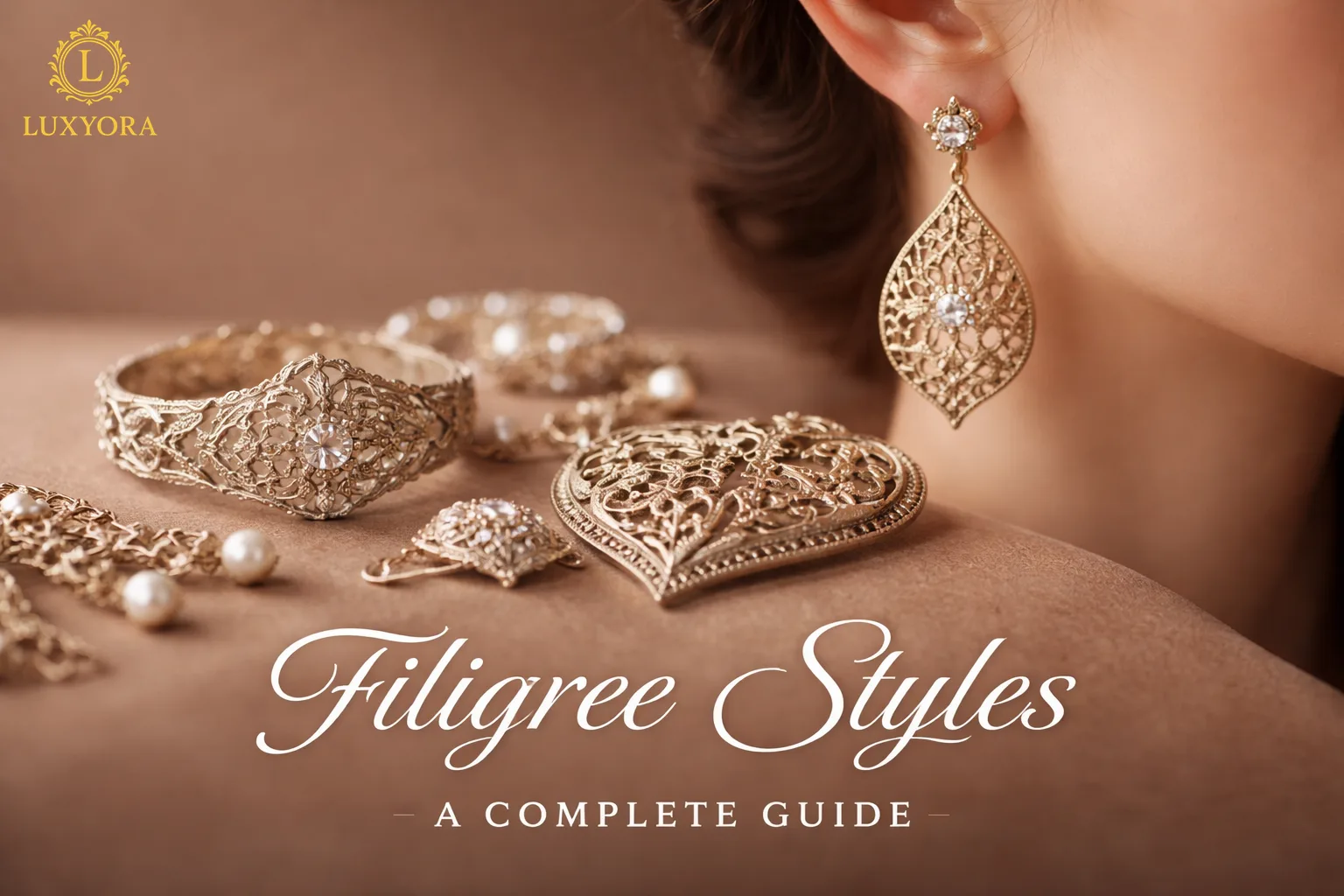
Filigree styles are beautiful decorative designs made with delicate threads of metal such as gold, silver, or platinum. These threads are twisted, curled, or soldered together to create detailed patterns that often look like lace, vines, scrolls, or lovely floral motifs.
Unlike solid metalwork, filigree showcases a beautiful sense of openness and delicate craftsmanship. The final pieces are lightweight and visually intricate, reflecting truly remarkable skill.
Key Characteristics of Filigree Styles:
- Fine metal wires (often thinner than a millimeter)
- Intricate, symmetrical patterns
- Openwork designs (negative space is essential)
- Handcrafted or semi-handcrafted techniques
The History and Cultural Evolution of Filigree Styles
Filigree styles have a rich history that goes back more than 5,000 years, beginning in ancient civilizations such as Mesopotamia and Egypt. Over the centuries, this beautiful craft traveled across many continents, with each region creating its own unique and charming style.
Ancient Origins
Early filigree traditions were found in archaeological sites across Mesopotamia, where skilled artisans crafted beautiful jewelry for royalty using delicate gold wires. Egyptians also cherished this art form, incorporating filigree into their intricate burial ornaments and special ceremonial pieces.
Mediterranean Influence
The Greeks and Etruscans beautifully refined their filigree techniques, adding intricate details such as tiny metal beads called granulation and elegant wirework. These charming styles had a lasting impact on Roman jewelry, inspiring generations with their craftsmanship.
Asian and Middle Eastern Adaptations
Countries such as India, China, and Yemen have beautifully incorporated filigree into their traditional jewelry and ceremonial artifacts. Indian filigree, called “Tarakasi,” is particularly celebrated for its intricate and sophisticated designs.
European Renaissance and Beyond
During the Renaissance, beautiful filigree styles flourished in Italy, Spain, and Portugal. Today, places like Viana do Castelo in Portugal are cherished around the world for their dedication to maintaining this exquisite traditional craftsmanship.
Different Types of Filigree Styles
Filigree styles vary widely depending on cultural influences, techniques, and applications. Understanding these types helps buyers and enthusiasts make informed choices.
Traditional Filigree
This style adheres to historical techniques and motifs. It often features:
- Floral and vine patterns
- Symmetrical layouts
- Handmade construction
Example Scenario:
A collector purchasing a vintage Portuguese filigree necklace will likely encounter traditional motifs symbolizing love, heritage, and spirituality.
Modern Filigree
Modern filigree blends traditional craftsmanship with contemporary design.
- Minimalist patterns
- Geometric shapes
- Mixed materials (e.g., enamel, gemstones)
Example Scenario:
A jewelry brand targeting millennials might create sleek filigree rings with clean lines and subtle detailing.
Industrial Filigree
With technological advancements, some filigree is now produced using machines.
- Laser-cut designs
- Mass production
- Lower cost
Practical Tip:
If you’re buying filigree jewelry online, check whether it’s handcrafted or machine-made. Handmade pieces often have slight imperfections, which add to their authenticity.
Regional Filigree Styles
Indian Filigree (Tarakasi)
- Extremely intricate
- Often used in bridal jewelry
- Silver is commonly used
Portuguese Filigree
- Iconic heart motifs (Heart of Viana)
- High gold content
- Cultural symbolism
Middle Eastern Filigree
- Bold, elaborate designs
- Often combined with gemstones
Techniques Used in Filigree Craftsmanship
Filigree styles require precision and patience. The process involves multiple steps, each demanding specialized skill.
Wire Drawing
Metal is stretched into thin wires using a drawplate.
Twisting and Curling
The wires are twisted or shaped into patterns such as spirals, loops, and scrolls.
Soldering
The delicate wires are carefully joined using heat without melting the entire structure.
Assembly
Individual components are arranged into a final design.
Practical Tip:
When evaluating filigree quality, look closely at solder joints. Clean, nearly invisible joins indicate expert craftsmanship.
Materials Used in Filigree Styles
The choice of material significantly impacts durability, appearance, and price.
Gold Filigree
- Luxurious and durable
- Resistant to tarnish
- Ideal for heirloom pieces
Silver Filigree
- More affordable
- Requires maintenance (tarnish-prone)
- Widely used in traditional designs
Platinum Filigree
- Rare and premium
- Extremely durable
- Used in high-end jewelry
Alternative Materials
- Copper or brass for budget-friendly designs
- Mixed materials for modern aesthetics
Filigree Styles in Modern Jewelry Trends
Filigree styles have made a strong comeback in contemporary fashion, particularly in the luxury and artisanal markets.
Bridal Jewelry
Filigree is popular in engagement rings and wedding sets for its romantic, vintage appeal.
Example Scenario:
A bride choosing a filigree engagement ring may prioritize uniqueness and symbolic craftsmanship over a traditional solitaire design.
Statement Pieces
Large filigree earrings and pendants are trending in fashion-forward collections.
Sustainable Jewelry Movement
Handcrafted filigree aligns with sustainable and ethical practices, as it often involves small-scale artisans rather than mass production.
Practical Tips for Buying Filigree Jewelry
Inspect Craftsmanship
- Look for symmetry and precision
- Avoid pieces with visible glue or uneven soldering
Check Material Authenticity
- Verify metal purity (e.g., 925 silver, 18K gold)
- Ask for certification if buying expensive items
Consider Usage
- Lightweight filigree is ideal for daily wear
- Heavier designs are better for occasional use
Maintenance Matters
Filigree can trap dust and dirt due to its openwork design.
Cleaning Tip:
Use a soft brush and mild soap to clean filigree jewelry. Avoid ultrasonic cleaners unless approved by the manufacturer.
Common Challenges and How to Handle Them
Fragility
Filigree can be delicate due to its thin wires.
Solution:
Store pieces in separate compartments and avoid stacking them with heavier jewelry.
Tarnishing
Especially common with silver filigree.
Solution:
Use anti-tarnish cloths and store in airtight containers.
Repair Difficulties
Repairing filigree requires specialized skills.
Practical Advice:
Always take damaged pieces to experienced jewelers who specialize in intricate metalwork.
Filigree Styles Beyond Jewelry
Filigree is not limited to jewelry; it also appears in:
- Decorative artifacts
- Religious objects
- Furniture detailing
- Architectural elements
Example Scenario:
In luxury interior design, filigree patterns are often used in metal screens or wall panels to create elegant visual textures.
Future of Filigree Styles
With the rise of digital design tools and global artisan platforms, filigree styles are entering a new era.
Trends to Watch:
- 3D-printed filigree designs
- Hybrid handcrafted-digital techniques
- Increased global demand for artisanal products
Despite technological advancements, the essence of filigree precision, artistry, and patience remains unchanged.
Final Thoughts
Filigree styles represent a perfect blend of history, craftsmanship, and modern innovation. Whether you’re a jewelry enthusiast, collector, or designer, understanding the nuances of filigree can help you appreciate its true value.
From traditional handcrafted masterpieces to contemporary interpretations, filigree continues to stand as a testament to human creativity and skill. Investing in or wearing filigree is not just about aesthetics; it’s about carrying a piece of history and artistry with you.
References
Akin, S. (2021). Traditional Jewelry Techniques and Cultural Heritage. Artisan Press.
Brown, L. (2019). The evolution of filigree in global jewelry design. Journal of Decorative Arts, 12(3), 45–62.
Davis, M. (2020). Jewelry Craftsmanship: Techniques and Trends. Thames & Hudson.
Fernandes, R. (2022). Portuguese filigree: Heritage and innovation. International Journal of Cultural Studies, 8(2), 110–128.
Gupta, R. (2018). Indian silver filigree (Tarakasi): A study of craftsmanship. Asian Art Review, 5(1), 23–39.
Smith, J. (2023). Modern adaptations in traditional jewelry-making. Design and Craft Quarterly, 15(4), 78–95.