Ostrich Leather : What is Ostrich Leather?
Ostrich leather is one of the most distinctive and luxurious exotic leathers in the world. Recognized instantly by its unique quill follicle pattern, this premium material has become a symbol of sophistication, craftsmanship, and long-lasting quality. From luxury handbags and wallets to high-end footwear and automotive interiors, ostrich leather continues to attract consumers seeking both exclusivity and durability.
Unlike many exotic leathers that are appreciated mainly for their appearance, ostrich leather combines aesthetics, softness, flexibility, and exceptional strength. Its remarkable characteristics have made it one of the most sought-after materials in the luxury leather industry.
This comprehensive guide explores everything you need to know about ostrich leather, including its origins, production process, benefits, applications, care requirements, sustainability considerations, and buying tips.
What Is Ostrich Leather?
Ostrich leather is a premium exotic leather derived from the skin of the ostrich (Struthio camelus), the world’s largest bird. Native to Africa, ostriches have been farmed for centuries for their feathers, meat, and skin.
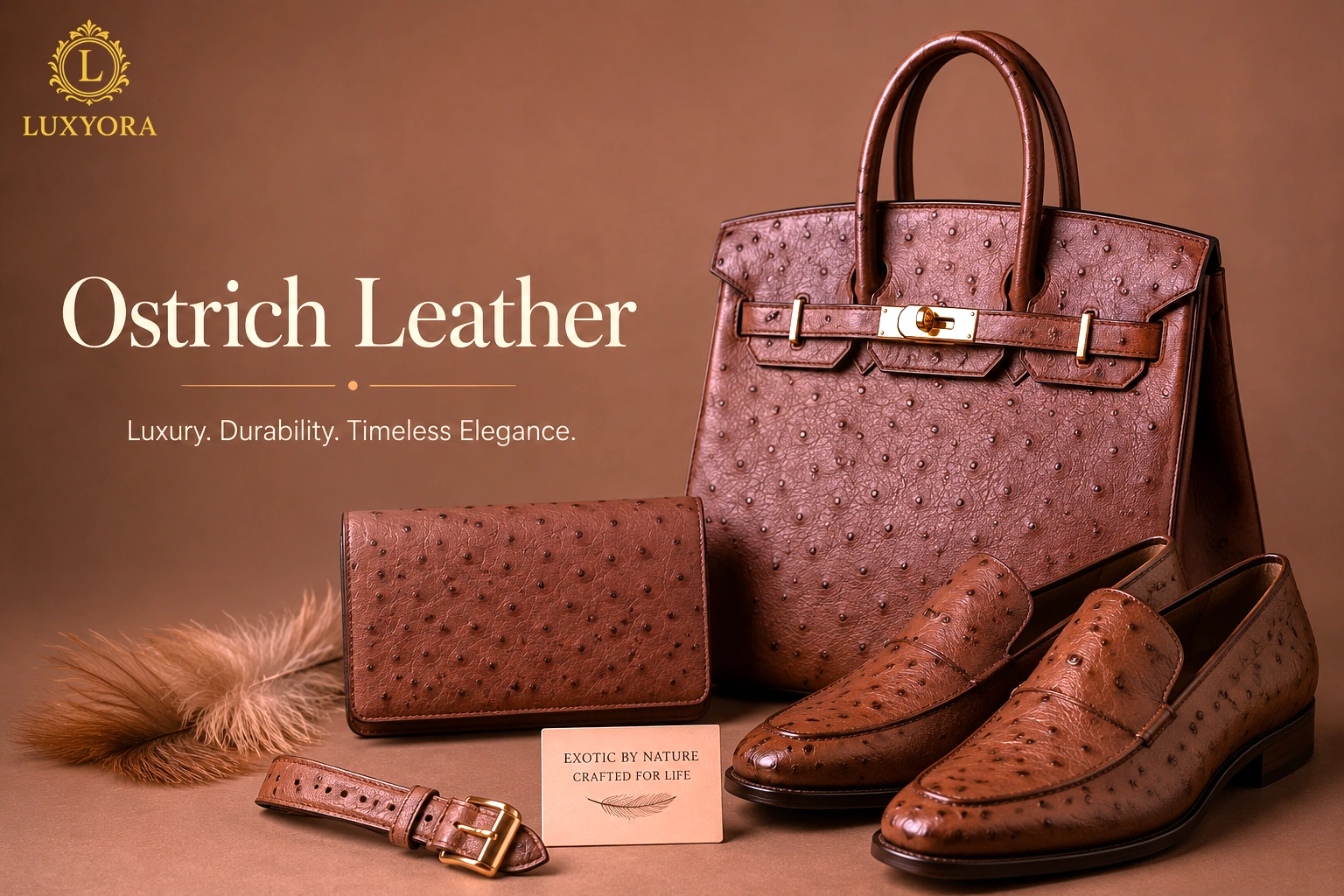
The most recognizable feature of genuine ostrich leather is the raised pattern created by feather follicles, commonly known as “quill bumps.” These natural markings create a distinctive texture that cannot be perfectly replicated by synthetic materials.
Luxury brands and skilled artisans value ostrich leather because it offers a rare combination of:
- Exceptional softness
- High tensile strength
- Distinctive texture
- Natural flexibility
- Long lifespan
- Luxury appeal
These characteristics have helped ostrich leather maintain its status as one of the most prestigious exotic leathers available today.
The History of Ostrich Leather
The commercial use of ostrich products dates back to the 19th century. During the Victorian era, ostrich feathers became highly fashionable in Europe and North America, creating a thriving industry in South Africa.
As demand for feathers declined in the early 20th century, farmers began exploring alternative uses for ostrich by-products. Leather production quickly emerged as a valuable market due to the skin’s unique appearance and durability.
Today, South Africa remains one of the world’s leading producers of ostrich leather, although farming operations also exist in countries such as Namibia, Zimbabwe, Australia, and the United States.
The global luxury market continues to drive demand for premium ostrich leather goods, particularly in fashion and bespoke craftsmanship sectors.
How Ostrich Leather Is Made
The production of ostrich leather involves several specialized steps designed to preserve the skin’s natural beauty and structural integrity.
1. Skin Selection
Only high-quality skins with consistent follicle patterns and minimal imperfections are selected for premium-grade leather production.
2. Tanning Process
The skins undergo tanning to stabilize the collagen fibers and prevent decomposition. Common tanning methods include:
- Chrome tanning
- Vegetable tanning
- Combination tanning
The chosen tanning process influences the leather’s texture, color retention, and flexibility.
3. Dyeing and Finishing
After tanning, the leather is dyed in various colors ranging from classic black and brown to vibrant fashion shades such as red, blue, and green.
Special finishing treatments enhance:
- Color consistency
- Moisture resistance
- Surface protection
- Softness
4. Quality Inspection
Each hide undergoes rigorous inspection before being used in luxury products. The highest grades feature uniform quill patterns and superior texture.
Unique Characteristics of Ostrich Leather
Several features distinguish ostrich leather from other exotic and traditional leathers.
Distinctive Quill Pattern
The signature quill follicles are perhaps the most recognizable characteristic. These raised bumps create a luxurious and highly sought-after appearance.
Exceptional Softness
Despite its strength, ostrich leather is remarkably soft to the touch. It often feels more supple than cowhide while maintaining excellent durability.
High Natural Oil Content
Ostrich leather contains natural oils that help prevent drying and cracking. This contributes to its longevity and reduces maintenance requirements.
Superior Flexibility
Unlike some exotic leathers that become stiff over time, ostrich leather remains flexible even after years of use.
Durability
Ostrich leather is known for its impressive tensile strength. Properly maintained products can last for decades.
Types of Ostrich Leather
Not all ostrich leather is the same. Different sections of the skin create varying textures and appearances.
Full Quill Ostrich Leather
This is the most valuable and recognizable type.
Characteristics include:
- Prominent quill follicles
- Luxury appearance
- High market value
- Premium craftsmanship applications
Semi-Quill Ostrich Leather
This leather displays fewer follicle markings while maintaining the softness and durability associated with ostrich skin.
Ostrich Leg Leather
Ostrich leg leather features a unique scale pattern resembling reptile skin.
Popular uses include:
- Luxury boots
- Watch straps
- Wallets
- Small leather accessories
Why Ostrich Leather Is So Expensive
Many consumers wonder why ostrich leather commands premium prices.
Several factors contribute to its cost:
Limited Supply
Ostrich leather production is significantly smaller than conventional leather production.
Specialized Farming
Raising ostriches requires substantial investment in land, feed, veterinary care, and infrastructure.
Labor-Intensive Processing
Producing high-quality ostrich leather involves extensive tanning, finishing, and grading procedures.
Luxury Market Demand
High demand from luxury fashion brands and bespoke manufacturers contributes to premium pricing.
Common Uses of Ostrich Leather
Ostrich leather appears in a wide range of luxury products.
Luxury Handbags
Fashion houses frequently use ostrich leather in premium handbags due to its texture and prestige.
Wallets
Ostrich leather wallets are popular among consumers seeking durability combined with luxury aesthetics.
Footwear
Luxury boots and dress shoes made from ostrich leather offer exceptional comfort and longevity.
Belts
The flexibility of ostrich leather makes it ideal for premium belts that retain their shape over time.
Watch Straps
Collectors often choose ostrich leather watch bands for their softness and distinctive appearance.
Automotive Interiors
Some luxury vehicles incorporate ostrich leather in custom interiors for a unique, high-end finish.
Benefits of Choosing Ostrich Leather
Purchasing ostrich leather products offers numerous advantages.
Long-Term Value
Although expensive initially, quality ostrich leather products often outlast many conventional leather alternatives.
Unique Appearance
No two ostrich skins are exactly alike, giving each product a distinctive look.
Comfort
The softness and flexibility of ostrich leather improve comfort, particularly in footwear and accessories.
Resistance to Cracking
Natural oils help preserve the leather’s integrity over time.
Timeless Luxury
Ostrich leather remains a respected material within the luxury goods market and rarely goes out of style.
How to Identify Genuine Ostrich Leather
With growing demand, imitation ostrich leather products have become more common.
Here are practical ways to identify authentic ostrich leather:
Examine the Follicles
Real ostrich leather displays naturally irregular quill bumps. Perfectly uniform patterns often indicate embossing.
Feel the Surface
Authentic ostrich leather feels soft, supple, and slightly oily due to its natural composition.
Check the Backing
Genuine leather typically has a fibrous suede-like underside.
Verify the Source
Purchase from reputable manufacturers and authorized luxury retailers.
Caring for Ostrich Leather Products
Proper maintenance can significantly extend the life of ostrich leather goods.
Regular Cleaning
Use a soft dry cloth to remove dust and debris.
Avoid Excess Moisture
While ostrich leather is relatively resilient, prolonged water exposure should be avoided.
Use Leather Conditioner
Apply conditioners specifically designed for exotic leather when recommended by the manufacturer.
Proper Storage
Store products in breathable dust bags away from direct sunlight and extreme temperatures.
Practical Example Scenarios
Scenario 1: Luxury Business Professional
A senior executive purchases an ostrich leather briefcase. Despite daily use for several years, the leather develops an attractive patina while maintaining its structural integrity, demonstrating the long-term value of premium materials.
Scenario 2: High-End Footwear Investment
A consumer invests in handmade ostrich leather boots. The natural flexibility of the leather reduces break-in time, while the durability allows the boots to remain in excellent condition for over a decade with proper care.
Scenario 3: Collector's Watch Strap
A watch enthusiast upgrades a luxury timepiece with an ostrich leather strap. The unique texture enhances the watch’s appearance while providing superior comfort during daily wear.
Sustainability and Ethical Considerations
Modern ostrich farming increasingly operates within regulated agricultural systems.
Key sustainability aspects include:
- Utilization of multiple animal by-products
- Controlled breeding programs
- Veterinary oversight
- Traceability systems
- International trade regulations
Consumers concerned about ethical sourcing should seek products certified by reputable suppliers that comply with local and international animal welfare standards.
Future Trends in the Ostrich Leather Industry
Several trends are shaping the future of ostrich leather:
Increased Traceability
Luxury consumers increasingly demand transparent sourcing information.
Sustainable Tanning Methods
Manufacturers are investing in environmentally responsible tanning technologies.
Bespoke Luxury Products
Customization continues to drive demand for premium exotic leather goods.
Emerging Markets
Growing luxury consumption in Asia and the Middle East is expanding demand for exotic leathers.
Conclusion
Ostrich leather remains one of the most prestigious materials in the luxury leather industry. Its unique quill pattern, remarkable softness, durability, and timeless appeal distinguish it from both conventional and exotic leather alternatives. Whether used in handbags, wallets, footwear, watch straps, or bespoke accessories, ostrich leather offers a rare combination of beauty and performance.
For consumers seeking long-lasting luxury products, genuine ostrich leather represents both an aesthetic statement and a practical investment. Understanding its characteristics, care requirements, and sourcing considerations can help buyers make informed decisions while appreciating one of the world’s most distinctive premium materials.
References
American Ostrich Association. (2022). Ostrich farming and leather production standards. American Ostrich Association.
Covington, A. D. (2020). Tanning chemistry: The science of leather (2nd ed.). Royal Society of Chemistry.
International Trade Centre. (2021). Market trends in exotic leather products and luxury goods. International Trade Centre.
Leather Naturally. (2023). Understanding leather sustainability and responsible sourcing. Leather Naturally.
Meyer, E. H. H., & Cloete, S. W. P. (2019). Ostrich production systems and product quality. In D. C. Deeming (Ed.), The Ostrich: Biology, Production and Health (2nd ed.). CABI Publishing.
Ostrich Business Chamber. (2023). Global ostrich leather industry report. Ostrich Business Chamber.
Sustainable Leather Foundation. (2024). Transparency and traceability in luxury leather supply chains. Sustainable Leather Foundation.
United Nations Food and Agriculture Organization. (2021). Livestock and sustainable agricultural systems. FAO.
Wilson, J. A. (2019). The leather industries of the world: Production, manufacturing and markets. Routledge.
World Leather. (2022). Trends in exotic leather markets and luxury manufacturing. World Leather Journal, 35(4), 18–27.
- Use mild soap and warm water
- Avoid harsh chemicals
- Use a soft cloth to polish
- Increasing demand for minimalist jewelry
- Growth in personalized and charm-based designs
- Rising interest in durable, everyday pieces
Industry Trends (2018–2025)