Sustainable Leather : What is Sustainable Leather?
Leather has been a symbol of durability, luxury, and craftsmanship for centuries. From fashion accessories and footwear to furniture and automotive interiors, leather remains one of the most sought-after materials worldwide. However, growing concerns about environmental impact, animal welfare, resource consumption, and waste generation have led consumers and manufacturers to seek more responsible alternatives. This shift has brought the concept of sustainable leather into the spotlight.
Sustainable leather is transforming the traditional leather industry by promoting environmentally conscious production methods, ethical sourcing, resource efficiency, and innovative materials. As sustainability becomes a critical purchasing factor, understanding sustainable leather is essential for consumers, brands, and businesses alike.
What Is Sustainable Leather?
Sustainable leather refers to leather and leather-like materials that are produced with minimal environmental impact, ethical sourcing practices, responsible resource management, and enhanced social accountability throughout the supply chain.
Unlike conventional leather production, which may involve intensive chemical processing, high water consumption, and significant greenhouse gas emissions, sustainable leather aims to reduce these impacts through innovative technologies and responsible manufacturing processes.
The concept encompasses several categories:
- Responsibly sourced animal leather
- Vegetable-tanned leather
- Recycled leather
- Regenerated leather fibers
- Bio-based leather alternatives
- Circular leather production systems
- Low-impact tanning technologies
The primary goal is to balance performance, durability, aesthetics, and environmental responsibility.
Why Sustainable Leather Matters
The global fashion and textile industries face increasing scrutiny regarding their environmental footprint. Traditional leather manufacturing has been associated with several sustainability challenges.
Environmental Concerns
Conventional leather production often involves:
- Significant water consumption
- Chemical-intensive tanning processes
- Waste generation
- Carbon emissions
- Soil and water contamination risks
By adopting sustainable leather practices, manufacturers can substantially reduce these impacts while maintaining product quality.
Consumer Demand
Modern consumers increasingly prefer products that align with their values. Shoppers now evaluate products based not only on quality and price but also on:
- Ethical sourcing
- Environmental impact
- Transparency
- Corporate responsibility
- Product lifecycle
Brands that invest in sustainable leather often gain stronger customer loyalty and market differentiation.
Types of Sustainable Leather
Sustainable leather is not a single material. It includes multiple approaches aimed at improving environmental performance.
Responsibly Sourced Leather
This leather comes from animals raised primarily for the food industry, where hides are considered a by-product rather than the main product.
Responsible sourcing practices include:
- Traceable supply chains
- Improved animal welfare standards
- Reduced deforestation risks
- Verified environmental compliance
Vegetable-Tanned Leather
Vegetable tanning uses natural tannins extracted from plants, bark, leaves, and fruits instead of chromium-based chemicals.
Benefits include:
- Reduced toxic chemical usage
- Biodegradability
- Natural aging characteristics
- Lower environmental impact
Vegetable-tanned leather develops a unique patina over time, making it popular among premium leather artisans.
Recycled Leather
Recycled leather utilizes scraps and waste generated during leather manufacturing.
The process involves:
- Collecting leather offcuts.
- Grinding them into fibers.
- Combining fibers with binders.
- Producing new leather sheets.
This approach reduces landfill waste and maximizes resource utilization.
Regenerated Leather
Regenerated leather combines leather fibers with natural or synthetic materials to create new products.
Advantages include:
- Reduced raw material consumption
- Lower production waste
- Extended material lifecycle
Bio-Based Leather Alternatives
One of the fastest-growing segments involves leather alternatives derived from renewable resources.
Examples include:
- Mushroom leather (mycelium)
- Pineapple leaf fiber leather
- Apple waste leather
- Cactus leather
- Corn-based leather
- Coconut leather
These materials are gaining popularity among sustainable fashion brands seeking animal-free solutions.
How Sustainable Leather Is Produced
Sustainable leather production involves multiple stages designed to minimize environmental impact.
Responsible Raw Material Sourcing
Manufacturers begin by sourcing raw materials from certified suppliers who follow environmental and ethical standards.
Important factors include:
- Traceability
- Animal welfare
- Land management
- Biodiversity protection
Cleaner Tanning Technologies
Modern sustainable tanneries often employ:
- Chrome-free tanning
- Vegetable tanning
- Wet-white tanning
- Water-saving systems
These methods reduce hazardous waste and improve worker safety.
Water Management
Water conservation has become a major priority in leather manufacturing.
Sustainable facilities may implement:
- Water recycling systems
- Closed-loop processing
- Wastewater treatment technologies
- Rainwater harvesting
Energy Efficiency
Many leather producers are investing in:
- Renewable energy
- Solar-powered facilities
- Energy-efficient machinery
- Carbon reduction programs
These measures help lower greenhouse gas emissions.
Sustainable Leather vs Traditional Leather
Environmental Impact
Sustainable leather generally produces:
- Lower carbon emissions
- Less chemical pollution
- Reduced water consumption
- Improved waste management
Durability
High-quality sustainable leather often matches traditional leather in durability and performance.
For example:
A sustainably produced leather handbag can last 10-20 years with proper care, reducing the need for frequent replacement and lowering overall environmental impact.
Consumer Perception
Consumers increasingly view sustainable leather as:
- Ethical
- Premium
- Innovative
- Future-oriented
This perception is helping drive market growth.
Real-World Examples of Sustainable Leather Applications
Fashion Industry
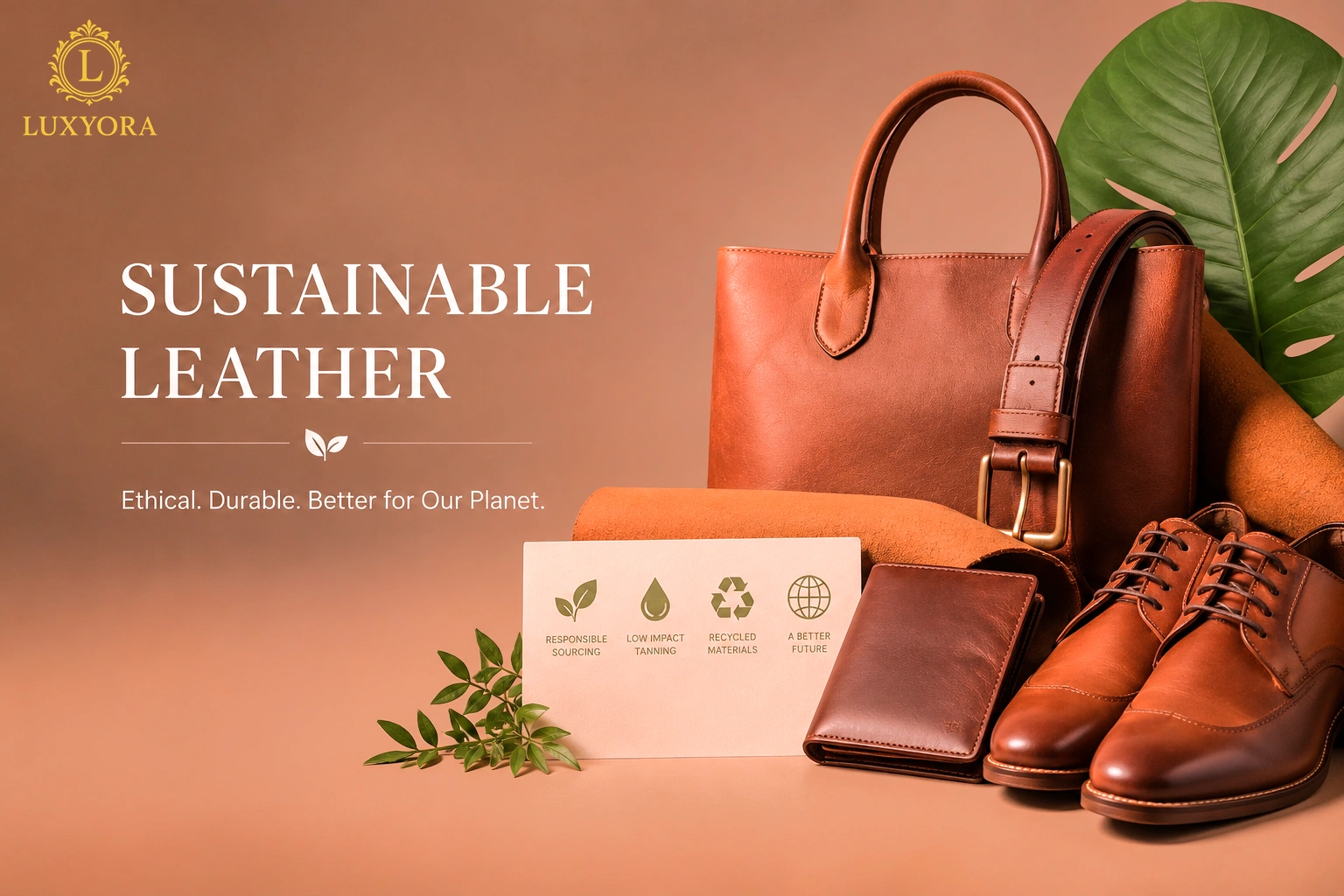
Luxury and mainstream brands are adopting sustainable leather for:
- Handbags
- Shoes
- Jackets
- Belts
- Wallets
Example Scenario
A consumer looking for a premium work bag may compare a conventional leather option with a vegetable-tanned leather alternative. While the sustainable option may have a slightly higher upfront cost, its durability, lower environmental impact, and unique aging characteristics often provide better long-term value.
Automotive Industry
Automakers are increasingly incorporating sustainable materials into vehicle interiors.
Applications include:
- Seats
- Steering wheels
- Dashboard components
- Door panels
Many manufacturers now blend recycled or bio-based materials with traditional leather.
Furniture Manufacturing
Sustainable leather is becoming common in:
- Sofas
- Office chairs
- Hotel furnishings
- Residential interiors
Businesses seeking environmental certifications often prefer sustainable upholstery materials.
Benefits of Sustainable Leather
Reduced Environmental Footprint
Sustainable leather initiatives help reduce:
- Resource depletion
- Pollution
- Waste generation
- Carbon emissions
Improved Resource Efficiency
Manufacturers maximize material use through:
- Recycling programs
- Waste reduction strategies
- Circular economy models
Enhanced Brand Reputation
Companies adopting sustainable leather often gain:
- Increased customer trust
- Better ESG performance
- Stronger market positioning
- Competitive differentiation
Long-Term Economic Value
Although sustainable leather products may sometimes carry a higher purchase price, their durability often results in lower lifetime ownership costs.
Challenges Facing the Sustainable Leather Industry
Despite significant progress, several challenges remain.
Cost Considerations
Sustainable production methods can increase manufacturing expenses due to:
- Certification requirements
- Advanced technologies
- Smaller production scales
Supply Chain Transparency
Tracking materials through complex global supply chains remains challenging.
Companies must invest in:
- Traceability systems
- Digital monitoring tools
- Supplier verification programs
Consumer Education
Many consumers still misunderstand the differences between:
- Genuine leather
- Sustainable leather
- Vegan leather
- Synthetic leather
Educational efforts are essential for informed purchasing decisions.
How to Identify Sustainable Leather Products
When shopping for sustainable leather products, consider the following factors:
Certification Programs
Look for certifications and standards that verify environmental and ethical practices.
Material Transparency
Brands should clearly disclose:
- Material origins
- Tanning methods
- Manufacturing processes
Durability and Repairability
A truly sustainable product should be designed to last and be repairable.
Example Scenario
A consumer purchasing a leather wallet may choose a repairable vegetable-tanned leather product instead of a lower-quality synthetic alternative that requires replacement every few years.
Practical Tips for Consumers
Buy Less, Buy Better
Choose high-quality leather products that can last for years rather than frequently replacing cheaper items.
Maintain Your Leather Properly
Regular care can significantly extend product lifespan.
Recommended practices include:
- Cleaning with appropriate products
- Conditioning periodically
- Proper storage
- Avoiding excessive moisture
Research Brand Sustainability Claims
Review company sustainability reports and sourcing policies before purchasing.
Consider Product Lifecycle
Ask yourself:
- How long will this item last?
- Can it be repaired?
- Is it recyclable?
- What happens at end-of-life?
These questions help support more sustainable purchasing decisions.
The Future of Sustainable Leather
The sustainable leather industry continues to evolve rapidly. Advances in biotechnology, circular manufacturing, regenerative agriculture, and eco-friendly tanning methods are creating new opportunities for innovation.
Emerging trends include:
- Lab-grown leather technologies
- Advanced bio-based materials
- Digital product passports
- Carbon-neutral leather production
- Closed-loop manufacturing systems
As regulations tighten and consumer awareness grows, sustainable leather is expected to play an increasingly important role in fashion, automotive, furniture, and consumer goods industries.
Conclusion
Sustainable leather represents a significant evolution in how leather and leather-like materials are produced, sourced, and utilized. By combining responsible sourcing, cleaner manufacturing processes, innovative materials, and circular economy principles, sustainable leather addresses many of the environmental and ethical concerns associated with traditional leather production.
For consumers, choosing sustainable leather means supporting products that prioritize durability, transparency, resource efficiency, and environmental responsibility. For businesses, it offers an opportunity to meet growing sustainability expectations while delivering high-quality products that align with modern market demands.
As innovation continues to reshape the industry, sustainable leather is positioned to become a cornerstone of responsible manufacturing and conscious consumerism in the years ahead.
References
Allwood, J. M., Laursen, S. E., Malvido de Rodríguez, C., & Bocken, N. M. P. (2019). Sustainable materials: With both eyes open. UIT Cambridge.
Ellen MacArthur Foundation. (2021). Circular economy principles for fashion and materials industries. Ellen MacArthur Foundation.
Food and Agriculture Organization. (2023). Sustainable livestock and value chain development. Rome, Italy: FAO.
Klemes, J. J., Varbanov, P. S., Walmsley, T. G., & Jia, X. (2020). New directions in sustainable leather processing. Journal of Cleaner Production, 273, 122849.
Leather Working Group. (2024). Environmental auditing protocol for leather manufacturers. Leather Working Group.
Niinimäki, K., Peters, G., Dahlbo, H., Perry, P., Rissanen, T., & Gwilt, A. (2020). The environmental price of fast fashion. Nature Reviews Earth & Environment, 1(4), 189–200.
Organisation for Economic Co-operation and Development. (2023). Sustainable supply chains and responsible business conduct. OECD Publishing.
United Nations Environment Programme. (2022). Sustainability and circularity in the fashion value chain. UNEP.
World Economic Forum. (2023). The future of sustainable materials and manufacturing. Geneva: World Economic Forum.
Zhang, Y., Chen, H., Wang, Y., & Li, X. (2021). Cleaner production technologies in the leather industry: A review. Journal of Cleaner Production, 287, 125054.