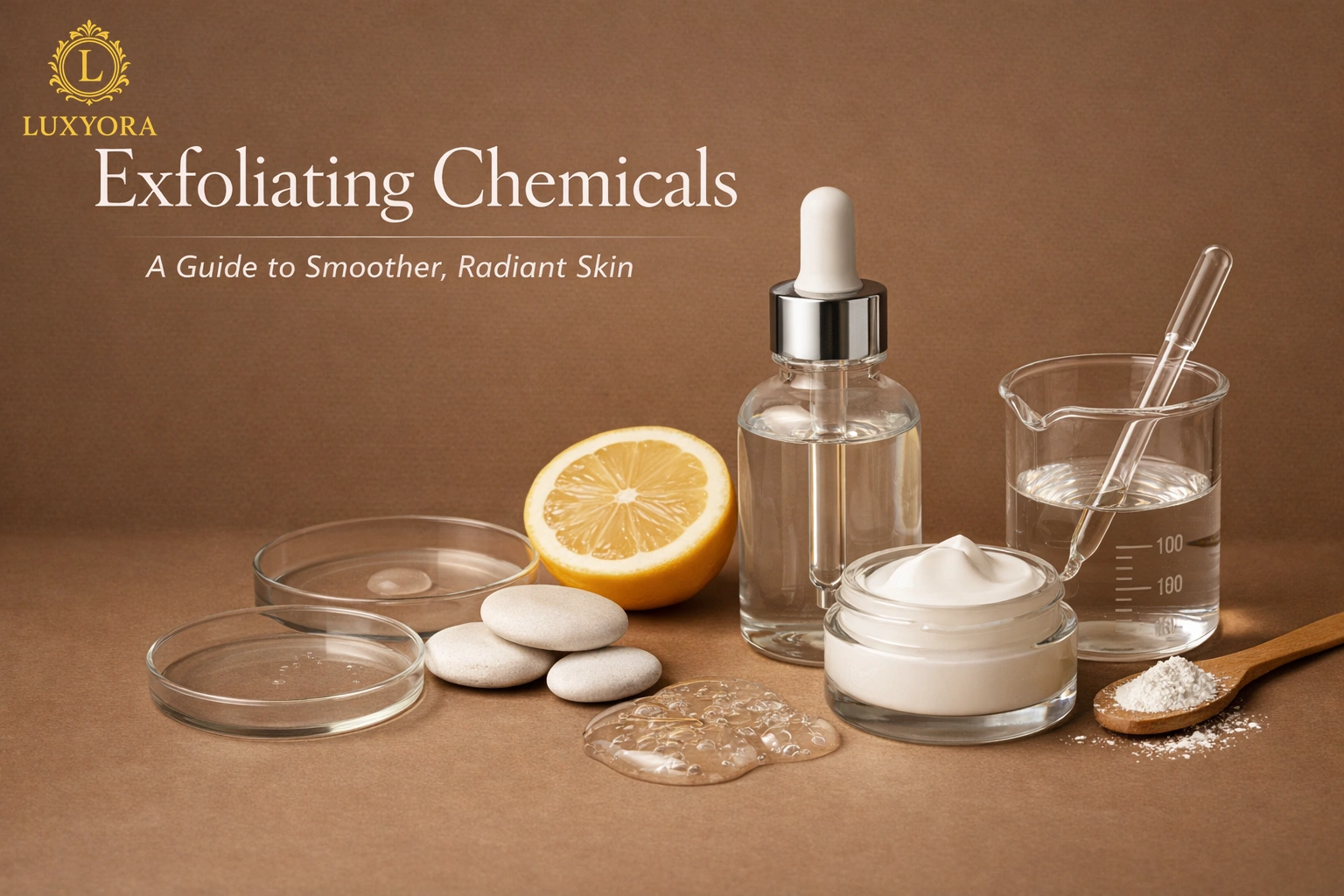
Exfoliating Chemicals
Exfoliating chemicals have become a cornerstone of modern skincare, transforming the way people achieve smoother, brighter, and healthier-looking skin. From dermatology clinics to at-home routines, chemical exfoliants are now widely used for treating acne, pigmentation, dullness, and uneven texture. But what exactly are exfoliating chemicals, and how do they work beneath the surface?
In this detailed guide, we’ll break down everything you need to know about exfoliating chemicals, from their types and mechanisms to practical usage tips, industry insights, and real-world applications.
What Are Exfoliating Chemicals?
Exfoliating chemicals are active ingredients used in skincare formulations to remove dead skin cells by dissolving the bonds that hold them together. Unlike physical exfoliants (such as scrubs), which manually slough off skin cells, chemical exfoliants work at a molecular level.
These chemicals primarily target the outermost layer of the skin, known as the stratum corneum, promoting cell turnover and revealing fresher, healthier skin underneath.
Why Chemical Exfoliation Matters
- Enhances skin texture and tone
- Helps unclog pores and prevent acne
- Improves absorption of skincare products
Reduces appearance of fine lines and hyperpigmentation
Types of Exfoliating Chemicals
Chemical exfoliants are broadly categorized based on their chemical structure and solubility.
Alpha Hydroxy Acids (AHAs)
AHAs are water-soluble acids derived from natural sources like fruits and milk.
Common AHAs:
- Glycolic acid
- Lactic acid
- Mandelic acid
- Citric acid
Benefits:
- Ideal for dry and sun-damaged skin
- Improves skin hydration
Reduces fine lines and uneven tone
Beta Hydroxy Acids (BHAs)
BHAs are oil-soluble acids, making them effective for penetrating pores.
Most common BHA:
Benefits:
- Suitable for oily and acne-prone skin
- Reduces blackheads and whiteheads
- Anti-inflammatory properties
Polyhydroxy Acids (PHAs)
PHAs are gentler alternatives to AHAs.
Examples:
- Gluconolactone
- Lactobionic acid
Benefits:
- Suitable for sensitive skin
- Hydrating and antioxidant properties
Minimal irritation
Important Chemical Parameters in Exfoliation
Understanding the technical parameters of exfoliating chemicals helps choose the right formulation and ensure safe use.
pH Level
The effectiveness of exfoliating acids largely depends on their pH.
- Lower pH (around 3-4) = Higher exfoliation strength
- Higher pH = Reduced activity
Concentration
The percentage of acid determines its potency.
- 5-10%: Mild exfoliation (daily use)
- 10-20%: Moderate exfoliation
- 20%+: Professional treatments or chemical peels
Molecular Size
Smaller molecules penetrate deeper into the skin.
- Glycolic acid: Smallest molecule, deeper penetration
- Mandelic acid: Larger molecule, gentler action
Contact Time
The duration the chemical remains on the skin influences both the results and the risk of irritation.
Other Chemical Exfoliants in Skincare
Beyond AHAs and BHAs, several other ingredients contribute to chemical exfoliation.
Enzymatic Exfoliants
Derived from natural enzymes such as:
- Papain (papaya)
- Bromelain (pineapple)
These exfoliants gently break down keratin proteins without significantly altering skin pH.
Retinoids
While not traditional exfoliants, retinoids accelerate cell turnover and enhance skin renewal.
Urea
At higher concentrations, urea acts as a keratolytic agent, softening and breaking down rough or thickened skin.
Indirect Exfoliation: A Hidden Approach
Indirect exfoliation refers to methods that promote skin renewal without directly dissolving dead cells.
Mechanism
- Stimulates natural cell turnover
- Enhances skin regeneration
- Improves barrier function
Examples
- Niacinamide
- Peptides
- Growth factors
These ingredients support long-term skin renewal and complement direct exfoliating chemicals.
How Exfoliating Chemicals Work
Chemical exfoliants weaken the bonds between dead skin cells, allowing them to shed more easily.
Key Mechanisms
- Disruption of corneocyte adhesion
- Increased epidermal turnover
- Improved collagen production with long-term use
Practical Tips for Using Exfoliating Chemicals
Using exfoliating chemicals correctly is essential to avoid irritation and maximize benefits.
Start Slow
- Begin with lower concentrations
- Use 1–2 times per week
Patch Test First
Always test new products on a small area before full application.
Use Sunscreen
Chemical exfoliation increases sun sensitivity, making daily sunscreen essential.
Avoid Over-Exfoliation
Signs include:
- Redness
- Dryness
- Burning sensation
Example Situations and Scenarios
A practical understanding of exfoliating chemicals can help users make better skincare decisions.
Example 1:
An individual with acne-prone skin may incorporate a salicylic acid-based product into their routine to unclog pores and reduce breakouts over time.
Example 2:
Someone with dull, uneven skin tone may use a glycolic acid exfoliant to improve brightness and smoothness with consistent use.
Risks and Safety Considerations
While effective, exfoliating chemicals must be used responsibly.
Common Risks
- Skin irritation
- Increased photosensitivity
- Damage to the skin barrier
Who Should Be Careful?
- Individuals with sensitive skin
- People with conditions like eczema or rosacea
- Pregnant or breastfeeding individuals (consult a professional)
Industry Trends in Chemical Exfoliation
The skincare industry continues to innovate in chemical exfoliation.
Clean Beauty Movement
Focus on minimal, transparent formulations using naturally derived acids.
Personalized Skincare
Technology-driven solutions now tailor exfoliation routines based on individual skin profiles.
Multi-Acid Formulations
Products combining AHAs, BHAs, and PHAs are increasingly popular for targeting multiple concerns simultaneously.
Choosing the Right Exfoliating Chemical
Skin Type | Recommended Exfoliant |
Oily/Acne-Prone | Salicylic acid |
Dry | Lactic acid |
Sensitive | PHAs |
Aging | Glycolic acid |
Selecting the appropriate exfoliant ensures both effectiveness and skin safety.
Final Thoughts
Exfoliating chemicals are powerful tools in modern skincare, offering a scientifically backed approach to improving skin health and appearance. With proper understanding of their types, chemical properties, and application methods, users can safely incorporate them into their routines for optimal results.
Balanced usage, combined with sun protection and skin awareness, is key to unlocking the full benefits of chemical exfoliation.
References
- Draelos, Z. D. (2018). Cosmetic Dermatology: Products and Procedures. Wiley-Blackwell.
- Baumann, L. (2020). Cosmetic Dermatology: Principles and Practice. McGraw-Hill Education.
- Barel, A. O., Paye, M., & Maibach, H. I. (2019). Handbook of Cosmetic Science and Technology. CRC Press.
- Mukherjee, S., Date, A., Patravale, V., Korting, H. C., Roeder, A., & Weindl, G. (2020). Retinoids in the treatment of skin aging. Clinical Interventions in Aging, 15, 1981–1995.
- Tang, S. C., & Yang, J. H. (2018). Dual effects of alpha-hydroxy acids on the skin. Molecules, 23(4), 863.
-