Rose Gold Hardware : What is Rose Gold Hardware
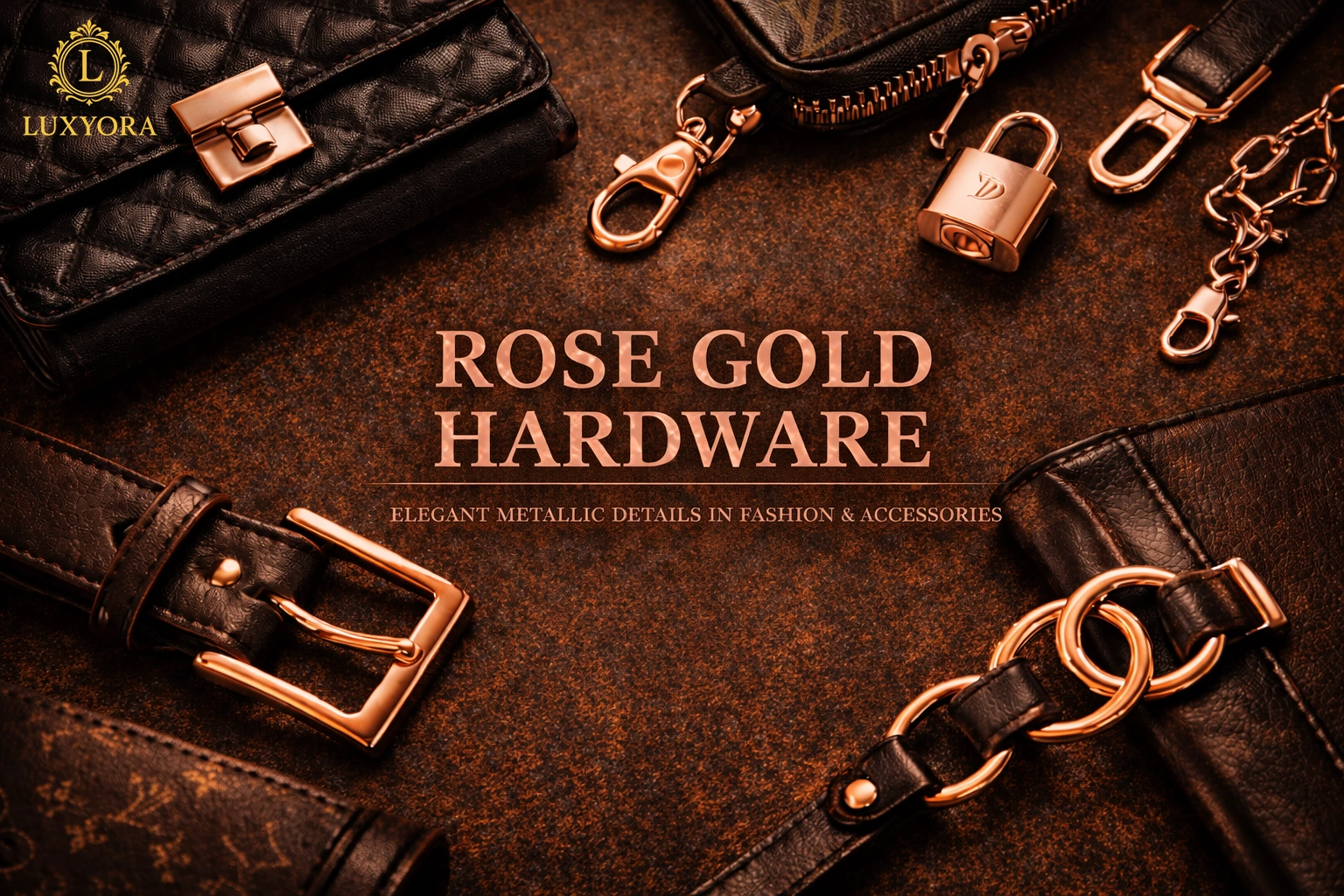
In the fashion and accessories industry, rose gold hardware refers to the metal components on products such as buckles, zippers, clasps, chains, D-rings, rivets, padlocks, logo plates, and bag feet that feature a warm pink-gold metallic finish. The key point: in most handbags, belts, footwear, and small leather goods, rose gold hardware is a surface finish rather than solid rose gold. Brands use the term to specify color tone, reflectivity, and finish style (polished, brushed, matte, or antiqued), and the finish is achieved through electroplating, PVD coating, and/or protective clear coats, depending on cost, performance, and sustainability goals.
Rose gold hardware matters because hardware is both high-visibility (it frames the product’s design language) and high-contact (it’s the most handled, rubbed, and chemically exposed part of many accessories).
Choosing rose gold hardware affects branding, perceived luxury, durability, maintenance requirements, and even compliance in certain product categories.
What Rose Gold Hardware Is (and What It Isn’t)
Rose gold hardware = “rose gold-tone finish”
In accessory specifications, rose gold typically refers to a rose-toned metallic appearance produced by a finishing system applied over a base metal (e.g., brass, stainless steel, zinc alloy). This differs from fine jewelry, where “rose gold” often refers to a gold alloy (gold mixed with copper, sometimes with silver) used throughout the piece.
Why does the color look “rosy”
The rosy hue is associated with copper-rich gold alloys, which are said to produce the pink complexion associated with rose gold.
In fashion hardware, manufacturers replicate that hue through coatings and plating chemistry rather than using solid gold.
Why Rose Gold Hardware Became a Fashion Staple
1) It’s a “warm neutral” that flatters materials
Rose gold complements:
- black, espresso, and medium brown leathers (luxury classic pairing)
- warm neutrals (camel, taupe, ivory)
- blush and pastel palettes (romantic/bridal energy)
2) It signals modern luxury without feeling harsh
Compared with yellow gold (bold warmth) and palladium/silver hardware (cool sharpness), rose gold tends to read as:
- contemporary
- soft-luxe
- feminine-leaning (though used in unisex design too)
3) It supports signature branding through hardware design
Accessory design references treat hardware as a major component of product identity and brand signature, not an afterthought, especially for bags. Black, espresso, and medium brown leathers (luxury classic pairing)
Where You’ll See Rose Gold Hardware
Handbags & small leather goods
- turn-locks, push-locks, padlocks, chain straps, zipper pulls, logo plates
Belts
- buckles, keepers, rivets, prongs
Footwear
- eyelets, buckles, decorative bars/bits
Outerwear
Because these components face frequent friction and exposure, finish selection is a key technical decision for product developers.
How Rose Gold Hardware Is Made: The Main Finishing Methods
1) Electroplating (rose gold-tone plating systems)
Electroplating deposits a thin metallic layer onto a base component. In decorative finishes, multiple layers may be used (adhesion and barrier layers, followed by a colored top layer), and the final appearance depends on surface preparation and thickness control.
Pros
- classic metallic look
- scalable for mass production
- flexible across many hardware shapes
Cons
- Surface wear can reveal underlayers/base metal
- Environmental impacts depend on chemistry and waste management.
2) PVD coating (Physical Vapor Deposition) for rose gold tones
PVD is a vacuum-based coating process widely used for decorative applications, offering controlled color and potential performance advantages. Research reviews note that PVD use has expanded into decorative fields (including fashion), but also emphasize that full substitution for electroplating isn’t always feasible; the industry often combines techniques to achieve desired aesthetics and textures.
Rose gold PVD is also described in industry literature as a method for achieving a durable rose gold appearance on metal substrates.
Pros
- consistent tone control (useful for matching sets: buckles + zips + rings)
- Often marketed as wear-resistant for daily-contact items
Cons
- Equipment and process costs can be higher
- Geometry and substrate constraints may apply depending on the components.
3) Clear coats/lacquers (protective sealing)
Many brands use a clear protective topcoat (which varies by supplier and tier) to slow tarnishing, reduce micro-scratching, and protect color stability, especially on high-touch closures.
Durability: What Happens to Rose Gold Hardware Over Time
Rose gold-tone finishes can change due to:
- friction and abrasion (bag hardware rubbing against zippers, chains, tables)
- moisture, humidity, sweat, salt air
- chemicals (perfume, sanitizer, lotions, cleaners)
Common wear signs:
- hairline scratches on polished finishes
- edge rub-through (corners and contact points wear first)
- tone shift (warmer to brassy, or patchy areas if coating thins)
- dulling if oils and dust accumulate
Quality Evaluation Checklist: How to Judge Rose Gold Hardware Like a Pro
1) Tone consistency across components
Look for:
- matched hue across clasp, rings, zipper pull, feet
Mismatched tone can signal mixed suppliers or weak process control.
2) Finish texture and reflectivity
- high-polish = glamorous, shows scratches more easily
- brushed/satin = more forgiving, “quiet luxury” feel
- antiqued = hides wear, but must look intentionally designed
3) Function and engineering
- zippers should glide
- locks should align cleanly
- Rings and clips should feel sturdy (no sharp edges, no wobble)
4) Wear hotspots
Inspect:
- clasp edges
- chain link contact zones
- buckle prong points
Early rub-through often suggests insufficient thickness or poor adhesion.
5) Aftercare and repair options
Premium positioning often includes care guidance and repair/refurbishment pathways (important for resale value and long-term ownership).
Care and Maintenance: Keeping Rose Gold Hardware Looking New
A strong baseline approach:
- Wipe hardware after use with a soft microfiber cloth to remove oils and moisture.
- Store in a cool, dry place, away from heat and sunlight.
- Avoid chemical contact (e.g., perfume, sanitizers, harsh cleaners).
Resale/care guidance for luxury handbags specifically emphasizes protecting hardware from sunlight to prevent tarnishing, rust/loss of luster, and recommends cool, dry storage.
Sustainability and Process Choices
Surface finishing is under increasing scrutiny because it can involve complex chemical management and waste streams. A fashion-industry study comparing electroplating and PVD highlights environmental considerations and proposes a decision-support approach based on life-cycle thinking to select the most suitable finishing routes.
Meanwhile, a decorative PVD review notes growing interest in PVD in fashion as part of the push for more sustainable manufacturing, while stressing that hybrid systems are often used to meet aesthetic and technical needs.
What this means for rose gold hardware: the finish isn’t just a color choice, it’s a manufacturing strategy with implications for durability, compliance, and environmental impact.
Conclusion: Rose Gold Hardware as “Design + Engineering.”
Rose gold hardware is a high-impact fashion term because it sits at the intersection of aesthetics, brand identity, and materials engineering. The best rose gold hardware looks beautiful on day one and holds up over the years through smart choices: correct base metal, strong surface preparation, controlled plating/coating thickness, and realistic care guidance. In today’s market, rose gold hardware also reflects the broader industry shift toward greater durability and more responsible finishing choices without sacrificing the romance and warmth that made the tone iconic.
References
- Gilroy, D.-J. (2023). Fashion bags and accessories: Creative design and production. Laurence King Publishing. (Laurence King Publishing UK)
- Saunders, A. (2023). Design, manufacture and sell your bag collection. Bloomsbury Visual Arts. (Bloomsbury Publishing)
- NIIR Board. (2021). The complete technology book on electroplating, phosphating, powder coating and metal finishing (2nd rev. ed.). National Institute of Industrial Research. (flore.unifi.it)
- Bandinelli, R., Fani, V., & Bindi, B. (2021). Electroplating and PVD finishing technologies in the fashion industry: Perspectives and scenarios. Sustainability, 13(8), 4453. https://doi.org/10.3390/su13084453 (MDPI)
- Simvaco. (2025). What is rose gold PVD? (SIMVACO)
- The RealReal. (2023, December 18). The best ways to care for designer handbags. (The RealReal)
- Vorobyova, M., et al. (2023). PVD for decorative applications: A review. Materials. (Open-access via PubMed Central). (PMC)
- World Gold Council. (n.d.). Gold jewellery: Colour, carat & purity. (World Gold Council)
- Cooksongold. (n.d.). What is rose gold and why is it so popular? (cooksongold.com)
-