Understated Luxury : What is Understated Luxury
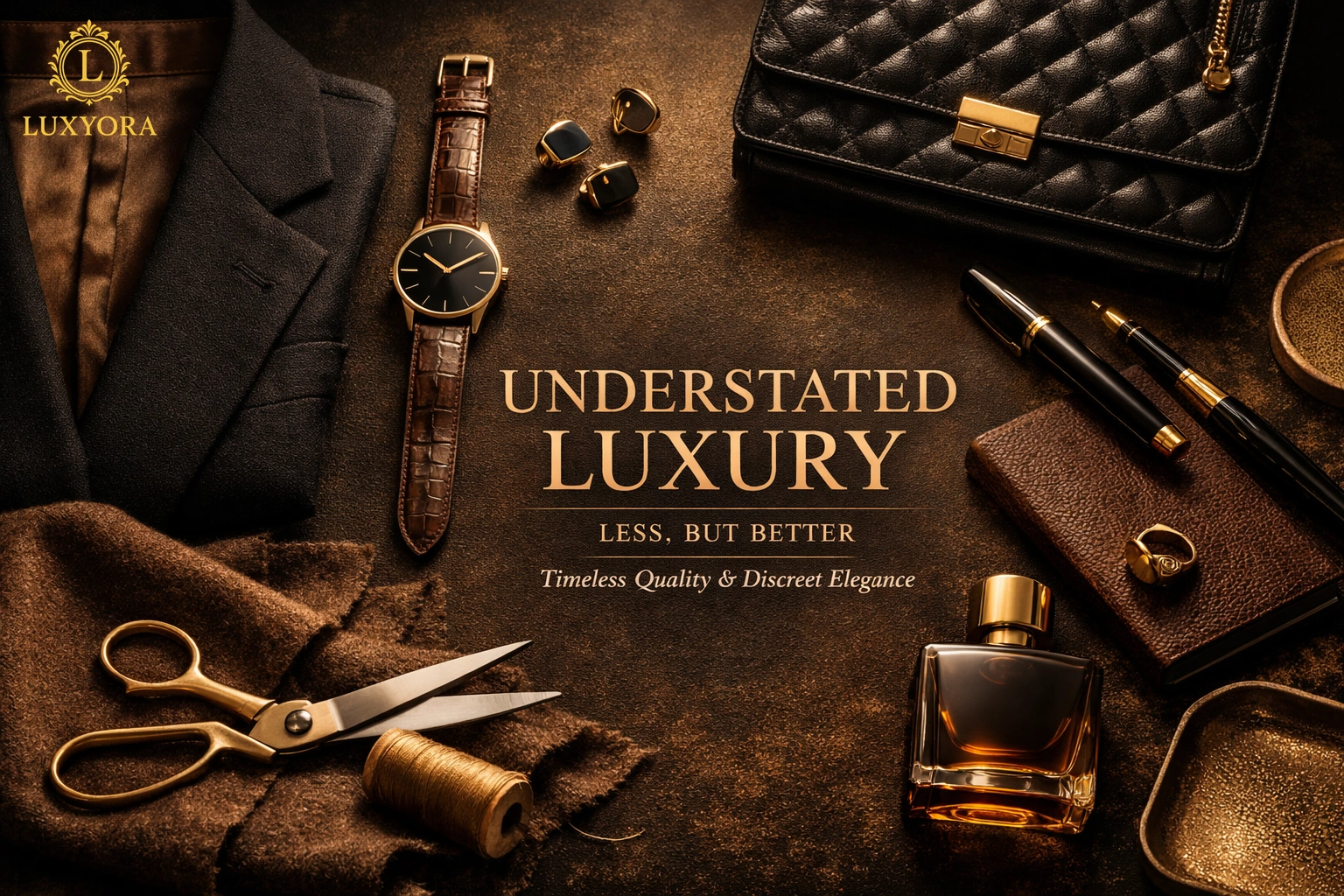
Understated luxury (often discussed alongside “quiet luxury” or “stealth wealth”) is an industry term for high-end products, services, and experiences that signal exceptional quality without loud branding. Instead of relying on prominent logos, flashy patterns, or overt status cues, understated luxury leans into craftsmanship, materials, fit, provenance, and timeless design details that are usually legible to those who know, rather than to everyone in the room.
This shift matters because it reflects changing consumer values: many luxury buyers are becoming more selective, more sustainability-aware, and more interested in authenticity than spectacle.
What Exactly Is “Understated Luxury”?
At its core, understated luxury is about inconspicuous signaling, communicating taste, discernment, and access through subtle markers rather than obvious ones. Academic research on inconspicuous consumption describes this as using subtle signals that are “unidentifiable by the mainstream” but recognizable to knowledgeable audiences
Key characteristics
- Minimal or no visible logos (branding is often internal, tonal, or embedded in construction)
- Premium materials (e.g., high-grade cashmere, fine leathers, rare textiles, responsibly sourced metals)
- Precision and restraint in design (clean lines, balanced proportions, neutral palettes)
- Longevity (products are designed to age well, be repairable, and remain relevant)
- Quiet excellence in service (private clienteling, personalization, thoughtful hospitality)
Why Understated Luxury Grew: Four Powerful Drivers
1. Logo fatigue and a renewed respect for craft
As social media accelerated trends, many consumers began craving the opposite: stability, substance, and heritage. Contemporary luxury storytelling increasingly emphasizes craft, artisanship, and human skill, positioning making and materials as the real status markers
2. Minimalism meets luxury
Minimalism is not always “anti-consumption.” Research suggests that some minimalist consumers actually prefer premium, subtle products because quality and restraint align with their values. In other words, fewer items, but better ones.
3. Economic uncertainty and “selective splurging.”
When consumers feel uncertain, they often become more careful, buying less frequently but choosing items with higher perceived value and durability. Luxury reports highlight a climate of selectivity: customers still buy, but more deliberately
4) A shift from “status display” to “status literacy.”
Understated luxury is a form of cultural fluency: knowing what matters (fabric, cut, construction, provenance) rather than what’s loud. This aligns with academic work describing inconspicuous luxury as tied to social positioning within exclusive networks
The Business of Understated Luxury: How Brands Deliver “Quiet” Value
Understated luxury is not simply an aesthetic; it’s an operating model. The “quiet” outcome requires disciplined decisions across design, sourcing, retail, and marketing.
Product strategy: materials + construction as the signature
Instead of “brand recognition,” the product itself becomes the proof:
- Higher-grade raw materials and tighter tolerances
- Superior finishing (linings, seams, edge paint, hardware, stitching density)
- Classic silhouettes that support long-term use
Retail strategy: service becomes the spectacle
Luxury reports emphasize the importance of in-store human interaction and personalized experiences, especially as brands work to sustain desirability and improve performance.
Marketing strategy: less noise, more meaning
Understated luxury often avoids shouty campaigns. Instead, it leans into:
- Craft narratives (who made it, how, and why it matters)
- Heritage and provenance
Limited distribution and controlled availability
This restraint can support scarcity and protect prestige, especially when consumer trust depends on substance rather than hype.
Understated Luxury and the Wider Market
Subtle luxury sits within a broader luxury scene marked by normalization after post-pandemic surges and changing customer behavior.
- Bain’s global luxury reporting notes pressure from price elevation and a more selective customer base, while also highlighting the role of top clients and the need for brands to protect desirability while improving performance
- The industry also faces channel shifts (e.g., post-pandemic normalization online) and the growing importance of resale/secondhand, estimated at €48B in 2024 in Bain’s analysis
- Looking ahead, coverage of 2026 forecasts underscores uneven recovery patterns (for example, Bain commentary on China’s expected rebound in 2026 reported by Reuters)
- Broader fashion and luxury outlooks anticipate luxury as a major profit driver, but within a tougher macro environment.
What this means for understated luxury: when buyers become more discerning, subtle, well-made, repairable products often feel like the “safest” luxury purchase, both emotionally and financially.
How to Recognize Understated Luxury: A Practical Checklist
If you’re evaluating a product that claims quiet/understated luxury, focus on what’s hardest to fake:
1) Materials
- fiber length (cashmere, wool), grain quality (leather), weight, and drape (silk, cotton)
- responsible sourcing and traceability where available
2) Construction
- stitch consistency, seam alignment, lining quality, edge finishing, hardware feel
- repairability: can it be maintained for years?
3) Design logic
- clean proportions, intentional simplicity, versatility across settings
4) Brand behavior
- consistent pricing logic, aftercare support, repair programs, controlled distribution
- credible craft storytelling (not “craftwashing”)
The Future of Understated Luxury
Understated luxury is likely to remain influential, but it will evolve. Expect three directions:
- Craft + transparency: more proof of origin, labor ethics, and material traceability.
- Experience-led quiet luxury: private client services, high-touch hospitality, and personalization.
- Durability as status: long-term ownership, repair, and resale value as prestige markers
In short, understated luxury is not the absence of status; it’s status expressed through discernment. The “quiet” is deliberate: a strategic choice to let quality speak first
References
- Cho, M. (2025). The hidden signals of luxury: Investigating inconspicuous consumption and the mediating role of social connectedness [Abstract]. Journal of Retailing and Consumer Services. (ScienceDirect)
- Makkar, M., & Yap, S.-F. (2018). Emotional experiences behind the pursuit of inconspicuous luxury. Journal of Retailing and Consumer Services. (ScienceDirect)
- Pangarkar, A., et al. (2021). Minimalism in consumption: A typology and brand engagement strategies. Journal of Business Research. (ScienceDirect)
- Taylor. (n.d.). What, no logos? Why some minimalists prefer quiet luxury. Psychology & Marketing (Wiley Online Library). (Wiley Online Library)
- Bain & Company. (2024). Luxury in transition: Securing future growth. (Bain)
-
- Bain & Company. (2025). Luxury is ready for a new era after stabilizing in 2025 (Snap chart). (Bain)
- Euronews. (2023). What’s behind the “quiet luxury” trend and how long can it last? (euronews)
- McKinsey & Company. (2023). The State of Fashion 2024. (McKinsey & Company)
- McKinsey & Company. (2025). The State of luxury goods in 2025. (McKinsey & Company)
- Reuters. (2026, January 29). China luxury market forecast to rebound in 2026, Bain says. (Reuters)
- SCAD. (2025). The future of quiet luxury (SCADask report) [PDF]. (SCAD.edu)
- Vogue Business. (2025). How craft became luxury’s most valuable currency. (Vogue)
- Chevalier, M., & Mazzalovo, G. (2020). Luxury brand management in digital and sustainable times (4th ed.). Wiley. (Wiley Online Library)
- Kapferer, J.-N., & Bastien, V. (2025). The luxury strategy: Break the rules of marketing to build luxury brands (3rd ed.). Kogan Page. (Amazon India)