What Makes a Perfume Expensive? Ingredients, Brand & Quality | Luxyora
An expensive perfume doesn’t just smell good; it behaves differently. It has presence without shouting. It evolves like a well-written plot. And hours later, when you catch it on your sleeve, it still feels intentional, like the fragrance equivalent of a perfectly tailored coat.
But what, exactly, are you paying for when a bottle costs the same as a weekend getaway? Spoiler: it’s not just “rare ingredients.” The price of perfume is a layered story, part raw materials, part craftsmanship, part branding, and (yes) a healthy dose of experience.
Here’s the Vogue-coded breakdown of what really drives perfume prices and how to tell when the luxury is legit
1. Ingredients: rarity, yield, and the inconvenient truth about “natural”
Luxury perfumes often feature costly naturals (and naturals can be pricey for very unglamorous reasons). Some materials require enormous amounts of plant matter for a tiny amount of oil or absolute, and yields can be vulnerable to weather, harvest conditions, and supply-chain shocks. The Financial Times notes that climate pressure and supply issues can affect ingredient yields and costs, contributing to higher perfume prices overall.
But here’s the myth-buster: natural doesn’t automatically mean better, and synthetic doesn’t automatically mean cheap.
A credible industry discussion in Chemical & Engineering News explains how perfumers balance natural and synthetic materials, often prioritizing sustainability, performance, and consistency over cost alone. Some synthetics are used because they’re safer, more stable, or because they reduce pressure on overfarmed natural sources.
What you’re really paying for with ingredients:
- Rarity/scarcity (limited supply, slow-growing sources)
- Extraction complexity (more labor/tech to produce)
- Consistency (top houses control quality tightly, batch to batch)
- Ethical sourcing & traceability (when done properly, it costs more)
2. Concentration and formula structure: the “how long does it last?” factor
While price and concentration aren’t perfectly linked, higher concentrations of fragrance oils (often seen in Eau de Parfum and extrait styles) can raise costs, especially when the formula relies on more expensive materials and longer-lasting base structures.
That said, concentration alone doesn’t guarantee quality. A cheaper perfume can be potent; a luxury one can be intentionally sheer. Still, formulas designed for longevity, complexity, and smooth transitions often involve more development time and a more expensive palette.
3. The perfumer’s work: time, revisions, and expertise
People imagine perfumers casually mixing rose and vanilla like a kitchen hobby. In reality, fragrance creation can involve months (or even years) of trials, evaluations, reformulations, and polishing. That time is paid labor: perfumers, evaluators, and lab teams testing stability, performance, and compliance.
This is one reason niche and luxury perfumes can feel more “finished”: you’re often smelling the result of iteration, how the opening flows into the heart, how the dry-down stays clean rather than messy.
From carefully selected ingredients to the final composition, every perfume undergoes a remarkable transformation before it becomes a signature scent. Learn how this olfactory masterpiece comes together in How Perfume Is Made: Step-by-Step Fragrance Creation Process.
4. Compliance and reformulation: the hidden cost nobody posts on Instagram
Perfume isn’t just art; it’s also a regulated consumer product. The industry follows evolving safety guidance and restrictions on certain materials, and that can mean reformulating a fragrance (sometimes multiple times) to keep it compliant in key markets.
IFRA (International Fragrance Association) publishes widely used standards aimed at the safe use of fragrance ingredients, and brands that follow the IFRA Code of Conduct align their formulas accordingly.
Reformulation isn’t just swapping one ingredient. It can involve:
- replacing restricted materials,
- rebalancing the whole structure,
- re-testing stability and performance,
- sometimes reworking the scent profile to match the original.
That research-and-development churn costs money, especially for brands committed to global distribution.
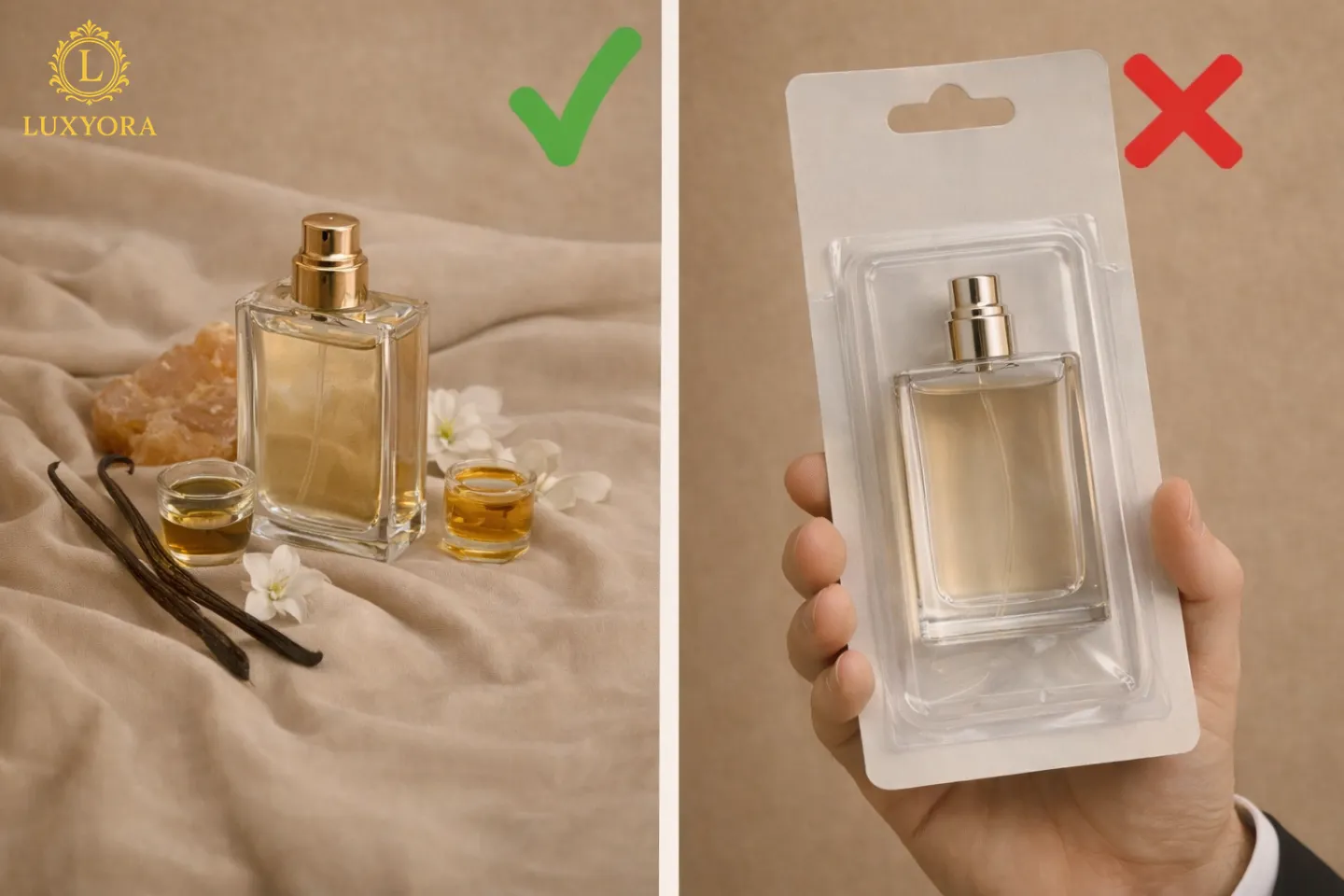
5. Packaging: the bottle can be a tiny piece of industrial design
If you’ve ever held a luxury bottle and thought, This feels like an object, you’re not imagining it. Heavy glass, weighted caps, premium sprayers, and multi-piece packaging don’t come cheap, and they’re part of the luxury “ritual.”
Even industry-facing discussions note that premium fragrance positioning often comes with premium packaging choices (heavy bottles, refined finishes, elevated presentation), which increase costs.
Is packaging the soul of perfume? No.
Is it part of what you’re paying for? Absolutely
6. Brand, storytelling, and status: the price of being “in the room”
Luxury fragrance pricing isn’t only about materials; it’s also about the brand world. You’re buying into heritage, design codes, scarcity, and the promise of a certain lifestyle.
Luxury brands have increasingly launched ultra-expensive fragrances as collectible, status-driven objects often paired with high-craft, bespoke experiences and art-meets-jewelry storytelling.
That doesn’t mean expensive perfumes are “fake.” It means luxury pricing includes:
- brand equity (decades of reputation and desirability),
- creative direction and image-making,
- retail experience and exclusivity,
- limited distribution and controlled availability
7. Small batches, niche scale, and distribution markups
Many niche houses don’t have mass-market scale, which means:
- smaller production runs,
- higher per-unit manufacturing costs,
- limited negotiating power for raw materials and components,
- specialized distribution.
And then there’s retail reality: fragrance is often sold through channels with significant markups (department stores, luxury boutiques, distributors). By the time the bottle reaches you, multiple layers may have taken a cut.
8. Sustainability and innovation: when “better” truly costs more
A luxury perfume can also be expensive because it’s trying to do something harder: traceable sourcing, refillable packaging systems, or greener production inputs.
The fragrance industry faces sustainability challenges, from over-farming natural ingredients to the complexity of making responsible “natural” claims, revealing that the greener path is often more complicated and costly than it seems.
Innovation in perfumery can be costly, with the industry investing significantly in alternative materials and new production processes as it evolves.
How to tell if a perfume is worth the price
A few clues that the cost is showing up in quality (not just hype):
- Smooth evolution: no harsh “alcohol blast,” no messy dry-down.
- Longevity with elegance: it lasts, but doesn’t suffocate.
- Detail in the base: woods, musks, and ambers feel dimensional, not flat.
- Consistency: it smells the same each time you wear it.
- Transparency: the brand communicates sourcing, refills, or craft clearly.
Luxyora Philosophy: True luxury is not a number on a label, it’s an intention you can feel. Choose perfumes where craft, quality, and character linger longer than the price tag.
References:
- Bomgardner, M. M. (2019, April 21). How perfumers walk the fine line between natural and synthetic. Chemical & Engineering News. Chemical & Engineering News
- International Fragrance Association. (n.d.). IFRA Standards. Retrieved December 21, 2025. IFRA
- Vogue. (2023, February 7). Why Gucci’s latest fragrance is made from recycled carbon. Vogue
- Vogue. (2024, November 30). Why luxury brands are launching ultra-expensive fragrances. Vogue
- Vogue India. (2022, December 22). Is your perfume sustainable? Vogue India
- Financial Times. (2024). Why has perfume become so expensive? Financial Times
- Elchemy. (2025, May 23). Perfume vs cologne: Implications for packaging, branding, and distribution in fragrance manufacturing. Elchemy