When Does a Shoe Reach the End of Its Life? | Luxyora
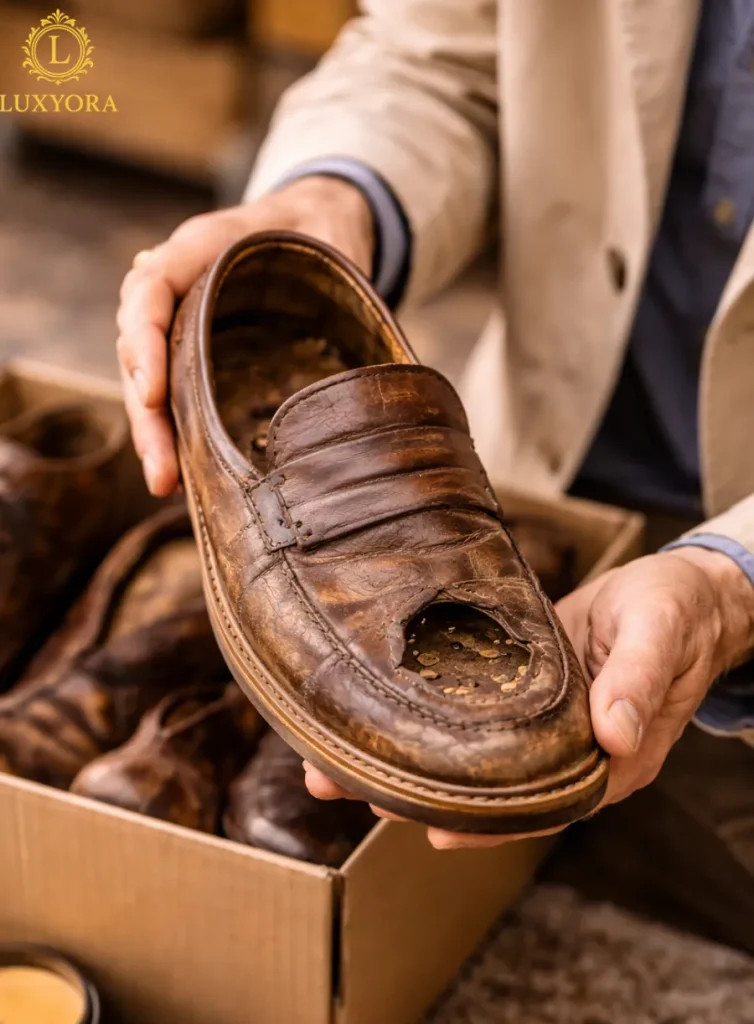
There’s a moment every shoe lover eventually encounters: a favorite pair sits quietly in the closet, once vibrant, now whispering tales of streets walked, rain showers survived, awkward first-date steps, triumphant presentations, and impromptu dances. You look at them and wonder Is it really time? When does a shoe go from being a trusted companion to a relic of the past?
Like all good questions, the answer isn’t binary. A shoe’s “end of life” isn’t just about a visible scuff or a worn-out sole; it’s a blend of physical decline, safety considerations, emotional attachment, environmental impact, and even the story you want your wardrobe to tell.
In the luxury context, understanding the lifecycle of footwear and knowing when to continue caring and when to part is as much an art as it is a science.
The Anatomy of Wear: What Actually Breaks Down
Before calling it quits on a shoe, it helps to know what’s actually wearing out:
1. The Upper
The leather or fabric that hugs your foot. Creases are normal over time, but when stitching unravels, linings tear, or structural collapse begins, the shoe might be nearing its practical limits.
2. The Sole
Soles wear unevenly depending on gait, terrain, and frequency of use. A thinning sole that exposes midsole foam or allows water infiltration signals a loss of functional protection.
3. The Heel
Heel tips take a beating. Once they’re worn to metal or completely gone, walking becomes unstable and potentially damaging to knees or back.
4. The Midsole
In sneakers and performance footwear, the midsole cushioning degrades over time as it compresses and loses responsiveness. It’s unseen but profoundly affects comfort.
5. Adhesives and Bonding
Many modern shoes use adhesives to bind sole, upper, and lining. Over time, these bonds can fail, creating separation and structural compromise.
Each of these components has its own lifespan. In a well-maintained leather dress shoe, the upper might last decades while the sole needs periodic replacement. In a highly engineered sneaker, the upper and outsole might hold up while the midsole foam collapses faster.
Signs It’s Truly Time to Retire
It’s tempting to cling to a beloved pair, but luxury isn’t about clinging. It’s about discernment. Here are the main markers that a shoe’s life is truly ending:
1. Structural Failure
No amount of resoling or repair can restore alignment, balance, or form. When a shoe no longer supports your foot properly, it’s more than a cosmetic issue; it’s a biomechanical inefficiency.
2. Severe Midsole Breakdown
In performance and comfort shoes, once the cushioning has compressed and fails to rebound, the whole walking experience changes. Your joints handle more impact, and fatigue sets in faster.
3. Water Infiltration
If a shoe leaks despite waterproofing efforts, it’s a sign the integrity of the materials has been compromised. That’s especially true in premium leather shoes where moisture can irreversibly harm the hide.
4. Impossible Repairs
When stitching comes undone in spots that are hard to reinforce, or adhesive separation is beyond serviceable repair, the shoe might be more cost-effective to retire.
5. Injury or Discomfort
Your body often tells the truth before your eyes do. If a pair that used to feel good now causes pain, imbalance, or postural compensations, it’s time to reassess.
The Emotional Dimension: Letting Go Without Guilt
Luxury shoes aren’t just objects; they’re memory vessels. A beautifully worn crease, a recycled resoling stitch, the softness that comes from repeated wear… these evoke stories. Emotional attachment complicates the “end of life” question.
There’s no shame in holding onto a shoe for sentiment. But sentimental value should coexist with functional reality. A shoe that causes discomfort or misalignment is doing physical violence to your body, even if it makes your heart flutter.
Here’s the gentle rule of thumb: Honor the memory, not the damage. Take photos. Preserve stories. Invest in a high-quality repair for a final memorable outing. But know when the relationship has transitioned from utility to memory.
There comes a point when every pair of shoes has technically done its job but not every favorite is easy to let go of. Sometimes the decision to keep or replace a pair has surprisingly little to do with wear alone. Discover more in Emotional Value vs Functional Lifespan in Shoes.
The Sustainability Perspective: A Circular View
In an era when sustainable fashion matters, the lifecycle of shoes isn’t just personal; it’s planetary. Extending a shoe’s life through resoling, reconditioning, and repair reduces textile and leather waste. A study on textile reuse and recycling highlights how garments (and, by extension, footwear) that are kept in use longer reduce environmental burden (Sandin & Peters, 2018). But there also comes a point where ongoing repairs may consume more resources than responsibly retiring the item.
Many luxury brands are adopting take-back programs and designing for repairability. Choosing shoes built to be maintained rather than discarded aligns with a more thoughtful fashion ethos.
Aesthetic vs Functional Decline
Sometimes, a shoe looks past its prime but still functions well. Other times, a shoe still looks pristine but has lost structural support. In luxury footwear, aesthetics often drives purchase decisions, but when assessing end-of-life, function should take precedence.
This is why bespoke and high-end shoes are often recrafted: the shoe’s sole is rebuilt while the upper remains intact. But you should recognize the practical threshold: if the underlying support has failed, a cosmetic refresh doesn’t restore performance.
The Cost-Per-Wear Equation
A shoe’s value isn’t measured only in how long it lasts, but how usefully it lasts. Cost-per-wear economics helps illuminate when a shoe has served its purpose. A high upfront cost with years of reliable service and comfort is far superior to a cheaper pair replaced frequently. In modern footwear discussions, this concept is gaining traction as consumers become more mindful of longevity and value.
Luxury consumers often intuit this instinctively: a well-made shoe that offers comfort, style, and reliability over time feels worth every cent.
Knowing When to Transition
The end of a shoe’s life isn’t always abrupt. Sometimes it fades. You stop reaching for a pair not because they’re broken, but because your body or aesthetic has evolved. This transitional moment matters. Letting go, donating, recycling, and repurposing are an acknowledgment of both emotional closure and a forward-looking wardrobe.
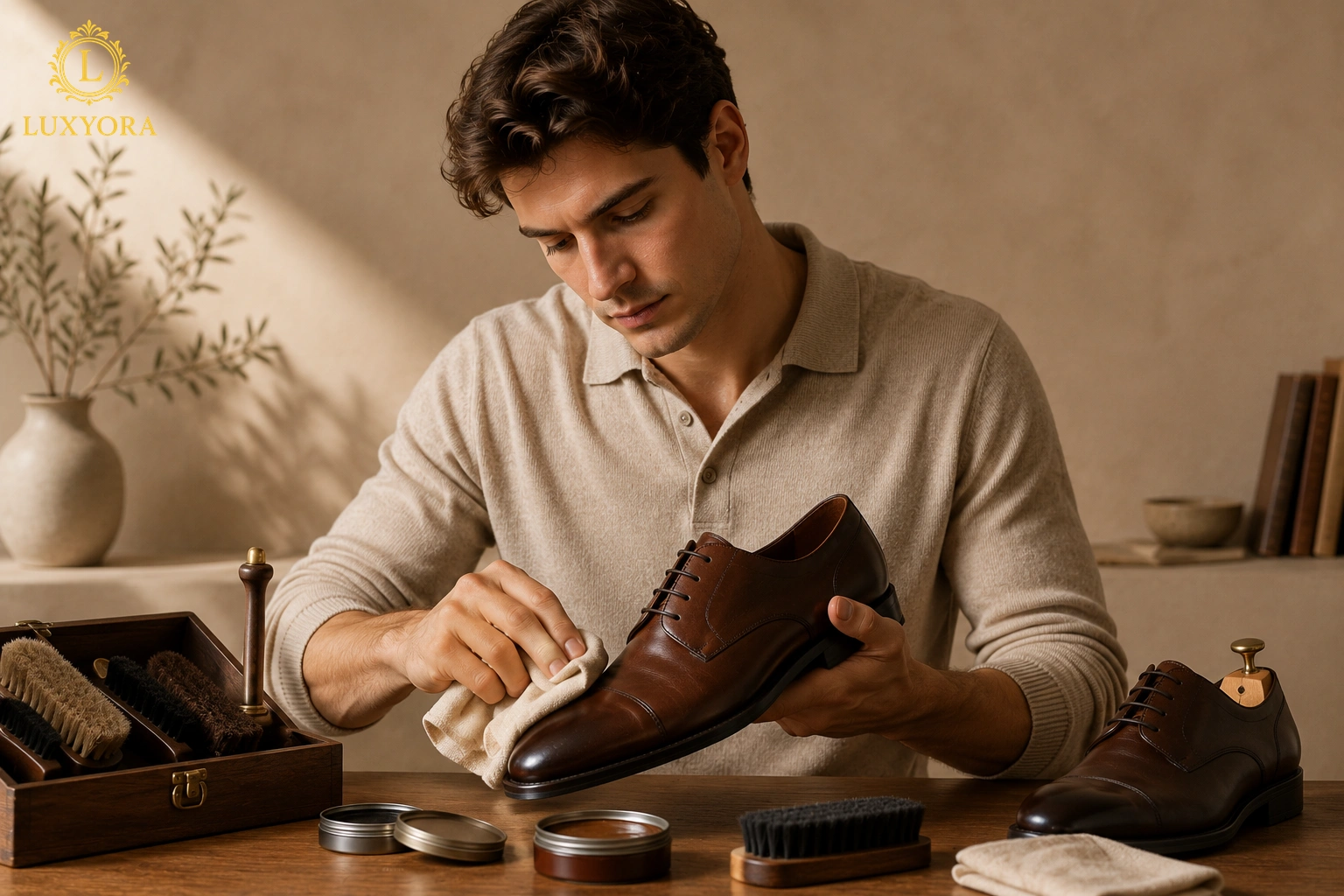
Consider a ritual: clean the shoes one last time, take a moment to reflect on where they carried you, and then release them with gratitude. That transforms retirement into a celebration.
Luxyora Philosophy: A shoe’s end of life isn’t defined by age; it’s defined by purpose fulfilled. Honor the journey, respect the wear, and know that stepping forward sometimes means letting go.
References:
- Niinimäki, K., & Hassi, L. (2019). Emerging design strategies in sustainable production and consumption of textiles and clothing. Journal of Cleaner Production, 237, 117710.
- Sandin, G., & Peters, G. M. (2018). Environmental impact of textile reuse and recycling: A review. Journal of Cleaner Production, 184, 353–365.
- Sun, X., Lam, W.-K., Zhang, X., Wang, J., & Fu, W. (2020). Systematic review of the role of footwear constructions in biomechanics and injury prevention. BioMedical Engineering OnLine, 19(1), 7.
- van der Velden, N. M., et al. (2021). A conceptual review on wearables and human biomechanics: How footwear influences wearing experience and injury risk. European Journal of Sport Science, 21(1), 1–17.
No amount of resoling or repair can restore alignment, balance, or form. When the shoe no longer supports your foot properly, it’s more than cosmetic—it’s biomechanical inefficiency.