How to Use a Crossbody Bag : Tips and Tricks | Luxyora
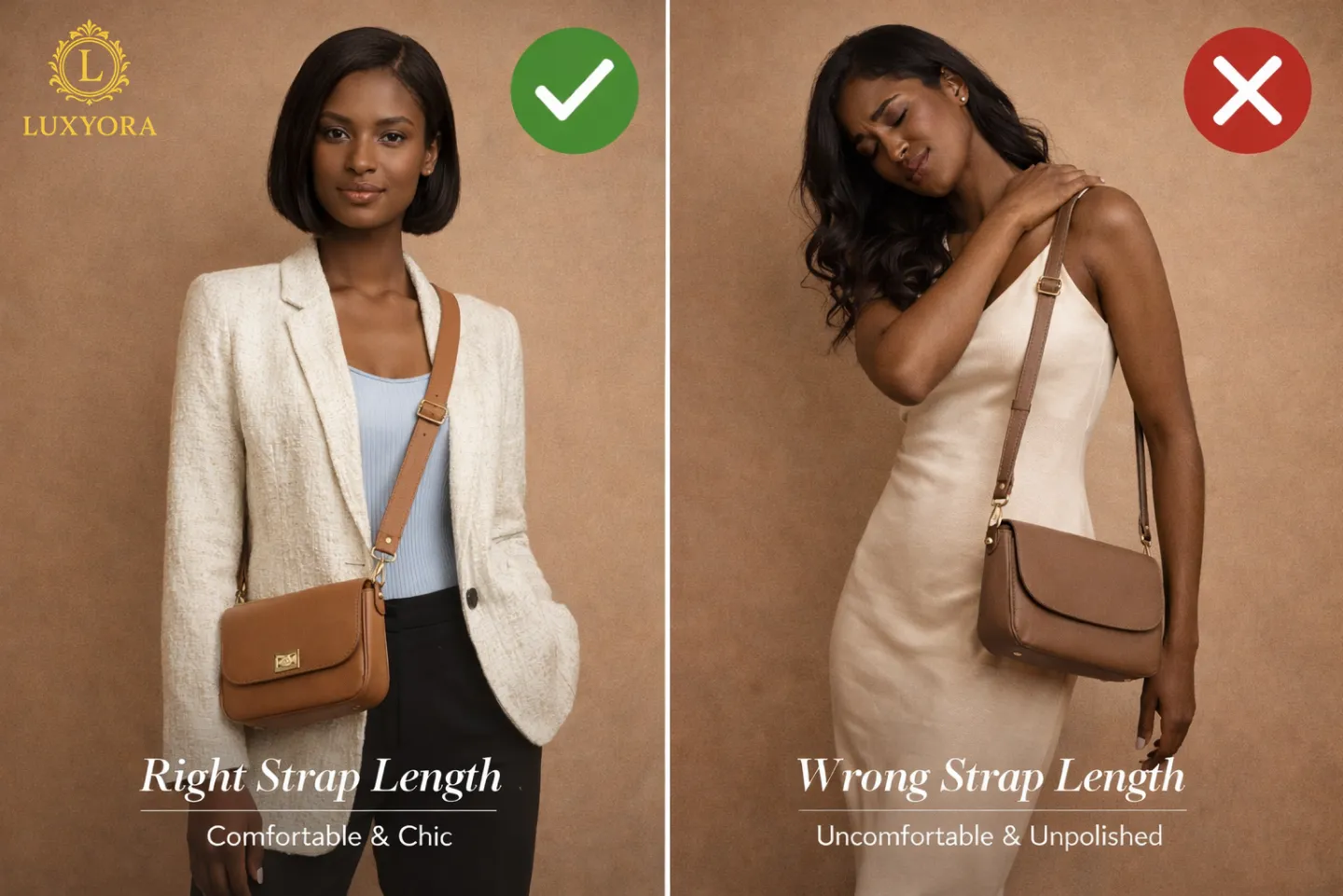
A crossbody bag is the fashion world’s most charming contradiction: equal parts practical and polished, built for movement but capable of looking utterly intentional. It’s the bag you reach for on a rushed morning, and the one you keep on for dinner because it makes your outfit feel finished. The magic isn’t just in the bag itself; it’s in how you wear it. Strap length, placement, weight, and styling choices can make the difference between “effortlessly chic” and “why does my shoulder hate me?”
This guide is your luxury-lifestyle cheat sheet: how to position your crossbody so it flatters, feels comfortable, and works with everything from tailoring to weekend denim, plus the little details that keep it looking expensive, not accidental.
1) Start With Placement: Where Your Bag Sits Changes Everything
Crossbody styling starts with one deceptively simple question: Where should the bag rest on your body? The most wearable sweet spot for most people is around the hip area, high enough to be easily accessible, low enough to move naturally as you walk.
The goal: the bag should land where your arm naturally falls, so you can unzip, reach, and close it without twisting your torso. If it’s too high, it can feel tight and fussy; too low, and it swings, bumps, and looks less refined.
Try this quick fit check:
- Stand tall, relax your shoulders, and let your arms hang naturally.
- Adjust the strap so the bag sits near your hip or slightly above it.
- Walk a few steps. If it swings dramatically, go a touch shorter.
Many strap-length guides suggest a broad “standard” range for crossbody straps, but the real luxury move is customizing to your proportions and your outfit layers, thin knit vs. thick coat makes a difference.
2) Choose Your “Mood”: Front, Side, or Back Carry
Crossbodies aren’t one-note. Where you wear it creates a different vibe and a different level of security.
Front carry (across the chest)
This looks modern and urban, and it’s extremely convenient when you’re moving through crowds, commuting, or traveling. It also keeps the bag within your peripheral vision, which can make you feel more secure.
Tip: Keep the strap lying flat and untwisted across your chest. A twisted strap looks messy and can cause pressure points.
Side carry (classic hip placement)
The most timeless styling is elegant, balanced, and easy. Works beautifully with coats and tailoring because it doesn’t visually “cut” the body too harshly.
Tip: If you’re wearing a blazer or trench, position the bag so it sits cleanly on top, not awkwardly under the lapel.
Back carry (behind the hip)
Useful when you want the bag out of the way, but it can be less accessible. Best for lighter bags and short periods, think: quick errands.
Tip: If the bag migrates forward as you walk, shorten the strap slightly and reduce the load.
3) Strap Length Is a Styling Tool, Not Just a Comfort Setting
Yes, strap length affects comfort, but it also changes your outfit’s silhouette.
- Shorter crossbody (higher on the torso): reads sporty, modern, and youthful.
- Mid-length (at hip): reads classic, luxe, and “put together.”
- Longer (below the hip): can look relaxed, but risks swinging and pulling on the shoulder.
The luxury rule: your bag should look like it belongs where it is. If it’s bouncing, slipping, or constantly being adjusted, it will never feel truly elevated, no matter how beautiful it is.
4) Comfort Comes From Weight Distribution (And It’s Not Just a Feeling)
Carrying loads on the body creates pressure, and research on load carriage consistently shows that heavier weight and strap design can affect posture, discomfort, and pressure on the shoulder area. While much of the formal research focuses on backpacks, the principles translate beautifully to crossbodies: less weight, better distribution, and less concentrated pressure tend to feel better over time.
Make comfort feel expensive:
- Go wider for busy days. A wider strap generally feels gentler over hours of wear because it spreads the load.
- Avoid “all-metal” straps for long wear. Chain straps can be gorgeous, but they’re not always kind.
- Keep the bag light. Your crossbody isn’t a suitcase. Luxury looks best when it’s effortless.
A quick packing edit: If you haven’t used it in the last 48 hours, it doesn’t deserve a seat in your bag.
5) The Anti-Swing Trick: Stabilize Your Bag Without Looking Tactical
Swing is what makes a crossbody feel inconvenient. The fix is usually simpler than you think:
- Shorten the strap slightly so the bag sits closer to your body.
- Shift the bag slightly forward so it rests against the front curve of your hip.
- Use structured shapes when you want a steadier carry. Soft slouchy bags can move more.
If your bag still swings, it may be a sign that it’s too heavy, too long, or that the strap is too slick against your outfit fabric.
6) Outfit Pairings That Always Work
Let’s turn “how to wear it” into “how to wear it beautifully.”
With tailoring (blazers, trousers, midi skirts)
Choose a mid-length strap that lands near the hip. Keep hardware minimal and let the bag read like an accessory, not an interruption.
Bonus polish: Align the bag strap with your blazer’s lapel line so it looks intentional.
With knitwear and coats
A crossbody is a winter hero, hands-free, secure, and actually usable. Wear it over the coat for ease, or under the coat for the cleanest outer silhouette (and you’re not constantly reaching into the bag).
Pro move: If you’re wearing thick layers, lengthen the strap slightly to prevent it from pulling or riding up.
With evening looks
Yes, you can wear a crossbody at night, think “refined minimalism.” Pick a smaller bag, a sleeker strap (leather or a leather-threaded chain), and wear it slightly higher so it feels like jewelry.
The secret to effortless crossbody styling isn’t simply wearing the bag it’s knowing exactly how to make it complement every outfit. Discover the expert tips in How to Match Your Handbag with Your Outfit.
7) Small Adjustments That Make It Look More Luxurious
Luxury styling is rarely loud. It’s in the details.
- Keep the strap flat. Twists instantly read careless.
- Center the bag’s front panel. A bag that tilts awkwardly can make even the nicest design look off.
- Match your hardware story. If your jewelry is cool-toned, a bag with similar hardware feels cohesive.
- Mind the strap end. Long strap tails flapping around can look untidy; tuck them neatly if possible.
8) Crossbody Etiquette: When and How to Wear It in Real Life
A crossbody is personal space in accessory form, so a few practical habits help:
- At dinner: shift it behind your hip or remove it if the strap disrupts your neckline.
- In crowded areas: bring it to the front carry position for easier access and awareness.
- In the car: loosen slightly to sit comfortably, or slide it to the side so it doesn’t press awkwardly.
If your bag routinely feels like it’s “in the way,” it’s usually a length issue or a sign you need a smaller silhouette for that day.
9) Common Crossbody Mistakes (And How to Fix Them Fast)
Mistake: Wearing it too low.
Fix: Raise the strap so the bag sits around the hip; it’ll look cleaner and move less.
Mistake: Overstuffing.
Fix: Edit your essentials. If you need more, choose a wider strap or a larger bag with better structure.
Mistake: Letting the strap slide off the shoulder line.
Fix: Adjust length and keep the strap flatter; consider a strap with more texture or width.
Mistake: Styling conflict with outfit proportions.
Fix: With long coats, keep the bag mid-hip; with short jackets, a slightly higher placement can look sharper.
10) The “Signature Crossbody” Routine
If you want one go-to way of wearing your crossbody that always works:
- Adjust to mid-hip.
- Position to the side for classic elegance.
- Keep the weight minimal and the strap flat.
- Shift to front carry only when you need security or quick access.
It’s simple, consistent, and feels quietly luxurious like the kind of styling that doesn’t need an explanation.
Luxyora Philosophy: Luxury is the ease you can feel when what you carry supports how you live, and every detail looks intentional without trying too hard.
References:
- Charles & Keith. (2024). The ultimate guide to women’s crossbody bags. Charles & Keith Guides. (charleskeith.com)
- Petite Simone. (2024, July 3). The perfect crossbody bag strap length guide. Petite Simone. (Petite Simone)
- Chen, Y.-L., Kuo, Y.-L., & Lee, Y.-H. (2021). Influence of school bag loads and carrying methods on posture, muscle activity, and discomfort: An experimental study. International Journal of Industrial Ergonomics, 81, 103056. (ScienceDirect)
- Timm, L., & Michel, F. I. (2021). Effect of shoulder strap design and mechanical properties on surface pressure in load carriage. Journal of Science and Cycling, 10(2). (Journal of Science and Cycling)
- Hein, J. L., et al. (2025). Backpack load carriage affects motor and sensory function of the upper limb: The role of shoulder-strap compression. Military Medicine. (OUP Academic)